• Following Us

  • Categories

  • Check out the Archives


  • Awards & Nominations

The X-Files – Synchrony (Review)

This February and March, we’re taking a trip back in time to review the fourth season of The X-Files and the first season of Millennium.

Time travel is one of the great science-fiction tropes.

Although magical or metaphorical time travel has long been a part of literary tradition, pseudo-scientific or pseudo-rational versions of science-fiction really took root towards the end of the nineteenth century. Although H.G. Wells blazed a trail with The Time Machine, Edward Page Mitchell actually beat him to the punch – he published the short-story The Clock That Went Backward fourteen years before Wells wrote The Time Machine. Nevertheless, time travel quickly caught on as a literary device.

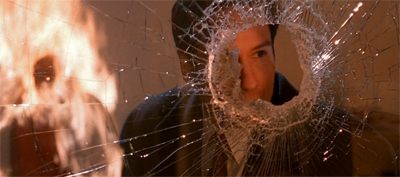
The hole in things...

The hole in things…

There are films, television show, novels, comics and songs all playing with the idea of moving through time. Although there is considerable debate about the feasibility of actually travelling backwards through time, time travel serves as a wonderful narrative device. It opens up all sorts of possibilities for structure and style; it provides some pretty heavy themes; it opens up a myriad of settings and possibility. It is no surprise that there have been so many variations and permutations based upon the idea of going backwards in time.

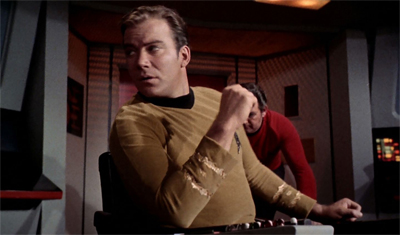
Indeed, it seemed like it was only a matter of time before The X-Files got around to telling its own time travel story. Synchrony was as inevitable as the decision to close the episode with a clumsy hint toward predetermination.

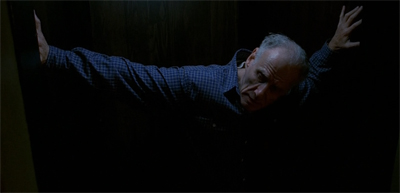
Ghosts of future self...

Ghosts of future self…

Continue reading

Star Trek: Enterprise – Cold Front (Review)

Next year, Star Trek is fifty years old. We have some special stuff planned for that, but – in the meantime – we’re reviewing all of Star Trek: Enterprise this year as something of a prequel to that anniversary. This January, we’re doing the first season. Check back daily for the latest review.

It is customary, these days, for television shows to map out their mythologies years in advance. Depending on when you ask him, executive producer Bryan Fuller boasts of having a six- or seven-year plan for Hannibal, despite the fact that the show spends each cancellation period on the bubble line for NBC. Indeed, the move away from the standard television pilot format means that shows are encouraged to have long-form plots and arcs mapped out.

However, that isn’t always the case. The X-Files was very much made up as it went along, with little real thought put into how the show’s sprawling alien mythology hung together beyond the immediate future. Even heavily serialised shows like Lost or 24 were plotted as they went along, with plans radically changing as the show evolved. Unlike film, where you (mostly) need a finished story before you start filming, television is a medium where you don’t really need an ending in mind as you begin telling the story.

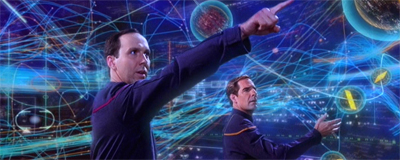
There's a lot on the (time) line...

There’s a lot on the (time) line…

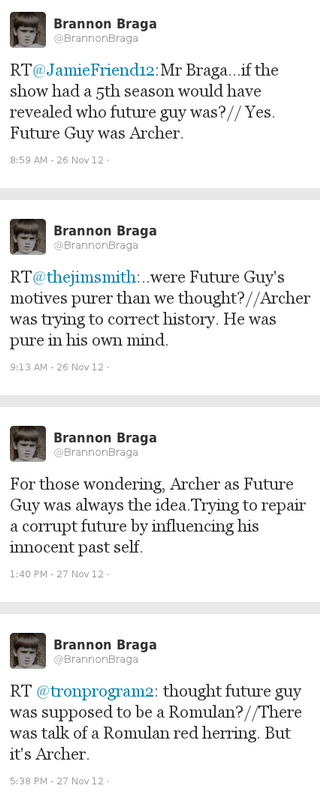
So it really shouldn’t be a surprise that Star Trek: Enterprise introduced the idea of the “Temporal Cold War” without any real idea of how the story was meant to develop or conclude. Although structured as something of a serialised arc among a (mostly) episodic couple of seasons, the Temporal Cold War is something that makes very little sense in the context of the show. Even years after the fact, the Temporal Cold War is a mystery, with Brannon Braga casually dropping the reveal that, well… Archer did it.

Of course, that plot development doesn’t make a lot of sense… but that’s par for the course. It is very hard to tie the various Enterprise time travel episodes together into a logical and cohesive narrative. Cold Front doesn’t even bother to answer questions immediately relevant to its own narrative, let alone hint at logical future developments for the series’ recurring time-travel plot line. It’s a story that seldom makes sense within individual episodes, let alone when they are strung together.

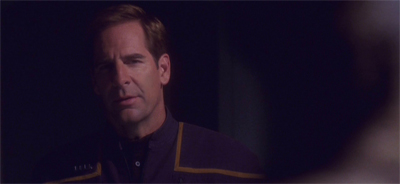
In space, all warriors are (temporal) cold warriors...

In space, all warriors are (temporal) cold warriors…

And yet, despite that, Cold Front is a pretty great episode. Part of that is down to the Temporal Cold War plot line, with Cold Front introducing a welcome sense of ambiguity to the conflict and selling the idea that Archer has wandered into something much larger than he can comprehend. On an otherwise quiet mission, Enterprise finds itself embroiled in a conflict between two forces that Archer does not fully understand, as if the ship and its crew have found themselves engaged on one front of a war in heaven.

However, Cold Front works just as well with the elements that exist outside the Temporal Cold War. As with Breaking the Ice, the episode plays like a regular day on board the Enterprise, as Archer and his crew find themselves welcoming religious pilgrims on board and making friendly first contact as they gather to watch some beautiful interstellar phenomenon. It’s an episode that draws attention to the quiet wonder and majesty of deep space exploration, elegantly and effectively.

Hang on in there...

Hang on in there…

Continue reading

Star Trek – Assignment: Earth (Review)

The first Star Trek pilot, The Cage, was produced in 1964. To celebrate its fiftieth anniversary, this December we are reviewing the second season of the original Star Trek show. You can check out our first season reviews here. Check back daily for the latest review.

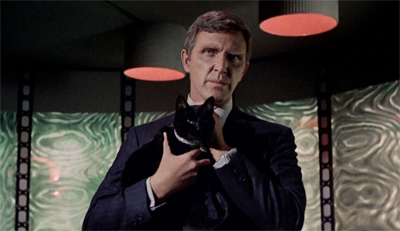
Assignment: Earth was almost the last episode of Star Trek ever produced.

It was also possibly (although nowhere near “almost”) the pilot for a spin-off television show.

Seventh heaven?

Seventh heaven?

At the last minute, following a very high-profile fan campaign, Star Trek was renewed for a third season.

Fans would have to wait decades to see an actual Star Trek finalé that reduced the main cast to guest stars.

"Wait, who just hijacked my show?"

“Wait, who just hijacked my show?”

Continue reading

Star Trek: Deep Space Nine – Visionary (Review)

This September and October, we’re taking a look at the jam-packed 1994 to 1995 season of Star Trek, including Star Trek: Deep Space Nine and Star Trek: Voyager. Check back daily for the latest review.

Visionary confirms that “O’Brien must suffer” is to become an annual tradition on Star Trek: Deep Space Nine. The second season of the show had made a good start with episodes like Whispers and – to a lesser extent – Armageddon Game, but Visionary confirms that this will really be O’Brien’s niche in the ensemble from this point on. Visionary sees O’Brien randomly jumping forward through time, inevitably glimpsing some horrible tragedy that must be avoided. (Boy, it sure is lucky that he started jumping at this point, isn’t it?)

Visionary should feel contrived and convenient, hinging on a pretty flimsy plot hook. That said, the episode ultimately works quite well, even if it doesn’t stand out as a classic piece of Star Trek. Watching Visionary, there’s very much a sense that Visionary only really works as well as it does because Deep Space Nine has built up a larger mythology of characters and long-form plotting that can support what might otherwise be a fairly flimsy premise.

"Why the hell doesn't this ever happen to Julian?!"

“Why the hell doesn’t this ever happen to Julian?!”

Continue reading

Star Trek: Voyager – Time and Again (Review)

This September and October, we’re taking a look at the jam-packed 1994 to 1995 season of Star Trek, including Star Trek: Deep Space Nine and Star Trek: Voyager. Check back daily for the latest review.

It’s really remarkable the sense of self that Star Trek: Voyager had three issues into its run. It took Star Trek: The Next Generation two years to figure out what it wanted to be. Star Trek: Deep Space Nine only really settled down in its fourth season. Star Trek: Enterprise reinvented itself twice before it was cancelled. On the other hand, Voyager just seemed so aware of what it was and what it was going to be within only a few episodes.

Sure, there would be a few changes made in the years ahead. The Borg would appear in the third season; Seven of Nine would join the cast in the fourth. Janeway’s fickleness has yet to be firmly established; the Doctor hasn’t come to the fore. And, yet, three episodes in, it is quite possible to look at Star Trek: Voyager and get a sense of what the next seven years will be like. The shape of things to come.

Time and Again is a time travel story, but it’s also the first time that Voyager pulls a full-on end-of-episode reset. It will not be the last.

Guest starring: anomaly of the week!

Guest starring: anomaly of the week!

Continue reading

Star Trek: Deep Space Nine – Past Tense, Part II (Review)

This September and October, we’re taking a look at the jam-packed 1994 to 1995 season of Star Trek, including Star Trek: Deep Space Nine and Star Trek: Voyager. Check back daily for the latest review.

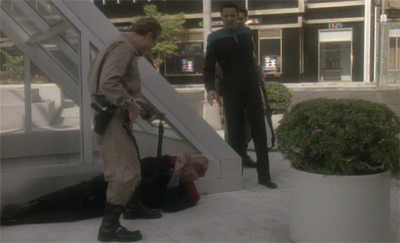
Past Tense, Part II is a nice way to close out Star Trek: Deep Space Nine‘s solo run, the only period in the show’s history where it was the only Star Trek on television. Caretaker, the première of Star Trek: Voyager, would be the next episode of the franchise to air. Deep Space Nine spent a lot of its early third season attacking various foundations of the Star Trek universe, as if hoping to demonstrate how profoundly different the show was from its predecessors.

The Search promised a war brewing on the horizon, and presented a cynical view of Starfleet foreign policy, where pacifism amount to appeasement. House of Quark reduced the Klingon Empire to a joke. Equilibrium suggested that Sisko could live with (and passively enable) a government lie if it kept his friend alive. Second Skin hinted that things might not be as they appear to be. The Abandoned embraced the idea that sometimes people are incapable of being anything more than what their genes might tell them to be. Defiant was the story of sibling desperately trying to prove his unique identity.

Everything is under control...

Everything is under control…

Part of me wonders if this very cynical stretch of episodes is responsible for the perception of Deep Space Nine as an incredibly cynical and pessimistic television show – one consciously at odds with the utopian ideals of the franchise. After all, this was the stretch where Deep Space Nine was most in the spotlight. It had the spot previously allocated to Star Trek: The Next Generation in most markets. It had no televised competition. If ever Star Trek fans were going to jump on board Deep Space Nine, this was the moment. It seems quite possible that this run of episodes cemented the show’s reputation.

So it seems strange that Deep Space Nine should wait until its last possible moment in the sun to embrace the humanism and optimism at the heart of the franchise. Past Tense is a story about building paradise, and about how humanity has the capacity to be so much better than we currently are. In short, it’s quintessential Star Trek, right down to the occasionally heavy-handed moralising and utopian idealism.

Keep your hat on...

Keep your hat on…

Continue reading

Star Trek: Deep Space Nine – Past Tense, Part I (Review)

This September and October, we’re taking a look at the jam-packed 1994 to 1995 season of Star Trek, including Star Trek: Deep Space Nine and Star Trek: Voyager. Check back daily for the latest review.

It’s weird to think that Past Tense aired at the very end of the period where Star Trek: Deep Space Nine was the only Star Trek on television. The two parts were broadcast in early January 1995, after the release of Star Trek: Generations but before the broadcast of Caretaker, the pilot episode of Star Trek: Voyager.

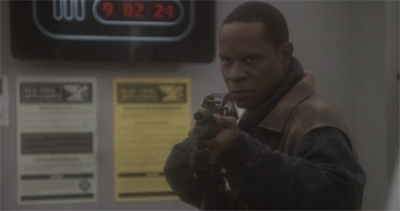
In a way, these are the most “Star Trek”-y episodes of the third season of Deep Space Nine. Embracing the franchise’s utopianism and optimism, the two episodes are even structured as a gigantic homage to The City on the Edge of Forever. Unlike the somewhat cynical and jaded run of episodes leading into them, Past Tense seems to exist as an episode that could draw fans of Star Trek: The Next Generation into Deep Space Nine.

Panic in the streets...

Panic in the streets…

It would have made sense to position the episodes earlier in the season, where they might have done a better job of attracting casual Star Trek viewers jonesing for a fix after The Next Generation went off the air. Unconnected to the serialised long-form plot of Deep Space Nine, engaging with important social issues of contemporary society and playing with familiar Star Trek tropes like time travel, it’s hard to imagine an episode of the third season of Deep Space Nine better suited to reeling in viewers.

As it stands, though, Past Tense aired at the last possible moment where Deep Space Nine could truly claim to be “the only Star Trek on television”, making the two-parter feel more like a footnote than a crescendo. It’s a shame, as Past Tense remains a vastly underrated instalment of the show’s third season.

Arresting drama...

Arresting drama…

Continue reading

Star Trek IV: The Voyage Home (DC Comics, 1986) (Review)

This June, we’re taking a look at some classic Star Trek movie tie-ins and other interesting objects. Check back daily for the latest reviews and retrospectives.

The comic book adaptation of Star Trek IV: The Voyage Home does a surprisingly good job of translating the comedy adventure into comic book form. Relying the creative team of Mike W. Barr and artist Tom Sutton to produce a one-shot comic book adaptation of the feature film, DC Comics have reached a point where they are able to consistently and reliably churn out comic books based around the Star Trek franchise.

Indeed, one might imagine that the somewhat lighter tone of The Voyage Home would pose a challenge for the duo, eschewing the grand space opera of Star Trek III: The Search for Spock in favour of something more firmly rooted in modern sensibilities. However, Barr and Sutton do a wonderful job adapting the screenplay into a charming comic, even if it does seem to be aimed more squarely at hardcore Star Trek fans than casual viewers.

Standing tall...

Standing tall…

Continue reading

Star Trek IV: The Voyage Home by Vonda N. McIntyre (Review)

This June, we’re taking a look at some classic Star Trek movie tie-ins. Check back daily for the latest reviews and retrospectives.

Comedy doesn’t always translate well between different media. That’s not to suggest that comedy works better in one medium as compared to others, merely to contend that certain forms of comedy don’t translate perfectly between different media. It works any number of ways. Something that is funny in sound and vision is not necessarily hilarious in prose. Gags relying on delivery might play better with a seasoned performer than in the mind’s eye of a reader. Witty prose doesn’t always lend itself to narration or articulation on film.

Much of Star Trek IV: The Voyager Home plays as broad farce, following a bunch of time-travelers from the future (and refugees from television land) as they try to interact with the real world. The movie does have some wonderful character moments – notably Spock’s character arc that beautifully brings him a full circle and Kirk’s relationship with Spock – but it also plays the Star Trek ensemble in a highly caricatured manner, more as archetypes than fully-realised three-dimensional characters.

This is grand. After all, these are fictional characters rather than real people. After all stories are more than just excerpts from the biographies of fictional characters. While it’s nice to have consistent characterisation, suggesting that you can’t have Kirk and Spock acting in an exaggerated fashion for the sake of comedy is a very narrow and restrictive view of what Star Trek is or should be.

The Voyage Home gets the big character beats right – Spock’s insistence that the crew rescue Chekov, Kirk convincing Gillian to trust him, Spock “guessing” – that we can excuse the crew’s lack of awareness about a time period they have visited before and the general flippancy of the movie itself. The novelisation, however, is another matter. Vonda N. McIntyre clearly cares a great deal about the characters. That was one of the strengths of her work on the novelisations of the last two films. Here, however, McIntyre struggles to balance that with the tone of the story.

startrekiv Continue reading

Star Trek – The Entropy Effect by Vonda N. McIntyre (Review)

This June, we’re taking a look at some classic Star Trek movie tie-ins and other interesting objects. Check back daily for the latest reviews and retrospectives.

The Pocket Books Star Trek line has to be one of the most stable and successful tie-in book ranges in the world. While the comic book license has bounced from publisher to publisher, Star Trek prose has remained firmly rooted at Pocket Books through the highs and the lows of the Star Trek franchise. This is undoubtedly because Pocket Books is a subsidiary of Simon and Schuster, which has been owned by the company that has owned Star Trek since 1975.

As such, from 1979 until the present day, Pocket Books has produced an incredible amount of tie-in material to support the Star Trek franchise. From reference material through to novels set within the fictional universe, the line has published a wealth of material across all the shows and all the time frames. Indeed, Pocket even launched their own separate spin-off brands run by authors like Peter David or Keith R.A. DeCandido.

While Gene Roddenberry’s novelisation of Star Trek: The Motion Picture was the first official Star Trek novel published by Pocket Books, and the line had published a number of reference books in the interim, Vonda N. McIntyre’s The Entropy Effect is the first original novel published by Pocket Books. In many ways, the influence of McIntyre’s work is still being felt, as she demonstrated how best to approach a Star Trek tie-in novel.

theentropyeffect

Continue reading