• Following Us

  • Categories

  • Check out the Archives


  • Awards & Nominations

The X-Files – Two Fathers (Review)

This July, we’re taking a trip back in time to review the sixth season of The X-Files and the third (and final) season of Millennium.

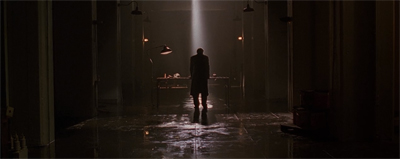
This is the end. I never thought I’d hear myself say those words after all these years. You put your life into something… build it, protect it… The end is as unimaginable as your own death or the death of your children. I could never have scripted the events that led us to this. None of us could. All the brilliant men… the secret that we kept so well. It happened simply, like this.

– the Cigarette-Smoking Man channels his inner Chris Carter

In case you were wondering about the title...

In case you were wondering about the title…

Continue reading

The X-Files – Tithonus (Review)

This July, we’re taking a trip back in time to review the sixth season of The X-Files and the third (and final) season of Millennium.

Alas! for this gray shadow, once a man—
So glorious in his beauty and thy choice,
Who madest him thy chosen, that he seem’d
To his great heart none other than a God!
I ask’d thee, ‘Give me immortality.’
Then didst thou grant mine asking with a smile,
Like wealthy men, who care not how they give.
But thy strong Hours indignant work’d their wills,
And beat me down and marr’d and wasted me,
And tho’ they could not end me, left me maim’d
To dwell in presence of immortal youth,
Immortal age beside immortal youth,
And all I was, in ashes. Can thy love,
Thy beauty, make amends, tho’ even now,
Close over us, the silver star, thy guide,
Shines in those tremulous eyes that fill with tears
To hear me? Let me go: take back thy gift:
Why should a man desire in any way
To vary from the kindly race of men
Or pass beyond the goal of ordinance
Where all should pause, as is most meet for all?

– Alfred, Lord Tennyson, Tithonus

Shades of grey...

Shades of grey…

Continue reading

The X-Files – S.R. 819 (Review)

This July, we’re taking a trip back in time to review the sixth season of The X-Files and the third (and final) season of Millennium.

And we’re back on familiar ground.

The first half of sixth season of The X-Files is perhaps the weirdest that the show ever really became. It seemed like the series transformed into a goofy workplace romantic comedy, as Mulder and Scully worked at boring desk jobs during the day before investigating paranormal activity together in their spare time. It was utterly unlike anything that the show had done before or anything that it would do after. It is very strange to see so many oddities packed together so tightly.

He survived by the Skin(ner) of his teeth...

He survived by the Skin(ner) of his teeth…

Triangle, Dreamland I, Dreamland II, How the Ghosts Stole Christmas and The Rain King have enough surreal content to sustain two or three seasons of The X-Files. Broadcasting them almost back-to-back left some fans a little shell-shocked. At the time, it must have seemed like The X-Files had become a completely different television show than it had been only five or six months earlier. However, with the benefit of hindsight, it becomes clear that those episodes were just a very strange blip in the larger context of the series.

S.R. 819 is the episode that marks the clear return to the classic “tried and tested” model of The X-Files. It has everything from ambiguous conspiracies to body horror to car park confrontations. It is very much business as usual. Which is both the best and worst thing about it.

Do the Mathes, son...

Do the Mathes, son…

Continue reading

The X-Files – The Rain King (Review)

This July, we’re taking a trip back in time to review the sixth season of The X-Files and the third (and final) season of Millennium.

I do not “gaze” at Scully.

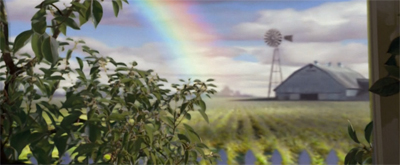
Somewhere over the rainbow...

Somewhere over the rainbow…

Continue reading

The X-Files – Terms of Endearment (Review)

This July, we’re taking a trip back in time to review the sixth season of The X-Files and the third (and final) season of Millennium.

Terms of Endearment is perhaps the most conventional episode of The X-Files to air between Drive and Agua Mala.

The early sixth season was generally quite experimental and playful, and Terms of Endearment stands out in this stretch of the season as an episode that is very much structured like a horror story and which conforms to the expectations of an episode of The X-Files. A local law enforcement official brings a case to the attention of the FBI; Mulder and Scully trade theories; Mulder pursues his hunches, while Scully offers pseudo-scientific rationalisations. There is a crime; there is a paranormal element; there is a secret.

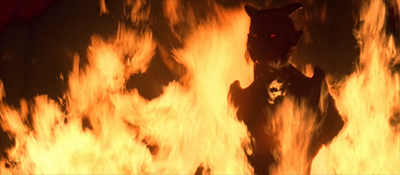
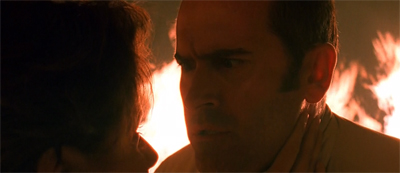
Who said their marriage is lacking some fire?

Who said their marriage is lacking some fire?

Terms of Endearment is an episode that could easily have been written into the fifth or seventh seasons of the show without any real difficulty. Barring the brief appearance of Spender at the start of the episode, and the occasional references to the fact that Mulder is not technically on the X-files anymore, this is business as usual. Indeed, the episode’s themes of reproductive horror might have fit quite comfortably with the recurring infant-related horror stories that populated the fifth season.

Still, Terms of Endearment works. In a way, its somewhat conventional nature serves it well. As with the stand-alone monster of the week stories scattered sparingly through the fifth season, it is easier to appreciate an episode like this when it feels exceptional rather than generic. Featuring an intriguing central metaphor, a great guest performance, and a number of memorable visuals, Terms of Endearment is a clever and powerful little script. It is not a bad début from writer David Amann.

"Who loves you, baby?"

“Who loves you, baby?”

Continue reading

Millennium – Omertà (Review)

This July, we’re taking a trip back in time to review the sixth season of The X-Files and the third (and final) season of Millennium.

It might not feel like it – particularly while actually watching the episode – but Omertà does represent something of a shift in the third season of the show.

Although it was the ninth episode of the third season to be broadcast, it was the eighth produced. It was held back so that it could be broadcast closer to Christmas, in keeping with the themes of the show. As a result, it was the first episode of the third season not to be produced by Michael Duggan. Chip Johannessen is the only “executive producer” listed before Chris Carter at the end of the episode. In a way, shuffling Michael Duggan’s script for Human Essence back earlier in the broadcast order might have been a good thing; it makes for a cleaner break.

"Merry Christmas, Mr. Black."

“Merry Christmas, Mr. Black.”

Omertà is not a great piece of television, by any measure. It is not even a good piece of television, by most measures. However, it does mark a point of transition for the third season of Millennium. Omertà begins a run of episodes that deal substantively with the legacy of the show’s second season, and which engage with grand themes of death and spiritual rebirth. The third season of Millennium is a thematic mess, but Omertà represents a point where it seems like the creative team might finally be getting a grip on things, almost half-way through the year.

None of this makes Omertà any easier to watch, but it does provide an intriguing prism through which the episode might be viewed.

"Tonight, we're gonna party like it's 1989!"

“Tonight, we’re gonna party like it’s 1989!”

Continue reading

The X-Files – How the Ghosts Stole Christmas (Review)

This July, we’re taking a trip back in time to review the sixth season of The X-Files and the third (and final) season of Millennium.

Building off episodes like Triangle and Dreamland, How the Ghosts Stole Christmas continues to develop and expand upon the sixth season’s fascination with issues of time and love.

With the closing of the X-files in The End, it seems like The X-Files has abandoned any real focus on the procedural element of the series. Instead of being a show about two people employed to investigate weird phenomenon together, it seems that The X-Files has evolved into a series about two people who investigate weird phenomena in their spare time. It seems likely that Mulder would have invited Scully on his Christmas Eve stake out even if they were working on the X-files together, but the fact that this is a recreational activity certainly recontextualises it.

Semi-title drop!

Semi-title drop!

The first half of the sixth season of The X-Files is perhaps the most invested that the show has ever been in the nature of the relationship between Mulder and Scully. After all, the seventh season shies away from questions concerning a Mulder and Scully romance; the eighth season keeps William’s parentage a mystery until the last possible moment. The opening stretch of the sixth season is really the only point in the show’s run where the series has an extended conversation about what the two mean to one another and how they express that.

How the Ghosts Stole Christmas is essentially an episode about Mulder and Scully receiving paranormal couples’ counseling that goes horribly wrong.

"Merry Christmas, everybody!"

“Merry Christmas, everybody!”

Continue reading

The X-Files – Triangle (Review)

This July, we’re taking a trip back in time to review the sixth season of The X-Files and the third (and final) season of Millennium.

There are a lot of reasons to celebrate Triangle.

The episode gets a lot of attention for its wonderful use of long tracking shots. According to Chris Carter’s commentary, there are only twenty-four individual shots stitched together to produce the forty-five-minute episode. Considering the amount of split-screen action at the climax, that is not a lot. Triangle is an artistic tour de force for writer and director Chris Carter. The success that both Birdman and True Detective enjoyed in 2014 due to their extended takes suggests that Carter was significantly ahead of the curve.

Dragging up the past...

Dragging up the past…

There are other aspects to note. Triangle also ushers in a new mood and tone for the sixth season of The X-Files. The show had moved to Los Angeles, and would struggle with how to retain its identity in the new (and bright) surroundings of California. The Beginning and Drive had both answered the question in their own way, but Triangle ushers in a whole new approach to storytelling. Triangle is the first of a series of light and breezy episodes in the early stretch of the sixth season where The X-Files almost turns into a paranormal sitcom.

However, there is one other reason to celebrate Triangle. It is an extended forty-five minute pun on the word “ship.”

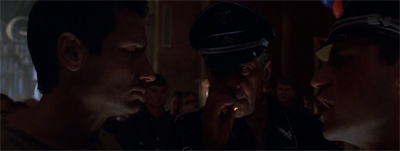
Cigarette-Smoking Nazi...

Cigarette-Smoking Nazi…

Continue reading

The X-Files – The Beginning (Review)

This July, we’re taking a trip back in time to review the sixth season of The X-Files and the third (and final) season of Millennium.

The more things change, the more they stay the same.

The opening shot of The Beginning makes it quite clear that things have changed. The camera opens staring at the sunny cloudless sky of California, doubling for Arizona. It pans down to an open desert. As the production team conceded with Anasazi, the desert was just about the only American environment that Vancouver could not easily mimic – to the point where the team had to paint rocks red in order to convincingly set a scene in New Mexico. California makes for a much more convincing desert.

Bursting on to the scene...

Bursting on to the scene…

The contrast is striking. The sixth season of The X-Files is bright and sunny; it is aware of its new production reality and chooses to embrace them rather than pointlessly resist them. Things had changed, and there was nothing to be gained from pretending otherwise. It is no wonder that the opening sequence of The Beginning features a group of working-stiff conspirators in transit; the perfect opening image for a season still figuring out how Los Angeles works. The Beginning loads all of that into its opening shot, getting it out in the open before it gets down to business.

At the same time, The Beginning is keen to stress that not too much has actually changed. The naming of the fifth season finalé and the sixth season premiere is decidedly symmetrical – The End and The Beginning. In fact, naming the second part of a two-part episode “The Beginning” is a very clear attempt at reassurance. It is a beginning without actually being a beginning; it is a conclusion without actually being a conclusion. The wheel keeps on turning. All that is missing is the ouroboros.

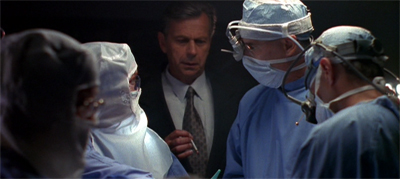
Dude, that's totally not sterile...

Dude, that’s totally not sterile…

The closing shot as much as confirms this, revealing that the bold new alien design revealed in The X-Files: Fight the Future is not so bold and new after all. Instead, the monster obviously inspired by Alien is something of a missing link, a tether connecting the grey aliens seen in episodes like Duane Barry to the black oil introduced in Piper Maru. It is all one big circle in perpetual motion. Everything is connected. Everything fits together. The show might have moved two thousand miles south, but it hasn’t missed a step.

For better or worse, The Beginning is about assuring viewers that – no matter what has changed – everything remains the same. It is up to the viewer to decide whether that is a good or a bad thing.

The truth is in there...

The truth is in there…

Continue reading

Millennium – Exegesis (Review)

This July, we’re taking a trip back in time to review the sixth season of The X-Files and the third (and final) season of Millennium.

It is odd to think of The Innocents and Exegesis as a two parter, despite the explicit “to be continued” that bridges the two episodes.

The Innocents is very much a straightforward procedural episode, with Frank rejoining the FBI and investigating a string of mysterious occurrences that are all connected. As Frank tries to pull himself back together after the death of his wife, various parties insist that he is more lost than ever before. There is a sense that Frank needs to work though what happened to him, regardless of the doubts expressed by his embittered father-in-law or his friendly supervisor at the FBI. Of course others doubt him, and of course he works through those doubts.
"I can see it all clearly..."

“I can see it all clearly…”

It is very much a standard “lead character gets his life back together” story, complete with obligatory sequence where Frank demonstrates he has made his peace with the loss of Catherine by using his story as emotional leverage to ply a confession (or, at least, an explanation) from a person of interest in the on-going investigation. The Innocents is a very banal and paint-by-numbers episode of television. Underneath all those biohazard warnings and eerie blue-eyed siblings, there is a strong procedural element to The Innocents. It feels trite and coy.

At the very least, Exegesis is more unique. It feels like an episode of Millennium, rather than some generic dime-a-dozen procedural. This is likely down to the fact that The Innocents was written by Michael Duggan and Exegesis was written by Chip Johannessen. Michael Duggan was a writer who had a lot of experience on procedurals (Law & Order and C-16: FBI), but who had no prior experience writing Millennium. Hired to run the show in its third year, he would only write two scripts for the show before departing seven episodes into the season.

Go fly a kite...

Go fly a kite…

In contrast, Chip Johannessen had helped to define Millennium’s identity in its first year. In fact, with a group of nearly identical female sisters working towards a mysterious goal (based on vague prophecy), Exegesis owes a great deal to Johannessen’s earlier script Force Majeure. While it does illustrate how Exegesis feels like a more traditional Millennium episode than The Innocents, it is not a comparison that does Exegesis any favours. Force Majeure was one of the best episodes the show ever produced; Exegesis is… not.

As with The Innocents, Exegesis is handicapped by a lot of the clumsy production decisions made at the start of the third season. It feels curiously disconnected from what came before; it plays a little too much like a reheated leftover from The X-Files; a lot of the nuance and development given to Peter Watts and the Millennium Group over the second season is washed away. Nevertheless, it does have a clearer sense of purpose and energy than The Innocents. It feels like Johannessen knows what he wants to say, even if the show is still tripping over itself.

Welcome back, Frank.

Welcome back, Frank.

Continue reading