• Following Us

  • Categories

  • Check out the Archives


  • Awards & Nominations

Doctor Who: The Witch’s Familiar (Review)

“Of course, the real question is where I got the cup of tea. Answer: I’m the Doctor, just accept it.”

– the Doctor tells it how it is

As is the norm for Moffat-era Dalek episodes, The Witch’s Familiar is a mess… but it is an interesting mess.

The Witch’s Familiar works best as a collection of intersecting character moments than a narrative in its own right. In some respects, The Witch’s Familiar feels like a season premiere in the same way that The Magician’s Apprentice did; it is light and breezy, with more energy devoted to character dynamics than to dramatic stakes. The Witch’s Familiar is quite blatantly set-up; it is all about establishing things that might possibly become more important later on. Davros is revived; the Hybrid is mentioned; Skaro is back in play.
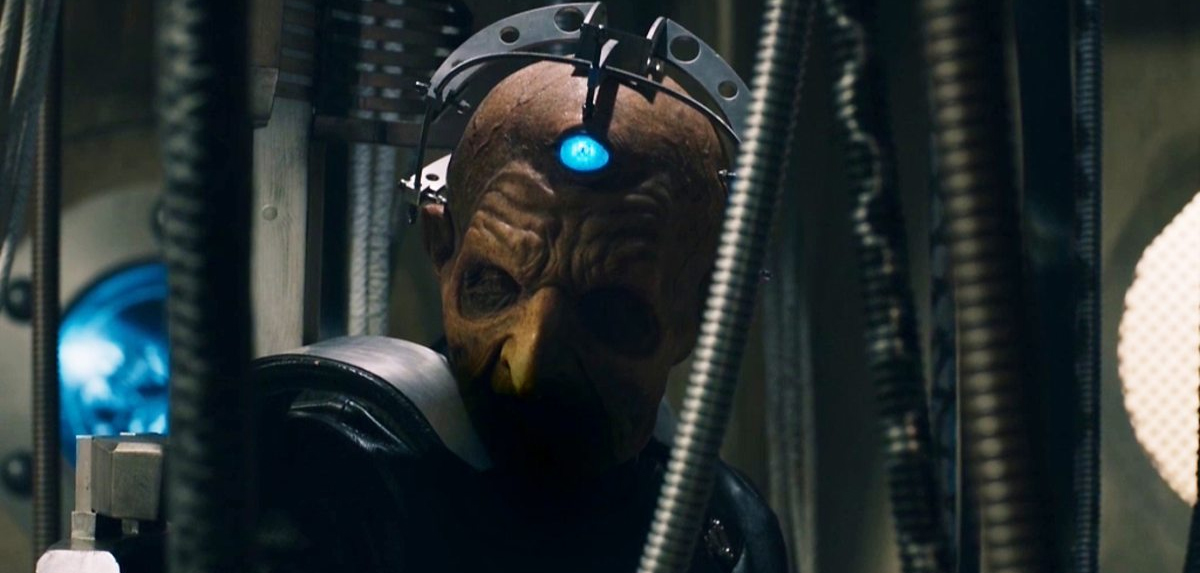
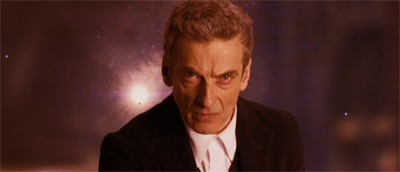
Destiny of the Davros...

Destiny of the Davros…

The plot is all over the place, with Moffat’s script avoiding retreading old thematic ground about “the Oncoming Storm” and justifiable genocide by barely alluding to the moral quandaries that The Magician’s Apprentice set-up. When Davros alludes to the idea of the Doctor wiping out the Daleks through a single act of murder, or harnessing all that power for his own ends, it feels like Davros is just barreling through a check list of cheap shots that any major adversary is expected to land when facing the Doctor. The Dalek Emperor did it more convincingly in The Parting of the Ways.

Still, this familiarity does allow The Witch’s Familiar to lock the Doctor and Davros in a room together for an extended period of time. It affords the pair the chance to trade barbs and to understand one another in a way that no previous story has attempted. One of the more interesting aspects of a season of ninety-minute stories told across multiple episodes in 2015 is that the format is remarkably different than a season of ninety-minute stories told across multiple episodes in 1989. This is a season of serialised stories, but it is not a return to the classic model.
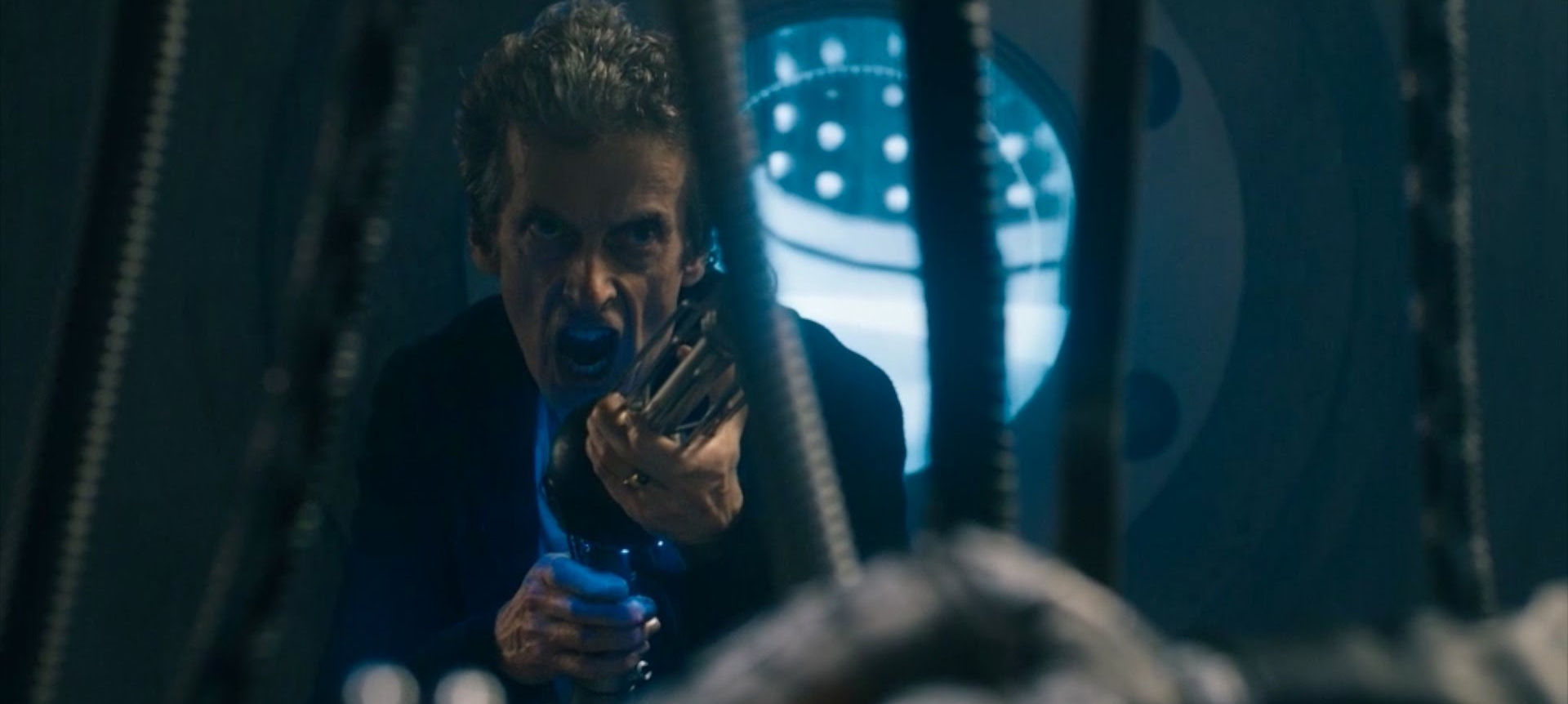
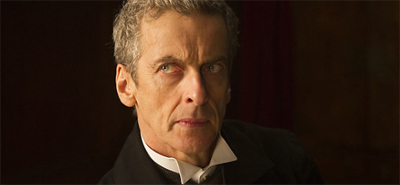
Exterma- wait a minute!

Exterma- wait a minute!

The classic series would never have been able to pull off this sort of quiet and understated interaction between the Doctor and Davros. The nature of a classic Dalek story was to build to a climax of the Doctor and Davros screaming at each other across the room; the pleasure of The Witch’s Familiar is the space that it affords both characters to move past the shouting and to something towards mutual comprehension. It helps that The Witch’s Familiar has two fantastic central performers in Peter Capaldi and Julian Bleach.

The Witch’s Familiar might be yet another example of the Moffat era trying and failing to construct an entirely functional Dalek story, but it is quite possibly the single best Davros story ever told. (Give or take a Revelation of the Daleks.)

Shades of grey...

Shades of grey…

Continue reading

Doctor Who: Series Eight (or Thirty-Four) (Review/Retrospective)

You asked me if you’re a good man and the answer is, I don’t know. But I think you try to be and I think that’s probably the point.

Peter Capaldi’s first season of Doctor Who is astonishingly linear.

That feels like a very weird thing to type, but it’s true. Executive producer Steven Moffat backed away from the ambitious structural experiments that defined the two previous seasons, pushing the show back towards a fairly conventional and logical structure. Between Deep Breath and Death in Heaven, there was a clear logical progression. The season did not begin at the end like The Impossible Astronaut did, or end at the beginning like The Name of the Doctor.

doctorwho-deepbreath2

Instead, things progressed cleanly and logically. Character arcs evolved in a very clear and structured way; themes built organically; the season’s central mysteries had little to do with the intricacies of time travel and more to do with guessing the nature of the returning threat. The result was perhaps the most accessible and linear season of Doctor Who since Steven Moffat’s first year as executive producer. In fact, it was the first season not to be split since Steven Moffat’s first season as executive producer.

To be fair, it is easy to see why such an approach was taken. While Peter Capaldi might be one of the most high profile and most successful actors to ever take on the lead role, changing the lead actor on successful television show is always a risky proposition; it is impossible to be too careful in managing the transition. The actor’s first season in the role is an endearing effort; a rather safe first half of the season giving way to a more adventurous and playful second half. While the season has a few flaws, it is hard to consider it anything but a massive success.

doctorwho-intothedalek17

Continue reading

Doctor Who: Death in Heaven (Review)

Welcome to the only planet in the universe where we get to say this. “He’s on the payroll.”

Am I?

Well, technically.

How much?

Shush.

Death in Heaven doesn’t work quite as well as Dark Water. Then again, it has a lot more to do.

After all, Dark Water was a sublimely extended joke – a forty-five minute gag. It is easier to affectionately parody the excess of the Davies-era finalés in the first part than it is to offer a straight-up imitation of those same finalés in the second. This simply isn’t the sort of season finalé to which Moffat’s style lends itself. This is very much a return to the scale and mood of The Parting of the Ways, Doomsday, The Last of the Time Lords or Journey’s End – the type of big emotive farewell season-ender that the show hasn’t done in quite a while.

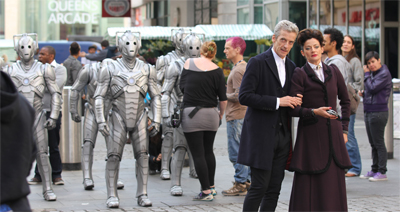
"Hm. It used to be a lot easier to inspire terror. Time was five Cybermen marching around St. Paul's Cathedral..."

“Hm. It used to be a lot easier to inspire terror. Time was five Cybermen marching around St. Paul’s Cathedral…”

This is a different beast than The Name of the Doctor, The Wedding of River Song or even The Big Bang. After all, although The Big Bang was the second part of a season finalé with the entire universe at stake, the bulk of the story featured familiar characters in a relatively confined space. In contrast, Death in Heaven is very much structured as an “event” story built around an iconic adversary and teasing the departure of a long-term companion. It is full of big emotional beats and stunning set-pieces, placing the entire Earth at the mercy of a massive extraterrestrial threat.

Most of Death in Heaven feels like Moffat is writing in a strange language; he knows the words, but the grammar does not entirely fit. And yet, despite that, Death in Heaven mostly works. It doesn’t work as well as it might; it isn’t the strongest script of the season by any stretch; it is a little disjointed, a little all over the place, a little too giddy with itself in places. However, it is as clever as viewers have come to expect from the show and the writer, remaining in tune with the season’s core themes and putting an impressive capstone in Peter Capaldi’s first season as the Doctor.

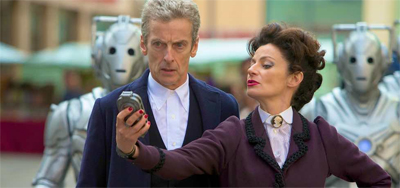
Psycho selfie!

Psycho selfie!

Continue reading

Doctor Who: In the Forest of the Night (Review)

There are some things I have not seen. That’s usually because I’ve chosen not to see them. Even my incredibly long life is too short for Les Misérables.

On paper, In the Forest of the Night should be a highlight of the season. Frank Cottrell-Boyce is quite a sizeable “get” for the show, one of the most significant guest writers to work on Doctor Who in quite some time. Cottrell-Boyce is on the same level as Richard Curtis or Neil Gaiman, as far as “special guest writers” go. Coupled with the fact that this is the first time that the Twelfth Doctor has wandered into the “fairy tale” aesthetic that defined his predecessor, In the Forest of the Night should be a classic waiting to happen.

However, In the Forest of the Night never quite comes together as well as it should. At its best, it riffs on concepts already very thoroughly and thoughtfully explored in Kill the Moon. At its worst, it feels ill-judged and an awkward fit for the characters in the show. In the Forest of the Night comes at the end of a highly successful stretch of late-season episodes all credited to writers working on Doctor Who for the first time; it is quite endearing that In the Forest of the Night is the only stumbling block; ironically arriving at the latest possible moment.

Tyger, Tyger...

Tyger, Tyger…

Still, there is some interesting material here. It is also a sly and affectionate homage to the work of William Blake. Blake was famed author, illustrator and poet. In the Forest of the Night takes its title from a line in Blake’s most famous poem Fearful Symmetry. There are points where the episode goes out of its way to reference that work. The Doctor makes a reference to the year of its most popular publication, assuring the assembled audience that “a tiny little bit of 1795 still alive inside of it.” There is a tiger; there is burning bright.

However, these allusions towards Blake ultimately lead In the Forest of the Night into some very questionable ideas. William Blake was haunted throughout his life by visions and hallucinations. He saw things that were not real, but which informed and inspired his work. In the Forest of the Night tries to borrow from this aspect of Blake’s life in its characterisation of Maebh, a young girl with visions. It is a story that falls right back on the rather clichéd narrative about how medicating people suffering with mental illness is in effect destroying what makes them special or unique.

... burning bright.

… burning bright.

Continue reading

Star Trek: Voyager – Heroes and Demons (Review)

This September and October, we’re taking a look at the jam-packed 1994 to 1995 season of Star Trek, including Star Trek: Deep Space Nine and Star Trek: Voyager. Check back daily for the latest review.

In many ways, Heroes and Demons is a watershed moment for Star Trek: Voyager. The two previous episodes, Prime Factors and State of Flux, may have been far from perfect, but they did at least hint at a direction for the show. They suggested that maybe Voyager might be interested in engaging in some of the big philosophical questions raised by the crew’s unique situation. Stranded seventy thousand light-years from home, the ship was cut off from the Federation. It was isolated and alone. That meant that tough choices at least had to be debated.

While neither Prime Factors nor State of Flux made for particularly exciting television, they were episodes that felt specific to Voyager in a way that a lot of the first season really doesn’t. Unfortunately, Heroes and Demons represents a step backwards. Far from telling a story specific to Star Trek: Voyager, this feels like a script that could easily have been recycled from Star Trek: The Next Generation or Star Trek: Deep Space Nine.

Can the Doctor hack it?

Can the Doctor hack it?

It’s written by veteran Next Generation writer Naren Shankar, who had also served on the staff of Deep Space Nine. He wrote Heroes and Demons as a freelancer, pitching the idea very early in the development cycle. Perhaps what is most remarkable is how little of Shankar’s script was adapted or edited from that first draft. In fact he described it to The Official Star Trek: Voyager Magazine as “the best experience I’ve ever had as a writer, in terms of writing something as a first draft and then seeing those exact words on screen.”

There’s a sense that Heroes and Demons is a fun story that could have really worked in any context, and doesn’t fit particularly well into the mould of Voyager‘s first season. This should be the year where Voyager is trying to find its own voice, rather than simply imitating that of its older siblings.

Only mostly armless...

Only mostly armless…

Continue reading

Doctor Who: Mummy on the Orient Express (Review)

“You know, Doctor, I can’t tell if you’re ingenious or just incredibly arrogant.”

“On a good day, I’m both.”

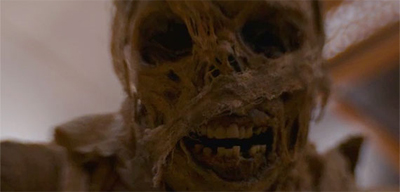
Mummy on the Orient Express is Doctor Who in a blender. It’s classic period piece, genre pastiche and science-fiction spectacle, mixed with a healthy dose of creature feature horror and a solid development of the themes running through the eighth season so far. It’s clever, witty and energetic. The episode is a delight from beginning to end, beating out Robot of Sherwood and Time Heist to claim the title of the year’s best “romp” – as you might expect from a story that is a Hammer Horror murder on the Orient Express in Space.

doctorwho-mummyontheorientexpress8

Continue reading

Doctor Who: Frontios (Review)

To celebrate the fiftieth anniversary of the longest-running science-fiction show in the world, I’ll be taking weekly looks at some of my own personal favourite stories and arcs, from the old and new series, with a view to encapsulating the sublime, the clever and the fiendishly odd of the BBC’s Doctor Who.

Frontios originally aired in 1984.

“You know, we can sort this all out in no time at all, if everyone just stays calm.”

– The Doctor sums up the tragedy of Peter Davison’s time as the Timelord

Towards the end of Peter Davison’s time in the title role, Doctor Who was becoming gradually darker. While Colin Baker’s brightly-coloured take on the character would convert this grim fare into a surreal and grotesque pantomime, there was something tragic about Davison’s iteration confronting a quickly darkening universe. Steven Moffat once explained, “this Doctor takes the emphasis off the eccentricities and turns it into a pained heroism of a man who is so much better than the universe he is trying to save but cannot bear to let it stand”, and that’s very much the case here. While the cynicism and pointless darkness would reach their zenith during Resurrection of the Daleks and pay off spectacularly in The Caves of Androzani, Frontios feels like the perfect illustration of these ideas.

The Doctor's surgery...

Continue reading

Doctor Who: Scream of the Shalka (Review)

To celebrate the fiftieth anniversary of the longest-running science-fiction show in the world, I’ll be taking weekly looks at some of my own personal favourite stories and arcs, from the old and new series, with a view to encapsulating the sublime, the clever and the fiendishly odd of the BBC’s Doctor Who.

Scream of the Shalka originally streamed in 2003.

Doctor Who survived its cancellation across a variety of media. There were unofficial videos starring Colin Baker and Sylvester McCoy. There were audio plays. There were mountains of books. The BBC even came up with the clever idea of offering on-line content, with a series of illustrated audio plays, including the Seventh Doctor story Death Comes to Time and the Sixth Doctor adventure Real Time, as well as an adaptation of the aborted Douglas Adams serial Shada. Most of these were little more than powerpoints with sound playing over them. However, for the show’s fortieth anniversary, the BBC came up with an altogether more ambitious idea – a brand new fully animated adventure starring a new Doctor and promising a wave of new adventures, striving boldly forward into the new century.

The Doctor is in…

You can hear the serial, free, here.

Continue reading

A Matter of Time – Doctor Who: Season 5

Sorry… Sorry! Dropped it!

Hello, Stonehenge! Who takes the Pandorica, takes the universe. But bad news everyone… cause guess who! Listenw you lot, cause you’re all whizzing about – it’s really could distracting. Could you all just stay still for a minute? Because I. am. talking!

Now, question of the hour: who’s got the Pandorica? Answer: I do. Next question: who’s coming to take it from me?

C’mon!

Look at me: no plan, no backup, no weapons worth a damn – oh, and something else I don’t have? Anything to lose! So if you’re sitting up there in all your silly little spaceships with your silly little guns and you’ve got any plans on taking the Pandorica tonight, just remember who’s standing in your way; remember every black day I ever stopped you; and then – and then! – do the smart thing: let somebody else try first.

– The Doctor, The Pandorica Opens

Well, the first season of Stephen Moffat’s run of Doctor Who is over. And what a ride it was. On one hand, you had budget cuts at the BBC, putting an even great financial strain on the show’s transition to high definition, the first wholsecale chance of the entire cast between seasons since the show’s transition to colour in 1970 (and, fittingly, this was the show’s transition to high definition), and you had the World Cup skewing ratings towards the backend of the season. On the other hand, you had the writer of some of the show’s best episodes directing the entire run behind the scenes, the exploration of the time travelling nature of the central protagonist, and a blatant admission that the show is more a fairytale than a science fiction epic. And along the way, there was barely enough time to catch your breath.

No time to lose...

Continue reading

Sympathy for the Daleks: Steven Moffat & The Shifting Status Quo

I suppose you could bring them back, but I’d be slightly puzzled, because they were robots that went wrong. Generally speaking, and maybe Russell wouldn’t agree with a word I’m saying right now, but my favorite Doctor Who story is the one with brand new monsters that you see once and once only. The moment you start crowding the universe with familiar monsters, I think it’s less interesting. Two of the words that you could reasonably apply to the Daleks are ‘reliably defeatable.’ You know those guys are going to lose at the last minute anyway, and you always know what they’re up to, so the best bit about bringing back old monsters is the reveal. After that, it’s all downhill. It’s like Agatha Christie deciding that the butler should always do it, because it was successful in the last book, so that’s not my favorite kind of Doctor Who story. I like brand new monsters.

– Steven Moffat

That answer comes from an interview he gave waaaay back in 2006 – about the time he was writing The Girl in the Fireplace, his second story for the relaunched Doctor Who. I don’t know if he knew then that he was heir apparent to the throne and would succeed Russell T. Davies, but I wonder if being positioned as showrunner has somewhat changed his perspective. In his inaugural year running the show, we’ve already had the return of the Daleks, three episodes in with Victory of the Daleks, next week we’ll witness Moffat returning to one of his own monstrous creations in The Time of Angels and previews have already confirmed that the Cybermen themselves – foes dating from the show’s first leading actor – will be returning as well (with Roman centurians). I’m not complaining at all (a writer as talented as Moffat can do pretty much whatever he wants and I’ll trust him), but I can’t help wondering if perhaps Moffat is playing his own long game with the franchise in his opening season.

Don't worry, this Cyberman is mostly 'armless...

Note: This article contains spoilers for the end of this week’s episode, The Victory of the Daleks, so those who haven’t caught it yet might want to look away or come back to this when they’ve seen the episode. You’ve been warned, so you have.

Continue reading