• Following Us

  • Categories

  • Check out the Archives


  • Awards & Nominations

New Escapist Column! On How “WandaVision” Finds the MCU Coming to (and For) Television…

I published a new column at The Escapist last week, but didn’t get a chance to share it. With WandaVision now streaming on Disney+, it seemed like a good idea to take a look at it.

The most striking thing about WandaVision is how immersed it is in the language of television. Previous attempts to bring the MCU to television treated it as secondary to movies; Netflix shows like Daredevil or Iron Fist were treated as thirteen-hour movies, while Agents of S.H.I.E.L.D. and Agent Carter lived off scraps from the films that drove the shared universe. In contrast, WandaVision is not just a thriving celebration of television as a medium, it’s also an exploration of it. This is very firmly and very definitely the MCU coming to television.

You can read the piece here, or click the picture below.
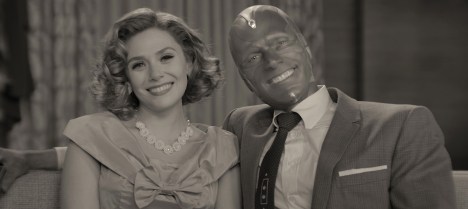
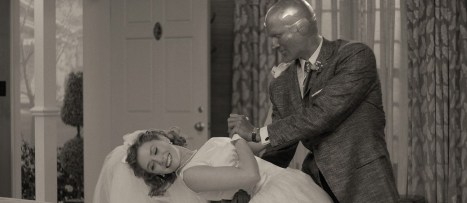
New Escapist Column! On How “WandaVision” Plays Sitcom as Horror and Nostalgia as Nightmare…

I published a new In the Frame piece at The Escapist this evening. With WandaVision currently streaming on Disney+, it seemed like an interesting opportunity to look at the show’s use of the language of sitcoms.

In particular, sitcoms have long been a staple genre of American television. However, they don’t just reflect cultural norms, they also project an aspirational ideal. For generations of Americans, the domestic sitcom presented a vision of domestic life that shaped and informed popular consciousness. In WandaVision, those nostalgic fantasies become a trap and a waking nightmare, as characters build themselves a life of seeming domestic bliss dictated by decades of television. Wanda has built herself a cage, treating television as a mirror.

You can read the piece here, or click the picture below.

New Podcast! The Time is Now – Season 3, Episode 10 (“Borrowed Time”)

Last year, I was thrilled to spend a lot of time on The Time is Now discussing the second season of Millennium. Since the podcast has moved on to the third season, I have taken something of a step back as a guest. That said, I was flattered to get an invitation to discuss Borrowed Time with the fantastic Kurt North.

Borrowed Time marks an interesting point of transition for the third season of Millennium. It arguable marks the point at which the third season begins acknowledging the second season as something that actually happened and something that has to be explored – both thematically and literally. Borrowed Time kicks off a triptych of episodes that continues through Collateral Damage and into The Sound of Snow, which begin to unpack and work through the shadow of the second season in increasingly direct and literal ways.

As ever, you can listen directly to the episode here, subscribe to the podcast here, or click the link below.

Continue reading

New Video! Talking “TENET” on Turkish Television…

I had the pleasure of appearing on Showcase on TRT World earlier this week, to discuss the upcoming release of TENET and Christopher Nolan’s career in general. You can watch the segment below, if you want.

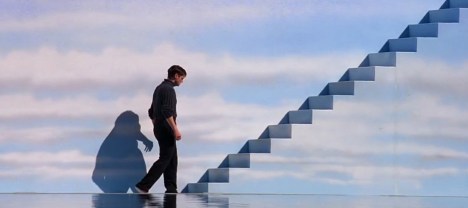
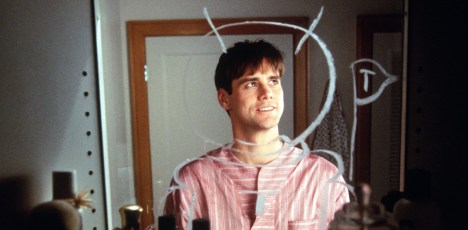
“The Truman Show” Didn’t Just Predict Our Future, But Also the Future of How Movies Would Be Sold…

More than twenty years after its release, it feels like everything that might be said about The Truman Show has already been said.

The Truman Show is that rare Hollywood blockbuster that feels somehow simultaneously timeless, timely and prescient. It speaks to anxieties that resonate throughout history, fears that were very particular to the cusp of the millennium, and to nightmares that were yet to come. It belongs at once to that age-old anxiety that the world is an illusion and human comprehension is insufficient, to the difficult-to-articulate existential uncertainty of the so-called “end of history”, to a future in which everybody would willingly become the star of their own Truman Show.

Indeed, The Truman Show seems to say so much about the world outside itself and the human condition that it’s possible to miss the film itself. Peter Weir’s late nineties blockbuster is a surreal slice of history itself, a relatively big budget mainstream release starring one of the most famous people on the planet, built around a rather abstract high concept. Not only was the film a massive critical success, it also managed to survive and prosper against a heated summer season.

While its actual themes and contents might be dystopian, The Truman Show itself offers an optimistic glimpse of a kind of blockbuster that seems increasingly unlikely.

Continue reading

New Podcast! The Time is Now – Season 2, Episode 15 (“Owls”)

I have had the immense good fortune to appear on The Time is Now quite a lot lately, but was particularly flattered to be invited on to talk about Owls and Roosters, the big “mythology” two-parter in the late second season of Millennium. It’s an honour to join Kurt North for the conversation.

Owls and Roosters rank among my favourite mythology episodes in the Ten Thirteen canon, largely because they serve as a conscious unravelling of conspiracy theory. It is very common to compare Millennium to The X-Files, and with good reason. There’s considerable thematic overlap between the two shows; in fact, Patient X and The Red and the Black work as interesting companion pieces to Owls and Roosters. Both are stories about the limits of conspiracy, and the idea that entropy must eventually kick in and erode these empires of sand.

However, while The X-Files maintained a consistent belief in a singular unifying mythology, a belief in a single account of history, however convoluted that arc might be, Millennium opted for a more adventurous and postmodern approach. Millennium suggested a world in which all conspiracies were true, in which there were multiple competing narratives of history struggling against one another, with no clear or correct answer. Owls and Roosters offer the culmination of this approach, a car crash of competing narratives trying to account for a period of great instability.

As ever, you can listen directly to the episode here, subscribe to the podcast here, or click the link below.

Continue reading

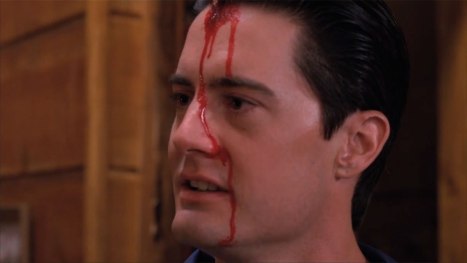
New Escapist Column! On Understanding “Twin Peaks” Emotionally, Rather than Intellectually…

I published a new In the Frame piece at Escapist Magazine yesterday. With the thirtieth anniversary of Twin Peaks, I got to talk a little bit about the show and David Lynch.

Lynch has a reputation as a “difficult” artist for audiences, a filmmaker whose art is challenging and provocative. It’s easy to see why. On a simple mechanical level, it can be very difficult to explain what happens during a David Lynch film or television show. More to the point, two different audience members might provide two very different descriptions. However, that’s always been what I admired about Lynch. As a critic, he forces me to engage emotionally with his work because an intellectual understanding is never enough. I feel Lynch’s work, even if I don’t comprehend it.

You can read the piece here, or click the picture below.

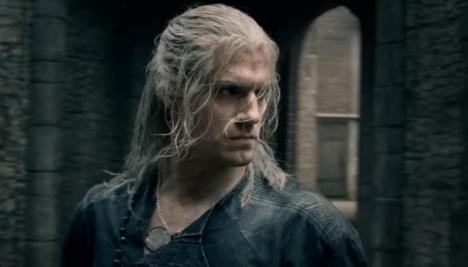
New Escapist Column! On Uncanny Valley of “The Witcher” Between Prestige and Tradition…

I published a new In the Frame piece at Escapist Magazine the week before last, looking at the Netflix streaming show The Witcher.

There are a lot of interesting things about the eight episode introductory season of The Witcher, which is adapted from two books of short stories and which seems to exist largely to set the table for more impressive seasons to follow. However, what is most immediately striking about The Witcher is the way in which it exists in the uncanny valley between modern prestige television and a more traditional model of episodic storytelling, looking like a hybrid of Hercules: The Legendary Journeys and Game of Thrones. To be clear, this is not a bad thing.

You can read the piece here, or click the picture below.

New Podcast! The X-Cast – Season 5, Episode 8 (“Kitsunegari”)

Last year, I was extremely privileged to get to discuss the wonderful Pusher with the sensational Tony Black on The X-Cast. For those who don’t know, Pusher is Tony’s favourite episode ever – and comfortably sits around the edge of my top ten. So no pressure.

As such, it was a delight to get to join Tony for Kitsunegari, the fifth season sequel to Pusher. Outside of the mythology, it was relatively rare for The X-Files to do direct sequels to earlier episodes – even popular ones. Kitsunegari is an entry in a very select club that includes Tooms and Orison. However, it is also an episode with which I’ve had a very complicated relationship. It often feels like a parody of a sequel to Pusher rather than an entirely earnest follow-up, and as such as always felt like it belongs to the fifth season’s broader preoccupations with monstrous progeny as a metaphor for the show’s unexpected evolution and direction. Of course, I’ve always worried that I read too much into it.

As ever, you can make up your own mind. You can listen to the episode here, or click the link below.

Continue reading

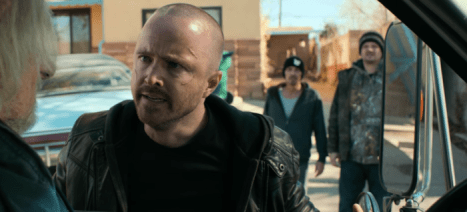
New Escapist Column! “Deadwood: The Movie”, “El Camino” and Closure In The New Age of Television…

I published a new In the Frame piece at Escapist Magazine yesterday. This one looks at the recent releases of Deadwood: The Movie and El Camino: A Breaking Bad Movie as an illustration of how much the television landscape has changed in recent years.

These belated capstones to beloved series – Deadwood and Breaking Bad – are interesting because they afford the creative talent the opportunity to wrap up their story free from the production constraints of television, the urgent desperate churn of the conveyor belt that demands workable solutions in insanely short periods of time. These epilogues arrive years after the fact, and are the product of careful consideration and reflection. They allow their creators to tie a little bow around their work. After all, sometimes it is nice to have distance.

You can read the piece here, or click the picture below.