• Following Us

  • Categories

  • Check out the Archives


  • Awards & Nominations

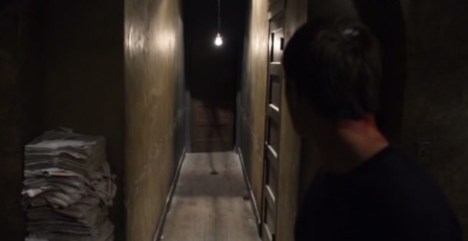
Daredevil – The Dark at the End of the Tunnel (Review)

This month, we’re doing daily reviews of the second season of Daredevil. Check back daily for the latest review.

Adaptation is a tricky business.

One of the more interesting aspects of the comic book movie boom that occurred in the years following Blade (although really kicking into gear with X-Men and Spider-Man) has been the discussion over narrative fidelity. It seems like a comic book adaptation is no longer truly judged on its own merits, but weighed against how faithfully it recreates its source material. It is not enough to produce a good superhero film, it is expected that most contemporary production teams should produce a good superhero adaptation.

Trinity.

Trinity.

This would have seemed ridiculous during the nineties. After all, Tim Burton’s Batman and Batman Returns stand as two of the most successful superhero films of the decade, and they are arguably better described as “Tim Burton films” than “Batman films.” There was a point at which Tim Burton was planning to direct his own Superman film that would have been (very) loosely inspired by The Death and Return of Superman written by Kevin Smith and starring Nicolas Cage, a giant spider, and some polar bears.

Largely driven by the success of the Marvel Studios business model, however, it seems that contemporary superhero films and television shows are expected to show their work and to emphasise their connection to the source material.

"Let's turn this town into a warzone. A Punisher: Warzone."

“Let’s turn this town into a warzone. A Punisher: Warzone.”

Continue reading

Daredevil – .380 (Review)

This month, we’re doing daily reviews of the second season of Daredevil. Check back daily for the latest review.

One of the strongest things that the second season of Daredevil has going for it is the three-act structure.

Pacing and structure can be concerns for Netflix television shows. After all, the distributor works on a completely different model than most television broadcasters. Instead of releasing a series on a week-to-week basis across a period of several months, Netflix releases all of a season at the exact same moment. As such, the focus and goals of a Netflix series are different from that a series developed through more traditional means. Netflix shows are consciously designed to be “binged” rather than to be digested in hour-long chunks.
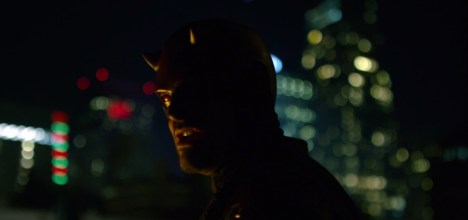
He's the devil, that one.

He’s the devil, that one.

In some ways, this has seen the erosion of the episode as a functional unit of storytelling. If an episode of a regular television drama simply does not work, then the audience is left with a bad taste in their mouth for a week. If an episode of a Netflix drama does not work, the next episode is right there. In fact, Netflix makes it even easier by automatically moving the viewer to the next episode, meaning it takes more effort not to watch the next episode than it does to just keep going. With that in mind, an individual episode not working is not a deal-breaker.

In some respects, it is disappointing that Netflix has yet to truly embrace the potential of the streaming model. Storytelling that would be unthinkable in a weekly model are easier to work around when it comes to binging. In terms of playing with narrative formating, Aziz Anasari’s Master of None is probably the most ambitious of the “Netflix original” shows; the series bounces between its arc-based storytelling and more standalone pieces. In most cases, Netflix shows only really exploit the potential of the model when it comes to serialising their story.
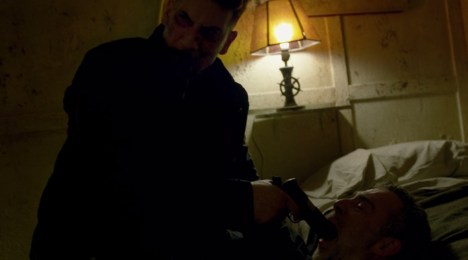
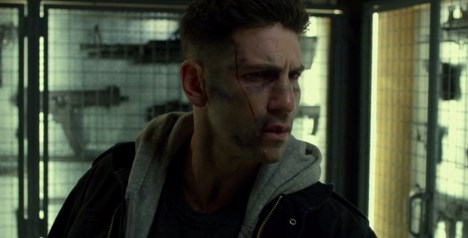
Frank interrogates The Usual Suspects.

Frank interrogates The Usual Suspects.

That said, there is still some division between how streaming affects the plotting of comedies as compared to dramas. Comedies like The Unbreakable Kimmy Schmidt and Bojack Horseman seem to adopt a more conservative episodic approach to their episode-to-episode plotting; given that The Unbreakable Kimmy Schmidt was moved to Netflix rather late in its production cycle, this makes in a certain amount of sense. Nevertheless, it would appear that the streaming model tends to lean towards a “single story told over [number] hours” approach to drama.

This is not inherently a good thing. One of the bigger issues with streaming dramas remains the attachment to classic television formal conventions, whether it is a set runtime or a predetermined number of episode. Not every story needs to be thirteen episodes, especially not on a streaming service. There is a question as to whether shows like Mad Dogs and Jessica Jones might have been better served with a shorter order. There is also a sense that the demand of telling a single story over a set number of hours leads to stalling and repeating.
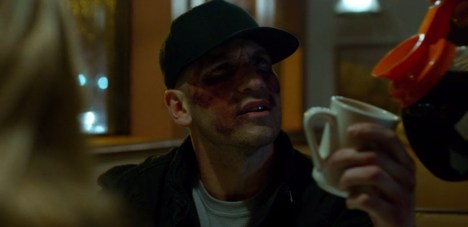
Just a regular guy, talkin' about love and punishing.

Just a regular guy, talkin’ about love and punishing.

While a fantastically ambitious show in terms of storytelling and themes, Jessica Jones had an unfortunate habit of running around in circles in order to reach that thirteen-episode count. Early episodes like AKA Crush Syndrome and AKA It’s Called Whiskey wasted a lot of time on how to knock Kilgrave out. Kilgrave himself was introduced twice in both AKA Crush Syndrome and AKA It’s Called Whiskey. Kilgrave was captured and escaped no less than three times over the season, in AKA The Sandwich Saved Me, AKA Sin Bin and AKA 1,000 Cuts.

In many ways, Daredevil is a conventional piece of television drama. Part of that is down to structuring. Daredevil has a stronger sense of episodic storytelling than many contemporary streaming dramas. Within the second seasons, episodes like Guilty as Sin and Seven Minutes in Heaven are held together by internal themes like the idea of perpetual war as it links the season’s two plots and whether various characters are trapped within prisons of their own makings. Care is taken to ensure that something is accomplished between the start and end of a given episode.
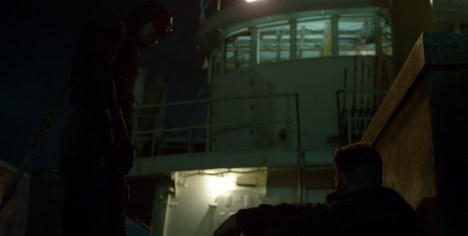
Guy talk.

Guy talk.

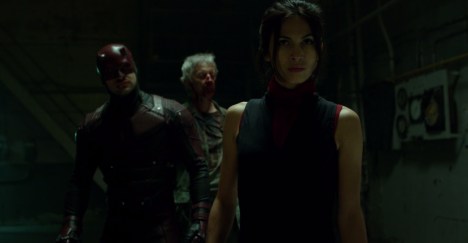
More than that, the second season takes the idea further and very clearly structures itself into conventional three-act design. The first act introduces Frank Castle and pit him against Matt Murdock, running from Bang to Penny and Dime. The second act introduces Elektra and focuses on Frank Castle’s trial and incarceration, running from Kinbaku to Seven Minutes in Heaven. The third act completes Frank’s origin story while pitting Matt and Elektra against the hand, from The Man in the Box to A Cold Day in Hell’s Kitchen. The structure is very clear.

Unfortunately, .380 marks the point at which that structure begins to fall apart.
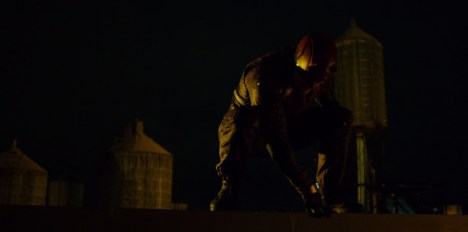
There's going to be hell to pay...

There’s going to be hell to pay…

Continue reading

Star Trek: Deep Space Nine – Accession (Review)

This February and March, we’re taking a look at the 1995 to 1996 season of Star Trek, including Star Trek: Deep Space Nine and Star Trek: Voyager. Check back daily Tuesday through Friday for the latest review.

In its third and fourth seasons, Star Trek: Deep Space Nine is undergoing something of a transformation; a metamorphosis.

This is only natural. Shows evolve and grow as they go on. The production team discovers what works and what doesn’t, allowing them to play the strengths of the premise and the ensemble. It happens to most shows, if they live long enough. It happened to Star Trek: The Next Generation when Michael Piller came on board in its third season. It will happen to Star Trek: Voyager when Michael Piller departs in its third season. Change and transformation is inevitable, for television shows as much as for people.

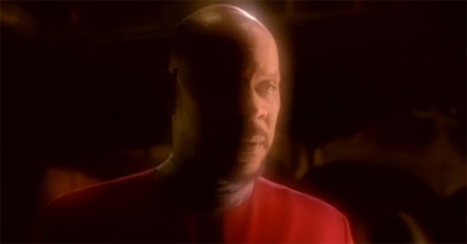
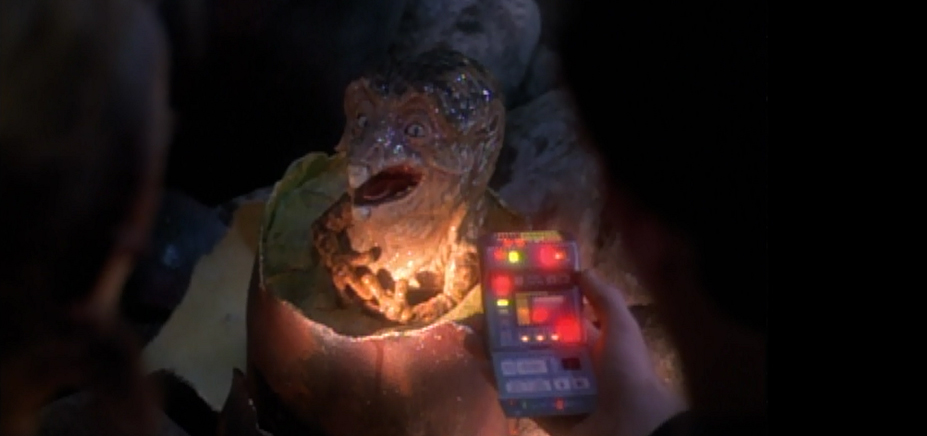
That healthy orb-experience glow...

That healthy orb-experience glow…

The third and fourth seasons of Deep Space Nine saw a change taking place. Ira Steven Behr had taken more and more control of the show since the late second season, starting with The Maquis, Part II. Michael Piller had stepped back from the show in its third season, completely ceding control with Life Support. The show was changing in a material sense. The Dominion came to the fore, Bajor faded to the background; Worf joined the cast, Odo found his people, the Klingons were an on-going concern again.

By this point in the fourth season, the transformation is almost complete. Deep Space Nine is very close to its final form, standing on the edge of its biggest departures from the established Star Trek canon. Part of those changes involves a reconfiguring of what Bajor means to the series. Accession begins the process of drawing down the curtain on the Bajor arc as it began with Emissary all those years ago, allowing Sisko to find some peace in his position and a sense of closure in his appointment before the show’s emphasis on Bajor changes dramatically.

Gotta have faith...

Gotta have faith…

Continue reading

The X-Files Polls Results

A quick thanks to all who voted in our big X-Files poll to wrap up our coverage of the classic era of the show – from The Pilot up through The X-Files: I Want to Believe. I was very pleased with the response the poll got, with over 100 votes cast. (101, in total.) The results are below, but first two quick housekeeping announcements:

a.) we’ll be covering the modern era of the show (the IDW comics and the six episodes) sometime later in the year, probably around the DVD/blu ray release when things in my personal life are less hectic; part of that hecticness is because…

b.) I’ve written an unauthorised and unofficial critical history of The X-Files that is going to print at the end of the month; I’ll publish more details closer to publication, but it’s very much a refinement of everything that’s been put on the blog, with better research, more detail and a clearer narrative throughline; there is one really cool detail: the introduction is very kindly being written by the wonderful Kumail Nanjiani.

Anyway, enough housekeeping. Let’s get to the results!

xfilespoll15

Continue reading

Star Trek: Voyager – Tattoo (Review)

This February and March, we’re taking a look at the 1995 to 1996 season of Star Trek, including Star Trek: Deep Space Nine and Star Trek: Voyager. Check back daily Tuesday through Friday for the latest review.

Tattoo is another example of the second season Star Trek: Voyager doubling down on elements that did not work in the first season.

Episodes like The Cloud and Cathexis had suggested that Chakotay might be a problematic character for the show. After all, Chakotay was the first Native American lead character to appear in the franchise, but he was played by a Mexican-American actor. More than that, the first season seemed to draw from an awkward collection of tropes and clichés in its depiction of Chakotay’s culture. The show declined to anchor Chakotay in a single specific Native American cultural tradition, instead drawing from a rake of familiar shallow iconography.

"Oh, here we go again..."

“Oh, here we go again…”

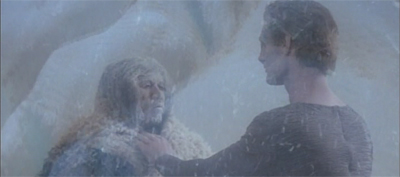
Chakotay didn’t really work in the first season. The problem is that Michael Piller seemed reluctant to accept that Chakotay’s Native American spirituality was borderline racist and offensive. So Tattoo returns to that particular well, with a much greater commitment to patronising and exploiting Native American culture. Exploring the Delta Quadrant, Chakotay comes across a seemingly abandoned moon that turns out to be the home of an ancient alien culture that made contact with Chakotay’s ancestors forty-five thousand years ago.

These aliens were responsible for shaping and molding Native American culture, for putting those groups in closer communion with the land and for fostering a purer spirituality. Not only is the main alien played by white actor Richard Fancy, the make-up design on these “Sky Spirits” emphasises their whiteness. So Tattoo becomes a story about how Native American culture essentially came from a bunch of super-advanced white people. It is astounding that nobody seemed to stop and think about the episode on the way to the screen.

"Oh, hey. That's a new level of offensiveness."

“Oh, hey. That’s a new level of offensiveness.”

Continue reading

Star Trek: Voyager – Parturition (Review)

This February and March, we’re taking a look at the 1995 to 1996 season of Star Trek, including Star Trek: Deep Space Nine and Star Trek: Voyager. Check back daily Tuesday through Friday for the latest review.

One of the more interesting aspects of the second season of Star Trek: Voyager is its stubborn refusal to give up on elements that simply do not work.

Time and again, and often at the behest of producer Michael Piller, the second season returns to concepts that were problematic and troublesome in the first season. The obvious goal is to fix those problems so that those elements can be successfully reintegrated into the surrounding show. This is why the second season returns to concepts like the Kazon as a threat and Tom Paris as a rebel and Neelix as a character with a useful function on the ship. This is not a bad approach. If the first season of a show is about experimentation, then the second season is about calibration.

Two men and a lizard lady...

Two men and a lizard lady…

It is hard to begrudge Michael Piller this approach. After all, it had worked quite well on Star Trek: The Next Generation and Star Trek: Deep Space Nine. In particular, it took Deep Space Nine about three years before it figured out how to make characters like Bashir, Dax and Quark capable of carrying their own episodes without making the audience want to bash their heads against a large blunt surface. It is not unreasonable to take the same approach to dealing with the elements of Voyager that are not working.

There is a very significant difference, though. The problematic elements of Voyager have little to do with execution; they are fundamental problems with the concepts. The Kazon do not work as a threat because they are one of worst alien species that Star Trek ever produced, rooted in some rather unpleasant racial stereotypes tied to contemporary Los Angeles gang culture. Tom Paris does not work as a rebel and womaniser because Robert Duncan McNeill works better as a charming goof. Neelix’s romance with Kes is toxic because she is a child and he’s possessive.

Cooking up a storm...

Cooking up a storm…

As such, it feels like the second season of Voyager spends a lot of time fixing problems that are fundamentally unfixable. One of the great aspects of the premise of Voyager is the fact that the show is in a constant state of movement. Unlike the cast of Deep Space Nine who are fixed in a single place, the cast of Voyager are constantly moving forward. It is possible for Voyager to jettison the parts that are simply not working. (Cue lazy joke about the size of Kazon space.)

Parturition is an example of this phenomenon, as Voyager tries to “fix” the toxic relationship between Neelix and Kes, while offering Tom Paris some small semblance of character growth. Unfortunately, it seems very attached to the idea of Neelix and Kes as a romantic couple and Tom Paris as a playful romantic rogue, which means that the best that it can hope to do is to not make the underlying problems any more obvious. While Parturition is nowhere near as bad as Elogium or Twisted, it still feels like a series treading water.

It's time for the Delta Quadrant's favourite fifties sitcom, "Last Tango With Paris."

It’s time for the Delta Quadrant’s favourite fifties sitcom, “Last Tango With Paris.”

Continue reading

Star Trek: Deep Space Nine – The Way of the Warrior (Review)

This February and March, we’re taking a look at the 1995 to 1996 season of Star Trek, including Star Trek: Deep Space Nine and Star Trek: Voyager. Check back daily Tuesday through Friday for the latest review.

The third season of Star Trek: Deep Space Nine was really just a dress rehearsal for what lay ahead.

The third season had been a tumultuous time for the show, with Michael Piller departing the franchise to pursue opportunities outside Star Trek. It was the year directly after the end of Star Trek: The Next Generation, and all attention was focused on the pending release of Star Trek: Generations and the launch of Star Trek: Voyager. On top of that, the third season suffered from a great deal of confusion and disorganisation throughout the year, making it very hard for the production team to set an end goal for themselves.

"This could be the start of a beautiful friendship..."

“This could be the start of a beautiful friendship…”

In fact, the third season of Deep Space Nine was such a mess that the production team had not even managed to hit the end of season cliffhanger that they wanted. The Adversary had been drafted at the last possible minute when the studio vetoed the idea of ending the year with a Vulcan withdrawal from the Federation. This is not to discount the long list of impressive episodes produced during the season, but it does illustrate that the third season of Deep Space Nine had not progressed according to plan.

At the same time, it was a vital learning experience for the show. It provided a clear framework for what followed, providing producer Ira Steven Behr with a foundation from which he would build the rest of the run. The work put in during the third season would pay dividends in the fourth and fifth seasons, as the show began to play with and pay off ideas that had been carefully and meticulously established during that most chaotic of seasons. In fact, the show begins paying off those dividends with The Way of the Warrior, the first episode of the fourth season.

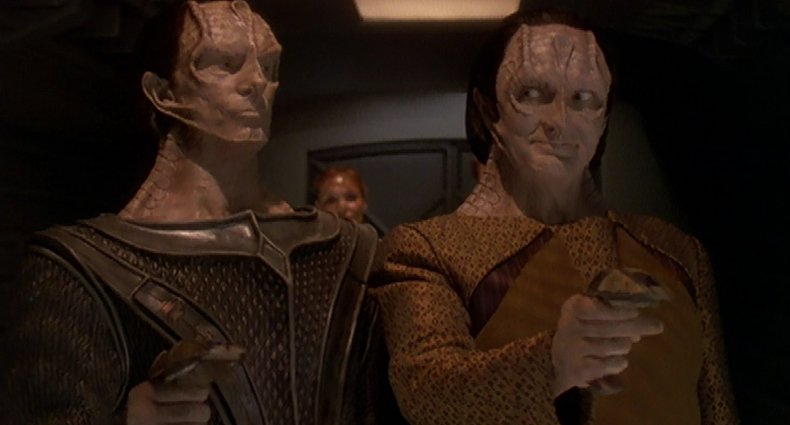
Klingons woz 'ere...

Klingons woz ‘ere…

Continue reading

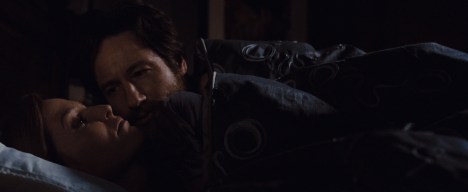
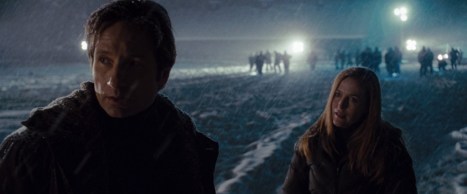
Non-Review Review: The X-Files – I Want to Believe

This January, to prepare for the release of the new six-part season of The X-Files, we’re wrapping up our coverage of the show, particularly handling the various odds and ends between the show’s last episode and the launch of the revival.

The plan was always to transition The X-Files from television to film, but fans change.

Following the success of The X-Files: Fight the Future, there had been some mumblings about the possibility of releasing a film in the summer of 2000. Given that The X-Files was a cultural property rooted in the nineties, it seemed like a big screen adventure would have been the perfect way to bring Mulder and Scully into the twenty-first century. After all, the original plan was that the show would retire in its seventh season. (The network even had a bespoke successor selected in Chris Carter’s Harsh Realm.)

Gotta have faith...

Gotta have faith…

However, this was not to be. It turned out that Fight the Future represented the cultural peak of The X-Files, the moment of maximum pop culture saturation. Almost immediately upon the production team’s move to California at the start of the sixth season, the show’s rating began their slow (and then not so slow) decline. The seventh season was itself hampered by behind-the-scenes drama, with David Duchovny suing Chris Carter and Fox over syndication. At the same time, Fox’s “worst season ever” meant that the broadcast could not afford to cancel The X-Files.

So, understandably, the sequel to Fight the Future was postponed and put on the long-finger. As the show came to an end in its ninth season, the subject of a second X-Files feature film arose again. Still, there was a debate to be had about whether the world really wanted a second X-Files film. While the sixth and seventh seasons had slowly eroded the show’s popularity and appeal, the ninth completely collapsed it; through the combination of bad storytelling decisions and the broader shift in the political mood, The X-Files felt like a spent cultural force.

"Platonic", eh?

“Platonic”, eh?

Ultimately, that was not to be either. The production history of The X-Files: I Want to Believe often recalls the mythology at the heart of The X-Files, with the project constantly shifting and changing as outside forces intervene. I Want to Believe arrived in cinemas in July 2008, a full decade after Fight the Future and more than six years after the broadcast of The Truth. The finished product is radically different from what anybody might have imagined in the immediate aftermath of Fight the Future, its design often surreal and awkward.

If I Want to Believe would have been a strange choice for an X-Files film release in July 2000, it seemed downright perverse in July 2008.

The truth is out there. Way out there.

The truth is out there. Way out there.

Continue reading

Night Stalker (Review)

A new version of Night Stalker from the team behind The X-Files should have been a slam dunk.

Frank Spotnitz was a veteran of The X-Files, the longest serving member of the writing team beyond Chris Carter himself. He had assembled a murderer’s row of X-Files talent. Darin Morgan and Vince Gilligan were veterans of the show, producing some of the show’s best episodes. There is a strong argument to be made for either writer as the strongest staff writer on The X-Files. Spotnitz was also able to bring along Tom Schnauz, who had struggled with his scripts for Lord of the Flies and Scary Monsters, but had done great work on The Lone Gunmen.

kolchak-pilot21

More than that, Spotnitz had pulled a great deal of the behind-the-scenes talent had made The X-Files such a television classic. Daniel Sackheim had directed multiple episodes of The X-Files and had been a driving creative force on Harsh Realm. Rob Bowman had graduated from television to feature films, but returned to helm the show’s second episode. Spotnitz even drafted director Tony Wharmby, who had made a great impression with episodes like Via Negativa. There was considerable talent involved in the show’s production.

On paper, Night Stalker sounds like a slam dunk. Many of the great creative minds of The X-Files offering a modern reimagining of a beloved genre property that had been a huge inspiration; for the character of Carl Kolchak, it seemed like things had come a full circle. What could possibly go wrong?

nightstalker-malum9

Continue reading

Night Stalker – What’s the Frequency, Kolchak? (Review)

This January, to prepare for the release of the new six-part season of The X-Files, we’re wrapping up our coverage of the show, particularly handling the various odds and ends between the show’s last episode and the launch of the revival.

What’s The Frequency, Kolchak? is the episode written by Vince Gilligan.

Gilligan remained one of Frank Spotnitz’s most keen collaborators in the years following the end of The X-Files. Gilligan had worked with Spotnitz as part of the writing staff on the short-lived Robbery Homicide Division before the pair moved on to Night Stalker. After ABC cancelled Night Stalker, the pair would collaborate on the television series A.M.P.E.D. for Spike, writing a pilot that would eventually air as a television movie when the network declined to pick it up for series.

"Wow, ABC really is a tough network to play with..."

“Wow, ABC really is a tough network to play with…”

Sadly, Night Stalker only lasted long enough for Gilligan to script a single episode of the show. Still, he fared better than fellow staffer Darin Morgan; Morgan’s script for The M-Word did not make it into production before the axe fell on the show. This is a shame; the materials available on the DVD that never made it to air on ABC suggest a show more comfortable with itself than the first six episodes would suggest. More than any other episode of the first season of Night Stalker, What’s the Frequency, Kolchak? speaks to the series’ potential.

It is just a shame that it arrives too late.

The monster at the end of the hall...

The monster at the end of the hall…

Continue reading