• Following Us

  • Categories

  • Check out the Archives


  • Awards & Nominations

The X-Files – El Mundo Gira (Review)

This February and March, we’re taking a trip back in time to review the fourth season of The X-Files and the first season of Millennium.

The X-Files is a show that sometimes has difficulties when it comes to portraying minorities.

There are lots of episodes that offer insightful and thoughtful explorations of isolated subcultures, without veering into offensive stereotypes or awkward cliché. Fresh Bones and Hell Money are two examples of the kinds of stories that do offer those sorts of interesting and respectful depictions of minorities. In contrast, the show can sometimes seem a little close-minded and xenophobic. Excelsis Dei, Teso Dos Bichos and Teliko are episodes with somewhat questionable depictions of other cultures.

Illegal aliens.

Illegal aliens.

Writer John Shiban likes his horror tropes. He adores the classic horror movie trappings, and revels in a very old-school approach to scary stories. Unfortunately, the horror genre has an unfortunate history of exploitation and racism when it comes to the portrayal of “the other.” The easiest way to make something scary and unknown is to make it foreign, suggesting that the outside world is filled with horrors and monstrosities. Shiban would hit on this trashy exploitation vibe repeatedly during his tenure on The X-Files.

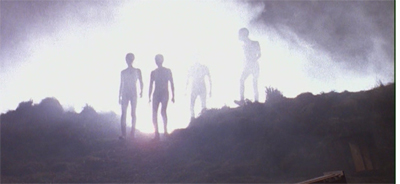
El Mundo Gira is very much a companion piece to Shiban’s other stories about foreign monsters – the indigenous cat-people of Teso Dos Bichos and the butt-dwelling Indian fakir of Badlaa. It is a not a story set in the world of Mexican-American immigrants; it is a story set in a clumsy stereotypical depiction of the world of Mexican-American immigrants, as channelled through unfortunate racial stereotypes.

Green haze...

Green haze…

Continue reading

Non-Review Review: Interstellar

Interestingly, Christopher Nolan seems to have generated a reputation as a rather detached director. Common wisdom around Nolan’s films suggest that the film-maker is perhaps too cold and clinical in his approach to the material; that his films lack warmth or humour. This reputation is probably a result of the director’s fascination with non-linear storytelling. After all, The Dark Knight is his only straight-arrow-from-beginning-to-end film.

Probably also due to the narrative contortions and distortions of films like Memento or The Prestige, Nolan is generally presented as a film-maker who constructs visual puzzle-boxes. His films are frequently treated as riddles to be solved. Consider the discussion of narrative “plot holes” in The Dark Knight Rises that fixates on how Bruce Wayne got around back to Gotham, or the discussion on the mechanics of the final shot of Inception. This approaches to his work tend to divorce the viewer from his films.

Everything burns...

Everything burns…

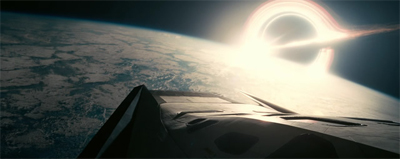
Interstellar will likely be Nolan’s most polarising film to date, replacing The Prestige or The Dark Knight Rises. The film offers an extended two-and-a-half hour rebuttal to accusations that Nolan is detached or distant. Much has been made about the attention to detail on Interstellar. The physics on the movie were so exact and precise that physicist Kip Thorne actually made theoretical advances while working on the film.

However, at the same time, one character posits love as a force more powerful than gravity or time. Interstellar might be precise and meticulous, but it is not a film that lacks for an emotional core; it is not a movie that lacks for warmth. Interstellar feels like a conscious attempt to cast off the image of a cynical and cold film-maker.

Out of this world...

Out of this world…

Continue reading

End of the Line: Unearned Happy Endings…

I reviewed Baby Mama earlier today and – while I was impressed with the film’s willingness to tackle a somewhat controversial topic – I was less than impressed by the somewhat conventional ending tacked on to the film. And then I mellowed out a bit. “It is a comedy after all,” I reminded myself, in the hope that I would forgive the film because it wasn’t a black comedy – most lighthearted comedies call for a light-hearted ending, after all. Besides, this particular film isn’t the only film in recent memory to resort to a disappointingly conventional ending, so why does it bother me so much?

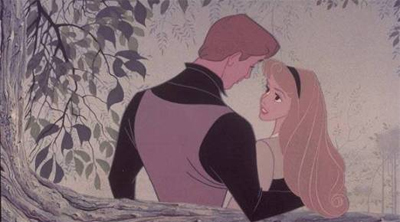
Not everybody gets a fairytale ending...

Note: As you may have guessed from the topic, I’ll be discussing endings here – particularly the one from Baby Mama. Consider yourself warned, there are spoilers ahead.

Continue reading

Keeping Trek: Thoughts on Continuity…

Sky is showing Star Trek all this week, and I’ve had the chance to catch it again – great movie. However, it’s got me thinking about the big furry beast which is continuity. Obviously continuity is a big thing within films – making sure the actors and sets look the same from shot to shot – but it becomes a whole other beast when you kick that up a level and are dealing with continuity between distinct individual works. Take the whole Star Trek saga, for a moment. Assuming you discount the hundreds of books, the entire animated series, the unproduced spin-off, various tie-ins and specials, you’re still left with over 600 episodes of television filmed over forty years and eleven feature-length movies which all have to line up nearly perfectly. And if they don’t, you get rampaging fans complaining it’s the end of the world. As much as my inner nerd loves that sort of continuity, I have to confess that I really don’t mind too much if one or two things are sacrificed in order to tell a good story.

Can we put that entire movie where Kirk kills God out of continuity?

Continue reading

The Tommy Westphall Hypothesis

I’m a sucker for meta-fiction – the idea of storytelling outside the story. One of the more fascinating notions suggested by Marvel’s recent spate of movies is the notion that all the individual stories in Iron Man, Thor and Captain America will be tied together to be revealed to be part of a larger canvas (in this case, The Avengers in 2012). I love it when television and films are shown to occupy the same fictional reality (for example, the Star Trek franchise, spread across five television shows (possibly six) and eleven feature films). So it goes without saying that I adore The Tommy Westphall Hypothesis.

And I thought I had an active imagination! (Click to enlarge)

For those unfamiliar with the hypothesis, it basically states that most television takes place within the head of an eleven-year-old autistic boy.

Continue reading

So, You Want to Read Comics, Eh?

We’re a bit late to the party, but this week we’ll be celebrating the 75th anniversary of DC Comics, with a look at the medium, the company and the characters in a selection of bonus features running Monday through Friday. This is one of those articles. Feel free to look up the rest, they’re fully of nerdy goodness.

So, it’s the end of our week-long look at the comic book medium and what a week it’s been. We’ve looked at grown-up comics and superhero comics, the best of DC comics and the quirks of the medium. So I hope you might forgive the excess if I write this last blog post from an all-together more person perspective. I like the funny books, I do. I think the medium has huge potential to tell stories in a fascinating format, unconfined by budget or scope. I am fascinated by the intertextual elements, the notion that all of these different and unique titles can be drawn together as part of one giant meta-story. But what I really have difficulty understanding is why the medium insists upon making itself so damn inaccessible.

Sometimes Superman just likes be a douche...

Continue reading