• Following Us

  • Categories

  • Check out the Archives


  • Awards & Nominations

Star Trek: The Next Generation – Contagion (Review)

This January and February, we’ll be finishing up our look at the second season of Star Trek: The Next Generation and moving on to the third year of the show, both recently and lovingly remastered for high definition. Check back daily for the latest review.

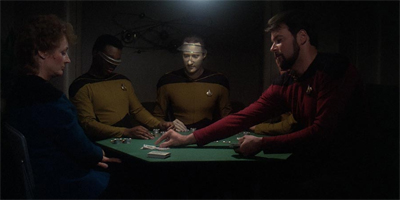
Contagion is a nice reminder that the average quality of Star Trek: The Next Generation is improving. While the stand-out episodes of the second season of The Next Generation tend to attract a lot of attention, the more solid episodes tend to get a bit lost in the discussion. Contagion doesn’t rank alongside Elementary, Dear Data, A Matter of Honour, The Measure of a Man or Q Who?, but it’s still demonstrating that we’ve reached a point where the show can churn out a pretty good episode without it feeling like a special occasion.

It’s a bit of a shame, then, that Contagion comes from two individuals outside the show’s writers’ room.
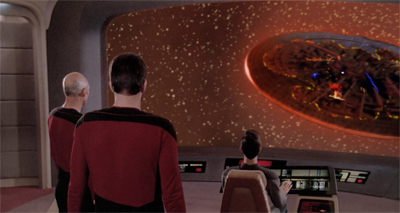
The Yamato rests in pieces...

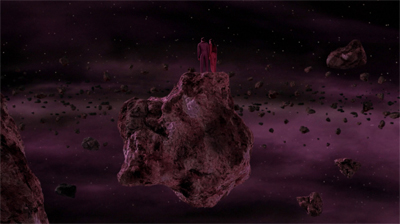
The Yamato rests in pieces…

Continue reading

Star Trek: The Next Generation – The Dauphin (Review)

This January and February, we’ll be finishing up our look at the second season of Star Trek: The Next Generation and moving on to the third year of the show, both recently and lovingly remastered for high definition. Check back daily for the latest review.

The Dauphin ends what looked like the beginning of a winning streak for the second season of Star Trek: The Next Generation. Both A Matter of Honour and The Measure of a Man represented a significant shift in gear for the show – a demonstration of just what The Next Generation was capable of at the top of its game. The Dauphin, in contrast, is a decidedly generic little episode.

It doesn’t help that it’s a character episode devoted to Wesley Crusher as a teenage protagonist on the Enterprise. Wesley was always a character who posed a bit of a problem for the show. There were times when bad writing and Wheaton’s less-than-nuanced performance saw the character threatening to turn The Next Generation into a plucky teenage science-fiction adventure series. Watch the boy genius save the ship while the trained professionals around him are useless!

While A Matter of Honour teased a way of making Wesley work in the context of the show, The Dauphin falls back into familiar traps. It’s a poorly-written teenage romance with some awful dialogue and two rather wooden leads, using familiar Star Trek trappings.

A rocky relationship?

A rocky relationship?

Continue reading

Star Trek: The Next Generation – The Measure of a Man: Extended Cut (Review)

This January and February, we’ll be finishing up our look at the second season of Star Trek: The Next Generation and moving on to the third year of the show, both recently and lovingly remastered for high definition. Check back daily for the latest review.

We’ll be supplementing our coverage of the episodes with some additional materials – mainly novels and comics and films. This is one such entry.

This is a rare treat.

The Measure of a Man is generally regarded as one of the best episodes that Star Trek: The Next Generation ever produced, and a crown jewel in the entire Star Trek franchise. As such, it’s a prime candidate for this sort of lavish restoration treatment, with the blu ray collection featuring not only the televised version of the episode, but a special extended edition.

This extended edition was the version originally filmed and edited together, until the production team realised that it ran almost a quarter-of-an-hour over the slot allocated to the show on syndicated airing.

tng-themeasureofaman23

Continue reading

My 12 for ’13: Star Trek Into Darkness & Fighting for the Future…

This is my annual countdown of the 12 movies that really stuck with me this year. It only counts the movies released in Ireland in 2013, so quite a few of this year’s Oscar contenders aren’t eligible, though some of last year’s are.

This is number 6…

Star Trek Into Darkness won’t win any awards for scripting or plotting. It’s very hard to succinctly explain the various overlapping evil plans directed by the movie’s two competing villains – who knows what at which point, and how that makes sense in the context of their objectives. Star Trek Into Darkness is a bit of a hot mess when it comes to storytelling – an overly convoluted plot that spends far too much time homaging what come before, when it should be boldly going somewhere new.

And yet, despite that, there is an ambition to Star Trek Into Darkness, a willingness to embrace big ideas and questions about cynicism and optimism, about hope and fear, about the attitude that people adopt towards the future. At the most basic level, that’s what Star Trek is. Into Darkness doesn’t have the same space as a television show to delve into those questions, nor to offer the same degree of nuance.

However, it’s a willingness to ask them that is quite endearing.

startrekintodarkness21

Continue reading

Doctor Who: The Greatest Show in the Galaxy (Review)

To celebrate the fiftieth anniversary of the longest-running science-fiction show in the world, I’ll be taking weekly looks at some of my own personal favourite stories and arcs, from the old and new series, with a view to encapsulating the sublime, the clever and the fiendishly odd of the BBC’s Doctor Who.

The Greatest Show in the Galaxy originally aired in 1988.

Sometimes I think it’s you that’s crazy, not Deadbeat here.

Anybody remotely interesting is mad in some way or another.

– Ace and the Doctor cut to the heart of Doctor Who

It’s very hard to believe that The Greatest Show in the Galaxy aired as the final story of the twenty-fifth season of Doctor Who. Stories like Remembrance of the Daleks and Silver Nemesis were clearly anniversary fodder, celebrating the progress of the show to this point. The Happiness Patrol was a delightfully surreal oddity that has only really been noticed by the general public in recent years, with news breaking in 2010 that Andrew Cartmel had been using Doctor Who to tell politically subversive stories. Which, I suppose, confirms just how few people were watching The Happiness Patrol in 1988.

The Greatest Show in the Galaxy is as concerned with the legacy of Doctor Who as Remembrance of the Daleks or Silver Nemesis, but it lacks the nostalgic shine. Instead, it’s a stunningly bitter piece of television that offers a pretty damning indictment of what Doctor Who had become by the late eighties, a critique of selling out and chasing ratings and living in constant fear that the gods of entertainment – the middle-class families so desperately courted and so carefully catered to – might tune out and consign the show to oblivion.

The Doctor welcomes you to The Greatest Show in the Galaxy...

The Doctor welcomes you to The Greatest Show in the Galaxy…

Continue reading

Agents of S.H.I.E.L.D – F.Z.Z.T. (Review)

F.Z.Z.T. is a reminder that Agents of S.H.I.E.L.D. is a genre show still in its first season. That might not sound like a good thing, and F.Z.Z.T. isn’t the strongest of the mediocre crop of episodes so far, but it does indicate that there is still potential. The Girl in the Flower Dress teased the possibility that Agents of S.H.I.E.L.D. might have settled into its own incredibly unambitious niche, and any evidence to the contrary should be welcomed.

F.Z.Z.T. is boring and generic, but at least it’s boring and generic in a way that is different from most of the boring and generic episodes so far. So that’s something.

A Gemma of an idea...?

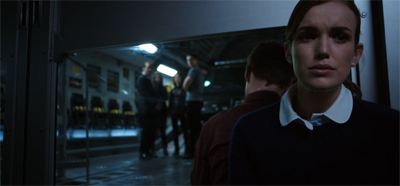
A Gemma of an idea…?

Continue reading

Star Trek: Deep Space Nine – Blood Oath (Review)

Star Trek: Deep Space Nine is twenty years old this year. To celebrate, I’m taking a look at the first season. Check back daily for the latest review or retrospective.

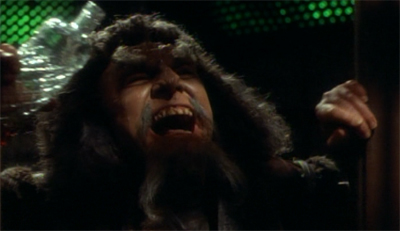
Blood Oath is a pretty fantastic piece of Star Trek: Deep Space Nine, and kicks the second season back into gear after a few mediocre (although not embarrassing) episodes. While it’s hardly the best episode of the year, and comes with its share of problems and baggage, it’s a tight and well-constructed piece of space opera. It’s a pulpy Klingon adventure, with the show’s best exploration to date of the existential problems of being Dax and a relatively simple (but potent) moral dilemma. It’s also just great fun.

Here's Kor!

Here’s Kor!

Continue reading

Star Trek: Deep Space Nine – Profit and Loss (Review)

Star Trek: Deep Space Nine is twenty years old this year. To celebrate, I’m taking a look at the first and second seasons. Check back daily for the latest review or retrospective.

It seems we’ve reached the point where Star Trek: Deep Space Nine has figured out a base level of quality, an “average” zone that it can pitch to without too much effort or breaking a sweat. We’ve had three episodes in a row now that haven’t been brilliant, but have been far from terrible. Solid, watchable stuff. That might sound like damning with faint praise, but it took Star Trek: The Next Generation longer to find that base level of quality, while Star Trek: Voyager settled into a zone where that “average” was a lot lower.

Profit and Loss is unlikely to be anybody’s favourite episode, but it remains thoroughly unobjectionable. It features the cast playing their roles reasonably well, some hints at world-building and even a guest spot for Garak. Nobody will really remember Profit and Loss as a brilliant piece of television after completing a lengthy Deep Space Nine rewatch, but they also won’t curse its name. It’ll simply be an episode in the middle-to-end section of the second season that wasn’t too bad and wasn’t too great.

Love him and leave him...

Love him and leave him…

Continue reading

Star Trek: Deep Space Nine – Shadowplay (Review)

Star Trek: Deep Space Nine is twenty years old this year. To celebrate, I’m taking a look at the first and second seasons. Check back daily for the latest review or retrospective.

Shadowplay is a great example of the kinds of things that Star Trek: Deep Space Nine is beginning to do very well. While the main plot works very well (so well, in fact that Star Trek: Enterprise would borrow it – and Rene Auberjones – for their first season episode Oasis), it’s remarkable how much of Shadowplay is given over to the two character-development subplots unfolding back on the station. Indeed, Dax and Odo have effectively solved the mystery of the missing villagers by about two-thirds of the way into the episode.

The character-development stuff in Shadowplay is interesting because the two subplots are not written with resolutions in mind. Indeed, they don’t even kick off the respective character arcs. Kira and Bariel have been waiting to become a couple since The Siege at the latest. The last episode, Paradise hinted that Jake might not be cut out to be a Starfleet officer.

In short, what is interesting about Shadowplay is the fact that it’s really just demonstrating that the show has reached the point where it is doing the things that it does relatively well. Deep Space Nine has found its groove, that point in a show’s history when it seems like it’s relatively easy to produce an hour of television of reasonable quality.

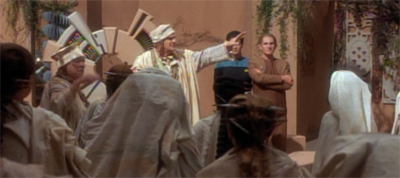
A holo crowd...

A holo crowd…

Continue reading

Star Trek: Deep Space Nine – Paradise (Review)

Star Trek: Deep Space Nine is twenty years old this year. To celebrate, I’m taking a look at the first and second seasons. Check back daily for the latest review or retrospective.

In a really weird way, this second half of the second season of Star Trek: Deep Space Nine really has its finger on the pulse of the nineties. Whispers tapped into pre-millennial anxiety, the sort of paranoia that fed into shows like The X-Files and would play itself out through the show’s admittedly underdeveloped “Changeling” arc. In a few episodes, The Maquis will play with the old “freedom fighter/terrorist” debate in a way that was only really possible in an America completely at peace, post-Cold War but pre-9/11.

Paradise taps into some other anxieties. According to The Star Trek: Deep Space Nine Companion, writer Jim Trombetta was heavily influenced by the anti-technology philosophy of the Khmer Rouge, the infamous regime where even the stereotypical signs of learning and education (for example, wearing glasses) were justification for execution. However, whatever the inspiration, Paradise seems to tap into something decidedly more contemporary.

"This is my boom stick!"

“This is my boom stick!”

Continue reading