• Following Us

  • Categories

  • Check out the Archives


  • Awards & Nominations

Star Trek: Voyager – Nightingale (Review)

During the production of the third season of Star Trek: The Next Generation, producer Michael Piller laid down a template for Star Trek storytelling that became a large (and underrated) part of the series’ successful. Following on from the unfocused and clumsy first two seasons, Piller advocated from a strong character-driven storytelling sensibility, advocating for a narrative structure whereby each episode would reveal or inform something interesting about a given character, quite apart from any phenomenon of the week or interesting alien species.

It was a template that was so sturdy that Piller himself could open the season by applying it to Wesley Crusher in Evolution. Ronald D. Moore was perhaps the first writer to really understand the appeal of the structure, applying it to Worf in The Bonding and Sins of the Father. Even when episodes weren’t about the main characters, they still offered some insight. Tin Man, Déjà Q and The Defector were both episodes focused on a guest star, but that guest star was largely seen through Data’s eyes.
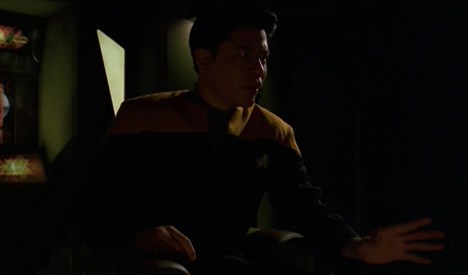
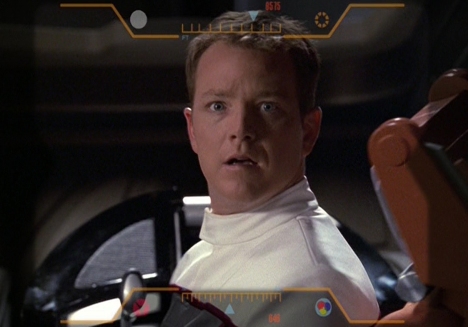
Captain Kim.

There were stories that didn’t adhere to this template. Often, like in Hollow Pursuits and Yesterday’s Enterprise, they focused on a guest star rather than the leads. However, these episodes were the exception that proved the rule. Even the less successful episodes of the season, like A Matter of Perspective or Ménage à Troi were still elevated above the troubled first and second seasons by this attention to character-driven storytelling. Piller set a template that lasted for the next four seasons, and beyond.

In the middle seasons of Star Trek: Voyager, there was a tension between this template and the demands of contemporary television. The writing staff on Voyager understood the basic rhythms and structure of the template that Piller established, and kept applying it after his departure following Basics, Part I and Basics, Part II. Stories like Nemesis and Timeless found a way to apply that template to even neglected characters like Chakotay and Kim. The only issue was that the template felt increasingly outdated.
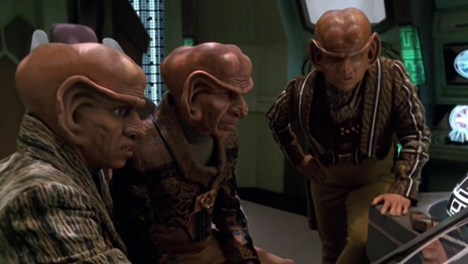
He’s (Nee)lixed.

Modern television was moving on. The X-Files and Babylon 5 were embracing sprawling epic television storytelling. Television series like The Sopranos and Oz were adopting a more novelistic approach to the medium. Even Star Trek: Deep Space Nine was consciously moving away from self-contained episodes in favour of longer-form storytelling, most notably the six-parter that ran from A Time to Stand through to Sacrifice of Angels. There was a sense that, even applied skillfully and correctly, the Piller template reflected an older mode of television storytelling.

One of the big issues with the seventh season of Voyager is a palpable feeling that even this foundational block of Star Trek storytelling dating back to The Next Generation has begun to erode. The seventh season of Voyager is packed with stories that look and feel loosely that familiar Piller template, broad narratives focusing on individual characters and big ideas wherein the characters develop or discover something about themselves. However, these episodes also tend to look like they were constructed from a faded photocopy of that classic blueprint.
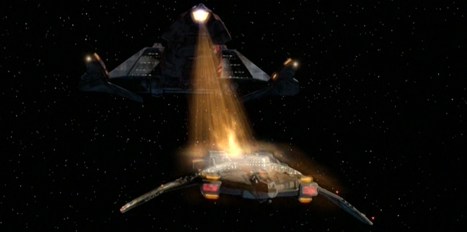
In-tractor-able.

This is reflected in the broad “Star-Trek-iness” of stories like Drive or Critical Care, episodes that gesture toward social commentary while working hard to avoid actually saying anything potentially engaging. It is also reflected in character-driven episodes like Imperfection or Body and Soul, which superficially resemble the template that Piller laid out for telling a good self-contained Star Trek story, but failing to connect all of the pieces in a way that makes any real sense.

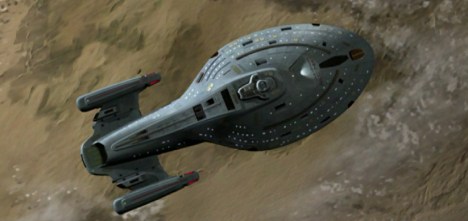
Nightingale is perhaps the season’s best example of this, for so many reasons. It is the last Voyager episode to focus on the character of Harry Kim, but returns to what has been his standard character arc since Demon. It has a strong central throughline about the importance of taking command, and the responsibilities of being in authority, but it also never allows these elements to cohere into a strong central thesis. It contains stock Star Trek elements like an alien war and the challenge of non-interference, but doesn’t do anything with them. It is simply a mess.

Continue reading

Star Trek: Voyager – Body and Soul (Review)

Body and Soul is the old science-fiction staple, the body swap episode.

There are any number of iconic examples of the genre, even within the larger Star Trek franchise. Although the original series was populated with duplicates and doppelgängers and surrogates and clones in episodes like The Enemy Within, Mirror, Mirror, Whom Gods Destroy and even What Are Little Girls Made Of?Turnabout Intruder might be the most straightforward example. Star Trek III: The Search for Spock featured sequences in which McCoy was channelling Spock. Star Trek: Deep Space Nine had all the cast take on the personalities of Dax’s past hosts in Facets.

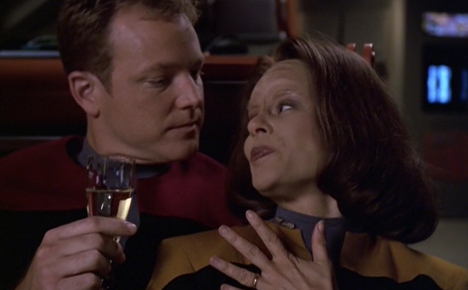
Insert your cheesecake jokes here.

Often, these sorts of stories exist to showcase the dramatic range of key performers and to offer a little variety to the weekly routine of playing the same character for years and years on end. On Star Trek: The Next Generation, Brent Spiner would occasionally find himself tasked with playing Data’s “brother” Lore or his “father” Noonien Soong in episodes like Datalore, Family, Descent, Part I, Descent, Part II and Inheritance. The cast on Deep Space Nine would play their mirror counterparts in stories like Crossover, Through the Looking Glass and Shattered Mirror.

Even Star Trek: Voyager has done its own body swap and possession narratives before, like with Tuvok in Cathexis or with Paris in Vis à Vis. However, the success of these sorts of episodes largely rests in the execution, in the question of whether it is worth watching a familiar actor playing an unfamiliar role for forty-five minutes. This is a tough challenge, and many episodes falter trying to hit that mark. Body and Soul has a lot of very fundamental issues with it, but it at least has the common sense to ask one of the cast’s best actors to impersonate another of the cast’s best actors.

“Next week is a Kim episode?”

Continue reading

Star Trek: Voyager – Inside Man (Review)

Inside Man is a curious episode.

It is a seventh season episode that feels very much like a first season episode. To be fair, this is perhaps par for the course with any long-running series approaching a definite ending. Both Star Trek: The Next Generation and Star Trek: Deep Space Nine got a little nostalgic in their final seasons. The Next Generation neatly bookended Encounter at Farpoint by picking up on the dangling thread of Q’s trial of humanity in All Good Things…, while Deep Space Nine revisited first season ideas like the “one hundred” in Chimera or Quark mistakenly thinking that he was replacing Zek in The Dogs of War.

“I’d counsel against that.”

Star Trek: Voyager was always going to be a little bit more nostalgic than most, given that the nature of the show involved a long journey back towards the familiar and the recognisable. The closer that Voyager got to home, the stronger the urge to look backwards. The seventh season of Voyager evokes the early seasons in a number of ways, such as the manner in which Repression tries to resurrect the Maquis conflict and even brings in a guest star last seen in Learning Curve or the surprise return of Joseph Carey as a guest star in Friendship One.

However, Inside Man has its own very strange nostalgia at its core. The episode builds on sixth season episodes like Pathfinder or Life Line, even including a number of recurring guest stars from those earlier episodes. However, its tone and its plot elements feel like they belong a much earlier script. Inside Man is an episode that treats the Ferengi as semi-serious antagonists who would murder more than a hundred people for a profit, which ignores a lot of their development on Deep Space Nine and jumps right back to their characterisation in early Next Generation episodes like The Last Outpost or Peak Performance.

“I mean, to be fair, they also couldn’t outwit the Kazon.”

However, at the core of the episode is a plot device that the series largely moved past in its second season, and one which feels strangely out of place on what amounts to the home stretch of Voyager. The plot of Inside Man revolves around a promise to get the ship and crew home ahead of schedule, the kind of promise that was frequently dangled in front of the crew in earlier episodes like Eye of the Needle, Cold Fire and False Profits. While it would be teased in later episodes like Hope and Fear or Bliss, it was never with the same intensity.

The irony with these earlier stories was that the audience understood, on some level,how unlikely it was that the ship and crew would be getting home. After all, the entire premise of Voyager was that it was a starship stranded on the far side of the galaxy, isolated from familiar support systems. To bring the ship home would represent a complete betrayal of the premise, even more than downplaying the tension with the Maquis or completely ignoring questions about which set of rules the crew would follow. If Voyager brought the ship home in a random episode in those first seasons, it would be a catastrophic admission of defeat.

Just a Reg-ular Barclay.

In Inside Man, a slight variation on the same central tension exists. Any audience member with any level of televisual literacy would understand that the ship and crew would be returning home at the end of the seventh season; this was the end of Voyager, and that ending had to involve the fulfillment of the show’s basic premise. However, given the show’s conservatism, it was highly unlikely that the crew would be getting home in such an early episode and certainly not as part of a plot involving the Ferengi. Inside Man is the most obvious sort of shell game, where there’s nothing hidden under any of the cups.

However, what’s most striking about Inside Man is that the script seems almost self-aware. The episode is glib and wry, repeatedly seeming like an extended joke being played by the savvy audience and the smirking writers on the series itself. Inside Man is based around the promise that the crew might be returning home, but is immediately established to the audience as nothing more than an empty hustle. The cruel irony (and the most wry punchline) is that the characters themselves remain in the dark even after the con is long over.

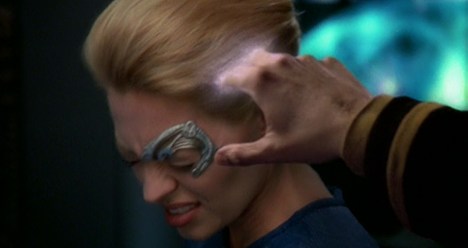
Getting into her head.

Continue reading

Star Trek: Voyager – Critical Care (Review)

Critical Care is the seventh season of Star Trek: Voyager attempting to be archetypal Star Trek.

To be fair, Voyager had done this before. When Jeri Taylor took over the show during its third season, she steered it away from the disaster of the Kazon arc and towards a more conventional style of Star Trek storytelling. Many of the episodes of the later seasons could easily have been repurposed for Star Trek: The Next Generation or Star Trek: Deep Space Nine or Star Trek: Enterprise without changing much beyond the characters’ names; think of Warlord, Scientific Method, Random Thoughts, Waking Moments.

What’s up, Doc?

This isn’t inherently a bad thing. Indeed, many of the best episodes of Voyager had this broad and generic quality to them, offering something resembling an archetypal distillation of Star Trek for audiences. Remember and Memorial were both stunning explorations of cultural memory and Holocaust denial that could arguably have worked with any Star Trek cast. Blink of an Eye was a beautiful science-fiction parable that was more about Star Trek itself than Voyager. Even Nemesis could have easily worked with Riker or O’Brien or Tucker as easily as it did with Chakotay.

However, there are also points when these attempts to create “archetypal Star Trek” feels cynical and exploitative, the writing staff very cynically offering audiences something that is designed to meet as many of the vaguely defined aesthetic qualities of Star Trek, but without any substance underneath it. This happens repeatedly during the seventh season of Voyager, when it seems like the production team understand what Star Trek looks and feels like enough to offer a passable approximation, but don’t understand the underlying mechanics enough to replicate that ineffable feeling.

“Don’t worry, we’re almost home.”

Like a lot of seventh season episodes, Critical Care is couched in the trappings of Star Trek but without any substance to group it. On the surface, Critical Care is classic “social commentary” storytelling, the type of allegorical narrative exemplified by stories like Let That Be Your Last Battlefield or The High Ground. It is an episode about the horrors of contemporary healthcare, transposed to a distant alien world where Voyager can draw some very broad parallels for the audience watching at home. This is, on a very superficial level, what Star Trek is to a large number of fans.

Unfortunately, these touches do not add up to anything particularly insightful or compelling, Critical Care providing observations on contemporary American healthcare that amount to “this is pretty bad, isn’t it?” without anything resembling actual engagement. The result is a shell of an episode, a missed opportunity, and a pale imitation of the franchise’s best social commentary.

“What is up, Doc?”

Continue reading

Star Trek: Voyager – Repression (Review)

There is something almost obligatory about Repression, as if the production team have arrived at the point in every season where they are obligated to do a Tuvok-centric story but without any particularly strong ideas for that Tuvok-centric story. It is there because Tim Russ is a credited lead and Tuvok is part of the ensemble, and because there is a twenty-six episode season order to fill. It is not there because any writer thought that there was a story that needed to be told with Tuvok, some part of his psyche that needed to be illuminated.

The seventh season is populated with episodes like this, stories built around particularly characters in the most archetypal of fashions. Star Trek: Voyager is frequently criticised for recycling premises from other Star Trek series, especially Star Trek: The Next Generation, but the show is less often criticised for simply repeating itself. The supporting characters on Voyager don’t really have arcs, often simply having a handful of stories that the series dutifully cycles through on rotation.

“Another fine mess(hall) you’ve gotten us into, Tuvok…”

On Star Trek: Deep Space Nine, a marathon of character-centric episodes would reveal the slow and gradual evolution of the cast. Julian Bashir changes and evolves over his time on the series, from the generic any-character-will-do narratives of The Passenger and Melora into the weirder and more awkward Distant Voices through to his emergence as a distinctive person in Hippocratic Oath, Our Man Bashir and The Quickening. Bashir is not the same character in What You Leave Behind that he was in Emissary, and watching a chain of episodes based around Bashir would explain and explore that growth.

In contrast, a character-centric marathon on Voyager would be a much more frustrating experience, as the characters inevitably go through the same motion and repeat the same plots. This is particularly true in the seventh season episodes, where the obligatory character-focused episodes underscore how little these characters have actually and fundamentally changed since the first season. In Nightingale, Harry Kim is still insecure and lacking in experience. In Lineage and Prophecy, B’Elanna Torres is once again wrestling with her Klingon heritage. In Drive, Tom Paris is once again the careless flyboy who learns about responsibility.

“The more things don’t change…”

At the same time, Tuvok has always represented a very particular challenge for the writers, in that he doesn’t even really have an archetypal story in the same way that Torres or Kim or Paris does. Tuvok doesn’t have a “lesson” that he needs to learn over and over again, or a default factory setting that he can fall back to in order to learn that lesson. At least at the end of Extreme Risk or Juggernaut, Torres had learned that she should not let her more destructive impulses guide her actions, even if she would forget it and learn again. This allows for a character arc that can be repeated and reiterated. In contrast, Tuvok was generally well-adjusted and well-balanced.

As a result, stories featuring Tuvok tend to take something away from him and watch him struggle to return to normality. As a Vulcan, Tuvok is often stripped of his Vulcan reserve and forced to recover it. The results can be interesting and compelling, with Meld and Gravity ranking among the best episodes that Voyager ever produced. However, these episodes can also feel very trite and formulaic, often reducing Tuvok to a passenger in stories nominally focused on him: he drives a lot of the plot in Random Thoughts, but Torres in the focal character; Riddles is about something that happens to Tuvok, but focuses on Neelix.

Looking at things from a new perspective.

Repression is notably the show’s last Tuvok-centric story. It is also perhaps the most archetypal. As with episodes like Nightingale or Lineage, it is a collection of familiar tropes for a supporting cast member trotted out one last time before the show crosses the finish line. Repression is an episode that has clearly been assembled from a variety of earlier episodes focused on Tuvok, right down to plot points and individual scenes or costume choices; it is Random Thoughts meets Meld, with an extended final-act homage to Worst Case Scenario. All of which reduces Tuvok to a passenger in his own story.

This is a shame, as Repression works about as well as any episode built around its core premise has any right to it. Like Drive before it, there’s a certain pulpy thrill to its core premise that fits comfortably within the heightened retro sci-fi surroundings of Voyager. The story of a detective who is investigating himself, spreading subversive ideas through telepathic assault, Repression is a patently absurd bit of television which feels very much of a piece with earlier stories like Cathexis or Macrocosm or Darkling or In the Flesh. It works much better as a trashy late-night B-movie than as a character-centric narrative.

There’ll be Meld to pay for this.

Continue reading

Star Trek: Voyager – Drive (Review)

Star Trek: Voyager has always had a pulpy sensibility, perhaps more than any other Star Trek series outside of the original.

There is something very retrograde about Voyager, something that harkens back to the plotting of old B-movies. The Communist paranoia of Cathexis or In the Flesh, the goofy science-fiction high-concepts of The 37s or Innocence or Tuvix or Rise or Macrocosm, the monster movie stylings of Threshold, the exaggerated campy horror aesthetic of Darkling or Revulsion or Alice. Even older science-fiction staples like the body-swap episodes Vis á Vis, Body and Soul or Renaissance Man. There is a reason why Voyager felt so comfortable doing an episode like Bride of Chaotica!

Photo finish.

With all of that in mind, Drive seems lie a perfect fit for Voyager. It is admittedly an absurd premise, a story about a racing tournament organised by four alien species as a testament to the fragile peace that they have built. Inevitably, Paris gets involved with the Delta Flyer. Inevitably, the crew uncover a wave of shady double-dealing that involves sabotage, attempted murder and terrorism as part of a plot to destabilise the entire region. It is completely and utterly ridiculous, feeling like the kind of low-budget trash that an audience member might stumble across flicking through the channels very early one weekday morning.

And yet, there’s a certain charm to it. Drive is a deeply flawed episode, with all manner of serious plotting and character issues. However, there’s also a sense that the production team are enjoying themselves. At a point when so much of Voyager feels like it is going through the motions, there is a certain appeal in a piece of pulpy entertainment that relishes its own existence.

The event wasn’t marr(i)ed.

Continue reading

Star Trek: Voyager – Season 6 (Review)

The sixth season of Star Trek: Voyager was not an easy season, by any measure.

Star Trek: Deep Space Nine had come to an end during the previous television season. Paramount had made a conscious decision not to launch a new Star Trek television series to fill the gap on the airwaves. This was a rather ominous decision. When Star Trek: The Next Generation had finally wound down in the mid-nineties, Paramount had committed to having two different spin-offs on the air at the same time and springboarding the cast and crew on to the big screen with Star Trek: Generations less than a half a year later.

In contrast, the silence following the end of Deep Space Nine was deafening. Following the critical and commercial disappointment of Star Trek: Insurrection, it would be four years before the Next Generation cast returned to the big screen in Star Trek: Nemesis. At the same time, there was increasing concern about declining ratings for the larger Star Trek franchise in both the fan and mainstream press. Although there were already plans in place for the series that would become Star Trek: Enterprise, it was decided that no new series would premiere before Voyager ended.

Voyager had never been more alone than it was during its sixth season.

Continue reading

Star Trek: Voyager – Unimatrix Zero, Part I (Review)

Once again, Star Trek: Voyager takes its cues from Star Trek: The Next Generation.

The Next Generation bridged its sixth and seventh seasons with Descent, Part I and Descent, Part II. That season-bridging two-parter was focused on discord within the Borg Collective, with the crew coming into contact with a group of drones that had separated themselves from the hive mind. It was a somewhat underwhelming two-parter, and is unlikely to rank alongside anybody’s favourite episodes (or even favourite two-parter) from the run of The Next Generation.

Things come to a head.

Even then, Descent, Part I and Descent, Part II had a lot of weight behind them. Glossing over the quality of the episodes themselves, they marked the big reintroduction of the Borg into The Next Generation following their appearance in The Best of Both Worlds, Part I and The Best of Both Worlds, Part II. The only episode to feature the Borg in the three years between those two-parters was I, Borg, meaning that the return of the Borg at the end of the sixth season of The Next Generation was a big deal.

As such, this seems like a strange cue for Voyager to take from The Next Generation. After all, Voyager doesn’t have that same luxury of built-in anticipation. Voyager bridged its own third and fourth seasons with Scorpion, Part I and Scorpion, Part II, but the Borg have been a steady fixture of the series since then. Ignoring the addition of characters like Seven of Nine and Icheb to the core cast, the Borg have played important roles in episodes like Hope and Fear, Drone, Dark Frontier, Part I, Dark Frontier, Part II, Collective and Child’s Play.

Picking their brains.

That is a lot of focus, particularly in the context of a television series like Voyager, where there is less continuity from episode to episode. Including hallucinations, dead bodies, screen images and holograms, the Borg appear in twenty-three episodes of Voyager, as compared to six episodes of The Next Generation. By way of contrast, the Hirogen appear in between nine and ten episodes, depending on how one counts Flesh and Blood, Part I and Flesh and Blood, Part II. The Malon only appear in four episodes.

All of this is to say that Unimatrix Zero, Part I and Unimatrix Zero, Part II feel like a rather blatant rip-off of an already underwhelming two-parter, but without the core appeal. Voyager has reached the point where the appearance of the Borg is a source of dread, but not for the reasons that it should be.

She’s had some bodywork done.

Continue reading

Star Trek: Voyager – The Haunting of Deck Twelve (Review)

It seems strange that Neelix was not a larger part of Star Trek: Voyager.

To be fair, Neelix never disappeared into the ensemble to the same degree as characters like Chakotay, Kim and Tuvok. However, the series often struggled with how best to approach the character and how to make him work. It is notable that the production team went to the effort of writing Neelix off the show shortly before the seventh season finale, sending him to live with a colony of (very far from home) Talaxians in Homestead and consigning him to a cameo in Endgame. The character was often just there, his role hazy and undefined.

A Briefing With Death!
Errr, I mean, Neelix.

Of course, there were reasons for this. Neelix had been drafted on to the crew as an expert on the Delta Quadrant in Caretaker, and it made sense that this role would become increasingly redundant as time went on. By Fair Trade, Neelix was largely redundant, his knowledge exhausted. More than that, the early seasons of Voyager anchored Neelix’s character development to an abusive relationship with two-year-old. The toxicity of Neelix’s relationship with Kes in episodes like PhageTwisted and Parturition made it hard to invest in Neelix as a character worthy of attention or effort.

However, across the seven seasons of Voyager, there is a strange sense that Neelix is perhaps the single character most perfectly adapted to Voyager. He is the character who has developed in the direction that is perhaps most compatible with what Voyager has become, both in how it tells its stories and what it uses those stories to talk about. More than any other character on Voyager, Neelix is the character with the deepest roots in Delta Quadrant history and the character who is most firmly committed to oral traditions of storytelling, both recurring motifs within Voyager.

Smoke and mirrors.

Continue reading

Star Trek: Voyager – Fury (Review)

Normally, the return of an old cast member to an established show is a cause for celebration, akin to a belated family reunion.

The obvious examples involve the appearances of cast members from other shows on later spin-offs. Think of the reverence and sincerity with which Star Trek: The Next Generation treated Spock and Scotty in episodes like Unification, Part I, Unification, Part II and Relics. Think about the delight with which Star Trek: Voyager greeted Geordi LaForge in Timeless or Deanna Troi in Pathfinder. Even when Star Trek: Deep Space Nine subverted expectations with Jonathan Frakes’ appearance in Defiant, it was still joyful. If anything, Star Trek: Enterprise went too far in accommodating Troi and Riker in These Are the Voyages…

Self-control.

Even within individual shows, the return of long-absent cast members is often treated as an opportunity to celebrate that character, and perhaps even to acknowledge past missteps involving them. Yesterday’s Enterprise brought back the character of Tasha Yar, and used the opportunity to rewrite her mean-spirited and pointless death in Skin of Evil. When mirror!Bareil visited in Resurrection, the episode became a meditation upon how the character’s intrinsic decency was strong enough to transcend dimensions and to define even the worst version of himself.

This approach to the return of established characters makes a great deal of sense for a wide variety of reasons. Most obviously, the production team have gone out of their way to recruit these actors for this specific purpose; it makes sense that these episodes should serve as a celebration of their contributions to the franchise. Even beyond that, it is safe to say that almost any lead character on a Star Trek series has something resembling a fan base; think about the ominously-named “Friends of Vedek Bareil.” Why bring back a character, and attract in those fans, just to do something horrific?

That healthy blue glow.

All of this serves to make Fury all the more perplexing. Fury is an episode of Voyager that effectively resurrects the character of Kes, a regular on the first three seasons of Voyager who departed the series in The Gift at the start of the fourth season. The return of Kes is a strange choice, in large part because the production team often struggled with what to do with the character while she was part of the core cast. Still, there are any number of interesting possibilities. And there is the possibility that, like Yesterday’s Enterprise or Resurrection, the production team might use the occasion to say something interesting about Kes.

Unfortunately, Fury is a spectacular mess of an episode with half-developed character motivations and a highly surreal premise that undercuts a lot of the appeal of bringing Kes back in the first place.

Having its cake and eating it too.

Continue reading