• Following Us

  • Categories

  • Check out the Archives


  • Awards & Nominations

Star Trek – Shadows on the Sun by Michael Jan Friedman (Review)

This August, to celebrate the upcoming release of Star Trek: Into Darkness on DVD and blu ray, we’re taking a look at the Star Trek movies featuring the original cast. Movie reviews are every Tuesday and Thursday.

We’ll be supplementing our coverage of the movies with tie-ins around (and related to) the films. We’ll be doing one of these every week day. This is one such article.

It almost feels like sacrilege to fill in the gap left at the end of Star Trek VI: The Undiscovered Country. The film was such a perfect send-off that picking up a novel directly after the end credits role feels like it might undermine the perfect farewell story for the veteran crew. After all, director Nicholas Meyer suggested that the film was an attempt to capture the spirit of Fukuyama’s “end of history”, representing the “end of history” for the original crew.

Except, of course, it wasn’t the end. In terms of internal Star Trek chronology, episodes of Star Trek: The Next Generation had picked up on the later adventures of Scotty and Spock. Star Trek: Voyager would flashback to a Sulu story unfolding concurrently with The Undiscovered Country. Scotty and Chekov would appear in Star Trek: Generations, which would also serve as a disappointing farewell to one James Tiberius Kirk. It seems bitterly appropriate (if far from fair) that Uhura should remain the only major player whose story actually ends with The
Undiscovered Country
.

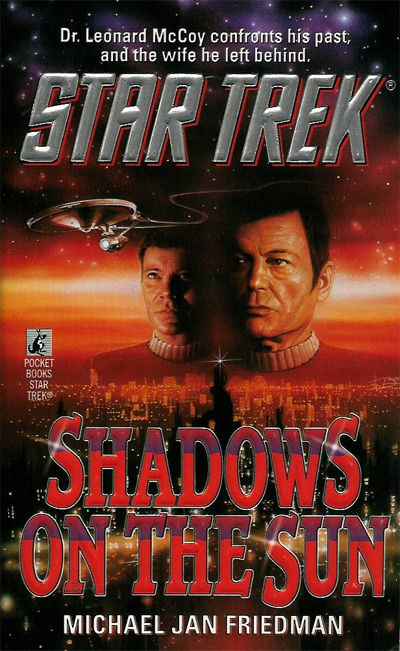
Still, despite his passing of the torch appearance in Encounter at Farpoint, you could make an argument that The Undiscovered Country was the end of the line for Leonard McCoy more than Kirk or Spock. And, as such, Michael Jan Friedman’s Shadows on the Sun serves as an effective (if flawed) reflection on the way that McCoy’s presence sort of faded from the 24th century spin-offs. startrek-shadowsonthesun
Continue reading

Star Trek – The Ashes of Eden by William Shatner et al (DC Comics) (Review)

This August, to celebrate the upcoming release of Star Trek: Into Darkness on DVD and blu ray, we’re taking a look at the Star Trek movies featuring the original cast. Movie reviews are every Tuesday and Thursday.

We’ll be supplementing our coverage of the movies with tie-ins around (and related to) the films. We’ll be doing one of these every week day. This is one such article.

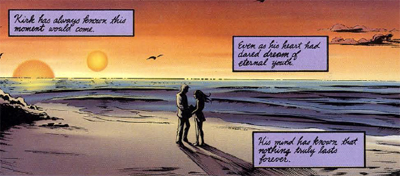
The Ashes of Eden is effectively professionally published Star Trek fan fiction, written by William Shatner. The actor gets some assistance from veteran Star Trek writers Judith and Garfield Reeves-Stevens, but it’s clear that Shatner is the driving force behind The Ashes of Eden. Indeed, an astute reader will spot quite a few thematic overlaps with Shatner’s much-maligned directorial effort, only without the rest of the cast around to temper his efforts to make this a story about Kirk and Kirk alone.

Still, The Ashes of Eden isn’t as bad as it might be. After all, just because something is fan fiction – professionally published or otherwise – says nothing of its quality. The story is probably best read as an exploration between Shatner and his alter ego, but it holds together quite well, providing a much more solid (if still far from perfect) exploration of the themes hinted at in Shatner’s Star Trek V: The Final Frontier.

The dusk of an era...

The dusk of an era…

Continue reading

Star Trek: Myriad Universes – Echoes and Refractions: The Chimes at Midnight by Geoff Trowbridge (Review)

This August, to celebrate the upcoming release of Star Trek: Into Darkness on DVD and blu ray, we’re taking a look at the Star Trek movies featuring the original cast. Movie reviews are every Tuesday and Thursday.

We’ll be supplementing our coverage of the movies with tie-ins around (and related to) the films. We’ll be doing one of these every week day. This is one such article.

The death of Spock at the climax of Star Trek II: The Wrath of Khan is one of the definitive Star Trek moments. Pop culture has assimilated the moment, to the point where any half-decent nerd will identify “the needs of the many…” or “I have been and always shall be…” or maybe even “of all the souls I encountered…” It’s an absolutely massive moment for the franchise, where the film series dared to kill off the show’s most iconic and best-loved character.

It’s no wonder that the moment is such a strong focal point for those seeking to explore Star Trek. Star Trek: Into Darkness riffs mercilessly on that iconic scene, inverting it and counting on the iconography to generate enough emotional resonance for the film to get away with a fairly half-hearted homage. (The effects of The Wrath of Khan last until Star Trek III: The Search for Spock, while the consequences of the climax of Into Darkness don’t even last until the closing credits.)

So that famous sequence serves as an effective focal point of Geoff Trowbridge’s The Chimes at Midnight, which offers a parallel continuity of the Star Trek films in a universe where Spock died after the events of Yesteryear.

st-myriaduniverses

Continue reading

Star Trek – The Pandora Principle by Carolyn Clowes (Review)

This August, to celebrate the upcoming release of Star Trek: Into Darkness on DVD and blu ray, we’re taking a look at the Star Trek movies featuring the original cast. Movie reviews are every Tuesday and Thursday.

We’ll be supplementing our coverage of the movies with tie-ins around (and related to) the films. We’ll be doing one of these every week day. This is one such article.

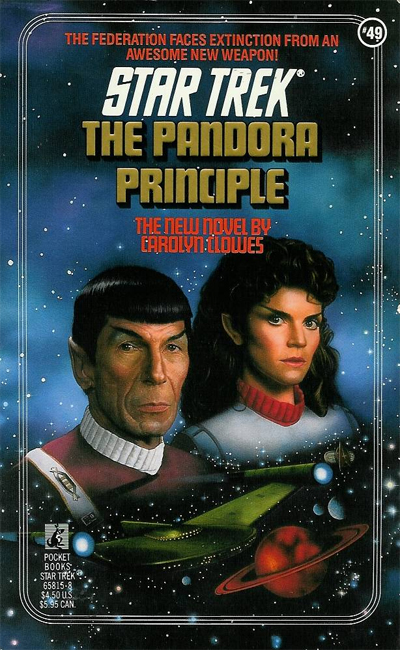
It’s amazing to think how much tie-in material the character of Saavik has generated, considering that she only appeared in three Star Trek films. There are regular characters who have never attracted the same degree of attention as Saavik. There’s probably a reason for this. After all, Saavik was introduced as an important character in Star Trek II: The Wrath of Khan. There’s even some speculation that she might have been originally intended as a replacement for Spock, had Leonard Nimoy decided not to return to the franchise. As such, she was introduced as a surprisingly developed character with a background rife with storytelling potential.

It’s a bit of a disappointment, then, that she was first re-cast as Robin Curtis in Star Trek III: The Search for Spock and then she was quietly shuffled off-stage at the start of Star Trek IV: The Voyage Home, never to be seen again. Perhaps that squandered potential is at the root of the fascination with Saavik. The Pandora Principle, the only Star Trek novel from author Carolyn Clowes, offers us an origin and a history for the character, building off hints and character attributes that were never even mentioned on-screen.

startrek-thepandoraprinciple

Continue reading

Non-Review Review: Star Trek – The Motion Picture

This August, to celebrate the upcoming release of Star Trek: Into Darkness on DVD and blu ray, we’re taking a look at the Star Trek movies featuring the original cast. Movie reviews are every Tuesday and Thursday.

Star Trek: The Motion Picture has a lot to recommend it. It’s big, thoughtful science-fiction, ripe with ideas and high-concepts tying directly into the root of the franchise. It gives both Kirk and Spock clear character arcs. It looks and sounds amazing, demonstrating just how far special effects had evolved in the decade since the show went off the air. However, it suffers from a pace that might best be described as “glacial”, and a sense that – for all the grand ideas – we aren’t really boldly going anywhere that new. Elements of the film can’t help but recall both the 1968 science-fiction classic 2001: A Space Odyssey and even the show’s own episode The Changeling.

While it’s easy to admire The Motion Picture, it’s a lot harder to enjoy it.

Strange new worlds...

Strange new worlds…

Continue reading

Star Trek – Season 1 (Review)

To celebrate the release of Star Trek: Into Darkness this month, we’ll be running through the first season of the classic Star Trek all this month. Check back daily to get ready to boldly go. It’s only logical.

That came together rather well, didn’t it? With the current success of Star Trek as a blockbuster movie franchise, it’s fun to speculate about the show possibly returning to television. Being honest, I would be nervous about that. In this cut-throat age where ratings need to solidify (or start rising) almost immediately, I wouldn’t trust the first season of a Star Trek spin-off to rope in viewers quick enough. None of the Star Trek spin-offs, from The Next Generation through to Enterprise, had what could be considered “strong” first years. Occasionally there were a few classic episodes buried in there, as with Deep Space Nine, but it always seems to take a Star Trek show some time to find its “space legs”, so to speak. Time that I am not sure it would be afforded in the current market place.

Which makes it all the more spectacular that Star Trek itself started out so phenomenally. The first year of the show (and the franchise) is not only the best first season of any Star Trek show ever, it’s also in the running for the best of the thirty seasons of television that the franchise has produced. Not bad at all, considering that it seems like nobody had any idea what exactly they were doing when they started out.

tos-miri18

Continue reading

Star Trek (Gold Key) #56 – No Time Like the Past (Review)

To celebrate the release of Star Trek: Into Darkness this month, we’ll be running through the first season of the classic Star Trek all this month. Check back daily to get ready to boldly go. It’s only logical.

We’ll be supplementing our coverage of the episodes with some additional materials – mainly novels and comics and films. This is one such entry.

It’s remarkable to think that Star Trek was kept alive in the decade between the airing of The Turnabout Intruder and Star Trek: The Motion Picture. The most popular television show to air in the 1968 and 1969 season was Rowan and Martin’s Laugh-In, a show that was apparently lucky to receive two “best of” DVD collections in the early part of the last decade, collecting a grand total of eight of the 140 episodes. Given that Star Trek didn’t even rank among the twenty highest rated shows of that broadcast season, it’s incredible that the show endured for so long.

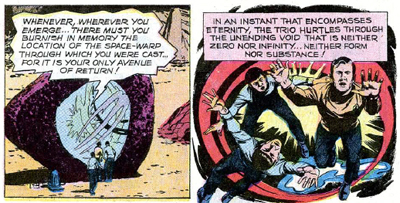
To be fair, there is a lot of material which fills the gap between the last episode of the live action television show and the first feature film. There was Star Trek: The Animated Series, perhaps the most high-profile release. There were a few novels, even if the tie-in line wouldn’t necessarily take off until the eighties. And there were the comic books, produced by Gold Key, notable as perhaps the largest publisher of non-superhero comics in the seventies.

These comics weren’t classics. It’s hard to argue that they are essential additions to the mythos, or that anybody would miss anything be ignoring them entirely. However, there’s a weird pulpy sci-fi charm to these stories that makes them interesting, even when you would wonder whether the artist or writer had actually watched any episodes of the show they were apparently adapting.

Trippy!

Trippy!

Continue reading

Star Trek – Operation — Annihilate!

To celebrate the release of Star Trek: Into Darkness this month, we’ll be running through the first season of the classic Star Trek all this month. Check back daily to get ready to boldly go. It’s only logical.

How do you follow The City on the Edge of Forever? The previous episode is one of the best-loved episodes of Star Trek ever produced, one of the great science-fiction television episodes of the sixties, and one of the best science-fiction romances ever written. It’s a gigantic and massively influential piece of television, one of the cornerstones of Star Trek and perhaps the best indicator of just how thoughtful and how genuine the franchise can be when it tries. So, what’s next? Where do we go from here? What is the next shot after that last scene of Kirk abandoning the Guardian of Forever on a desolate rock?

It’s always interesting to compare the first season of Star Trek to the first year of Star Trek: The Next Generation. The former can be counted among the very best of the show’s thirty televised seasons, while the latter can be counted among the worst. However, they do have something in common. They both probably should have ended an episode early, with The City on the Edge of Forever and Conspiracy serving as effective caps on each show’s first season, leaving the audience a chance to digest what they had seen.

Unfortunately, neither show ended on anything that could be measured among the strongest show of a given year. The Neutral Zone ended the first season of The Next Generation with a moralising whimper. While Operation — Annihilate! is quite entertaining on its own terms, it doesn’t rank among the best of the season. Still, it’s a solid pulpy science-fiction tale, which might not be the worst thing.

Man of action!

Man of action!

Continue reading

Star Trek – The City on the Edge of Forever (Review)

To celebrate the release of Star Trek: Into Darkness this month, we’ll be running through the first season of the classic Star Trek all this month. Check back daily to get ready to boldly go. It’s only logical.

The City on the Edge of Forever stands as both on of the most troubled episodes of Star Trek ever produced, and one of the most brilliant. It’s a powerful science-fiction romance, cleverly constructed and smoothly executed. Everything in the episode seems to working smoothly, which seems all the more improbable given the difficulties occurring behind the scenes. Harlan Ellison’s teleplay differs significantly from the finished product, but it’s very hard to argue that the televised episode isn’t among the finest Star Trek stories ever produced.

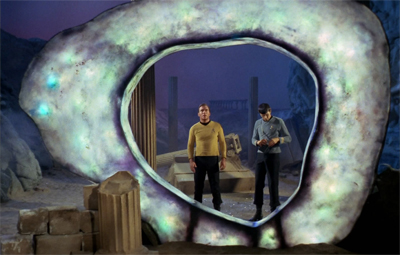
The hole in things...

The hole in things…

Continue reading

Star Trek – Errand of Mercy (Review)

To celebrate the release of Star Trek: Into Darkness this month, we’ll be running through the first season of the classic Star Trek all this month. Check back daily to get ready to boldly go. It’s only logical.

Ah, Klingons. It feels strange to think that we’re almost at the end of the show’s first year and that we’re only meeting the franchise’s most famous aliens now. More than that, in the original version of the show, their distinctive model space ships didn’t appear until the third season, in Elaan of Troyius, the same episode where their iconic imperial crest appeared. They wouldn’t get their bumpy foreheads for over a decade, until Star Trek: The Motion Picture. And a lot of what we’d take for granted about Klingon culture would only be established in the tie-in novel The Final Reflection and later in Star Trek: The Next Generation.

Still, Errand of Mercy welcomes the Klingons to the franchise, and offers a demonstration of why the aliens had such staying power. It’s also a rather wonderful Cold War analogy, feeling like something of a companion piece to Gene L. Coon’s A Taste of Armageddon.

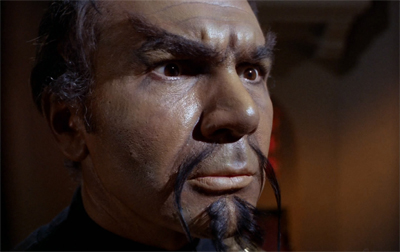
I bet a lot of people were surprised that they could Klingon to their reputation as Star Trek's top alien for so long...

I bet a lot of people were surprised that they could Klingon to their reputation as Star Trek’s top alien for so long…

Continue reading