• Following Us

  • Categories

  • Check out the Archives


  • Awards & Nominations

Star Trek: Strange New Worlds VI – The Beginning (Review)

This January and February, we’ll be finishing up our look at the second season of Star Trek: The Next Generation and moving on to the third year of the show, both recently and lovingly remastered for high definition. Check back daily for the latest review.

We’ll be supplementing our coverage of the episodes with some additional materials – mainly novels and comics and films. This is one such entry.

The Borg are, quite possibly, the most significant addition to the Star Trek mythos since the Klingons. They are one of the few modern pieces of Star Trek lore that will be instantly recognisable to a broader audience. They have featured, in some way, in all four of the Star Trek spin-off series. They are constantly rumoured and suggested as a viable antagonist for the rebooted film series. The Borg are a pretty big deal.

And yet, like so many pop culture villains, they seem less threatening the more we know about them. One of the more frequent complaints about the use of the Borg in Star Trek: Voyager was that it made the aliens more familiar, more understandable, more relatable. Continuing to build off the premise of the Borg Queen in Star Trek: First Contact, the Borg became an alien species that Janeway would reason and negotiate with, in stark contrast to Q’s characterisation of the collective in Q Who?

Although Star Trek: Enterprise did manage to turn the Borg’s fascination with mankind into a causal loop, televised Star Trek never managed to produce an origin story for those cybernetic monsters. Ever ready to fill in a perceived blank in the canon, the expanded Star Trek universe has actually proposed a number of origins for the Borg.
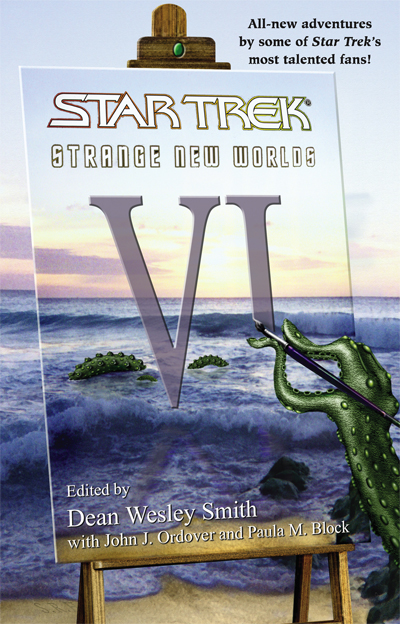
st-strangenewworlds6

Continue reading

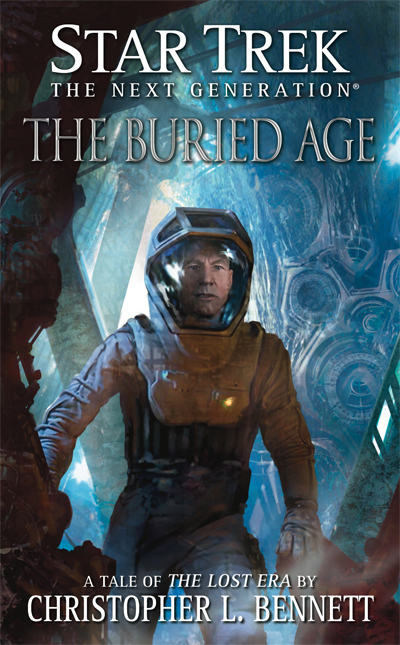
Star Trek: The Lost Era – The Buried Age by Christopher L. Bennett (Review)

This January and February, we’ll be finishing up our look at the second season of Star Trek: The Next Generation and moving on to the third year of the show, both recently and lovingly remastered for high definition. Check back daily for the latest review.

We’ll be supplementing our coverage of the episodes with some additional materials – mainly novels and comics and films. This is one such entry. This is actually supplementary to the first season of the Next Generation, specifically the episode Encounter at Farpoint.

“I’m offering the chance to find something entirely new,” Picard teases at one point in The Buried Age. “To begin filling in a tremendous gap in our understanding of galactic history.” In a way, Picard might as well be addressing the reader, explaining one of the many joys of Christopher L. Bennett’s The Buried Age. It is a chance to delve into the world of Star Trek, exploring the lacuna that exists leading directly into Encounter at Farpoint.

tng-theburiedage

Continue reading

My 12 for ’13: Star Trek Into Darkness & Fighting for the Future…

This is my annual countdown of the 12 movies that really stuck with me this year. It only counts the movies released in Ireland in 2013, so quite a few of this year’s Oscar contenders aren’t eligible, though some of last year’s are.

This is number 6…

Star Trek Into Darkness won’t win any awards for scripting or plotting. It’s very hard to succinctly explain the various overlapping evil plans directed by the movie’s two competing villains – who knows what at which point, and how that makes sense in the context of their objectives. Star Trek Into Darkness is a bit of a hot mess when it comes to storytelling – an overly convoluted plot that spends far too much time homaging what come before, when it should be boldly going somewhere new.

And yet, despite that, there is an ambition to Star Trek Into Darkness, a willingness to embrace big ideas and questions about cynicism and optimism, about hope and fear, about the attitude that people adopt towards the future. At the most basic level, that’s what Star Trek is. Into Darkness doesn’t have the same space as a television show to delve into those questions, nor to offer the same degree of nuance.

However, it’s a willingness to ask them that is quite endearing.

startrekintodarkness21

Continue reading

Star Trek: Deep Space Nine – The Jem’Hadar (Review)

Star Trek: Deep Space Nine is twenty years old this year. To celebrate, I’m taking a look at the first and second seasons. Check back daily for the latest review or retrospective.

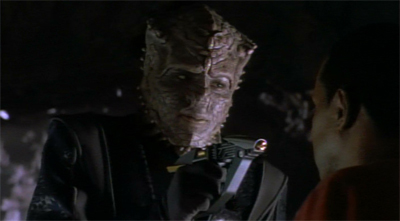
In terms of sheer quality of execution, The Jem’Hadar is probably the weakest of Star Trek: Deep Space Nine‘s season finalés. It lacks the gut punch of A Call to Arms, the shock twist of Broken Link, the atmosphere of The Adversary or even the timeliness of In the Hands of the Prophets. It is, at its most basic level, a story about a disastrous first contact that occurs during a father-son bonding trip that goes horribly wrong, ending with precious little actually advanced.

However, in terms of conceptual ideas, The Jem’Hadar is a game-changer. It is the cornerstone upon which Deep Space Nine would construct its most iconic narrative arc. It caps off two years of trying to develop the Ferengi as more than one-note jokes. It’s a bold statement about the freedom that Deep Space Nine would enjoy with Star Trek: The Next Generation retiring from the airwaves. It cemented the notion that Deep Space Nine never really dealt in two-part episodes to bridge seasons.

For Deep Space Nine, season finalés did not exist simply as pieces of Lego designed to snugly fit those other pieces at the start of the following season, crafting some illusion of continuity flow between two different seasons of television. Instead, cliffhangers on Deep Space Nine changed the rules, shook up the status quo, and teased the changing face of things to come.

A Jem?

A Jem?

Continue reading

Star Trek: Deep Space Nine – Melora (Review)

Star Trek: Deep Space Nine is twenty years old this year. To celebrate, I’m taking a look at the first season. Check back daily for the latest review or retrospective.

It’s hard to believe, based on what we’ve witnessed so far, but one day viewers will be able to think “oh, a Bashir episode!” without an involuntary shudder. There will come a time when the writing staff figure out how to write a Bashir-centric episode. In fact, they’ll even revisit this central premise in the show’s final season, in a way that is much less creepy because at least it acknowledges the creepiness. However, we’re a long way from that.

It’s not that Bashir is a bad character. In fact, I’m very fond of him. I think that this version of the character works very well as part of an ensemble, or even teamed up with another major character to carry a story. However, I don’t think that the show has quite figured out how to tell a Bashir-centric story yet. Most notably because – like The Passenger before it – Melora isn’t really about Bashir. At least not in a way that isn’t creepy and disturbing and unnerving.

Instead, Bashir is mostly a vehicle for the guest character of the week, who lends the episode her name and serves as the focal point of some incredibly condescending and patronising writing which doesn’t make the optimistic future of Star Trek look particularly bright.

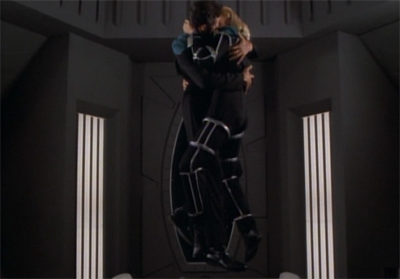
Floating in a most peculiar way...

Floating in a most peculiar way…

Continue reading

Star Trek (DC Comics, 1989) Annual #2 – Starfleet Academy!

This August, to celebrate the upcoming release of Star Trek: Into Darkness on DVD and blu ray, we’re taking a look at the Star Trek movies featuring the original cast. Movie reviews are every Tuesday and Thursday.

We’ll be supplementing our coverage of the movies with tie-ins around (and related to) the films. We’ll be doing one of these every week day. This is one such article.

Multimedia franchises tend to have very strange lives. These iconic pop culture characters rarely seem to ride off into the sunset in any real way. Their story might end, but there’s always a new beginning just waiting for them. When veteran Star Trek writer Ronald D. Moore took charge of the reboot of Battlestar Galactica, he even wove the idea into the fabric of the show. “All of this has happened before and will happen again,” the characters repeated.

It’s been a Hollywood fad for the last decade, with high-budget reboots like Batman Begins and The Amazing Spider-Man suggesting that icons never die, they just get reinvented. However, it has always been a feature of the pop culture landscape. Think of how many adaptations of Batman have run their course, or how many times in how many different media Sherlock Holmes has played out his game of wits. Life for these iconic properties is something of a spinning wheel. It seems that no sooner are you off one side than you are back on the other.

So, with the release of Star Trek: The Undiscovered Country in 1991, it seemed the ideal time for Star Trek author Peter David to venture back to the very beginning, and to explore Kirk’s time at Starfleet Academy!

"By the way, I like David as a name..."

“By the way, I like David as a name…”

Continue reading

Non-Review Review: Star Trek (2009)

This August, to celebrate the upcoming release of Star Trek: Into Darkness on DVD and blu ray, we’re taking a look at the Star Trek movies featuring the original cast. Movie reviews are every Tuesday and Thursday.

Star Trek was not in a healthy place at the end of the first decade of the twenty-first century. The last film, Star Trek: Nemesis, had been box office poison – partially due to the terrible script and direction, and partially due to the monumentally stupid decision of opening it during a winter season including The Lord of the Rings: The Two Towers, Harry Potter and the Chamber of Secrets and Die Another Day.

On television, things hadn’t been much brighter. Ratings had been in decline since Star Trek: Voyager hit the air, and Star Trek: Enterprise went through both a re-tool and a creative shift before becoming the first Star Trek television show since the eighties to be cancelled before running a full seven seasons. Even the most ardent Star Trek fan would have to concede that the franchise did not appear to have a bright future at that point in time.

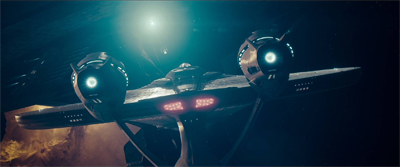
And yet, against all odds and despite all the goodwill the franchise had lost, JJ Abrams and Paramount managed to reinject both an energy and a vitality into the film, producing one of the best blockbusters of the decade.

A commanding Enterprise....

A commanding Enterprise….

Continue reading

Star Trek (DC Comics, 1984) Annual #1 – All Those Years Ago…

This August, to celebrate the upcoming release of Star Trek: Into Darkness on DVD and blu ray, we’re taking a look at the Star Trek movies featuring the original cast. Movie reviews are every Tuesday and Thursday.

We’ll be supplementing our coverage of the movies with tie-ins around (and related to) the films. We’ll be doing one of these every week day. This is one such article.

It’s weird to think that the original cast of Star Trek didn’t get a proper on-screen origin story until JJ Abrams rebooted the franchise in 2009. The show produced two pilots – The Cage and Where No Man Has Gone Before – and even the pilot episode that wound up airing was broadcast as the third episode of the first season. Given the realities of sixties television, it’s probably not too surprising. Rather famously, Gilligan’s Island scrapped its origin story pilot, reworking some of the footage (along with re-shot footage) into a later episode – deciding to skip the story of how everybody got here and just get to the meat of the story.

And you can understand why this approach worked with the original Star Trek. Structurally, the series was a product of its time, largely episodic. Sure, there were recurring alien races and even a few recurring guest stars outside the senior staff, but there was a sense you could jumble the viewing order of most of the episodes up and not notice anything strange.

At the same time, the lack of an origin leaves a vacuum. After all, each of the four following spin-offs opened with a two-hour special about putting the crew together to take their place on the final frontier. In hindsight, having had years to grow old with these characters and watch their friendships (and personalities) deepen and broaden, it occurs to us that we never really say them come together for the first time.

All Those Years Ago... isn’t nearly as elaborate or as sophisticated as Vonda M. McIntyre’s Enterprise: The First Adventure, but it does hint at a growing curiosity about how the team came to work together.

Second star on the right...

Second star on the right…

Continue reading

Non-Review Review: Star Trek – Generations

This August, to celebrate the upcoming release of Star Trek: Into Darkness on DVD and blu ray, we’re taking a look at the Star Trek movies featuring the original cast. Movie reviews are every Tuesday and Thursday.

There are lots of problems with Star Trek: Generations. It feels too much like a two-parter from the television show. It tries to fit in a laundry list of demands from the studio. It wastes Malcolm McDowell. It decides that the only part of the original series deserving a send-off is James T. Kirk, and then pushes him off-screen for an hour before dragging him back into the movie to kill him off in the most ironic and anti-climactic manner possible.

Yet, despite these considerable flaws, Generations also has a lot to recommend it. Although the script occasionally feels a little overcooked, the themes concerning mortality lend it a serious amount of weight. Director David Carson demonstrates that he can work wonders on a tiny budget. Cinematographer John A. Alonzo finds a way to shoot familiar sets in a way that makes them look incredibly beautiful. None of these strengths can fully compensate for the very fundamental flaws with the seventh Star Trek cinematic outing, but they do mitigate them somewhat.

Generations isn’t a great Star Trek film, and it isn’t even the best odd-numbered Star Trek film, but it is far from an unmitigated disaster. Well, except for the way it treats Kirk.

Riding the wave...

Riding the wave…

Continue reading

Star Trek – Cast No Shadow by James Swallow (Review)

This August, to celebrate the upcoming release of Star Trek: Into Darkness on DVD and blu ray, we’re taking a look at the Star Trek movies featuring the original cast. Movie reviews are every Tuesday and Thursday.

We’ll be supplementing our coverage of the movies with tie-ins around (and related to) the films. We’ll be doing one of these every week day. This is one such article.

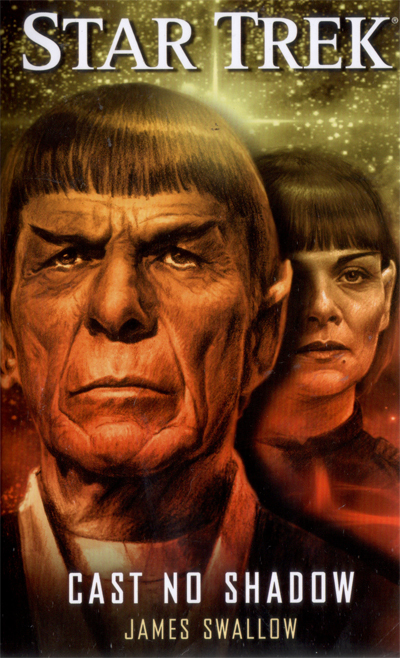
Valeris is a fascinating character who gets a bit lost in the scope of Star Trek VI: The Undiscovered Country. Given the film’s focus on bidding a fond farewell to the iconic crew of the Enterprise, it’s understandable that the newest addition to the crew should get pushed aside. It’s even more notable because Valeris is clearly a stand-in for the character of Saavik, another of Spock’s young female Vulcan protegés, making her not only a newer character, but a substitute for a newer character.

One of the most interesting things about Star Trek tie-in fiction is the scope afforded by the gigantic shared universe. Across the dozen movies and the seven-hundred episodes of television, there are countless supporting characters and concepts thrown out. Due to plotting necessities and the demands of particular stories, some of these ideas are never truly fleshed out. The sheer volume of tie-in material means that writers do get a chance to develop and expand upon these character which might otherwise be forgotten.

Writing a novel centred on Valeris is a very bold idea, but one which acknowledges just how intriguing the concept of Kim Cattrall’s Vulcan traitor is, despite the fact the film treats her as a minor character at best.

castnoshadow

Continue reading