• Following Us

  • Categories

  • Check out the Archives


  • Awards & Nominations

Star Trek: Enterprise – Strange New World (Review)

Next year, Star Trek is fifty years old. We have some special stuff planned for that, but – in the meantime – we’re reviewing all of Star Trek: Enterprise this year as something of a prequel to that anniversary. This January, we’re doing the first season. Check back daily for the latest review.

Strange New World is the first episode of Star Trek: Enterprise to come from a writing team other than Brannon Braga and Rick Berman. Berman and Braga would dominate the writing credits for the first season. Even when the final teleplay was credited to another writer or writing team, there was often a “story by” credit given to Berman and Braga. Braga himself has conceded that he essentially re-wrote all of the episodes of the first season.

Still, Strange New World is credited to the writing team of Mike Sussman and Phyllis Strong. Both had worked on Star Trek: Voyager before migrated to Star Trek: Enterprise along with André Bormanis. Sussman had pitched the story for Meld and worked on a number of solo stories and scripts before teaming with Strong on the seventh and final season of the show. The two would remain a writing team for the first two seasons of Star Trek: Enterprise, hitting their stride with some of the strongest episodes of the troubled second season.

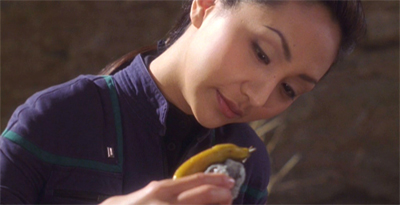
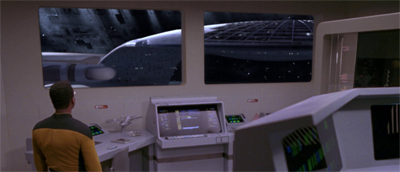
Picture perfect...

Picture perfect…

Strange New World is an interesting début for the pair. On the hand, it is a story that celebrates the unique place of Star Trek: Enterprise in the Star Trek pantheon. It’s a story about how great it must be to set foot on an alien planet, and how wondrous it must be to breath air from outside our atmosphere. With its emphasis on shuttlepods and primitive transporters, it does remain relatively true to the prequel premise of Enterprise.

On the other hand, Strange New World is a very familiar Star Trek template. Indeed, it’s a very familiar first season template. It’s the episode where the crew of the ship are exposed to some strange outside force that makes them all act out of character. It’s something of a Star Trek standard. The original Star Trek had The Naked Time and Star Trek: The Next Generation had The Naked Now, while Star Trek: Deep Space Nine had both Babel and Dramatis Personae. In many ways, Strange New World feels like a familiar old story.

Strange yellow daisy fields forever...

Strange yellow daisy fields forever…

Continue reading

Star Trek: Enterprise – Fight or Flight (Review)

Next year, Star Trek is fifty years old. We have some special stuff planned for that, but – in the meantime – we’re reviewing all of Star Trek: Enterprise this year as something of a prequel to that anniversary. This January, we’re doing the first season. Check back daily for the latest review.

Fight or Flight is reasonably solid as second episodes go. It’s very clear that Rick Berman and Brannon Braga are making a conscious effort to avoid the mistakes of Star Trek: Voyager. There’s a sense that they are trying to give Star Trek: Enterprise its own unique mood and flavour. As such, Fight or Flight feels like a story that isn’t just tailor-made for Enterprise, but is tailor-made for early in the first season of the show. It isn’t a story that could be done by another spin-off, and it’s also not a story that could be done by Enterprise even a year later.

While Fight or Flight works on a conceptual level, the execution feels a little strange. While Broken Bow was a big and bombastic Star Trek pilot with its own feel and rhythm, Fight and Flight feels almost quaint. As a piece of television, it’s constructed in a very meticulous and very precise manner, one that seems suspiciously outdated for a show broadcast in late 2001.

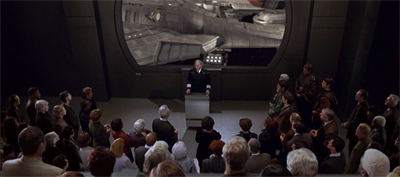
Slugging it out...

Slugging it out…

Continue reading

Star Trek: Enterprise – Broken Bow (Review)

Next year, Star Trek is fifty years old. We have some special stuff planned for that, but – in the meantime – we’re reviewing all of Star Trek: Enterprise this year as something of a prequel to that anniversary. This January, we’re doing the first season. Check back daily for the latest review.

Broken Bow is probably the strongest pilot in the Star Trek canon, with Emissary and The Cage vying for second place.

That’s not saying a lot. Broken Bow is still a troubled production with some rather sizeable issues marring what is otherwise an ambitious début for a new Star Trek show. Watching, Broken Bow – as with watching most of the first few years of Star Trek: Enterprise (or just Enterprise) – it feels like the show is at war with itself. It wants to be something new and fresh and exciting, but it also wants to be an important part of this larger tapestry. And the episode has difficulty reconciling that.

New (old) frontier...

New (old) frontier…

So we get new aliens like the Suliban, but a plot that revolves around the Klingons; we get an entirely new crew with a Vulcan science officer and Southern gentleman as the Captain’s best friend; we get a ship without most of the conveniences that we take for granted on Star Trek, but with substitutes and a resolution that relies on technological gimmickry; we get to explore an uncharted part of the Star Trek canon, but with the intrusion of the future to help make it feel a little more familiar.

From the first episode, Star Trek: Enterprise seems to exist as a show trapped between what it could have been and what it has to be. It’s a premise rich with potential, but which still feels a little too much like everything that came before.

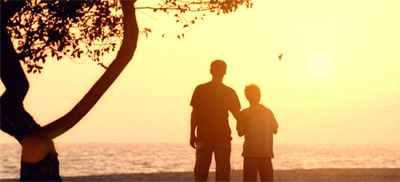
Into the sunset...

Into the sunset…

Continue reading

Star Trek: The Lost Era – Well of Souls by Ilsa J. Bick (Review)

This November and December, we’ll be finishing up our look at the second season of Star Trek: The Next Generation and moving on to the third year of the show, both recently and lovingly remastered for high definition. Check back daily for the latest review.

We’ll be supplementing our coverage of the episodes with some additional materials – mainly novels and comics and films. This is one such entry.

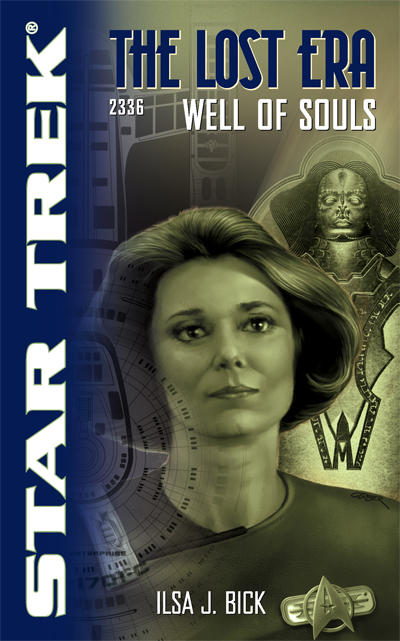
Well of Souls is a story of the Enterprise-C, the ship introduced in Yesterday’s Enterprise. One of the best-received episodes in the history of Star Trek: The Next GenerationYesterday’s Enterprise established Rachel Garrett’s ship as the troubled Enterprise, the tragic flagship, the doomed space craft. Ilsa J. Bick builds on that characterisation in Well of Souls, one small story from some point in Garrett’s command of the Federation flagship.

While Well of Souls feels like a rather unconventional Star Trek novel, it is charming in its own way. Bick connects her tale to the themes of Well of Souls, suggesting a troubled ship manned by a struggling crew. The novel returns time and again to the theme of unfortunate choices, the weight of making the best decision of the options open. Unlike Kirk or Picard, Bick seems to suggest, this version of the iconic starship doesn’t get that many lucky breaks, with her crew repeatedly forced to accept the least bad of a selection of unappetising choices.

Well of Souls is  a thoughtful, introspective piece. It doesn’t flow or pace itself as well as it might, but Bick crafts a compelling picture the never-the-less. While not quite the best of the Lost Era tie-in novels, it’s ambitious and insightful. It lacks the energy of Serpents Among the Ruins or The Art of the Impossible, but it’s still a very worthy read for anybody looking to sketch out a gap in the Star Trek mythos.

tng-wellofsouls

Continue reading

Star Trek: The Next Generation – Booby Trap (Review)

This January and February, we’ll be finishing up our look at the second season of Star Trek: The Next Generation and moving on to the third year of the show, both recently and lovingly remastered for high definition. Check back daily for the latest review.

Booby Trap is a bit of a mess. The writing credits for the episode, featuring four different writers credited with getting the idea from basic story to finished script. This wasn’t at all unusual in the show’s third season – consider the writing credits for Yesterday’s Enterprise – but it gives an indication of the chaos unfolding behind the scenes on the third season of Star Trek: The Next Generation.

It’s Michael Piller’s second credited script, and his first writing credit since he took over the writers’ room. (Although he did, along with Melinda Snodgrass, do a pass on Ronald D. Moore’s script for The Bonding.) As such, it is written with a very clear idea of where Piller wants to take the show, one that shines through a somewhat uneven and all-over-the-place plot, which often feels like several different scripts blended into one.

Building on what came before...

Building on what came before…

Continue reading

Star Trek: The Next Generation – The Bonding (Review)

This January and February, we’ll be finishing up our look at the second season of Star Trek: The Next Generation and moving on to the third year of the show, both recently and lovingly remastered for high definition. Check back daily for the latest review.

The Bonding is a pretty pivotal and momentous episode for Star Trek: The Next Generation. On one hand, it’s the first episode overseen by incoming executive producer Michael Piller. Piller would go on to become one of the most influential producers to work on Star Trek. Aside from steering The Next Generation towards success, he also created Star Trek: Deep Space Nine and Star Trek: Voyager, as well as overseeing the production of the first three Next Generation films.

However, The Bonding is also the first script written by Ronald D. Moore. Obviously, the version that made it to screen had been revised and tweaked by Melinda Snodgrass and Michael Piller, but The Bonding still feels like a Moore script. Ronald D. Moore would go on to be one of the more influential writers on The Next Generation and Deep Space Nine. He also worked (very) briefly on Voyager, before departing and heading up his own reboot of Battlestar Galactica.

So The Bonding is the beginning of something new, an original direction for The Next Generation. Featuring a powerful and wonderful opening half, The Bonding suffers a bit from falling into conventional Star Trek tropes towards the end of the episode. However, it’s still a clever and powerful piece of television.

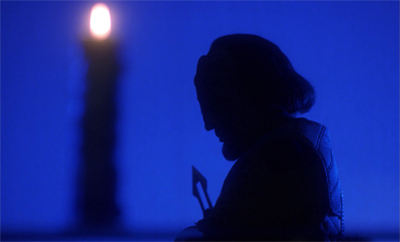
A bit of shadow...

A bit of shadowplay…

Continue reading

Star Trek: The Next Generation – The Survivors (Review)

This January and February, we’ll be finishing up our look at the second season of Star Trek: The Next Generation and moving on to the third year of the show, both recently and lovingly remastered for high definition. Check back daily for the latest review.

Michael Wagner remains something of a forgotten figure among Star Trek fans. While anybody familiar with the behind-the-scenes workings on Star Trek: The Next Generation is aware of the contributions made by the wonderful Michael Piller, and quite a few would be familiar with the work of Maurice Hurley during the first two seasons, Wagner’s four-episode tenure as executive producer and head writer is something of a mystery.

Situated right in the middle of that four-episode run, and the only Star Trek script on which Wagner does not share a credit, The Survivors seems like the most obvious indicator of what Wagner’s version of The Next Generation might have looked like. Of course, it’s impossible to extrapolate from a single episode of television, let alone a single episode of an era that was over before it already began, but it is interesting to look at how Wagner’s work here differs from the style that would be imposed by Piller.

The Survivors is a decidedly high-concept science-fiction mystery, feeling almost like an episode of an anthology featuring the regular cast. Built around a guest star, The Survivors is very much radically opposed to Piller’s vision of character-driven Star Trek.

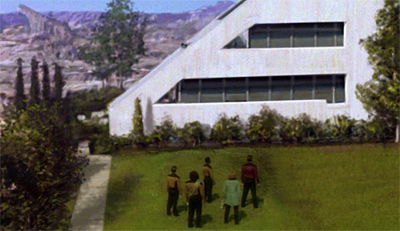
"Nice house. Can't see much about the neighbourhood, though."

“Nice house. Can’t see much about the neighbourhood, though.”

Continue reading

Star Trek: The Next Generation – Manhunt (Review)

This January and February, we’ll be finishing up our look at the second season of Star Trek: The Next Generation and moving on to the third year of the show, both recently and lovingly remastered for high definition. Check back daily for the latest review.

There’s a strange sense of fatigue as we come towards the end of the second season of Star Trek: The Next Generation, as if the effort of producing Q Who? has really just drained the show of any ambition or drive. To be fair, there are probably more banal motivations at play. The 1988 Writers’ Strike had taken the entire industry by surprise and has been credited with dropping television ratings by ten percent. It damaged the tail end of the first season, causing an improvised conclusion to We’ll Always Have Paris and is probably responsible for the mess that was The Neutral Zone.

The damage also bled into the second season. Even closing with a clip show, Shades of Grey, the second season wasn’t able to meet the average quota of twenty-six episodes per season. The season premiere, The Child, had to be hastily repurposed from an aborted script for Star Trek: Phase II. Even with the shortened orders, the second season of The Next Generation frequently saw episodes coming in behind schedule and above budget. This is one of the reasons that Rob Bowman, despite being responsible for two of the season’s strongest episodes (Elementary, Dear Data and Q Who?), did not become a regular director.

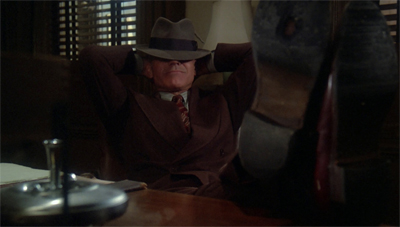
"It's a good time for nap time..."

“It’s a good time for nap time…”

Behind the scenes, the show seemed to be threatening to pull itself apart. Tracy Tormé and Maurice Hurley were frequently at loggerheads with one another over all manner of issues. Tormé was only allowed to register two pseudonyms with the Writers’ Guild of America, he used both on the second season of The Next Generation, protesting over modifications made to his script. It’s no wonder that the writers’ room pretty much exploded at the end of the season, with both Tormé and Hurley departing. When Michael Piller was put in charge on the third season, he had to pretty much start from scratch.

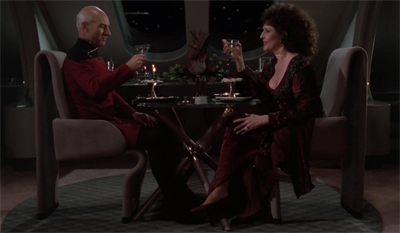
All of which explains why the tail end of the second season seems so lifeless and limp. The Emissary is really the only second season script with any life in it once the show gets past Q Who? Most of the rest of the season seems to trying to limp across the finish line. Still, even with all of that in mind, Manhunt feels a little mean-spirited. It’s an episode designed to mock at Lwaxana Troi, to reduce a middle-aged woman going through a process explicitly compared to menopause to the butt of some particularly harsh joke. It’s hard to find that all that amusing.

Starlit dinner...

Starlit dinner…

Continue reading

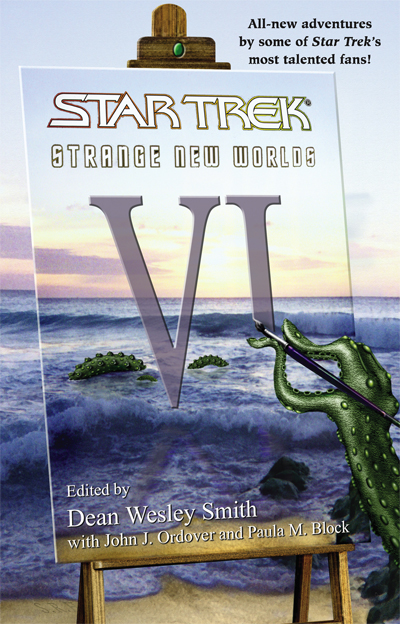
Star Trek: Strange New Worlds VI – The Beginning (Review)

This January and February, we’ll be finishing up our look at the second season of Star Trek: The Next Generation and moving on to the third year of the show, both recently and lovingly remastered for high definition. Check back daily for the latest review.

We’ll be supplementing our coverage of the episodes with some additional materials – mainly novels and comics and films. This is one such entry.

The Borg are, quite possibly, the most significant addition to the Star Trek mythos since the Klingons. They are one of the few modern pieces of Star Trek lore that will be instantly recognisable to a broader audience. They have featured, in some way, in all four of the Star Trek spin-off series. They are constantly rumoured and suggested as a viable antagonist for the rebooted film series. The Borg are a pretty big deal.

And yet, like so many pop culture villains, they seem less threatening the more we know about them. One of the more frequent complaints about the use of the Borg in Star Trek: Voyager was that it made the aliens more familiar, more understandable, more relatable. Continuing to build off the premise of the Borg Queen in Star Trek: First Contact, the Borg became an alien species that Janeway would reason and negotiate with, in stark contrast to Q’s characterisation of the collective in Q Who?

Although Star Trek: Enterprise did manage to turn the Borg’s fascination with mankind into a causal loop, televised Star Trek never managed to produce an origin story for those cybernetic monsters. Ever ready to fill in a perceived blank in the canon, the expanded Star Trek universe has actually proposed a number of origins for the Borg.

st-strangenewworlds6

Continue reading

Star Trek: The Lost Era – Deny Thy Father by Jeff Mariotte (Review)

This January and February, we’ll be finishing up our look at the second season of Star Trek: The Next Generation and moving on to the third year of the show, both recently and lovingly remastered for high definition. Check back daily for the latest review.

We’ll be supplementing our coverage of the episodes with some additional materials – mainly novels and comics and films. This is one such entry.

In theory, you can probably tell a good story about just about anything. There’s a knack to constructing a narrative and in making particular characters fascinating or compelling. In the right hands, even the most tired and boring premise can generate some measure of excitement and over a glimpse of depth that we never thought was there. For example, I didn’t come out of Star Trek: Generations thinking that I’d ever read a classic story about John Harriman, and then I read the superb Serpents Among the Ruins.

However, some ideas strike you as a little less exciting than others. Some concepts seem a bit riskier to pull off, a bit more daunting in scope. Constructing a compelling narrative around the youth of Commander William T. Riker, probably one of the blandest members of the Star Trek: The Next Generation ensemble, seems like an uphill struggle.

Unfortunately, Jeff Mariote’s Deny Thy Father isn’t up to the task of making the boring father-son relationship glimpsed in The Icarus Factor seem any more exciting.

tng-denythyfather

Continue reading