• Following Us

  • Categories

  • Check out the Archives


  • Awards & Nominations

Star Trek: The Next Generation – The Defector (Review)

This January and February, we’ll be finishing up our look at the second season of Star Trek: The Next Generation and moving on to the third year of the show, both recently and lovingly remastered for high definition. Check back daily for the latest review.

The Defector is the script that earned Ronald D. Moore his place on the writing staff of Star Trek: The Next Generation. The writer had contributed the first script produced by Michael Piller, The Bonding, but it was his second pitch – improvised in the heat of the moment – that cemented Moore’s place with the franchise. He would stay on The Next Generation until it finished, before moving on to Star Trek: Deep Space Nine and eventually Star Trek: Voyager, although he departed Voyager quite quickly.

Although Moore retains the credit on the finished episode, apparently – like so many third season scripts – the final draft of The Defector was a collaborative effort involving the whole writing staff. The episode, the first instalment of The Next Generation to air in the nineties, turned out surprisingly well. Indeed, The Defector is one of the strongest episodes of a very strong season.

A defective defector?

A defective defector?

Continue reading

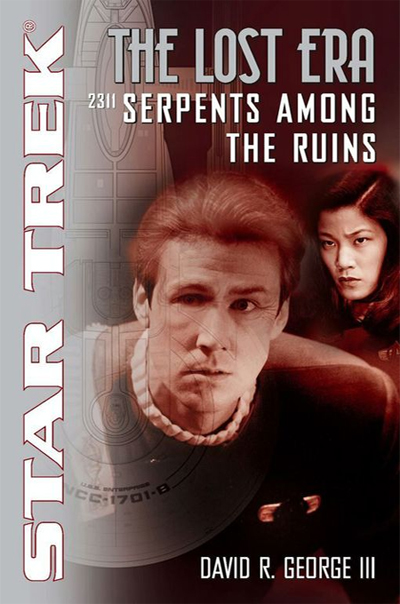
Star Trek: The Lost Era – Serpents Among the Ruins by David R. George III (Review)

This January and February, we’ll be finishing up our look at the second season of Star Trek: The Next Generation and moving on to the third year of the show, both recently and lovingly remastered for high definition. Check back daily for the latest review.

We’ll be supplementing our coverage of the episodes with some additional materials – mainly novels and comics and films. This is one such entry. This is actually supplementary to the first season of the Next Generation, specifically the episode The Neutral Zone.

The first year of Star Trek: The Next Generation was a little rocky when it came to continuity. Skipping roughly a century on from the adventures of James T. Kirk, there were times when it seemed like the writers weren’t entirely sure what had happened during that gap. Early on, for example, it was suggested that the Klingons had joined the Federation, a decision reversed by the show’s third season. Even within the first year of the show, it seemed like the writers hadn’t quite cemented the wider Star Trek universe. In Angel One, we discover that the Romulans are threatening war, only to hear in The Neutral Zone that they’ve actually been absent from galactic affairs for quite some time.

Serpents Among the Ruins is an attempt to explain that absence established in 1988, and contextualise it against the eighteen years of Romulan stories that would follow from the early appearances in Star Trek: The Undiscovered Country through to the end of Star Trek: Deep Space Nine and beyond.

st-serpentsamongtheruins

Continue reading

Star Trek: The Next Generation – The Bonding (Review)

This January and February, we’ll be finishing up our look at the second season of Star Trek: The Next Generation and moving on to the third year of the show, both recently and lovingly remastered for high definition. Check back daily for the latest review.

The Bonding is a pretty pivotal and momentous episode for Star Trek: The Next Generation. On one hand, it’s the first episode overseen by incoming executive producer Michael Piller. Piller would go on to become one of the most influential producers to work on Star Trek. Aside from steering The Next Generation towards success, he also created Star Trek: Deep Space Nine and Star Trek: Voyager, as well as overseeing the production of the first three Next Generation films.

However, The Bonding is also the first script written by Ronald D. Moore. Obviously, the version that made it to screen had been revised and tweaked by Melinda Snodgrass and Michael Piller, but The Bonding still feels like a Moore script. Ronald D. Moore would go on to be one of the more influential writers on The Next Generation and Deep Space Nine. He also worked (very) briefly on Voyager, before departing and heading up his own reboot of Battlestar Galactica.

So The Bonding is the beginning of something new, an original direction for The Next Generation. Featuring a powerful and wonderful opening half, The Bonding suffers a bit from falling into conventional Star Trek tropes towards the end of the episode. However, it’s still a clever and powerful piece of television.

A bit of shadow...

A bit of shadowplay…

Continue reading

Star Trek: The Next Generation – Who Watches the Watchers? (Review)

This January and February, we’ll be finishing up our look at the second season of Star Trek: The Next Generation and moving on to the third year of the show, both recently and lovingly remastered for high definition. Check back daily for the latest review.

Who Watches the Watchers? continues a strong start to the third season of Star Trek: The Next Generation. It is the last episode of the third season produced by Michael Wagner. He would depart the show and leave Michael Piller in charge of the scripts for the rest of the season. It’s also the third-to-last credit for writers Hans Beimler and Richard Manning, who had both been around from the first season.

The writing duo would work on Yesterday’s Enterprise with Ira Steven Behr and Ronald D. Moore, but also finish Allegiance before departing the show at the end of the third season. (They were rather enraged by Piller’s tactless “writing 101” memo, sent later in the season.) Manning and Beimler would go on to write Paradise for Star Trek: Deep Space Nine, and Behr would convince Beimler to return to the franchise for the fourth season of Deep Space Nine. Beimler would be Behr’s most faithful writing partner on that spin-off, teaming with Behr throughout the sixth and seventh seasons in particular.

In many ways, Who Watches the Watchers? returns to some of the themes that the duo had touched upon in their strongest script of the first season, Symbiosis. It’s a complicated morality tale about the ethics of Starfleet and the burden of the Prime Directive.

The answer, apparently, is Liko.

The answer, apparently, is Liko.

Continue reading

Star Trek: The Next Generation – Evolution (Review)

This January and February, we’ll be finishing up our look at the second season of Star Trek: The Next Generation and moving on to the third year of the show, both recently and lovingly remastered for high definition. Check back daily for the latest review.

Evolution kicks off the third season of Star Trek: The Next Generation, and marks the point at which the spin-0ff really comes into its own. It’s remarkable how consistent in quality the third season is, despite the trouble brewing behind the scenes. It’s also remarkable how quickly the show finds its footing after two years of stumbling clumsily in the right direction. Within the first five episodes of the third season, The Next Generation has clearly found its voice.

However, a change is obvious even from Evolution. Michael Piller would take over the reigns four episodes into the season, but he also co-wrote the script to the season premiere. While Piller polished quite a few of the scripts passing through The Next Generation‘s third season, it is interesting that his credited work book-ends the season, setting the tone and leaving a clear impression.

While Evolution is not the strongest episode of the season to come, it does have a much stronger sense of self and purpose than anything that has really come before. It isn’t a bold or ground-breaking script by any measure; it’s actually a relatively simple story. It just tells that story with a wonderful resonance, clarity and efficiency, commodities that have been sorely lacking from The Next Generation to date.

Hold on, it's time for a change...

Hold on, it’s time for a change…

Continue reading

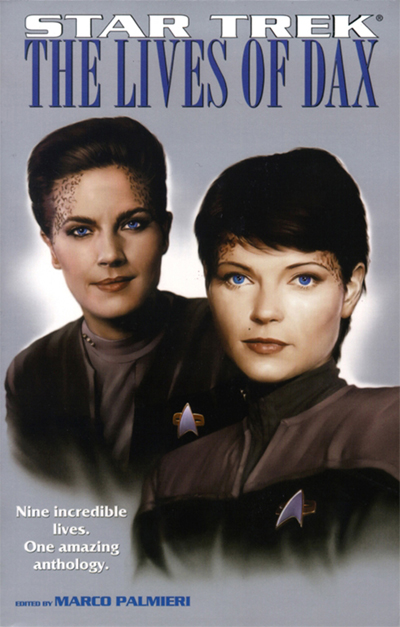
Star Trek: Deep Space Nine – The Lives of Dax: Sins of the Mother (Audrid) by S.D. Perry (Review)

This January and February, we’ll be finishing up our look at the second season of Star Trek: The Next Generation and moving on to the third year of the show, both recently and lovingly remastered for high definition. Check back daily for the latest review.

We’ll be supplementing our coverage of the episodes with some additional materials – mainly novels and comics and films. This is one such entry. This is actually supplementary to the first season of the Next Generation, specifically the episode Conspiracy.

The Star Trek: Deep Space Nine relaunch was the first truly successful attempt to continue a Star Trek television show past its final episode. Of course, there had been novels written before taking place after the finalés of the various shows, but the Deep Space Nine relaunch was the first conscious attempt to directly build upon the events of the series and structure the novels as something of an “eighth season” to the show. If I get through the seven years of Deep Space Nine, I am seriously considering covering the novels.

What’s interesting is that the novels didn’t quite come to be in an instant and decisive sort of way. There was a hazy grey period where books were published after What You Leave Behind, but not necessarily structured as part of that “eighth season.” Two of those books, The Lives of Dax and A Stitch in Time were retroactively welcomed into the relaunch. Indeed, this short story from S.D. Perry proves to pretty essential to the relaunch as a whole.

Like Deep Space Nine itself, the novels picked up and developed on particular themes and plot threads. The entrance of Bajor into the Federation is the most obvious, a plot point set up in Emissary and never completely resolved in the show. However, one particular plot thread seems to have emerged from out of nowhere, stretching back to an aborted arc from the very season of the second generation of Star Trek television shows. The relaunch built heavily on Conspiracy.

ds9-thelivesofdax1

Continue reading

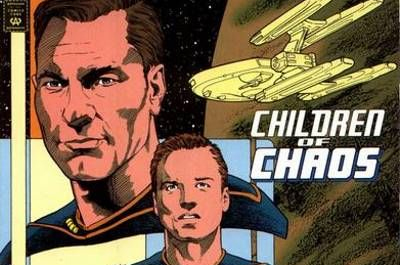
Star Trek: The Next Generation (DC Comics, 1989) #59-61 – Children of Chaos/Mother of Madness/Brothers in Darkness (Review)

This January and February, we’ll be finishing up our look at the second season of Star Trek: The Next Generation and moving on to the third year of the show, both recently and lovingly remastered for high definition. Check back daily for the latest review.

We’ll be supplementing our coverage of the episodes with some additional materials – mainly novels and comics and films. This is one such entry. This is actually supplementary to the first season of the Next Generation, specifically the episode The Battle.

Continuity is a funny thing. Star Trek: The Next Generation would develop its own internal continuity as it went along. The  episodes featuring the Klingons and the Romulans (and the Borg) all fit together in a somewhat logical and progressive pattern, even if the show lacked the clear story arc structure of Star Trek: Deep Space Nine. While the show did offer background information on the members of the Enterprise crew, it never felt particularly beholden to them.

Picard’s time commanding the Stargazer was one of the earliest parts of his history to be established, in the first season episode The Battle. Picard’s tenure on the ship is alluded to several times over the course of the series, and there’s a sense that it was a formative experience for the commander. While it’s never stated outright, it’s suggested that the death of Jack Crusher and the loss of the Stargazer may have turned him into the somewhat aloof and distant superior we met in Encounter at Farpoint.

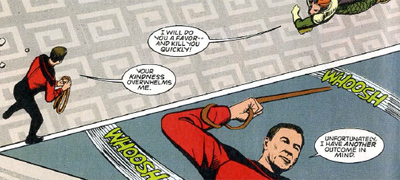
The slingshot manoeuvre...

The slingshot manoeuvre…

And yet, despite that, The Next Generation never delves too deeply into Picard’s past. There’s the occasional reference to his time serving on the Stargazer, or a reminder of his complicated relationship with Wesley and Beverly Crusher, but The Next Generation is a television show that seems to move forwards. Even the events that happen to Picard in the context of the show – his abduction by the Borg in The Best of Both Worlds or his alternate life in The Inner Light – don’t seem to have affected Picard too much.

So it seems appropriate that this bit of future history should become fodder for the comic books and tie-in materials, delving mroe deeply into the history of The Next Generation than was possible (or even desired) on screen.

Stargazing...

Stargazing…

Continue reading

Star Trek: The Next Generation – Up the Long Ladder (Review)

This January and February, we’ll be finishing up our look at the second season of Star Trek: The Next Generation and moving on to the third year of the show, both recently and lovingly remastered for high definition. Check back daily for the latest review.

It’s been a while since Star Trek: The Next Generation has been openly offensive. So, just in case you’d forgotten that this was the same production staff that gave us “Riker beams down to a planet of beautiful women and screws their heads on straight” or “Troi’s womb is occupied by an alien intelligence, isn’t that cute?”, the writing staff have conspired to remind us that just because prejudice doesn’t exist in the 24th century (tell that to the Ferengi!) doesn’t mean that it can’t exist inside a late twentieth century writing room.

Begosh and begorrah! The space Oirish are coming!

"Wait, we're actually filming this?"

“Wait, we’re actually filming this?”

Continue reading

Star Trek: The Lost Era – Deny Thy Father by Jeff Mariotte (Review)

This January and February, we’ll be finishing up our look at the second season of Star Trek: The Next Generation and moving on to the third year of the show, both recently and lovingly remastered for high definition. Check back daily for the latest review.

We’ll be supplementing our coverage of the episodes with some additional materials – mainly novels and comics and films. This is one such entry.

In theory, you can probably tell a good story about just about anything. There’s a knack to constructing a narrative and in making particular characters fascinating or compelling. In the right hands, even the most tired and boring premise can generate some measure of excitement and over a glimpse of depth that we never thought was there. For example, I didn’t come out of Star Trek: Generations thinking that I’d ever read a classic story about John Harriman, and then I read the superb Serpents Among the Ruins.

However, some ideas strike you as a little less exciting than others. Some concepts seem a bit riskier to pull off, a bit more daunting in scope. Constructing a compelling narrative around the youth of Commander William T. Riker, probably one of the blandest members of the Star Trek: The Next Generation ensemble, seems like an uphill struggle.

Unfortunately, Jeff Mariote’s Deny Thy Father isn’t up to the task of making the boring father-son relationship glimpsed in The Icarus Factor seem any more exciting.

tng-denythyfather

Continue reading

Star Trek: The Next Generation – The Measure of a Man (Review)

This January and February, we’ll be finishing up our look at the second season of Star Trek: The Next Generation and moving on to the third year of the show, both recently and lovingly remastered for high definition. Check back daily for the latest review.

Ah, The Measure of a Man.

It’s the first point in the run of Star Trek: The Next Generation where we’ve reached an episode that could legitimately be ranked as one of the best that the show would ever produce. Even today, the episode remains a favourite of Star Trek fans around the world, and a superb demonstration of what the series is capable of. Almost half-way into the second season, we get a glimpse of what The Next Generation could be, and how it balance its own identity against the proud philosophical traditions of its parent series.

It’s also quite brilliant.

A Data with destiny...

A Data with destiny…

Continue reading