• Following Us

  • Categories

  • Check out the Archives


  • Awards & Nominations

Star Trek: Deep Space Nine – The Lives of Dax: The Music Between the Notes (Curzon) by Steven Barnes

This September and October, we’re taking a look at the jam-packed 1994 to 1995 season of Star Trek, including Star Trek: Deep Space Nine and Star Trek: Voyager. Check back daily for the latest review.

Star Trek: Deep Space Nine struggled with the character of Dax on-and-off for the first three years. Terry Farrell found herself at the centre of interesting character-driven stories with Playing God and Facets, but the show tended to treat the Dax symbiont as a macguffin that just happened to be inside Jadzia. Episodes like Dax, Invasive Procedures and Equilibrium tended to marginalise Jadzia so that the symbiont itself could be pushed to the centre of a story driven by other members of the ensemble.

However, Dax is a character with absolutely phenomenal potential. There is something absolutely fascinating idea of a creature that has lived for centuries, and seen generations of history unfold within its lifetime.The symbiont has witnessed countless changes and pivotal moments. Dax has seen civilisations fall and alliances form; Dax has seen old enemies become true friends, and watched civilisations reach out into the cosmos.

The realities of a seven-season television show mean that Deep Space Nine never really got to explore the fact that Dax was living history. Perhaps Blood Oath and Trials and Tribble-ations come closest, using Dax as a rather logical bridge spanning almost a century of continuity. One of the joys of the Star Trek universe is how expansive and how limitless it is. Infinite diversity and all that. While even Dax cannot have seen everything, Deep Space Nine never felt like it captured the sense of Dax as living history.

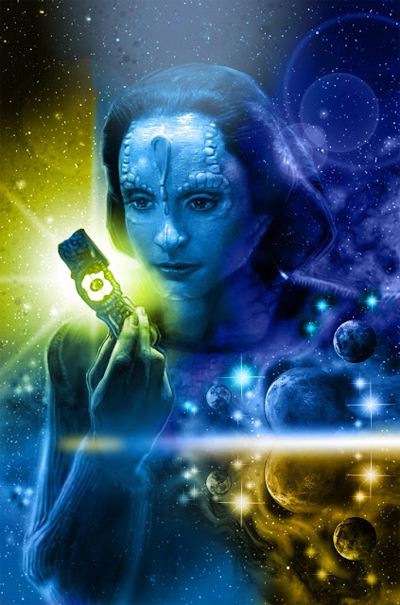
At its best, Pocket Books’ The Lives of Dax anthology captures this sense of change and movement. The books spans the width and breadth of the Star Trek franchise, as lived through the life of one single organism. It is beautiful.
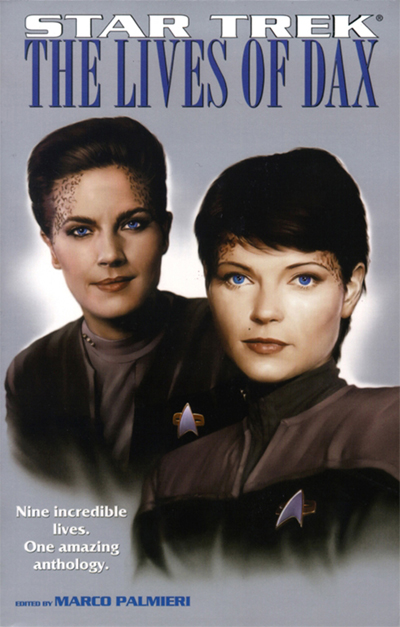
ds9-thelivesofdax1 Continue reading

Star Trek: Deep Space Nine – Shakaar (Review)

This September and October, we’re taking a look at the jam-packed 1994 to 1995 season of Star Trek, including Star Trek: Deep Space Nine and Star Trek: Voyager. Check back daily for the latest review.

There are really two versions of Shakaar.

There is the episode that Shakaar very clearly wants to be. It’s intended to offer Kira a bit of closure, following on from the events of Life Support. It’s very clearly meant to explore Kira’s grieving process and to allow her to come to terms with the loss she suffered. After all, the episode opens establishing that Kira still mourns Bareil, while the episode closes with Kira extinguishing the memorial candle she lit for him. (Which does invite the audience to wonder if it was burning the whole time she was on Bajor.)

Carrying a torch...

Carrying a torch…

As such, it makes sense to offer Kira an opportunity to get back to her roots – to suggest that Kira might secretly want to return to the relative simplicity of a rebel fighter resisting an oppressive government; fighting a war is a lot less complex than navigating the peace. Kira’s reunion with the Shakaar Resistance Cell is meant to offer her a way to escape into something comfortable, to avoid moving forward; because moving forward is tough and painful. Shakaar should be about Kira learning that she has to push forward. It should be a companion piece to Progress.

The episode can’t quite manage this. Instead, we end up with an episode about how Kira gets swept off her feet by a dashing hunk of a man – an episode that leaves the viewer with the unfortunate implication that Kira only needed to find another weirdly paternal man to help her get past the death of the man she loved. Shakaar is an episode with a host of interesting ideas, but isn’t quite sure how to best bring those ideas to the screen.

You Winn some, you lose some...

You Winn some, you lose some…

Continue reading

Star Trek: Deep Space Nine – Family Business (Review)

This September and October, we’re taking a look at the jam-packed 1994 to 1995 season of Star Trek, including Star Trek: Deep Space Nine and Star Trek: Voyager. Check back daily for the latest review.

Family Business is surprisingly good, standing as one of the strongest Ferengi-centric episodes produced during the run of Star Trek: Deep Space Nine. This is largely down to how Family Business treats its central characters. While still broadly played as a farce, Family Business is rooted in character. Like House of Quark (and unlike Prophet Motive), the episode takes care to treat its characters with a great deal of respect.

This isn’t an episode constructed around stock comedy tropes and trying to get the audience to laugh at one-note caricatures. Instead, it’s an episode firmly built around exploring Quark as a character in his own right. Family Business makes the decision to treat Quark (and its other Ferengi characters) with respect, and it’s a decision that ultimately pays dividends.

Naked ambition...

Naked ambition…

Continue reading

Star Trek: Deep Space Nine – Explorers (Review)

This September and October, we’re taking a look at the jam-packed 1994 to 1995 season of Star Trek, including Star Trek: Deep Space Nine and Star Trek: Voyager. Check back daily for the latest review.

Explorers is a wonderful piece of Star Trek: Deep Space Nine, an episode produced by a show entirely comfortable with itself. Indeed, the entire point of Explorers seems to be stressing just how comfortable Deep Space Nine has become in its own skin. It’s a leisurely and relaxed celebration of what makes the show unique in the Star Trek franchise, wallowing in the things that make Deep Space Nine the show that it is.

With a smart script by René Echevarria adapted from a solid premise by Hilary J. Bader, Explorers is an episode that never feels like it has anything to prove. And that’s the charm of it all.

Open to new cultures...

Open to new cultures…

Continue reading

Star Trek: Deep Space Nine – The Die is Cast (Review)

This September and October, we’re taking a look at the jam-packed 1994 to 1995 season of Star Trek, including Star Trek: Deep Space Nine and Star Trek: Voyager. Check back daily for the latest review.

The Die is Cast is, like Improbable Cause before it, a wonderful piece of television.

As with most Star Trek: The Next Generation and Star Trek: Deep Space Nine two-parters, The Die is Cast maintains continuity and consistency with its predecessor, but it feels like a very different episode than Improbable Cause. After all, the curtain has been pulled back. The assassination attempt is no longer the driving force of the narrative (in fact, it’s barely referenced), with the plot focusing on Enabrain Tain’s pre-emptive strike against the Dominion.

A bruised ego...

A bruised ego…

It’s interesting that it falls to the Cardassians and the Romulans to drive the Dominion plot onwards. There’s been no real development of this long-form plot since Sisko and his crew escaped at the end of The Search, Part II. Episodes like The Abandoned and Heart of Stone have seen the crew encountering individual members of the Dominion, and shows like Visionary have had characters sitting around talking about them, but nothing has actually happened. It is mostly business as usual.

As such, the episode’s title feels beautifully appropriate – it’s the crossing of a threshold, a point from which there can be no return. Not just for Tain or the Cardassians, but the show itself.

Odo's sympathy for Garak runs dry...

Odo’s sympathy for Garak runs dry…

Continue reading

Star Trek: Deep Space Nine – Improbable Cause (Review)

This September and October, we’re taking a look at the jam-packed 1994 to 1995 season of Star Trek, including Star Trek: Deep Space Nine and Star Trek: Voyager. Check back daily for the latest review.

Improbable Cause is an episode that should be a mess. It was originally conceived as a sort-of-sequel to Second Skin, building off Garak’s murder of Entek in that episode. The idea was that Garak would face the consequences of that action, with the Obsidian Order planning an assassination attempt. However, the script was incredibly difficult to break. The resolution felt contrived and forced, closing the story out with Garak blackmailing is adversaries into compliance using a never-before-referenced isolinear rod felt overly convenient.

With the script not working, desperate action was taken. It was decided to extend Improbable Cause into a two-parter at the last minute, tying it into the proposed sequel to Defiant. The decision was made so late in the production schedule that it was impossible to pull the script back out of production. Even though Improbable Cause aired after Through the Looking Glass, it was produced beforehand. Writer René Echevarria re-wrote the last two acts of Improbable Cause with The Die is Cast screenwriter Ronald D. Moore in a frenzy, to tie both parts together.

Everything burns...

Everything burns…

This is the very definition of “production nightmare.” It recalls one of those stories that you hear about blockbuster movies that start shooting without a finished script, or directors being locked out of the editing suite. By all accounts, Improbable Cause should have been a trainwreck held together by duct tape and good thoughts. Instead, there’s a credible argument that Improbable Cause is the strongest episode of the third season. It’s certainly the strongest episode broadcast since Star Trek: Voyager came on the air.

And that’s down to one simple fact: every single aspect of Improbable Cause works extraordinarily well.

Odo has the scent...

Odo has the scent…

Continue reading

Star Trek: Deep Space Nine – The Soul Key by Olivia Woods (Review)

This September and October, we’re taking a look at the jam-packed 1994 to 1995 season of Star Trek, including Star Trek: Deep Space Nine and Star Trek: Voyager. Check back daily for the latest review.

The Soul Key would wind up being the last novel published as part of the Deep Space Nine relaunch.

The Soul Key was published in July 2009. The next month, Una McCormack’s wonderful The Never-Ending Sacrifice would be published. However, McCormack’s novel was very written outside the relaunch, running as a companion to the series and unfolding in the immediate aftermath. After that, the Deep Space Nine book line found itself folded into various crossovers, like Typhon Pact and The Fall. There was a sense that the line was drifting away from Deep Space Nine and being recontextualised in Pocket Books’ larger Star Trek series.

The Soul Key picks up where Fearful Symmetry left off, following Kira, mirror!Iliana and Vaughn as they venture into the mirror universe in pursuit of the crazed Iliana Ghemor.

ds9-soulkey

Continue reading

Star Trek: Deep Space Nine – Through the Looking Glass (Review)

This September and October, we’re taking a look at the jam-packed 1994 to 1995 season of Star Trek, including Star Trek: Deep Space Nine and Star Trek: Voyager. Check back daily for the latest review.

It’s very tempting to write off the problems with the mirror universe episodes of Star Trek: Deep Space Nine as diminishing returns – the idea that repeated exposure to what was once novel robs that item of its novelty. It is possible to become immune to the charms of camp, dulled to absurd space opera, and just worn out by watching the cast play “space pirates meet Star Wars.”

However, this does a bit of a disservice to the mirror universe as a concept. As iconic as it has become, Mirror, Mirror worked very well as a piece of introspection for the original Star Trek. Crossover stands out as one of the strongest episodes in the first two years of Deep Space Nine, because it manages to capture the thoughtful-yet-campy self-criticism of Mirror, Mirror.

Let's face it, after what O'Brien's been through, nobody would be surprised if he snapped...

Let’s face it, after what O’Brien’s been through, nobody would be surprised if he snapped…

In contrast, Through the Looking Glass marks the point at which the mirror universe really ceases to be a clever concept, and becomes something that is simply kept around because it’s old and because the production team like the idea of playing “roguish rebels and evil empires” in a way that’s impossible in the mainstream Star Trek universe.

While the episode does have an interesting central premise and is nowhere near as weak as some of the mirror universe episodes ahead, Through the Looking Glass is the moment where the mirror universe seems to get away from Deep Space Nine.

They really nailed Rom to the wall...

They really nailed Rom to the wall…

Continue reading

Star Trek: Deep Space Nine (Malibu Comics) #29-30 – Enemies and Allies (Review/Retrospective)

This September and October, we’re taking a look at the jam-packed 1994 to 1995 season of Star Trek, including Star Trek: Deep Space Nine and Star Trek: Voyager. Check back daily for the latest review.

Enemies and Allies is a particular brand of oddity. It is the most throwaway story imaginable.

Continuing the trend of recruiting Star Trek actors to write for the comics, Malibu pursued Star Trek: Voyager regular Tim Russ to write for their monthly Star Trek: Deep Space Nine comic. Russ was ably assisted by Mark Paniccia. Paniccia was the editor for Malibu’s Star Trek comics. He co-wrote Rules of Diplomacy with Aron Eisenberg, and also wrote the script for the two-part Sole Asylum headlining the twenty-ninth and thirtieth issues of the Deep Space Nine monthly.

Star Trekkin' across the mirror universe!

Star Trekkin’ across the mirror universe!

As with the other actors to write for the line and the Star Trek actors-turned-writers in general, Russ concentrates on his own character. He crafts a story based around Tuvok. However, it is quite clear that Malibu has not reached the stage where it could launch a Voyager comic. It was in the process of planning such a comic when Marvel bought the rights to license all Star Trek comics in 1996. As such, Tim Russ is tasked with writing a comic centring around Tuvok without taking place in the same continuity of Voyager.

The solution to this problem was quite ingenious, even if the execution was less than satisfying. Tim Russ would write a two-part short story centring around mirror!Tuvok, the character who fleetingly cameo-ed in Through the Looking Glass.

Reflections on Tuvok...

Reflections on Tuvok…

Continue reading

Star Trek: Deep Space Nine – Distant Voices (Review)

This September and October, we’re taking a look at the jam-packed 1994 to 1995 season of Star Trek, including Star Trek: Deep Space Nine and Star Trek: Voyager. Check back daily for the latest review.

Poor Julian Bashir. Even at two-and-a-half seasons in Star Trek: Deep Space Nine, the character is still a blank slate. Distant Voices is a story that takes us inside the character’s head, but it winds up feeling very generic. It turns out that Bashir is afraid of getting old, as awkwardly pointed out in the opening scene. He also might have some self-esteem issues. For an episode that journeys into Bashir’s brain, Distant Voices is really pretty bland. There’s really not too much going on there.

Indeed, the most interesting thing about this glimpse inside Bashir’s mind is that it is so generic that it manages to avoid conflicting at all with the character-shattering revelation that Ronald D. Moore proposes in Doctor Bashir, I Presume. While it’s a nice piece of trivia, it’s hardly a compelling hook.

"So this is what a 100,000th episode party looks like..."

“So this is what a 100,000th episode party looks like…”

Continue reading