• Following Us

  • Categories

  • Check out the Archives


  • Awards & Nominations

The X-Files – Within (Review)

This October/November, we’re taking a trip back in time to review the eighth season of The X-Files and the first (and only) season of The Lone Gunmen.

What is The X-Files without Mulder? Can it even exist without Mulder?

The show entered its eighth season facing an existential dilemma. David Duchovny had renewed his contract with Fox at the last possible minute, three days before Requiem consigned his character to limbo. However, it was not necessarily the renewal that Fox would have wanted. Duchovny had agreed to reprise the role of Mulder in the eighth season of The X-Files, but only for eleven of the season’s twenty-one episodes. This meant that the character of Mulder could only actually appear in just over half of the season’s episodes.

Eye see...

Eye see…

This was a pretty significant blow to The X-Files. The title of the show referred to the procedural cases investigated by Mulder and Scully, but the series had long abandoned any pretense of focusing on those cases ahead of Mulder and Scully. David Duchovny and Gillian Anderson had elevated the characters to pop culture icons, with any pop savvy person capable of easily slipping a reference to Mulder and/or Scully into casual conversation. The chemistry between the two was so strong it forced the global conspiracy to second billing in The X-Files: Fight the Future.

Attempting The X-Files without Mulder (or with “just under fifty percent less Mulder”) was perhaps the most daring and ambitious decision of the show’s entire nine-season run.

"And introducing Robert Patrick."

“And introducing Robert Patrick.”

Continue reading

The X-Files – Je Souhaite (Review)

This September, we’re taking a trip back in time to review the seventh season of The X-Files and the first (and only) season of Harsh Realm.

The late seventh season has something of a twilight quality to it.

Even the show’s production staff are unsure whether the show will be coming back for an eighth season, so every episode takes on a special significance. Could this episode be “the last time that…”? Is Brand X the last time that the show does a traditional monster of the week? Is Hollywood A.D. the last time that David Duchovny writes and/or directs? Is Fight Club the last time that Chris Carter writes a non-mythology episode? Is Je Souhaite the last time that Mulder and Scully just investigate a weird standalone case together? There is a weight to it all.
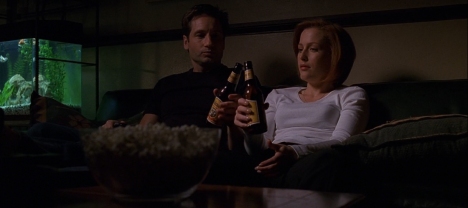
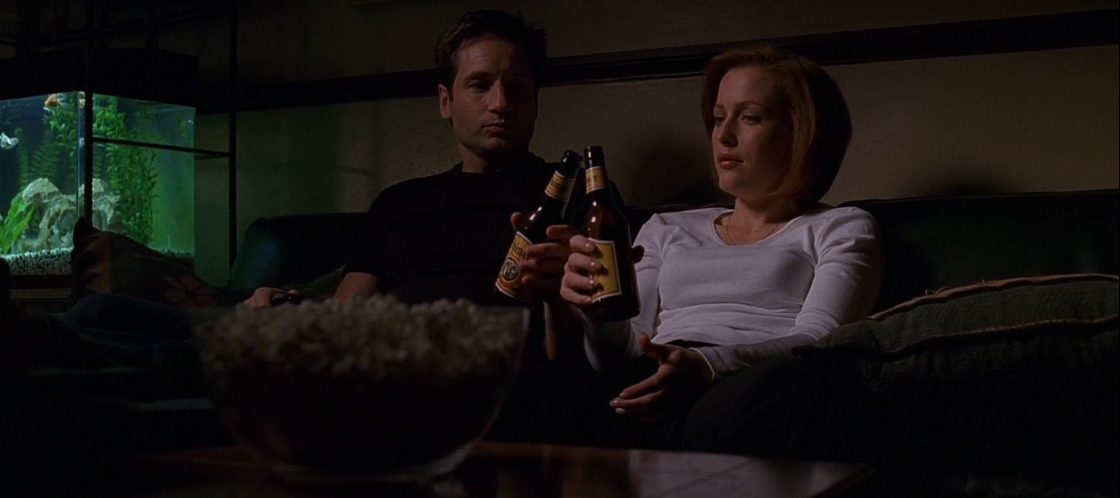
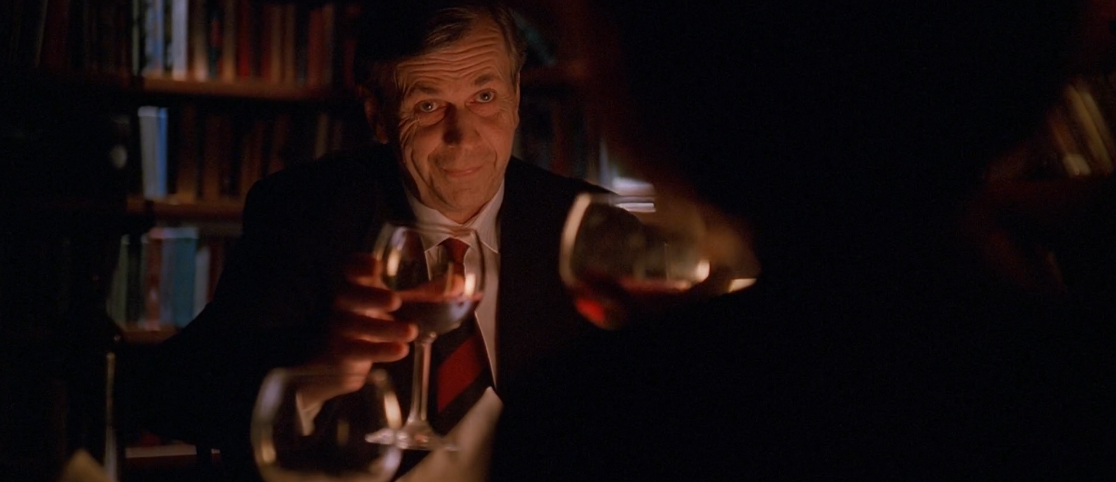
"I'll drink to that."

“I’ll drink to that.”

Of course, the show would come back for an eighth season. There would be lots of traditional monster of the week stories after Brand X. David Duchovny would enjoy another story and directorial credit after Hollywood A.D. Chris Carter would get to write non-mythology episodes after Fight Club, and even get to direct a much more successful whimsical adventure. Mulder and Scully would get to hang out together in the late eighth season and even at the very end of the ninth. In a very real way, this is not the end.

However, in an equally real way, this is the end. It has become hyperbole to suggest that something “… will never be the same again.” Even The X-Files has reinvented itself at least twice by this point, at the start of the third and sixth seasons. However, it is also perfectly reasonable to argue that The X-Files actually will never be the same again. The show changes on a very fundamental level after this point, with Je Souhaite serving as the very last glimpse of the show as it was. In many ways, this is the end of the road.
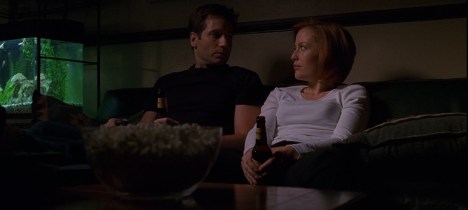
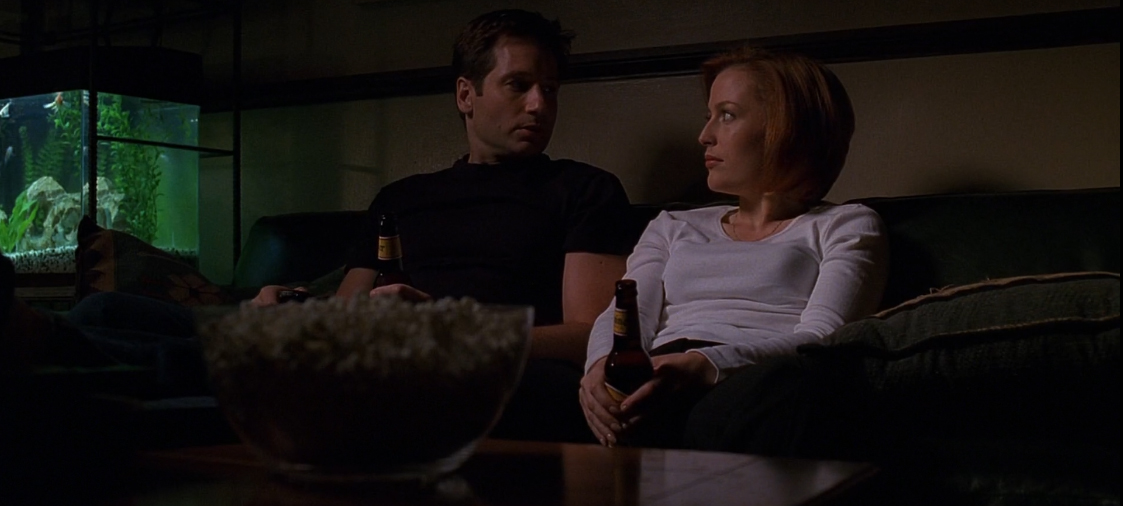
"So... meet up in about fifteen years?"

“So… meet up in about fifteen years?”

Gilligan would get to write and direct another episode of The X-Files before the show finally came to an end. In fact, there are a few thematic similarities between Je Souhaite and Sunshine Days, with both stories serving as affectionate and romantic finalés to Vince Gilligan’s version of The X-Files. There are still two full seasons ahead. Indeed, it is interesting to wonder what it would be like had Je Souhaite come earlier in the season, or even during the sixth season; it would be a light and fun episode, but would have the same heft and weight?

However, there is something different about Je Souhaite. In hindsight, it feels like a snapshot of an extended (seven-year-long) moment coming to end; it is a picture in an photo album that captures Mulder and Scully right on the edge of a transition. It is innocuous, yet profound. It is a picture of college friends sharing a drink at the end of the last term, unaware (or silently aware) of how things will change in the coming months. It is a picture of friends just hanging out before one gets married or has children.
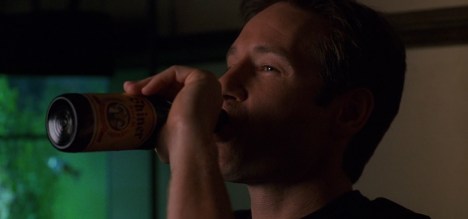
"I am outta here!"

“I am outta here!”

Of course, Mulder and Scully see each other after this point; there is the second half of season eight and the revival hanging in the future. (To say nothing of The X-Files: I Want to Believe or the comics.) College buddies still hang out. People with families maintain friendships. Still, those dynamics change. They are never quite the same. Not better, not worse. Just different. As weird as it is to describe an episode where Mulder encounters a genie as “the point before things got weird”, that’s exactly what Je Souhaite feels like.

What is most striking about Je Souhaite is how much the episode accepts that reality. It is not morose or melancholy; it is practically celebratory. Instead of eulogising the good times, it decides to have a good time. There is something very sweet about that.
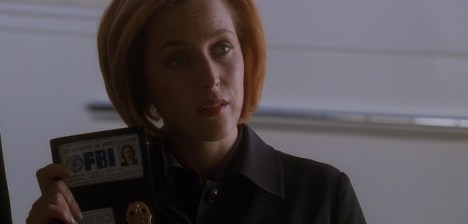
"I'm still here for two seasons..."

“I’m still here for two seasons…”

Continue reading

The X-Files – En Ami (Review)

This September, we’re taking a trip back in time to review the seventh season of The X-Files and the first (and only) season of Harsh Realm.

The seventh season mythology has a weird hazy feeling to it. It feels almost like a postscript.

It is hard to explain what is happening with the mythology at this point. Two Fathers and One Son had promised an end to the over-arching conspiracy narrative, but it felt like something of a half-measure. The First Elder and the Second Elder were killed off, but most of the other major players remained. Although Scully congratulated Mulder on toppling the conspiracy in Biogenesis, the same episode seemed to off-handedly suggest that the Cigarette-Smoking Man was still working on it. He was still talking hybrids in The Sixth Extinction II: Amor Fati.

I'll drink to that...

I’ll drink to that…

At the same time, Two Fathers and One Son marked the end of the mythology as an on-going concern. The particulars of colonisation and the nature of the Cigarette-Smoking Man’s work were confined to limbo, some sort of bizarre twilight realm where they might exist or they might not; they simply drift around the show like ghosts. Whether or not Two Fathers and One Son actually resolved any aspect of the show’s overarching plot is open to debate; however, they very clearly suggested that the mythology was not the show’s central story going forward.

In the seventh season, it frequently feels like the mythology is a hazy backdrop against which character-driven stories might unfold. In The Sixth Extinction, an alien ship becomes a gateway to meditations on the nature of human existence while Krycek blackmails Skinner and Fowley still works with the Cigarette-Smoking Man. In The Sixth Extinction II: Amor Fati, the Cigarette-Smoking Man is making hybrids and murders Fowley, but the heart of the story is Mulder’s flirtation with temptation. Sein und Ziet and Closure have nothing to do with colonisation.

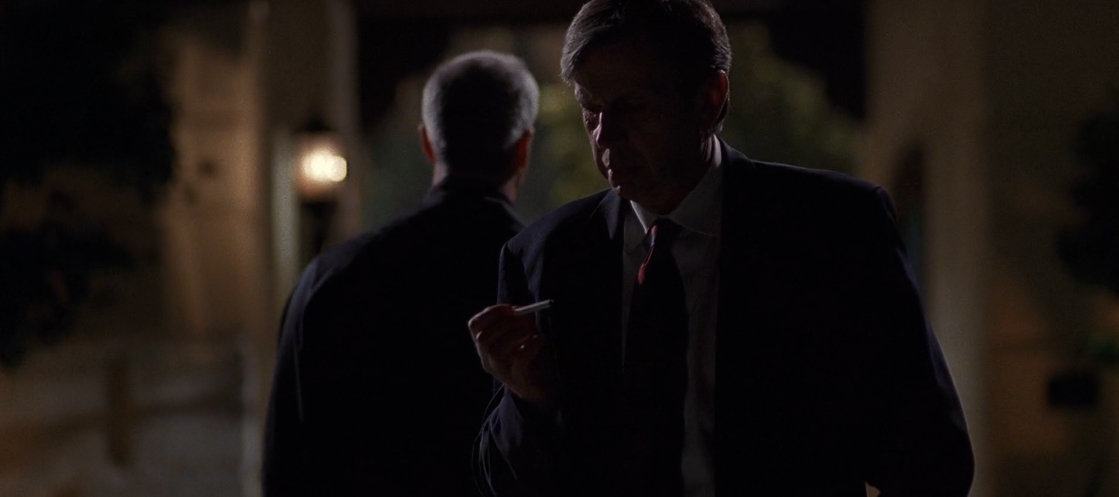
Smokey and the bandit...

Smokey and the bandit…

To be fair, this was arguably always the case with mythology episodes. In hindsight, it can seem like the mythology episodes were less part of an on-going story and more meditations on common themes tied into a shared continuity. Colony and End Game are spectacular pieces of television, but they are hard to reconcile with later revelations. The End arguably has more in common with Biogenesis than it does with the feature film into which it is supposed to tie. However, the mythology always held the promise of revelations and twists to propel it forward.

The principal effect of Two Fathers and One Son seems to have been to take away that sense of purpose and destination. The mythology is no longer building towards something or racing forward. Instead, the mythology stories seem to take place in the wasteland; a world in ruins, with only the fractured semblance of internal logic. En Ami continues the trend of setting character-driven stories amid the hazily defined unreality. Scully and the Cigarette-Smoking Man take a road-trip together through whatever is still standing.

Peering through an open door...

Peering through an open door…

Continue reading

The X-Files – Signs and Wonders (Review)

This November, we’re taking a trip back in time to review the seventh season of The X-Files and the first (and only) season of Harsh Realm.

Religion is a major part of The X-Files. After all, what is the show but a meditation on faith?

In a way, this is an aspect that dates the series. While the show’s conspiracy theories and surveillance culture paranoia resonate as effectively in 2015 as they did in 1995, the show’s religious themes seem innocent and naive in the wake of 9/11 and the War on Terror. Signs and Wonders was broadcast towards the end of January 2000. It is hard to imagine the episode being produced even two years later, once the world had been so thoroughly shaken by acts of religious zealotry.

Snaking along...

Snaking along…

The X-Files exists as a product of the nineties, pre-dating what many have termed “the new atheism.” It exists against the backdrop of the Clinton era, in the space between the fall of the Berlin Wall and the start of the War on Terror. There are points when the shew resonates beyond that; The X-Files is often a profound and thoughtful meditation on issues like trust and faith. However, there are also points where The X-Files almost seems fused in time; where it seems like a moment has been captured in celluloid like a mosquito trapped in amber.

Signs and Wonders feels like one of those moments, sitting between the failed impeachment of President Bill Clinton and the triumphant election of President George W. Bush. This is what the last gasp of the nineties looks like.

Snake handling...

Snake handling…

Continue reading

The X-Files – Orison (Review)

This November, we’re taking a trip back in time to review the seventh season of The X-Files and the first (and only) season of Harsh Realm.

The X-Files has generally avoided sequels.

There are exceptions, of course. Eugene Victor Tooms appeared twice in the first season, bookending the show’s first year in Squeeze and Tooms. The character of Robert Patrick Modell resurfaced in Kitsunegari, two years after his debut in Pusher. In a way, the mythology could be read as a series of sequels and inter-related plots, with the show lacking the sort of truly overarching design that would identify it as a single story that had been serialised. Still, The X-Files has been reluctant to resurrect old monsters, perhaps acknowledging the law of diminishing returns.

Here's Donnie!

Here’s Donnie!

So Orison is something of an oddity. It marks the second and final appearance of Donnie Pfaster, the demonic Ted Bundy type who made such an impression in Irresistible. Much like Robert Patick Modell or Eugene Victor Tooms, Donnie Pfaster was popular enough the bringing him back made a certain amount of sense; if the show had to do a “sequel” episode, Donnie was as good a candidate as any. Meanwhile, Flukeman waits by the phone. However, the question remains: why?

What is the point of bringing back Donnie? What didn’t the show do last time that it would do this time? It’s a very basic, very fundamental question. Unfortunately, Orison does not have much of an answer.

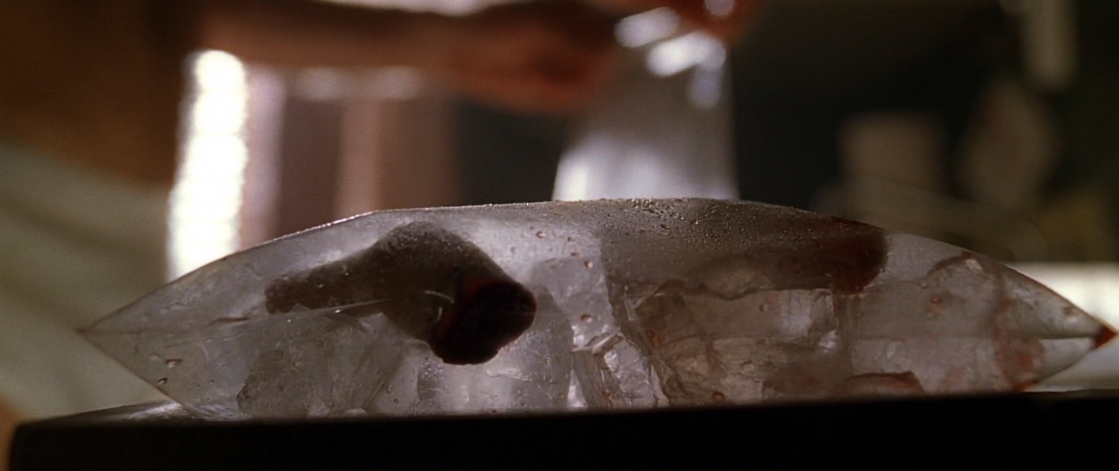
Finger food...

Finger food…

Continue reading

The X-Files – The Goldberg Variation (Review)

This November, we’re taking a trip back in time to review the seventh season of The X-Files and the first (and only) season of Harsh Realm.

Jeffrey Bell does whimsical very well.

The Rain King and The Goldberg Variation are perhaps Bell’s two strongest contributions to The X-Files, and they stand as some of the show’s most light-hearted episodes. In a way, Bell was the perfect new writer for a show moving from moody Vancouver down to sunny Los Angeles, with his best contributions to the show managing to preserve the weirdness that fans had come to know and love while turning up the brightness at the same time. They were episodes that felt much more applicable to the show’s new home in California.

Eye see...

Eye see…

The Rain King and The Goldberg Variation are bright episodes, and not just in a literal sense. There is an optimism that runs through both scripts, suggesting that maybe the world is not an inherently hostile place and maybe not every X-file is plotting to eat your liver or carve out your cancer. Strange things happen in the world on every day, and some times those strange things can be wondrous as well as terrifying. While quite far removed from the aesthetic of the first five seasons, The Rain King and The Goldberg Variation are no less true to the spirit of the show.

The Goldberg Variation is light entertainment. It is so light that there are points where it almost seems ready to float away. That may not be such a bad thing.

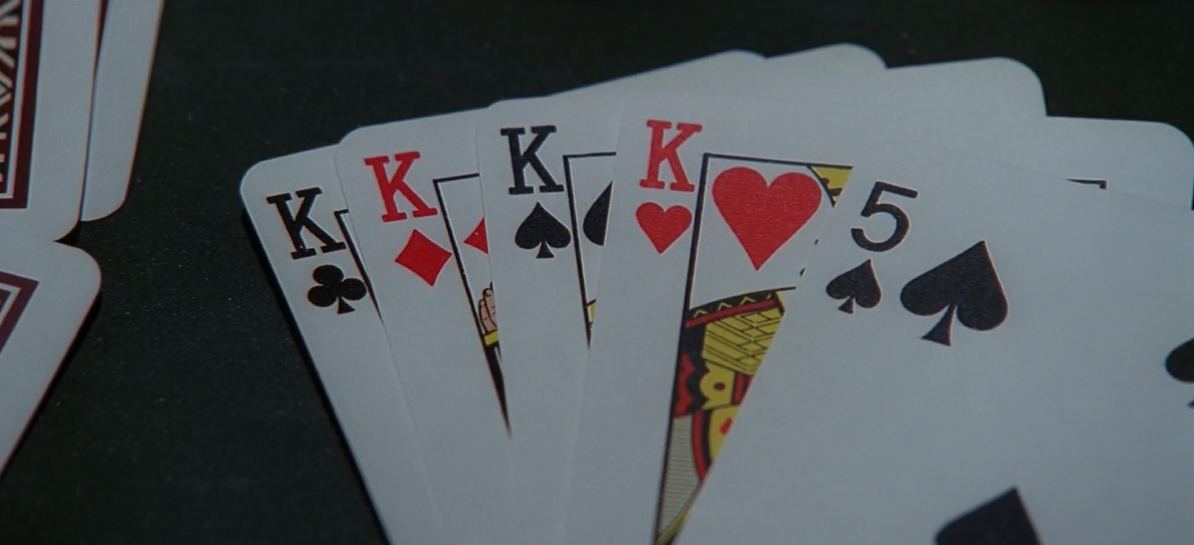
Sometimes you have to play the hand you're dealt...

Sometimes you have to play the hand you’re dealt…

Continue reading

The X-Files – Millennium (Review)

This November, we’re taking a trip back in time to review the seventh season of The X-Files and the first (and only) season of Harsh Realm.

There are any number of ironies around the cancellation of Millennium.

The show was cancelled by Fox to make room for Harsh Realm, hoping that Chris Carter’s new show would perform better in the Friday night slot. Of course, that did not turn out to be the case; Harsh Realm was cancelled after only three episodes had been broadcast, all failing to even match the already low numbers of the third season of Millennium. A show in its third season was cancelled to make room for a hip new show that was pretty much dead on arrival. However, that is not the only irony.

Frank Black's return...

Frank Black’s return…

Millennium concluded with Goodbye to All That in May 1999. The show fell seven months shy of its own deadline. If Fox had commissioned only eight new episodes, the creative team would have been able to take the show right up to the turn of the millennium itself. (Well, in a way that would make sense to most viewers. “Nobody likes a maths geek, Scully.” Even one who is technically correct.) It seems like Frank Black would not get to see the arrival of the date that had defined his show. (It was the title, after all.)

If Christmas is the season of goodwill to all men, then it is a nice gesture that The X-Files invited Frank Black to ring in the new year (and the new millennium) with them. It might not be much more, but it is a nice gesture.

... is just one thing that fans remember about this episode.

… is just one thing that fans remember about this episode.

Continue reading

The X-Files – The Sixth Extinction (Review)

This November, we’re taking a trip back in time to review the seventh season of The X-Files and the first (and only) season of Harsh Realm.

The fate of individual human beings may not now be connected in a deep way with the rest of the universe, but the matter out of which each of us is made is intimately tied to processes that occurred immense intervals of time and enormous distances in space away from us. Our Sun is a second- or third-generation star. All of the rocky and metallic material we stand on, the iron in our blood, the calcium in our teeth, the carbon in our genes were produced billions of years ago in the interior of a red giant star. We are made of star-stuff.

– Carl Sagan’s Cosmic Connection

Sea of blood...

Sea of blood…

Continue reading

The X-Files – Field Trip (Review)

This July, we’re taking a trip back in time to review the sixth season of The X-Files and the third (and final) season of Millennium.

Field Trip works well as the penultimate episode of the sixth season.

It returns to a lot of big ideas threaded through the sixth season, particularly as they relate to endings and mortality. It also pushes the bond between Mulder and Scully to the fore; it feels like something of a spiritual successor to both Bad Blood and Folie á Deux in its portrayal of the dynamic between Mulder and Scully, charting a rough arc in how Mulder and Scully come to see themselves and each other. Even beyond all that, it contains another surrogate romantic relationship for Mulder and Scully, this time in Wallace and Angela Schiff.

A lot to digest...

A lot to digest…

More to the point, Field Trip seems to hit on the core anxieties at the heart of the sixth season. It is a meditation on the show’s success and the status quo that has to be so careful maintained to keep the show from tipping over. As with TriangleDreamland IDreamland II, How the Ghosts Stole Christmas and Monday, our heroes find themselves trapped in something of a weird alternate reality. The climax of Field Trip hinges on both Mulder and Scully deducing that their world operates according to the logic of a television show.

However, Field Trip is perhaps most intriguing in the way that it proposes two separate endings to The X-Files. The humongous fungus at the heart of Field Trip offers both Mulder and Scully a conclusion to their six-year journey, an opportunity for closure and satisfaction. In doing so, Field Trip suggests that it is the central tension at the heart of The X-Files that keeps the show young. There is no way to end the show without absolutely and definitively declaring that one of the characters is right and the other is wrong.

Down the rabbit hole...

Down the rabbit hole…

As such, the endings seem mutually exclusive. Field Trip suggests that endings designed to satisfy Mulder and Scully and mutually exclusive and irreconcilable – recalling the implication in Bad Blood that both Mulder and Scully filter the same events through different lenses. However, Field Trip is rather more optimistic in its assessment of the dynamic between Mulder and Scully. While it might not be able to provide an ending to the show that satisfies both, Field Trip suggests that the duo have reconciled themselves to each other.

Whereas Bad Blood seemed to state that Mulder and Scully would never share the same perspective, Field Trip suggests that both characters have evolved and matured to the point where they can see the world through the eyes of the other. Bad Blood featured the two characters positing wildly different accounts of the same event, but Field Trip only resolves when Mulder and Scully come to share each other’s perspective. It feels entirely appropriate to close out the sixth season suggesting a new harmony between the two leads.

It's a dirty job...

It’s a dirty job…

Continue reading

The X-Files – Milagro (Review)

This July, we’re taking a trip back in time to review the sixth season of The X-Files and the third (and final) season of Millennium.

The teaser establishes the mood quite quickly. It is a rather striking opening sequence for an episode of The X-Files, focusing on a writer staring at a blank page. The sequence cuts through time as the writer searches for inspiration, trying to take his cue from the index cards helpfully arranged on the wall. Eventually, the writer makes a grand gesture. He reaches into his chest, and pulls out his heart. It is a very effective opening sequence, one that makes it clear that Milagro will not be a normal episode of The X-Files.

The sequence also makes it clear that Milagro will not will it be a subtle piece of television. The teaser is not a particularly elegant metaphor, but it is an effective one. What is writing but tearing out a piece of yourself? Sometimes you have to wear your heart on your sleeve; sometimes you have to put it on the page. The teaser to Milagro is a very earnest piece of work from Chris Carter, a clear acknowledgement that what follows is a deeply personal piece of work.

Burning heart...

Burning heart…

Continue reading