• Following Us

  • Categories

  • Check out the Archives


  • Awards & Nominations

Doctor Who: Planet of Evil (Review)

To celebrate the fiftieth anniversary of the longest-running science-fiction show in the world, I’ll be taking weekly looks at some of my own personal favourite stories and arcs, from the old and new series, with a view to encapsulating the sublime, the clever and the fiendishly odd of the BBC’s Doctor Who.

Planet of Evil originally aired in 1975.

He used the neutron accelerator. If he hit Sorenson, it could be disastrous.

You mean things can get worse? I don’t believe it.

– the Doctor and Sarah Jane make sure we understand the stakes

I feel a bit sorry for Planet of Evil. I mean, it sits near the start of one of the best seasons of Doctor Who, and yet it’s generally overlooked. It’s not that Planet of Evil is bad – The Android Invasion from the same season is actually bad, and is remembered as such. It’s more that Planet of Evil doesn’t really feel as exceptional as it could be. The Hinchcliffe and Holmes era of Doctor Who was cranking out classic adventures and iconic images to beat the band, but Planet of Evil just wound up feeling relatively generic. That’s not necessarily entirely fair. The opening two episodes of Planet of Evil are superb, but it is let down by a fairly average conclusion and undermined by a fairly weak supporting cast.

It is nowhere near the best story of the season, but it’s hardly a spectacular failure. there are times in the history of Doctor Who where Planet of Evil would be a welcome relief. However, it suffers from being a reasonably mediocre adventure in a fantastic season.
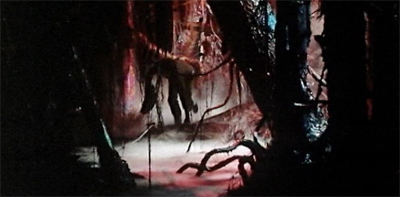
In the jungle, the peaceful jungle...

In the jungle, the peaceful jungle…

Continue reading

Doctor Who: Planet of the Spiders (Review)

To celebrate the fiftieth anniversary of the longest-running science-fiction show in the world, I’ll be taking weekly looks at some of my own personal favourite stories and arcs, from the old and new series, with a view to encapsulating the sublime, the clever and the fiendishly odd of the BBC’s Doctor Who.

Planet of the Spiders originally aired in 1974.

Oh dear, this is getting monotonous.

– the Doctor sums it up

Jon Pertwee’s final season is a real shame. The actor was, at the time, the actor who had served the longest period of time in the lead role. Starring as the Doctor for five years, and appearing as the face of the show during an era of renewal and reinvention, the actor deserved a much strong swansong. The year had started relatively strong with The Time Warrior, which I would rank among the best stories of the Pertwee era. However, every story after that just felt like it was treading water, revisiting old triumphs while biding time until the finalé. We had a Dalek episode in Death to the Daleks. We had a Malcolm Hulke lizard story with Invasion of the Dinosaurs. We had an off-world social commentary story in The Monster of Peladon. All felt like the cast and crew were just worn out, just going through the motions.

Sadly, Planet of the Spiders continues this trend, rather than bucking it.

Kiss of the spider-queen...

Kiss of the spider-queen…

Continue reading

Doctor Who: The Monster of Peladon (Review)

To celebrate the fiftieth anniversary of the longest-running science-fiction show in the world, I’ll be taking weekly looks at some of my own personal favourite stories and arcs, from the old and new series, with a view to encapsulating the sublime, the clever and the fiendishly odd of the BBC’s Doctor Who.

The Monster of Peladon originally aired in 1974.

Oh, have a heart, Sarah. I’ve been meaning to pay a return visit to Peladon for ages.

I can’t think why.

– the Doctor and Sarah Jane

What made The Curse of Peladon so fantastic was the fact that it felt so unique and different, as compared to all the Third Doctor adventures that had appeared before. Sure, the Doctor had travelled in time and space in Colony in Space, but The Curse of Peladon was really the first time that the colour television series had indulged in designing a truly alien world populated with truly alien creatures. Since the series had begun transmission in colour with Spearhead from Space, there had been nothing quite like it, and that was what made The Curse of Peladon so refreshing.

As such, the idea of doing The Monster of Peladon seems a bit questionable, especially when it’s going to feature the same world, the same aliens and be two episodes longer than the original adventure.

Not an underrated gem, I'm afraid...

Not an underrated gem, I’m afraid…

Continue reading

Doctor Who: Death to the Daleks (Review)

To celebrate the fiftieth anniversary of the longest-running science-fiction show in the world, I’ll be taking weekly looks at some of my own personal favourite stories and arcs, from the old and new series, with a view to encapsulating the sublime, the clever and the fiendishly odd of the BBC’s Doctor Who.

Death to the Daleks originally aired in 1974.

Keep away! Keep away!

– the Daleks have an understandable reaction to appearing in another Terry Nation script

I’ve remarked a bit that Pertwee’s final year feels a little like a victory lap, a clear attempt to revisit familiar, sometimes to provide a sense of closer. For example, Invasion of the Dinosaurs feels like the last true U.N.I.T. story, with betrayal and disillusionment closing that narrative strand. Similarly, Planet of the Spiders closes out the recurring New Age Buddhist iconography that the Barry Letts has been injecting into the show. However, some of these decisions to return to familiar concepts feel a little superfluous. Did we need an extended sequel to Curse of Peladon, for example?

And did we really need another throwback Terry Nation Dalek story, only a year after the last throwback Terry Nation Dalek story?

The clue is in the title...

The clue is in the title…

Continue reading

Doctor Who: Invasion of the Dinosaurs (Review)

To celebrate the fiftieth anniversary of the longest-running science-fiction show in the world, I’ll be taking weekly looks at some of my own personal favourite stories and arcs, from the old and new series, with a view to encapsulating the sublime, the clever and the fiendishly odd of the BBC’s Doctor Who.

Invasion of the Dinosaurs originally aired in 1974.

How are you feeling now?

Hungry, tired and I’ve got a headache.

– Mark asks Sarah Jane how her viewing went. I can empathise.

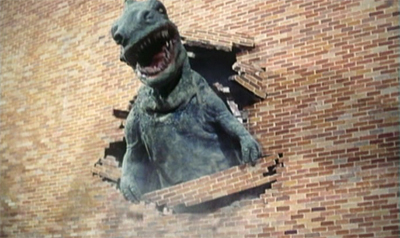
Ah, ambition. It’s hard to fault it… although there is a point where you simply have to. Invasion of the Dinosaurs crosses that line in the first episode. I know that Doctor Who is a BBC television serial. I understand that the classic series hardly had a huge amount of money to hand when it needed special effects. I am well aware that the special effects for the following season’s The Ark in Space amount to some bubblewrap and green paint. There is an art to watching many of these classic stories, and that art involves being wilfully blind to the fact that the special effects aren’t up to scratch. Beyond that, it’s arbitrary. There’ll always be one silly special effect that undermines an otherwise impressive episode – which special effect and which episode will vary from person to person.

However, Invasion of the Dinosaurs makes the special effects the whole point of the exercise. The title tells you that you should be watching the dinosaurs. Malcolm Hulke was given the brief to write a story about dinosaurs in contemporary London. There might be a plot underneath it all, but the serial expects that you are here for the dinosaurs. And, if you are…

I’m sorry. I’m so sorry.

A smashing time...

A smashing time…

Continue reading

Doctor Who: The Time Warrior (Review)

To celebrate the fiftieth anniversary of the longest-running science-fiction show in the world, I’ll be taking weekly looks at some of my own personal favourite stories and arcs, from the old and new series, with a view to encapsulating the sublime, the clever and the fiendishly odd of the BBC’s Doctor Who.

The Time Warrior originally aired in 1974.

Look, will you excuse me? I’ve got to go and find a young girl. I’ll see you later, I hope.

Young girl? I should have thought he was a bit old for that sort of thing. Oh well.

– the Doctor and Rubeish discover that Jo’s departure isn’t affecting him too much

The end of an era is fast approaching. Jon Pertwee departed Doctor Who after spending five years in the title role. The end of his fourth year saw the departure of his longest-serving companion, Jo Grant. The start of his final year would see the introduction of Sarah Jane Smith, perhaps the most iconic companion of all time. However, watching the first serial of his last year – The Time Warrior – there is a sense of pending change in the air, a sense that show in the cusp of a very significant shift. The Time Warrior isn’t necessarily explicit about this, but you can almost feel it.

Time is running out...

Time is running out…

Continue reading

Doctor Who: The God Complex (Review)

To celebrate the fiftieth anniversary of the longest-running science-fiction show in the world, I’ll be taking weekly looks at some of my own personal favourite stories and arcs, from the old and new series, with a view to encapsulating the sublime, the clever and the fiendishly odd of the BBC’s Doctor Who.

The God Complex originally aired in 2011.

It’s time we saw each other as we really are.

– The Doctor

It really is like the McCoy era all over again, isn’t it? The Impossible Astronaut gave us a scheming and manipulative Doctor. Night Terrors felt like it was drawn from the same cloth as Survival, with the faintest trace of Paradise Towers. Here, we get to revisit the ideas at the heart of The Curse of Fenric. Moffat’s second season has really been about the writer defining his own way of making Doctor Who, following a debut season that followed the same structure as the four years overseen by Russell T. Davies.

Here, Moffat is deconstructing the myth of the Doctor, in a way that draws on and contrasts with Davies’ “the Lonely God”, without going to the excess of “the Time Lord Victorious.” Indeed, with the whole dynamic between the Doctor and Amy drawing on one careless miscalculation the character made, changing a young girl’s life forever, one can’t help but wonder if there was more than a hint of truth in what the Doctor confessed to Amy to break her faith in him. “I took you with me because I was vain,” he tells her, “because I wanted to be adored.”

More than ever, it seems there’s a bit of truth in the Doctor’s admission that, “I’m not a hero.” Russell T. Davies has the Doctor follow a similar trajectory, albeit on a larger scale – episodes like Midnight and The Waters of Mars represented massive failings on the part of the Doctor. Moffat draws on the same sort of idea, but renders the Doctor’s failures much more intimate. It isn’t so much that the Eleventh Doctor fails to save the world or defeat the monster, it’s that he fails the people close to him so frequently and thoroughly.

You can check out any time you like, but you may never leave…

Continue reading