• Following Us

  • Categories

  • Check out the Archives


  • Awards & Nominations

Doctor Who: Death Comes to Time (Review)

To celebrate the fiftieth anniversary of the longest-running science-fiction show in the world, I’ll be taking weekly looks at some of my own personal favourite stories and arcs, from the old and new series, with a view to encapsulating the sublime, the clever and the fiendishly odd of the BBC’s Doctor Who.

Death Comes to Time originally broadcast on the BBC website in 2001.

I’m just another alien…

Alien to where?

Everywhere.

– the Doctor and Bedloe

There is quite a lot to like about Death Comes to Time. It offers a conclusion to Ace’s character arc. It features a stellar voice cast. Tannis is great villain. The script isn’t mired in continuity or slavishly devoted to the letter of the continuity of Doctor Who.

On the other hand, there’s quite a lot to loathe about Death Comes to Time. In moving away from Doctor Who continuity, it feels like a generic space opera. There’s a loss of the intimacy that defined the series. There’s a central revelation that makes no sense and a central moral philosophy which seems at odds with the very heart of Doctor Who. On top of that, it seems rather clumsily constructed. If it was intended as a pilot, the wrong characters are in focus for most of its not-insignificant runtime.

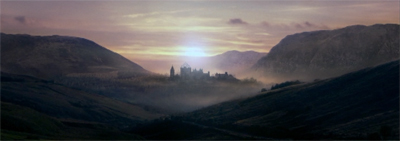
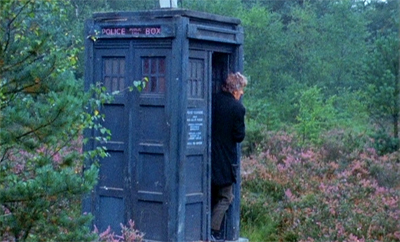
Hello, stonehenge!

Hello, stonehenge!

Continue reading

Doctor Who: The Vampires of Venice (Review)

To celebrate the fiftieth anniversary of the longest-running science-fiction show in the world, I’ll be taking weekly looks at some of my own personal favourite stories and arcs, from the old and new series, with a view to encapsulating the sublime, the clever and the fiendishly odd of the BBC’s Doctor Who.

The Vampires of Venice originally aired in 2010.

Tell me the whole plan!

One day that will work.

– the Doctor

The Vampires of Venice is interesting because it looks very different in 2013 as compared to when it was originally broadcast in 2010. In 2010, it looked a bit overly familiar, a collection of the tropes and storytelling tricks that we took for granted in the show under Russell T. Davies. The elements felt, at the time, a little over-familiar. Indeed, it seemed like Toby Whithouse’s script owed a great deal to his earlier adventure School Reunion.

However, Doctor Who looks very different in 2013. The show has definitely radically changed, so that these familiar plot points don’t seem quite so familiar any longer. Whereas The Vampires of Venice didn’t feel so strange after five years of Russell T. Davies, it does seem a bit more unique after three years of Steven Moffat. It doesn’t seem so much an attempt to repackage these story elements as it does one final celebration of them, a fond farewell to many of the narrative bits and pieces that we’d come to take for granted.

How times change.

A late-night bite...

A late-night bite…

Continue reading

Doctor Who: Tooth and Claw (Review)

To celebrate the fiftieth anniversary of the longest-running science-fiction show in the world, I’ll be taking weekly looks at some of my own personal favourite stories and arcs, from the old and new series, with a view to encapsulating the sublime, the clever and the fiendishly odd of the BBC’s Doctor Who.

Tooth and Claw originally aired in 2006.

I want her to say “we are not amused.” I bet you five quid I can make her say it.

Well, if I gambled on that, it’d be an abuse of my privileges of traveller in time.

Ten quid?

Done.

– Rose and the Tenth Doctor are “cute”

There’s something quite interesting at the heart of Tooth and Claw, which might be the best  “historical celebrity + monster” mash-up of the Davies era. It’s a wonderful pulpy genre hybrid run-around with Queen Victoria, ninja monks and a werewolf, but it’s also a quite interesting vehicle to explore the way that the show deals with historical characters. After all, Queen Victoria is a British icon, a monumentally important part of the British Empire. It would be tempting to reduce her to a bunch of catch-phrases and a stiff upper lip. It’s a testament to Davies as a writer that he can flesh her out a fully-drawn character.

However, there does seem to be something quite strange about a show that opens with a cheap shot at Margaret Thatcher only to wallow in the iconic status of Queen Victoria.

This year's Bad Wolf is in Torchwood...

This year’s Bad Wolf is in Torchwood…

Continue reading

Doctor Who: The Unquiet Dead (Review)

To celebrate the fiftieth anniversary of the longest-running science-fiction show in the world, I’ll be taking weekly looks at some of my own personal favourite stories and arcs, from the old and new series, with a view to encapsulating the sublime, the clever and the fiendishly odd of the BBC’s Doctor Who.

The Unquiet Dead originally aired in 2005.

What the Shakespeare is going on?

– Charles Dickens

It feels appropriate that Mark Gatiss should script the first episode of the revived Doctor Who not written by Russell T. Davies himself. Davies wrote the bulk of the first season’s thirteen episodes, and you could argue that he occasionally spread himself a bit too thin. However, I would argue that the first year of the revived show also had the strongest string of secondary writers on the bench, including Rob Shearman writing Dalek, Steven Moffat writing The Empty Child and The Doctor Dances, Paul Cornell writing Father’s Day and Gatiss writing The Unquiet Dead.

Gatiss and Moffat are two of the most prolific writers for the new series, with Moffat even succeeding Davies as showrunner. It’s also worth noting that both Gatiss and Moffat are fans of the classic show with considerable writing experience in television. It’s very clear that Davies isn’t just recruiting fans of the classic show, even those who may have written material while it was off the air (Gatiss wrote spin-off novels, Moffat wrote The Curse of Fatal Death), but recruiting those with practical experience about how television today works.

And that was a very shrewd decision.

Ghosts of Cardiff...

Ghosts of Cardiff…

Continue reading

Doctor Who: The Parting of the Ways (Review)

To celebrate the fiftieth anniversary of the longest-running science-fiction show in the world, I’ll be taking weekly looks at some of my own personal favourite stories and arcs, from the old and new series, with a view to encapsulating the sublime, the clever and the fiendishly odd of the BBC’s Doctor Who.

The Parting of the Ways originally aired in 2005.

Everything must come to dust. All things. Everything dies. The Time War ends.

– Rose

And so the first season of Russell T. Davies’ revived Doctor Who comes to a close. If you asked me, it’s the best season of the show that Davies has produced. The year contains a few clunkers, and it doesn’t contain the highest concentration of enjoyable episodes, but I think the first year has a much clearer direction and purpose than any of the years that followed. Although apparently Christopher Eccleston’s departure was only decided after the show went into production, the first season seems like it is constantly building to the death of the Doctor. The entire first season seems to build, logically and rationally, towards that moment.

He's not all there...

He’s not all there…

Continue reading

Doctor Who: Bad Wolf (Review)

To celebrate the fiftieth anniversary of the longest-running science-fiction show in the world, I’ll be taking weekly looks at some of my own personal favourite stories and arcs, from the old and new series, with a view to encapsulating the sublime, the clever and the fiendishly odd of the BBC’s Doctor Who.

Bad Wolf originally aired in 2005.

The Dalek stratagem nears completion. The fleet is almost ready. You will not intervene.

Oh, really? Why’s that, then?

We have your associate. You will obey or she will be exterminated.

No.

Explain yourself.

I said no.

What is the meaning of this negative?

It means no.

But she will be destroyed.

No! Because this is what I’m going to do. I’m going to rescue her. I’m going to save Rose Tyler from the middle of the Dalek fleet and then I’m going to save the Earth, and then, just to finish off, I’m going to wipe every last stinking Dalek out of the sky!

But you have no weapons, no defences, no plan.

Yeah. And doesn’t that scare you to death. Rose?

Yes, Doctor?

I’m coming to get you.

– the Daleks, the Doctor and Rose give the Ninth Doctor perhaps his best moment

Looking back at the first season, I’d argue that it’s the most cohesive run of episodes that Russell T. Davies produced on the dhow. Now because of the whole “bad wolf” thing, as that feels a bit like a clumsy link randomly inserted. Instead, as we watch the final episode, it becomes quite clear what Davies was trying to do with his first year on the show. The patterns, the themes, the subtext, the references – it all becomes quite clear. More than any other season of Davies’ tenure, the first season is really one gigantic story – and not just because the show never leaves Earth or the finalé returns to the setting of The Long Game.

The first season is a bridge. It’s a link between the last years of the classic series into the new and revived show as written by Davies. It’s a moment to gather up the dead, tidy away the loose ends and basically manage the stage so that the show can really come into its own. One of the things I loved about Davies’ Doctor Who was how accessible it all was, but it still had all this continuity ticking away in the background.

This first season finalé feels like it isn’t only a conclusion to Christopher Eccleston’s time in the lead role, it’s also closing the last of the dangling threads from the eras of Colin Baker and Sylvester McCoy in the eighties. As soon as David Tennant steps into the lead role, it seems the show is entirely and utterly free of everything that came before. It’s a testament to Davies’ skill that we’re not even sure that he’s doing it.

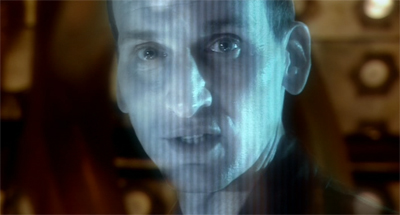
Come with me if you want to live...

Come with me if you want to live…

Continue reading

Doctor Who: The Eleventh Hour (Review)

To celebrate the fiftieth anniversary of the longest-running science-fiction show in the world, I’ll be taking weekly looks at some of my own personal favourite stories and arcs, from the old and new series, with a view to encapsulating the sublime, the clever and the fiendishly odd of the BBC’s Doctor Who.

The Eleventh Hour originally aired in 2010.

So, coming?

No.

You wanted to come fourteen years ago.

I grew up.

Don’t worry. I’ll soon fix that.

– the Doctor and Amy

The arrival of a new producer on Doctor Who always represents a shift in some way shape or form. The change from Barry Letts to Philip Hinchcliffe must have seemed radical, even at the time. Graham Williams following Hinchcliffe represented a similarly strange departure. The departure of Russell T. Davies, the producer who had brought Doctor Who back to television after over a decade, was always going be a pretty significant change for those watching. Steven Moffat’s first episode as producer might not seem like it’s a shocking departure from what came before, but it also quite efficiently and effectively distinguishes Moffat’s tenure from that of his direct predecessor.

While by no means as radical a shift as Spearhead from Space, there is a very clear feeling that The Eleventh Hour brings with it significant tonal and thematic changes to the tale of the Doctor.

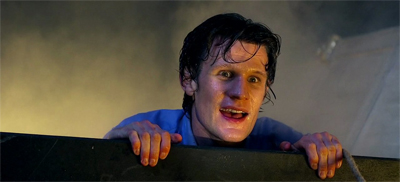
A mad man with a box...

A mad man with a box…

Continue reading

Doctor Who: Rose (Review)

To celebrate the fiftieth anniversary of the longest-running science-fiction show in the world, I’ll be taking weekly looks at some of my own personal favourite stories and arcs, from the old and new series, with a view to encapsulating the sublime, the clever and the fiendishly odd of the BBC’s Doctor Who.

Rose originally aired in 2005.

So, I’m going to go up there and blow them up, and I might well die in the process, but don’t worry about me. No, you go home. Go on. Go and have your lovely beans on toast. Don’t tell anyone about this, because if you do, you’ll get them killed.

(beat)

I’m the Doctor, by the way. What’s your name?

Rose.

Nice to meet you, Rose. Run for your life!

– the Doctor and Rose

It’s amazing to think of the pressure weighing down on Rose. Sure, Doctor Who has gone from strength-to-strength since its revival in 2005, but there was a time when its resurrection seemed unlikely, to say the least. Although fans had kept the show alive in various media, it must have seemed highly unlikely that they show would ever return to television, let alone as a massive success. Producer Russell T. Davies might have seemed like an unlikely choice. Although he had written some spin-off material, like other British television writers including Steven Moffat and Paul Cornell, Davies was best known for producing shows like Queer as Folk and The Second Coming. Nevertheless, he had been campaigning to bring the show back for quite some time, notably in 1998 and 2002, before finally bringing the revived show to screen in late March 2005.

Although the edges are still a bit rough in places, Rose serves as an effective introduction to the Russell T. Davies, and contains the seeds of what would become the show’s success. Borrowing (and reinventing) heavily from perhaps the last seismic re-tooling of the series in Spearhead from Space, the show presents a version of Doctor Who for a new generation.

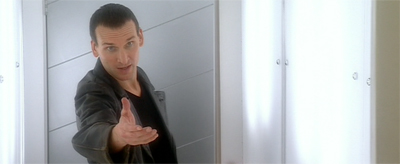
Run!

Run!

Continue reading

Doctor Who: Spearhead From Space (Review)

To celebrate the fiftieth anniversary of the longest-running science-fiction show in the world, I’ll be taking weekly looks at some of my own personal favourite stories and arcs, from the old and new series, with a view to encapsulating the sublime, the clever and the fiendishly odd of the BBC’s Doctor Who.

Spearhead from Space originally aired in 1970.

Oh well, at least he won’t get very far.

You mean, before your men shoot him again?

I don’t find that funny.

– The Brigadier and Liz discuss the Doctor’s (second) escape

Looking back now, it’s hard to believe that Spearhead from Space had so much riding on it, if only because of the deft combination of Robert Holmes’ sharp script and Derek Martinus’ confident direction. Indeed, the serial served as something of a second pilot for the show, demonstrating that the survival of the series during the transition between William Hatnell and Patrick Troughton had not been a fluke, broadcasting in colour for the first time, and setting up an entirely new status quo set primarily on present-day Earth. It’s a miracle that it all works so well, let alone that fact that it remains one of the most accessible adventures featuring the character.

We need a Doctor in the TARDIS!

Continue reading

Doctor Who: The Power of Three (Review)

The Power of Three is Chris Chibnell’s best Doctor Who script to date. While a little heavy-handed in the way it deals with the relationship between the Doctor and Amy and Rory, it’s still a nice change of pace. It’s a thoughtful episode exploring the Doctor’s relationship with time. (And that shared by his companions.) While the alien invasion seems a little tacked on, to the point where it only seems to serve the final pun, The Power of Three is still a solid penultimate outing for this trio of adventurers.

Thinking outside the box…

Continue reading