• Following Us

  • Categories

  • Check out the Archives


  • Awards & Nominations

The X-Files – Season 4 (Review)

This February and March, we’re taking a trip back in time to review the fourth season of The X-Files and the first season of Millennium.

The fourth season of The X-Files is a work of chaotic genius.

While the third season of The X-Files is one of the most consistently well-made seasons of television ever produced, the fourth season is a lot more uneven. There are a lot of reasons for this. Chris Carter was busy launching Millennium. Fox had decided to press ahead with The X-Files: Fight the Future. Behind the scenes, it was chaotic. Glen Morgan and James Wong hung around for half the season before leaving to work on their own pilot, a planned script from Darin Morgan fell through, Chris Carter’s attention was divided.
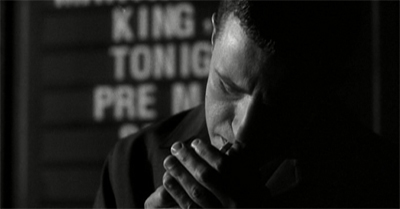
xfiles-musingsofacigarettesmokingman17

However, the fourth season represents something of a changing of the guard on the writing staff, a transition between two generations. The fourth season sees the permanent departure of writers Glen Morgan, James Wong and Howard Gordon. These were all writers who worked hard to give The X-Files its unique flavour and identity in the show’s earliest years. The X-Files would not be the same show without the input of those three writers. It is a shame to see them depart, although four years is a long time in the industry.

In contrast, the fourth season also sees younger talent rising up. It sees the first collaboration of Vince Gilligan, John Shiban and Frank Spotnitz. The trio would become one of the most consistent (and productive) writing ensembles on the series. The fourth season also saw the rapid ascent of Vince Gilligan, who had only contributed one script to the third season; Gilligan’s three solo scripts for the third season are iconic and influential in their own right. These are the voices that will steer The X-Files through to the end of its nine-year run.
xfiles-paperhearts22

As such, the fourth season feels transitional. It is a season that lacks the finely-honed efficiency that defined the third season, in favour of a more ambitious and even experimental style. The result is a season that feels wildly creative, a joyous cacophony rather than a harmonious symphony. The fourth season may not always hit the notes, but it is doing something very fresh and exciting. There is an energy and enthusiasm to the season that carries even some of the weaker episodes.

The fourth season is not consistently brilliant, but it is more than occasionally transcendental.

xfiles-max15

Continue reading

Star Trek: Enterprise – Dead Stop (Review)

Next year, Star Trek is fifty years old. We have some special stuff planned for that, but – in the meantime – we’re reviewing all of Star Trek: Enterprise this year as something of a prequel to that anniversary. This April, we’re doing the second season. Check back daily for the latest review.

Dead Stop is an interesting beast.

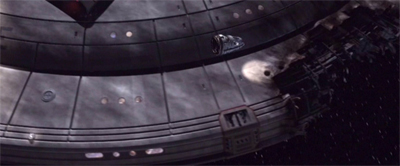
One of the stronger episodes from the second season of Star Trek: Enterprise, Dead Stop follows on directly from the events of the previous episode without serving as a direct continuation. It is very rare to see this approach taken on Star Trek, and it’s the perfect example of the sort of episode-to-episode connections that were lacking during the show’s first two seasons. Dead Stop is not a direct follow-on to Minefield, but it is fascinated with the fallout from that episode.

A model ship...

A model ship…

And yet, despite this, Dead Stop is also based around one of the most generic premises imaginable – a sentient space station with a sinister agenda. With a few choice edits, the premise could easily be adapted for Star Trek: The Next Generation or Star Trek: Voyager. Indeed, it’s not too difficult to imagine Kirk and Spock dealing with the rogue space station at some point during their five year mission. It is a story that could – in broad strokes – even work for a television anthology series.

The beauty of Dead Stop is the way that it blends these two conflicting elements together, to construct a show that feels like it showcases the best parts of Enterprise while working from a core story that could be told across the franchise.

Piecing it together...

Piecing it together…

Continue reading

Non-Review Review: Boychoir

This film was seen as part of the Jameson Dublin International Film Festival 2015.

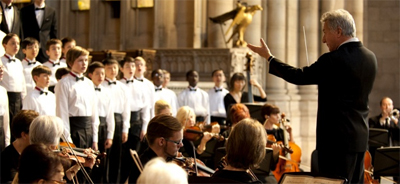
Boychoir hits just about every emotional note that you would expect it to.

Of course, it hits those notes in ways that feel incredibly contrived and emotionally manipulative. Director François Girard and writer Ben Ripley are incredibly cynical in how they choose to resonate with the audience. The script and the direction for Boychoir is advanced with an almost ruthless pragmatism, a pragmatism that is not afraid to kill of relatives to generate tragedy and which is willing to gloss over any real or tangible emotional reactions to get the film to the point that is most coldly calculated to affect the viewer.

boychoir

Boychoir very much goes through the motions for a film like this. It is a coming of age story set inside a highly competitive environment, juxtaposing a rather working class protagonist with those who have enjoyed privilege from a very young age. It is the story Stet Tate, a young boy who finds himself joining the National Boychoir; who quickly and inevitably discovers that his voice is a rare gift, and discovering exactly where that gift can take him and what it will teach him along the way.

Boychoir is a competent execution of a bunch of familiar tropes, albeit one that never strives for loftier goals. It is sappy and manipulative, but – given it aims to be sappy and manipulative – it is hard to treat that as a scathing criticism.

boychoir3

Continue reading

Non-Review Review: Lost River

This film was seen as part of the Jameson Dublin International Film Festival 2015.

There is a good film buried somewhere in Lost River.

Unfortunately, it is probably buried as deep as the community that give the movie its name.

lostriver5

Continue reading

Non-Review Review: The Canal

This film was seen as part of the Jameson Dublin International Film Festival 2015.

Ghosts are all around us.

As the opening scene of The Canal quite clearly states, the deceased endure long after their passing. Whether as images captured on camera or stories repeated in hushed tones, the dead haunt us. What are ghosts but the voices of history reaching out to the individual like some nightmare lodged deep in the collective unconscious? The “stone tape” theory of paranormal activity suggests that horrific events leave their mark, a blood stain that won’t wash out. What if that stain is psychological? What if ghosts are nothing but tales that echo in the darkness?

thecanal

It is not an entirely original concept, to be fair. The idea of ghosts that exist as stories (or as media) is quite an old idea. In fact, one particular jump scare in The Canal owes quite a specific debt to Ringu, the iconic Japanese horror story about a ghost trapped inside a haunted video cassette. That scene is not the only parallel; The Canal centres itself upon a man working at the National Archives who finds himself processing old footage. No sooner has he discovered the gory details of a brutal murder in his home than it seems that those same ghosts come to life.

The Canal hits a few speed bumps in its final act, but – for most of its runtime – the film is a thoroughly compelling modern day ghost story. Writer and director Ivan Kavanagh wears his cinematic homages on his sleeve, drawing quite openly from directors like Roeg or Kubrick. The Canal is an unsettling and fascinating Irish horror film.

thecanal5

Continue reading

Non-Review Review: Let Us Prey

This film was seen as part of the Jameson Dublin International Film Festival 2015.

Let Us Prey marks the feature film debut of director Brian O’Malley.

O’Malley certainly knows his stuff. Let Us Prey is visually striking and very well-directed. It is rich and memorable, perfectly capturing the eighties exploitation vibe that O’Malley is striving for. It isn’t too difficult to imagine Let Us Prey as a lost horror film from the eighties, with its synth-heavy soundtrack and vague paranormal underpinnings. O’Malley draws from a wealth of sources, but Let Us Prey feels most obviously indebted to the work of John Carpenter, feeling like a curious blend between Prince of Darkness and Assault on Precinct 13.

letusprey1

Unfortunately, O’Malley confident direction can do little to conceal the obvious flaws in a clumsy script. While Let Us Prey has an obvious affection for classic schlock-fest horror films, the script feels more than a little lazy and generic. Horror films generally trade in tastelessness or tackiness – that’s a huge part of the fun – but there is no sense of technique in how Let Us Prey parades its own depravity. The “shock” elements feel cheap and half-hearted.

O’Malley is very much a director to watch, but Let Us Prey is saddled with a script that is far more horrifying than anything O’Malley can actually put on screen.

letusprey

Continue reading

Non-Review Review: Pressure

This film was seen as part of the Jameson Dublin International Film Festival 2015.

Trapping a bunch of people in a claustrophobic location under time pressure is really the key to instant drama.

It is a well-proven strategy that has been used so often because it works. It is a great vehicle for high-stakes tension, but also for tough interpersonal drama. If you pack people close enough together under just the right amount of strain, it is a great way to reveal and inform character. It leads to conflict, which is generally quite entertaining to watch. If you can harness that tension and that conflict, it is fairly easy to get the audience to go along with the rest of the film.

pressure1

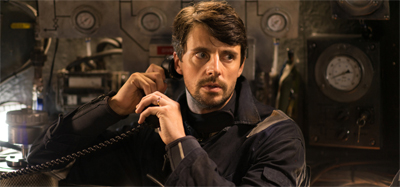
Pressure is a quintessential “bunch of people trapped in a tight space waiting to die” film. Four divers venture down to repair an oil pipeline, only for disaster to strike. The four characters find themselves trapped alone at the bottom of the ocean, with no real chance of survival. Tough decisions have to be made, and characters are thrown into conflict with one another as the air runs low and the power runs out. There are moments when Pressure really works as a claustrophobic thriller.

Unfortunately, there are just as many moments when Pressure doesn’t work. The film seems intent on pulling the audience out of the harrowing situation – whether through quick flashbacks or nightmare sequences that undercut the claustrophobic tension of the rest of the film. Despite the best efforts of the cast, the characters feel stilted and stock – spouting cliché dialogue and coming in the form of broad archetypes. The scripting is similarly haphazard, particularly in the somewhat contrived third act.

pressure

Continue reading

Non-Review Review: Shoulder the Lion

This film was seen as part of the Jameson Dublin International Film Festival 2015.

Shoulder the Lion is a visual sumptuous documentary from the creative team of Erinnisse and Patryk Rebisz.

The duo have a long history behind the scenes. Patryk is an accomplished cinematographer and Erinnisse is a veteran editor. However, barring a short film written and produced by Patryk a decade ago, Shoulder the Lion is the first time that the duo have taken complete charge of a film. The result is visually stunning. Shoulder the Lion is a documentary that divides its focus among three subjects – each dealing with a debilitating condition. However, the key is in how Shoulder the Lion attempts to relate to its subjects.

shoulderthelion2

Shoulder the Lion attempts to convey to the audience – visually and aurally – what it must be like to see the world through the perspective of its three subjects. There are any number of striking compositions and sequences in the film, as the Rebiszes invite the audience to experience even some small segment of what day-to-day life must be like for its three central individuals. As Alice Wingwall describes her deteriorating vision, the camera filters out the colours. As Fergal Sharpe describes the agony of tinnitus, a painful electronic buzz builds.

There are structural problems with Shoulder the Lion. Most obviously, the fact that it divides its attention between three subjects while devoting so much energy towards its visuals means that not all of the three central figures emerge fully-formed. Indeed, it could be argued that the film expends more time trying to replicate their disabilities than exploring their experiences beyond that. However, the result is a thought-provoking and well-constructed piece of film. It is a beautiful piece of work, if not quite as deep as it might have been.

shoulderthelion

Continue reading

Non-Review Review: Force Majeure

This film was seen as part of the Jameson Dublin International Film Festival 2015.

A blackly comic interrogation of modern masculinity, written and directed by Ruben Östlund, Force Majeure documents a family holiday that goes horribly and spectacularly wrong.

Following a nuclear family on their five-day ski holiday, Force Majeure examines the consequences of a fateful decision by the family patriarch. Dining on a restaurant on the upper levels of the resort, the family witness a controlled avalanche that quickly seems more and more uncontrolled. As a sea of white washes over the restaurant, Ebba tries to shield her children – while Tomas grabs his phone and his gloves and runs for cover, abandoning his wife and children to the elements.

forcemajeure

This sounds pretty bleak. However, Östlund shrewdly decides to play it as black comedy. He uses Tomas’ pretty spectacular failing as a jumping-off point into a number of delightfully uncomfortable sequences that manage to be both squirm-inducingly awkward and laugh-out-loud funny. For all the epic scale suggested by the movie’s one-line synopsis, Force Majeure is a rather more intimate piece of work. Two separate meltdowns over dinners with two different couples are arguably more catastrophic than any force of nature unleashed over the course of the narrative.

Force Majeure is a triumph, a stunning examination of a marriage under pressure.

forcemajeure4

Continue reading

Non-Review Review: All About Eva

This film was seen as part of the Jameson Dublin International Film Festival 2015.

All About Eva has ambition to burn.

It is a modern film noir set against the backdrop of the Irish racing scene, filmed mostly on a single stately country home and with a functional budget that seems minuscule even by the standards of independent Irish film. The fact that it exists is a testament to everybody involved. The fact that it comes very close to working is icing on the cake. All About Eva is a very stylish piece of work that very clearly has a lot of ambition behind it. It is a trashy revenge saga that is produced with a very high level of competence. In particular, director Ferdia MacAnna does great work.

However, ambition is only so much. As good as the film looks relative to its budget, there are a number of key structural flaws that cannot support the weight heaped upon them. Most obviously, All About Eva is an attempt to hark back to the classic femme fatale movies, with a seductive and manipulative young woman infiltrating a racing dynasty so as to dismantle it from the inside. All About Eva lives or dies based on that central performance. Newcomer Susan Walsh simply does not have the ability to carry the movie around her.

To be fair, Walsh is let down by an uneven and scattered script, which revels in cliché. All About Eva is a film that seems wryly aware of its own trite plot beats and dialogue, but that self-awareness can only carry a film so far. There is a point where homage is not enough to sustain a genre pastiche. All About Eva comes surprising close to working, and has an energy that is almost infectious. Unfortunately, it cannot make it over the line.

allabouteva

Continue reading