• Following Us

  • Categories

  • Check out the Archives


  • Awards & Nominations

Non-Review Review: Me Before You

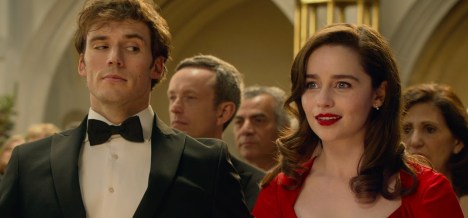
Me Before You works better than it really should.

There are points at which this romance dips into mandolin melodrama and gets lost in pop music montage, perhaps even over-extending itself through a series of almost episodic adventures. However, the film largely works. A lot of that is down to its willingness to address a potentially problematic theme head-on, investing its central characters with a sense of agency and dynamism that powers the film. However, a lot of that is down to the charm and strength of its two leads, particularly Emilia Clarke.

"Tom Hiddleston thinks he's got this sewn up," think both leads simultaneously.

“Tom Hiddleston thinks he’s got this sewn up,” think both leads simultaneously.

Continue reading

Non-Review Review: The Nice Guys

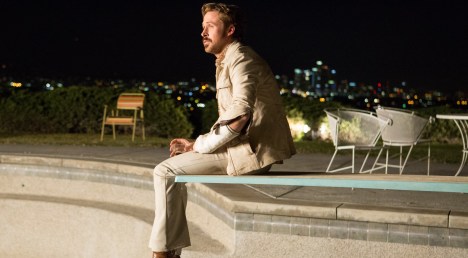
The Nice Guys is a superb piece of work, a retro seventies buddy action comedy with charm to spare.

The Nice Guys is dripping with period detail. The opening tracking shot swoops behind the iconic “Hollywood” sign, still trapped in a state of decay. The characters wear brightly coloured suits. The soundtrack is populated by recognisable disco and funk songs. There are repeated references to President Richard Nixon. Characters smoke like troopers and drive around in open-top convertibles while somehow managing an unhealthy combination of sideburns, stubble and moustaches. In short, the film is set in the seventies, and the audience won’t forget it.

Cigarette-Smoking Man.

Cigarette-Smoking Man.

However, The Nice Guys has a much deeper retro charm. It harks back to the sort of buddy action films that have become a rarity these days, the story of two lovable klutzes who wander into a life-or-death mystery that gradually unravels over the course of two hours. The stakes are charmingly low-key; there is no city destroyed, no threat on a planetary scale. The characters are broadly drawn archetypes, but neither have be chosen or fated. There are at most a couple of lives resting on their shoulders, their own included.

The Nice Guy harks back to a very nineties buddy action comedy aesthetic, demonstrating a nostalgia that is more than skin deep, but which is nonetheless endearing.

Board to death.

Board to death.

Continue reading

Non-Review Review: Money Monster

Money Monster works better as a heightened thriller than as righteous social commentary.

There is a lot to recommend Money Monster, beginning with the basic premise. Lee Gates is the fast-talking abrasive host of a hyper-masculine financial television show, who finds one Friday afternoon broadcast hijacked by a disgruntled investor who followed his advice. Tensions quickly escalate, as Gates finds himself trying to stay alive while also unravelling a thread of conspiracy and deceit that seems to tie the financial markets together. Gates and his assailant find themselves part of an unlikely team-up to blow this corruption wide open.

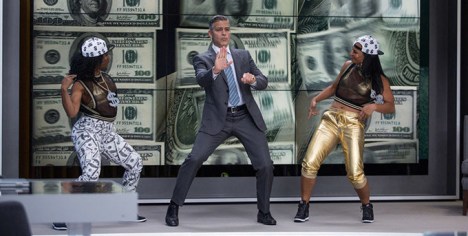
Money talks. It can also dance.

Money talks.
It can also dance.

Money Monster hinges on the combination of Jodie Foster’s direction and the cast’s charm. George Clooney remains one of the most charismatic performers on the planet, and there is a reason that Julia Roberts was one of the most successful lead actors of the nineties. While Clooney and Roberts add star power to the film, Foster benefits from casting Jack O’Connell as the irate-investor-turned-would-be-suicide-bomber. While performers like Dominic West and Giancarlo Esposito are horribly underused, they do add gravity to the film.

Jodie Foster is smart enough to keep the film moving. Even as a high-concept thriller, Money Monster is absurd. The characters frequently act irrationally. The plot never feels like an organic series of rippling consequences, with the author’s hand consistently visible. It is a movie that hinges on contrivance, with Foster working very hard to prevent the audience from catching their breath long enough to question the logic of what is unfolding on-screen. In some respects then, it has more in common with the world of high finance than it would care to admit.

Taking stock.

Taking stock.

Continue reading

Non-Review Review: X-Men – Apocalypse

X-Men: Apocalypse is a retro superhero blockbuster, and not just because it happens to be set in the eighties.

At this stage, the X-Men franchise is practically a warhorse of superhero cinema. Although Blade tends to get overlooked in discussions of the current superhero boom, it is fair to trace the current deluge of superhero films back to the twin releases of Bryan Singer’s X-Men and Sam Raimi’s Spider-Man. Without those two films, released more than a decade-and-a-half ago, the current blockbuster landscape would look a lot different. Those films changed audience expectations and demonstrated what could be done with the format.
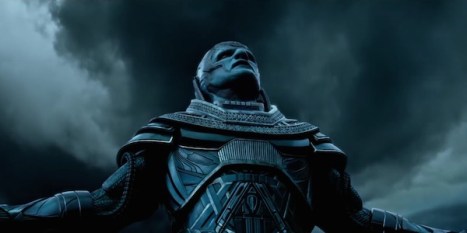
xmenapocalypse1

“Shoot me from a low angle to make me seem huge. I’m talking real ‘Triumph of the Will’, here.” (Special Guest Caption by Ed Azad.)

There have two big screen reboots of Spider-Man in the intervening years, with both Andrew Garfield and Tom Holland stepping into the red booties vacated by Tobey Maguire. In contrast, the Hugh Jackman and Patrick Stewart are still playing the iconic roles they established more than fifteen years ago, with X-Men: Days of Future Past straining to reconcile the original cast with the replacements who appeared in X-Men: First Class. However, in the intervening years, superhero cinema has changed dramatically.

In many respects, Apocalypse feels like the X-Men is playing catch-up with the generation of superhero blockbusters that arrived it its wake, taking the opportunity to do its own big “rock ’em, sock ’em” apocalyptic superhero team-up showdown of the kind that has never really featured in the franchise. Apocalypse finds the X-Men franchise embracing a particular style of superhero brawler typified by The Avengers back in 2012. Ironically, the genre itself has moved on, leaving the entire exercise feeling a little quaint.
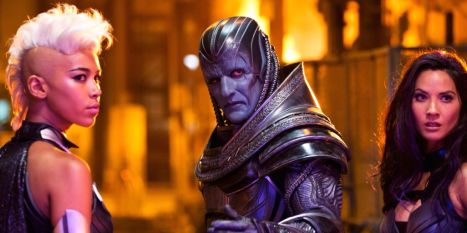
xmenapocalypse

“It was acceptable in the eighties.” (Special Guest Caption by Ed Azad.)

Continue reading

Non-Review Review: Angry Birds

The Angry Birds Movie is an enjoyable animation experience.

Adapted from the famous touch-screen game, a favourite of phone users everywhere, The Angry Birds Movie has a fairly thin premise that can successfully distilled into its two-word title. Set on an island populated by flightless birds, the film follows the adventures of the series’ distinctive red character as he struggles to contain his rage and anger in a culture built around peace and harmony. The plot, such as it is, is driven by first contact between the feathered inhabitants and the mysterious green-skinned visitors from “the world of the pigs.”

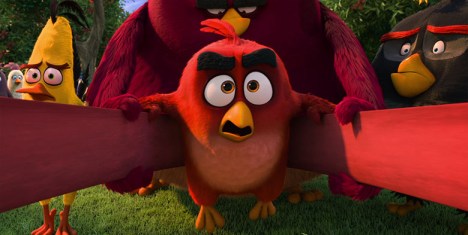
All fired up.

All fired up.

Video game adaptations can be tricky, particularly when it comes to adapting a video game that lacks a strong internal narrative. After all, very few players could claim to be emotionally invested in the skilful (and joyful) application of physics that made the original game so popular. Trying to construct a world around the stylistic affectations of a plotless video game can lead to all manner of convoluted nonsense; one need only look at Street Fighter or Super Mario Brothers to see the dangers of adapting a plotless video game.

The strength of The Angry Birds Movie is in how the films luxuriates in its plotlessness, embracing the arbitrary nature of its internal logic. The Angry Birds Movie is more concerned with being witty and energetic than in being cohesive or making sense. Given that it is a movie about cartoon birds propelling themselves like missiles towards a group of egg-snatching pigs that manages be both charming and funny, it seems like the prudent choice.

Bite-sized fun.

Bite-sized fun.

Continue reading

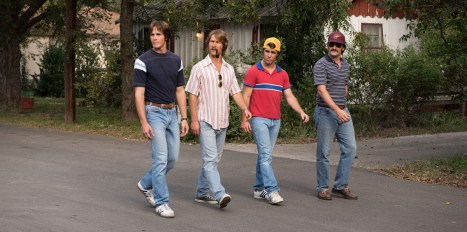
Non-Review Review: Everybody Wants Some!!

Richard Linklater is a director fascinated by the time in between.

This seems like a very obvious statement. After all, Linklater is still (relatively) fresh from a slew of nominations for Boyhood, a film that was famous for being shot with the same cast over the course of years and allowing the audience to literally watch its central character grow and develop. Many critics argued that the film was nothing more than a gimmick, a piece of performance art more than a narrative. Of course, the gimmick was largely the point of the film. Linklater is a director fascinated with the passage of time; Boyhood pushes that to the limit.

everybodywantssome

Of course, it is also interesting what Linklater does with his sense of time. Many of Linklater’s films unfold against the backdrop of a deadline. Before Sunrise, Before Sunset and Before Midnight build their deadlines into the title. Dazed and Confused follows a bunch of students on the last day of school. Everybody Wants Some!! operates with a literal countdown the ticks from the moment that Jake arrives at his college dorm to the start of his college classes. In theory, the film runs up against the clock.

However, Linklater’s deadlines tend to be arbitrary. His films are never race-to-the-finish thrillers as one might expect. Rarely are those precious few hours and minutes filled with important life-changing decisions and profound conversations. Instead, they are filled with a celebratory glimpse of the mundane, more extraordinary for their ordinariness. If anything, they feel like collective pauses; they are a deep breath before jumping back into life, a moment taken out of time, the last few hours before the clock really starts ticking.

everybodywantssome3

Continue reading

Star Trek: Voyager – False Profits (Review)

This February and March (and a little bit of April), we’re taking a look at the 1995 to 1996 season of Star Trek, including Star Trek: Deep Space Nine and Star Trek: Voyager. Check back daily for the latest review.

If ever there was an argument against the importance of continuity, False Profits would appear to be it.

The Price was not a good episode of Star Trek: The Next Generation. In fact, it was quite a bad episode of television. There is a credible argument to be made that The Price was the worst episode of the third season of The Next Generation. Another contender is Ménage à Troi, another third season episode of The Next Generation that coincidentally (or not) happens to feature the Ferengi. By all accounts, The Price is an episode of television that should be forgotten about, consigned to reference books and ill-considered classic television marathons.

"Now, I know fans don't like the Ferengi episodes, but this is too much!"

“Now, I know fans don’t like the Ferengi episodes, but this is too much!”

Unfortunately, continuity intervenes. The climax of The Price ends with two Ferengi stranded in the Delta Quadrant after the Barzan wormhole collapses. In most stories, that would be the last time that those two characters appeared; they had served their dramatic purpose, demonstrating that the Barzan wormhole was effectively useless. However, once it became clear that Star Trek: Voyager was heading to the Delta Quadrant, that ending became a plot thread. It became a piece of continuity that could be employed by the production team, a storytelling opportunity.

That explains how False Profits came to be, a terrible sequel to a terrible episode that seems to exist purely to satisfy some dangling continuity.

Proxy war...

Proxy war…

Continue reading

Non-Review Review: The Silent Storm

The Silent Storm is an ironic title for this over-produced melodrama.

The Silent Storm is a story about an abusive marriage and an unlikely affair that blossoms on an abandoned Scottish island when a trouble young man is assigned to the care of a fire-and-brimstone minister and the minister’s housekeeper-slash-wife. Inevitably tension mount and passions flair as the three characters dance around each other, with nothing but the craggy cliffs and choral soundtrack to keep them company. For an empty island abandoned to the forces of modernity, there’s a pretty loud choir to keep our three primary characters company.

Let us prey...

Let us prey…

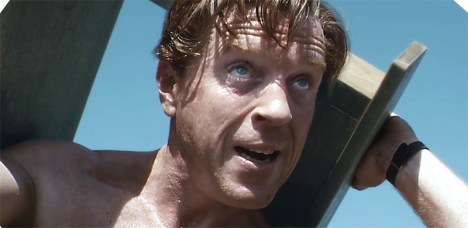
There is an appeal to this sort of dour character study. Writer and director Corinna McFarlane has cast two great actors in the lead roles of her first narrative feature; Damien Lewis and Andrea Riseborough are perfectly suited to this depressive melodrama, as a couple trapped in a repressive and abusive marriage with simmering tensions. The problem is the McFarlane never pitches the film at the right level. For a harrowing story of abuse and violence, the film frequently trips into self-parody.

Part of the fault rests with Lewis and Riseborough, who turn their performances up to eleven to match the production around them. However, a lot of the blame falls to McFarlane, who is utterly unwilling to let any moment stand on its own without pushing the theme or the mood to breaking point. The result is a film that struggles to find the right tone and so occasionally feels like a postmodern ironic deconstruction of the genre into which it is trying to fit.

Passion project...

Passion project…

Continue reading

Non-Review Review: Captain America – Civil War

Captain America: Civil War is, in some ways, a little too civil.

The third film in the series (following Captain America: The First Avenger and Captain America: The Winter Soldier) is produced to the highest professional standard. It is sleek and stylish, well-constructed and cleanly edited. It is always clear what is going on, no mean feat for a film with a cast this expansive. Character motivations are always entirely clear, even if there’s seldom any effort to explain why these characters have these motivations. It is a well-oiled, well-lubricated machine that hits all its marks and zips through its two-and-a-half hour runtime.

America, #!?> yeah...

America, #!?> yeah…

The biggest problem with Civil War is that it is a little too clean and professional, a little too mechanical and a little too impersonal. The film’s plot is anchored in some pretty heavy ideas about collateral damage and the responsibility that comes with unilateral intervention, but the script contorts awkwardly to ensure that things never get too heavy. “We’re still friends, right?” the Black Widow quips during her throwdown with Hawkeye, and Civil War is very careful to ensure that it doesn’t damage anything that cannot be replaced.

This is a perfectly reasonable approach to the film, given how many more films are leaning upon it, but it also feels a little forced. There are points at which Civil War bends itself into unnatural shapes to ensure that it can have its cake and eat it too.

He ain't heavy, he's my Rhodey...

He ain’t heavy, he’s my Rhodey…

Continue reading

Non-Review Review: Friend Request

Friend Request does not work.

There is a great horror film to be made about the internet age. After all, the best horror has always reflected the time around it. The witch hunts of the fifties paved the way for The Invasion of the Body Snatchers, while the AIDs panic of the eighties gave way to body horrors like The Fly or The Thing. There is undoubtedly a classic horror waiting to be made about the perils of online life and the strange connections that form through computer monitors. Unfortunately, Friend Request is not it.

"I CAN HAZ FRIEND?"

“I CAN HAZ FRIEND?”

Continue reading