• Following Us

  • Categories

  • Check out the Archives


  • Awards & Nominations

Non-Review Review: Logan

Logan is a powerful piece of blockbuster cinema, an R-rated feature film that recognises the distinction between “adult” and “mature.”

Logan is unashamedly a comic book movie. There is no getting around that. It features all manner of fantastic trappings, from Charles Xavier’s telepathy to self-driving trucks to clones to cyborgs. Logan is a film that revels in its superhero trappings, in particular the genre’s tendency to appropriate imagery and iconography from wider popular culture to fashion something unique and distinct. Logan is a superhero post-apocalyptic western road movie, and is unapologetic about that.

Bloody murder.

Bloody murder.

However, Logan never lets any of that get in the way of what is essentially a very intimate and personal story about a surrogate family unit and what it means to be a parent in a cruel and uncaring world. Logan is very much character-driven, using a very simple story to delve into its characters in a way that feels earned and nuanced. As much as Logan is proud of its more outlandish elements, it never allows them to crowd out a simple story about growing up and growing old.

Logan is a superb piece of cinema, one that knows when to go quiet and when to go loud, approaching its central character with considerable empathy and dignity.

A driving plot.

A driving plot.

Continue reading

Non-Review Review: Mali Blues

This film was seen as part of the Audi Dublin International Film Festival 2017.

Mali Blues is a joyous ode to the communal power of music, an affectionate to the social value of art.

Mali Blues follows a collection of musicians in the eponymous African country. Along with many other African countries, Mali is considered by many to have been a starting point for contemporary blues music, the music taken from the continent that would inspire a North American art form. Given that rich cultural history and important artistic heritage, it is no small irony that music finds itself under attack in Mali. The various performers and entertainers featured in Mali Blues are linked by a common thread, all forced south by radical Islamic extremists in the north.

Up on the roof's the only place I know...

Up on the roof’s the only place I know…

Director Lutz Gregor follows a collection of musicians trying to deal with the country’s political and social issues through their music. However, there is more to it than this. Fatoumata Diawara, Bassekou Kouyate and Master Soumy do not just hope to use their music to comment upon the current situation, instead believing that their compositions and engagement might actually bring about positive change within their communities. There is something profoundly optimistic in the way that these artists look at the world.

Mali Blues invests itself completely in that idea, believing wholeheartedly in the idea that music can serve as more than just entertainment. In contrast to the radical attempts to ban music in the African country, Mali Blues insists that a vibrant musical community is essential nourishment for a nation’s soul.

Fatoumata played guitar.

Fatoumata played guitar.

Continue reading

Non-Review Review: The Rehearsal

This film was seen as part of the Audi Dublin International Film Festival 2017.

There’s a lot of dramatic weight to be derived from the idea that actors are fundamentally creepy.

Of course, this is a crass generalisation and in no way reflective of how the world actually works, but just conceptually there is something fascinatingly creepy in the idea of acting. At best, it is a form of grown-up make-believe, in which the performer conjures reality from imagination in a way that blurs the line between the tangible and the ethereal. At worst, it can seem almost predatory as these actors draw up real-life experiences to enhance the illusion; how must it feel for an actor to manifest something deeply personal or intimate?

ACTion man.

ACTion man.

This is perhaps why popular culture has grown so fascinated with tales of “method” actors who warp their bodies and bend their psyches in pursuit of some fundamental truth about the characters they have been asked to bring to life. It does not matter that the Stanislavski method is quite far removed from the sensationalist version that has seeped into public consciousness. After all, there is something fascinating about tales of Christian Bale’s remarkable physical transformation or that time Daniel Day Lewis saw the ghost of his father while playing Hamlet.

The Rehearsal really mines this popular notion of actors as an uncanny bunch blurring the lines between reality and fantasy, exploiting real emotions and stories so as to offer a more convincing simulacrum. The problem with The Rehearsal is in trying to wed this sensationalist and exaggerated approach to a more relaxed feel-good film and forcing to to conform to something approaching the form of a romantic comedy.

Courting controversy.

Courting controversy.

Continue reading

Non-Review Review: Without Name

This film was seen as part of the Audi Dublin International Film Festival 2017.

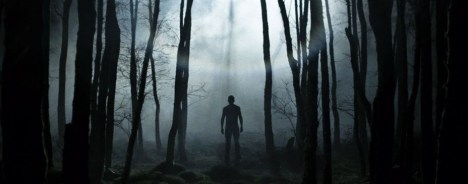
Without Name is a stunningly confident theatrical debut from director Lorcan Finnegan.

In theory, Without Name belongs that long-standing environmental horror genre, the fear that nature exists in opposition to mankind and that human beings are ultimately a hostile species not welcome in their surroundings. There are all manner of variations in that classic horror set-up, but it bubbles through any number of classic horror films, from The Shining to Jaws to The Birds. There is a recurring fear that the world is not a welcoming place for mankind, and that the wilderness might one day rebel against mankind’s desire to tame it.

If you go down to the woods today...

If you go down to the woods today…

Without Name takes that familiar premise and puts a uniquely Irish spin on it, distinguishing its own set of anxieties from those felt by the European Settlers in the United States or even those disconnected from their pagan roots in the United Kingdom. Without Name draws heavily upon the Western European pagan spirituality that informs films like The Wicker Man or A Field in England, but weds it to unique Irish anxieties about property and ownership that reflect both long-standing uncertainties and modern fears.

The result is a delightfully weird little environmental horror that feels very much of its time and place, a credit to its first-time director.

Sleep well...

Sleep well…

Continue reading

Non-Review Review: The Happiest Day in the Life of Olli Mäki (Hymyilevä mies)

This film was seen as part of the Audi Dublin International Film Festival 2017.

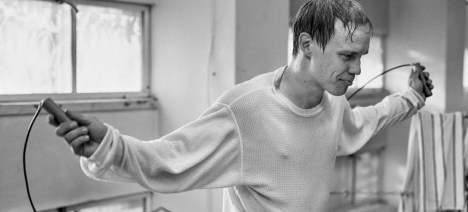
The Happiest Day in the Life of Olli Mäki plays almost like a mumblecore Raging Bull.

To be fair, that is a very facile description. Almost every boxing film stands in the shadow of Martin Scorsese’s 1980 biography of Jake LaMotta, but The Happiest Day in the Life of Olli Mäki invites those comparisons by filming its period-specific based-on-a-true-story boxing fable in black and white. It is hard not to think of Raging Bull in that context, and it is incredibly daring for The Happiest Day in the Life of Olli Mäki to actively invite the comparison.

Skipping to the point.

Skipping to the point.

However, in explicitly evoking that classic boxing movie, writers Juho Kuosmanen and Mikko Myllylahti are able to do something genuinely interesting. Taking all the iconography and expectations of the boxing movie genre, Kuosmanen and Myllylahti are able to tell a story that skews its perspective slightly. Channelling Raging Bull only underscores this subtle shift, with The Happiest Day in the Life of Olli Mäki not so much asking for a comparison as a contrast.

The Happiest Day in the Life of Olli Mäki is charming in the way that it embraces the clichés and expectations of the boxing movie only to subvert with a more naturalistic (and optimistic) love story about a boxer who largely eschews the conventions of the biography films that such sportsmen tend to inhabit.

On the ropes.

On the ropes.

Continue reading

Non-Review Review: Lady Macbeth

This film was seen as part of the Audi Dublin International Film Festival 2017.

Lady Macbeth is a very beautiful, and very arch film. Perhaps a little too arch.

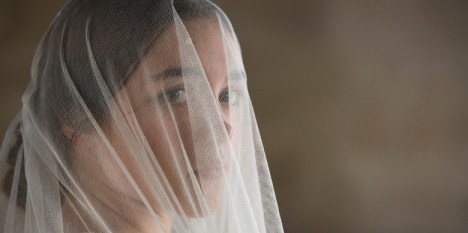
Writer Alice Birch and director William Oldroyd’s Lady Macbeth is a very loose adaptation of Lady Macbeth of the Mtsensk District by Nikolai Leskov, adapting the Russian novel to British surroundings. Ari Wegner’s cinematography is stunning, capturing the beauty of these new surroundings and meticulously framing the characters. Oldroyd films Lady Macbeth at a Kubrickian remove, keeping the camera still and often facing his characters head-on in a way that makes it seem like the cast are staring out of the film at the audience watching.

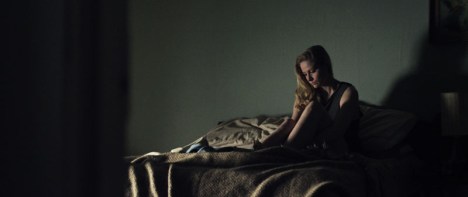
Thinly-veiled contempt.

Thinly-veiled contempt.

Birch’s script has an incredibly dark sense of humour, a wry grimace juxtaposed against the horrors that its characters inflict upon one another and the sense of bleakness that pervades the film. Indeed, the film balances on a knife-edge in terms of tone, shifting skilfully between moods from one scene to the next. At one moment, Lady Macbeth is a thoughtful character study, at another a cheeky feminist critique, then a pitch black comedy. Lady Macbeth is an impressive work in any technical sense.

However, there is a pervading coldness to the film, one reinforced by the intensity upon which the camera focuses upon characters who keep themselves at a remove. For all the polished sheen of Lady Macbeth, its characters remain heavily internalised and take their time expressing themselves through action. The result is a film that moves far too slowly, keeping its characters both opaque and inert for far too much of the runtime. Lady Macbeth is a very pretty film, but one that mistakes silence for profundity.

Return of the Mac(beth).

Return of the Mac(beth).

Continue reading

Non-Review Review: Maudie

This film was seen as part of the Audi Dublin International Film Festival 2017.

“Show me the way you see the world,” urges one buyer of Maud Lewis approximately half-way through Maudie, capturing the ageless appeal of just about any artistic vision. There is something exciting and unique about the opportunity to examine the world from a unique vantage point, to perceive time and space from the perspective of somebody else.

That is particularly true of Maud Lewis, the Canadian folk artist who captured the international imagination through the forties and into the fifties. Lewis had a very unique perspective on the world, capturing her surroundings and even people in crude two-dimensional terms with a surprising amount of depth. The little incongruous details of these seemingly simplistic paintings turned Lewis into a cultural icon, whose influence and legacy perseveres to this day.

maudie

Wedded to convenience.

The biggest problem with Maudie is that the film completely lacks any sense of original or distinctive vision, any real effort to see the world as it must have appeared to Maud Lewis. As much as the film and the surrounding characters might laud Maud for her distinct approach to painting, Maudie is a much more conventional tale. Maudie hits just about every biography cliché in the book, without offering any keen insight or shrewd observation. It lacks those small well-observed nuances that really brought Lewis’ work to life.

A superb central performance from Sally Hawkins cannot elevate a film that is so eager to engage in twee unreconstructed nostalgia.

Painting a pretty picture.

Painting a pretty picture.

Continue reading

Non-Review Review: Fences

Fences is a superb play, with a great cast, that makes for a reasonably solid film.

Fences was adapted by playwright August Wilson from his 1983 Pulitzer-Prize-winning stage play. Although Wilson passed away in 2005, the resulting film is very faithful to that stage-bound sensitivity. Perhaps out of respect for the writer, or out of respect for the story’s origin on the stage, director Denzel Washington never really pushes Fences beyond its source material. Fences has a superb A-list cast, but it never quite feels like a feature film adaptation.

Living life to the Maxson.

Living life to the Maxson.

Instead, Fences feels like it is trapped somewhere in the limbo between stage and screen, feeling like one of those adaptations from the earliest days of television when the medium never knew exactly where it fell between those two pillars. Fences retains a tight cast and a very fixed location, much like the stage play. It retains monologues and confrontations that play out over extended scenes that recall theatre rather than taking advantage of cinema’s ability to let time lapse.

To be fair, the cast superb and the source material is impressive. It is easy to understand why Washington adopted such a reverent and respectful approach to the cinematic adaptation. However, Fences never feels like anything more than the sum of its very impressive parts. In fact, it might feel like a little less.

Mending fences.

Tightly-knit family unit.

Continue reading

Non-Review Review: The Founder

The Founder is a reasonably solid drama, anchored in a strong central performance and a timely narrative.

In form, The Founder plays like a very old fashioned piece of prestige cinema. It is a grand and sweeping character-driving historical drama that spans a seven-year period from Dick and Mac McDonald’s first encounter with Ray Kroc to his eventual purchase of the family and business name. Unlike many contemporary historical dramas, there is no tight focus on a singular significant historical event. The Founder does not attempt to illuminate its central character through intense scrutiny of one big moment. Instead, it tries to tell the whole story.

Foundation myth.

Foundation myth.

The Founder hits all of the expected beats from a film like this. Although it is obvious rooted in a true story, the movie tracing an arc as smooth as that iconic golden “m.” This not necessarily a bad thing. The Founder knows what it is doing, and it sets out about doing it in an efficient manner. In its own strange way, this feels appropriate. The Founder is as precisely constructed as the “swift service” engine that Ray Kroc elevates from a local quirk to a national franchise. The Founder never falters too badly, never meanders unforgivably.

More than that, The Founder has the luxury of a fantastic central performance from Michael Keaton as the huckster salesman who attaches himself to a small family business and manoeuvres himself to the head of an international empire.

He only wants his cut.

He only wants his cut.

Continue reading

Non-Review Review: 20th Century Women

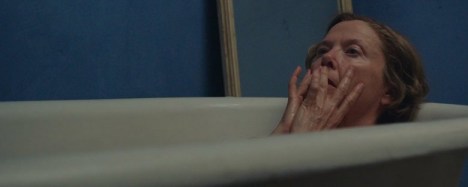
20th Century Women is more affective than effective.

Mike Mills’ late seventies drama is far too quirky for its own good, often feeling more like a dramatised video essay than a narrative film. Mills provides a rake of social context for his story, from samples of Lodger to references to The Man Who Fell to Earth. He plays an extended section of President Jimmy Carter’s “Crisis of Conscience” address to the nation and even inserts some footage from Koyaanisqati. Characters monologue (and even dialogue) over careful compositions as the camera tracks across footage.

Making a splash.

Making a splash.

Everything in 20th Century Women feels overstated. It is not enough to have characters quote extended passages from contemporary literature and poetry, Mills makes sure to cite his sources up on screen. The result is that 20th Century Women feels more like an annotated thesis statement than an engaging story. Mills keeps the camera at a distance from his characters, constantly moving through scenes instead of allowing them to develop organically. Everything is quirky and arch.

The result is that 20th Century Women suffocates its most interesting elements; its characters, its cast, its engagement with American masculinity and femininity on the cusp of Reaganism. This is a movie that strives so hard for authenticity that it only exposes its artifice.

Fanning the flame.

Fanning the flame.

Continue reading