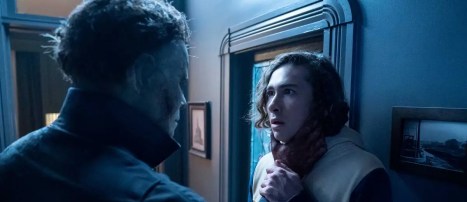
I’m thrilled to be launching movie reviews on The Escapist. Over the coming weeks and months, I will be joining a set of contributors in adding these reviews to the channel. For the moment, I’m honoured to contribute a three-minute film review of Halloween Kills, which released theatrically and on Peacock this weekend.
Halloween Kills is an ambitious sequel, if a little messy – and not just in the way that one expects a slasher movie to be messy.
Halloween Kills is a direct sequel to David Gordon Green’s Halloween. It picks up in a very similar place to where the two other direct sequels to a movie named Halloween start. Like Rick Rosenthal’s Halloween II and Rob Zombie’s Halloween II, the film follows Laurie Strode to hospital as Michael Myers continues his rampage through Haddonfield, Illinois. Although Zombie’s Halloween II takes a sharp turn in its second act, all three direct sequels extend the eponymous night into the early morning that follows.
Gripping stuff.
There is a lot going on in Halloween Kills. The film effectively splits across three main plot threads that only intermittently overlap with one another. One of these threads centres on Laurie’s recovery in the hospital, while the second follows the reaction of the local community to the carnage, and and the third focuses on Myers’ continuing rampage through an Illinois suburb. The film is disjointed, with Green inheriting a lot of continuity and character baggage from his previous film while heaping even more connections back to the original film upon it.
Still, perhaps the best and worst thing that can be said about Halloween Kills is that it marks a return to the grim nihilism that defined John Carpenter’s original.
I’m thrilled to be launching movie reviews on The Escapist. Over the coming weeks and months, I will be joining a set of contributors in adding these reviews to the channel. For the moment, I’m honoured to contribute a three-minute film review of Dune, which is released theatrically in Europe and the United States next weekend.
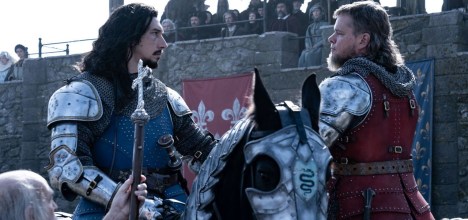
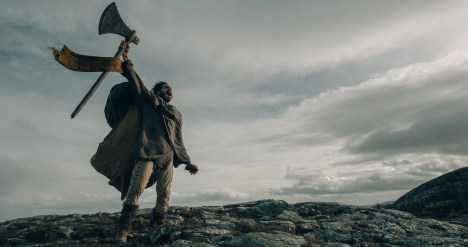
The Last Duel is a thorny and compelling medieval epic. It’s a little rough around the edges, but that’s undeniably part of the appeal.
The Last Duel is adapted from the book of the same name by historian Eric Jager. As its title implies, the film offers an account of the last judicial duel permitted by the Parlement of Paris. That duel was fought between two noblemen: Jean de Carrouges and Jacques Le Gris. The challenge was offered over allegations that Le Gris had raped de Carrouges’ wife, Maguerite. The assumption was that divine authority would ultimately determine where the truth lay in the matter, that the victor in this mortal combat would ultimately be vindicated.
Duel narratives.
Naturally, the events that inspired The Last Duel remain contentious. Historians are not entirely sure what happened, and how much of the various accounts reflect the truth of what happened or have been shaped by the convenient narratives of the victors. The film, with a screenplay from Matt Damon, Ben Affleck and Nicole Holofcener, leans into this ambiguity. The film is structured similarly to Akira Kurosawa’s Roshomon, outlining three separate accounts of the events leading up to the trial from the perspective of each of the key figures: Jean, Jacques and Maguerite.
The result is a film that touches on the blurred boundaries between history and narrative, and explores the way in which these sorts of stories are shaped by wounded pride and vain ego. It’s an uncomfortable and unsettling film, occasionally a little clumsy in its execution, but which grapples with big ideas.
There is perhaps some irony in the fact that a movie titled No Time to Die is the longest movie in the James Bond franchise.
No Time to Die is an interesting mess of a movie. It’s a film that contains a variety of interesting and intriguing elements that never coalesce into something completely satisfying, and are often lost in a mess of continuity accrued from the previous four entries in the franchise. As the final film in the franchise to star Daniel Craig, No Time to Die finds itself tasked with turning off the lights at the end of the night, serving as something of a series finale to the actor’s previous adventures.
Drinking it all in.
The biggest challenge facing No Time to Die is the simple fact that the previous four films in the franchise don’t really form a single or cohesive narrative. They were four separate movies, with each shaped and informed by the reaction to the prior entry. When Casino Royale proved that audiences could accept a modern take on the James Bond franchise, Quantum of Solace doubled down on tweaking the character to fit into the modern action thriller landscape. When that didn’t work, Skyfall course-corrected for a more traditional approach. Following that success, SPECTRE tried clumsily to tie it all together.
No Time to Die spends far too much of its impressive runtime trying to reconcile these films to each other. As a result, the film never really finds space to play with its own more interesting and compelling ideas.
The Sopranos was a groundbreaking piece of television that completely changed the rules of television as a medium, with a mob epic that was singularly suited to the opportunities and the constraints of its given medium. Perhaps the best thing that can be said about The Many Saints of Newark is that it at least reinforces how much of the success of The Sopranos was down to its existence of a television show. The Many Saints of Newark demonstrates that so many of the tricks that made The Sopranos so compelling when watched in thirteen-hour seasons become deeply frustrating when condensed to a two-hout movie.
The Many Saints of Newark is a fundamentally flawed film. The most charitable interpretation of the film is that it feels like an attempt to condense an entire season of television down to a cinematic narrative that clocks in at just under two hours. The Many Saints of Newark is a sprawling film, one that spans from the late sixties into the early seventies. It often doesn’t seem to have a singular driving plot, but instead a set of competing subplots that swirl and occasionally cohere around the lead character of Dickie Moltisanti. They gesture broadly at compelling thematic concerns, but without any real clarity or focus.
Clever Dickie.
The Many Saints of Newark hinges on the narrative trickery that made The Sopranos such a compelling watch. It has an expansive cast. There’s a recurring ambiguity about what any of this actually means and what parts of it will be actively important to the resolution of the story. The film is willing to spend extended periods focusing on vignettes involving tertiary supporting cast members, away from the nominal lead. The film’s ending is a very deliberate and pointed anticlimax, one that is very deliberately set up over the film’s runtime, but which still feels designed to confound audience expectations.
All of these elements worked on The Sopranos because the production team had enough room to explore and develop them. The show was dense enough and had enough narrative real estate that credited leads like Lorraine Bracco or Dominic Chianese could disappear for multiple episodes at a time, only to return at pivotal junctures. The show spent enough time developing its narrative threads that sudden curve balls that seemed to derail certain plots instead felt like satisfying and unexpected pay-offs from others. The Many Saints of Newark doesn’t have this luxury. It doesn’t seem expansive, just messy.
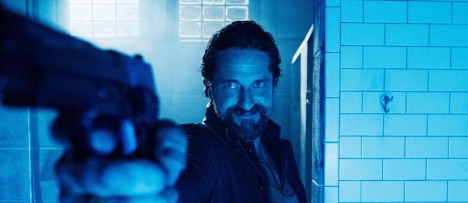
Copshop is a loving and pulpy throwback to old-fashioned seventies b-movies, that simply doesn’t know when to quit.
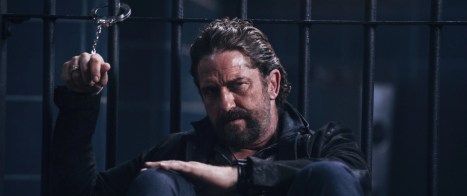
Copshop operates very firmly within the comfort zone of everybody involved. Director Joe Carnahan has made a name for himself as a director of these sorts of high-concept thrillers. Stars Gerard Butler and Frank Grillo both seem perfectly at home glowering at each other across a police station cell block, separated from one another by two sets of bars. Watching Copshop, the film plays as a slight tweak on the basic concept that has made Assault on Precinct 13 an enduring cult hit: an isolated and under-staffed police station finds itself unde rsiege and stuck with a dangerous criminal.
The Butler did it.
There’s a compelling simplicity to Copshop, with the movie building outwards from a solid premise, and understanding the appeal of these sorts of movies. Carnahan imbues the film with an appealing nastiness and cynicism that feels appropriate for this kind of genre throwback. Most of the runtime of Copshop finds its protagonist, Officer Valerie Young, forced to choose between the lesser of two evils as the situation steadily escalates around her. For most of the film’s runtime, Carnahan commits to this meanness in a manner that is often lacking from these sorts of throwbacks and tributes.
Unfortunately, Copshop somewhat falls apart in its final ten minutes, as the film seems unable to settle on a single satisfying ending and so instead cycles through at least three different climaxes hoping that one of them might stick. The movie’s bombastic and over-stuffed third act is a frustrating conclusion to a film that worked to that point largely because of its minimalism and its restraint.
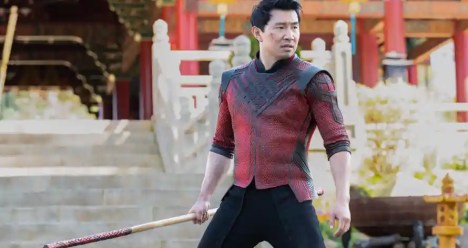
I’m thrilled to be launching movie reviews on The Escapist. Over the coming weeks and months, I will be joining a set of contributors in adding these reviews to the channel. For the moment, I’m honoured to contribute a three-minute film review of Shang-Chi and the Legend of the Ten Rings, which is released theatrically in Europe and the United States this weekend.
There’s something unsettling on how conservative Shang-Chi and the Legend of the Ten Rings is, even by the standards of the Marvel Cinematic Universe.
This is particularly frustrating when Shang-Chi and the Legend of the Ten Rings positions itself as a progressive piece of pop culture. There’s a lot to appreciate about the film, conceptually. It is the first film in the Marvel Cinematic Universe from an Asian American director. It is the first entry in the franchise with a predominantly (almost exclusively) Asian cast. It exists in conversation with the company’s long-standing history of clichés and stereotypes, exploring and reconstructing them. Even more than that, it has a fundamentally charismatic cast and a fairly solid emotional arc, both of which should sustain it.
Stick with it.
However, all of this ultimately feels like empty window dressing arranged around a weirdly traditionalist and pandering core. At its heart, Shang-Chi and the Legend of the Ten Rings is a story about how “kids these days” really don’t know what they’re doing or where they’re going, and really just need to get back in touch with their roots and learn from their elders. There are points when Shang-Chi and the Legend of the Ten Rings feels a little bit like a Jerry Seinfeld joke about stupid millennials with their gap years and their gig economy.
There’s something disheartening in all this, particularly with Shang-Chi and the Legend of the Ten Rings positioned as the first true origin story to follow Avengers: Endgame, the herald of a new era for perhaps the most ubiquitous pop culture franchise in the world. However, when Shang-Chi and the Legend of the Ten Rings should be looking forward into a bold new era, it casts its gaze backwards.
I published a new In the Frame piece at The Escapist this evening. With the release of David Lowery’s The Green Knight on streaming, it seemed like a good opportunity to take a look at the director’s reimagining of classic Arthurian legend.
In particular, when is so fascinating about The Green Knight is the way that it takes a very classic and very conventional hero’s journey – the story of a character who embarks upon a quest that makes them better, stronger and wiser before returning home fundamentally changed by the experience – and gradually deconstructs it. Is a hero’s journey alone enough to make Gawain a great man? Can the adventure make him a different person? Is there a checklist of accomplishments that he must complete before he becomes a worthy knight? The Green Knight interrogates and explores these questions.
You can read the piece here, or click the picture below.



















 the m0vie blog