• Following Us

  • Categories

  • Check out the Archives


  • Awards & Nominations

New Podcast! The X-Cast – Season 3, Episode 23 (“Wetwired”)

I’m back on The X-Cast this week, covering Wetwired with the one and only Tony Black. We took you into this season, and we can take you out of it too.

Wetwired is a curious beast. It’s an episode that a lot of people compare to Blood, but I’ve always seen it as being a lot closer to the first half of Anasazi. Which perhaps makes sense, if you consider it part of the third season finale in spirit. Wetwired is also an episode about which my opinion has shifted a great deal in recent years. I thought it was pretty fine when I reviewed it a few years ago, but – like a lot of The X-Files – it seems increasingly prescient in the modern context.

The truth is in here. You can listen to the episode here, or click the link below.

Continue reading

Non-Review Review: The Ballad of Buster Scruggs

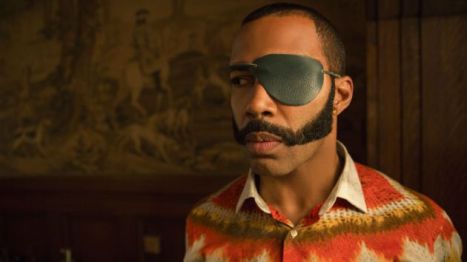
The Ballad of Buster Scruggs is not so much a set of stories about the Old West, more a set of stories about the stories that are told about the Old West.

To be fair, the anthology film wears this premise on its sleeve. The Ballad of Buster Scruggs is by its nature an omnibus of short stories, drawing its audience’s attention to the format through the framing device of an anonymous hand leafing gently through an old hardcover book of short stories. Even within the individual stories, the Coen Brothers frequently nest smaller and more intricate narratives; whether stories shared at dinner, great works recited for an enchanted audience, or even just strangers in a stage coach making awkward conversation with one another.
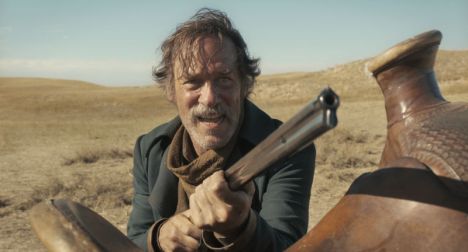
The rifle man.

In the film’s final segment, The Mortal Remains, the self-described “distractor” Thigpen explains that he distracts his quarry through stories. “People can’t get enough of them,” he assures his audience. “Because people connect the stories to themselves, I suppose. And we all love hearing about ourselves. So long as the people in the stories are us… but not us.” In its own weird way, positioned at the tail end of the narrative, Thigpen seems to offer something of a thesis statement for The Ballad of Buster Scruggs, a story about stories. In particular, a story about certain types of stories.

The Ballad of Buster Scruggs is decidedly uneven, as anthology films tend to be. That said, the quality is high enough (and the stories disparate enough) that it’s easy to imagine that each story of the six might be someone‘s favourite. The Coen Brothers very cannily and very astutely ensure a great variety in tone across the six installments, which range from gleefully nihilistic, to sombre and withdrawn, to eerie and uncanny. However, they are connected by a series of recurring preoccupations about life of the frontier and man’s awkward relationship to both that wilderness and his fellow man.

No need to make a song and dance about it.

The Ballad of Buster Scruggs is not consistent enough to rank among the Coens’ best work. While the movie maintains a consistent perspective and philosophical vantage point across its two-hour-and-ten-minute runtime, the individual stories vary so wildly in terms of aesthetic and rhythm that the film never quite coheres as well as it might. At the same time, The Ballad of Buster Scruggs contains enough delightful details in its smaller moments that linger, suggesting that the film might best be remembered as a collection of inspired moments rather than as a satisfying whole.

The Ballad of Buster Scruggs is not so much a ballad as a concept album.
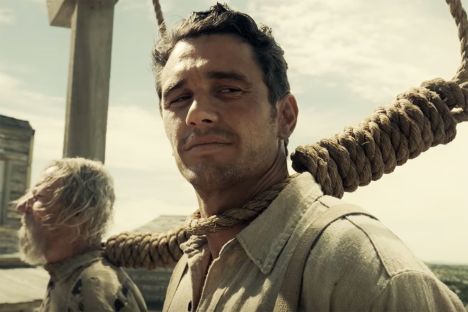
Don’t leave him hanging.

Continue reading

Non-Review Review: Outlaw King

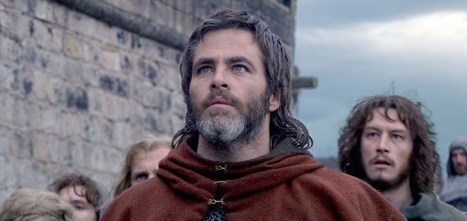
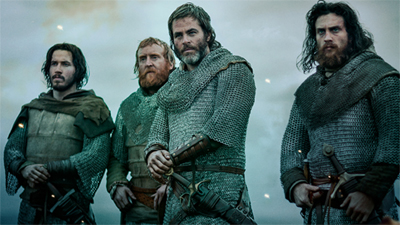
Outlaw King opens with a very impressive tracking shot, or what at least appears to be a very impressive tracking shot. The sequence lasts more than eight minutes, wherein the audience follows the action at the Scottish surrender to King Edward I. The camera follows various actors at they move through the scene, from inside the tent with King Edward I to the congress outside in the mud. The scene features an impressive sword fight, before heading back into the tent and out the other side, to the point where Kind Edward I has a massive trebuchet waiting.

The Scottish have surrendered. The revolution has failed. The lords of the region have bowed before the British Crown and sworn fealty to the throne. This gigantic instrument of war seems redundant, pointless. It has no purpose in this particular situation. Nevertheless, King Edward insists that the trebuchet be loaded, and discharged towards a prominent Scottish castle on the nearby hill. Edward explains that this is a gesture of authority, making it clear that the surrender is “final.” He adds, “Also, it took three months to build. So I don’t want to waste it.”

Great Scot!

It is an interesting introductory scene for a number of reasons. Most obviously, it is incredibly technically impressive. Director David Mackenzie is really just showing off here, demonstrating how much control he has over the film, how carefully managed the choreography is, how perfectly he can time the rhythms of the action to the movement of his camera. The introductory scene very skillfully introduces most of the major players and key dynamics that will inform the action that follows, in manner that is graceful and never overwhelming. It’s technically impressive.

At the same time, the entire sequence feels just a little bit like Edward’s gigantic trebuchet and perhaps even a little bit like the film as a whole. It is a wonderfully constructed piece of work that feels over-elaborate and over-complicated for what it is doing. Outlaw is a beautiful film underpinned by some intriguing ideas about power and violence, much like Mackenzie’s work on Hell or High Water. Unfortunately, Outlaw King lacks the warmth and humanity of Hell or High Water. Like that absurd trebuchet, it feels a little overly ornate and never entirely sure of its purpose.

A Brucie Bonus.

Continue reading

Non-Review Review: Bohemian Rhapsody

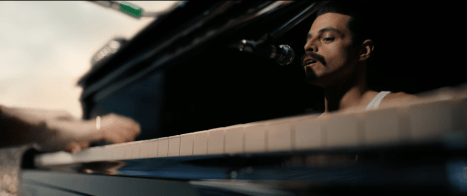
Bohemian Rhapsody is more invested in being a fairly standard music biopic than with being a slightly more specific Queen biopic.

There’s a weird sense of familiarity that runs through Bohemian Rhapsody, which has nothing at all to do with its central characters and everything to do with the kind of story that it is telling. If anything, Bohemian Rhapsody will appear completely foreign and alien to dedicated fans of Queen, or anybody with even a passing knowledge of the bad’s history and discography. Instead, it will feel most comforting and familiar to the aficionados of the old tried-and-true biographical feature film formula memorably lampooned by Walk Hard.

Spotlighting its subject.

Bohemian Rhapsody repeatedly brushes up against conflicts between history as it occurred and the rhythms of that standard narrative template. In every single case, Bohemian Rhapsody chooses to side with the narrative template rather than the historical record. It is debatable whether there is anything inherently wrong with this, to be fair. This sort of film-making is an act of adaptation. It is often necessary to conflate, distort of fabricate events in order to convey an essential truth about some real-life person or character, because real life is not a narrative, despite best efforts to impose one upon it.

However, it is one thing to manipulate or distort the finer details of a narrative to hint at a deeper truth. It is another thing entirely to warp reality to fit an assembly blueprint that reveals next to nothing about any of its subjects.

A pale reflection of the man himself.

Continue reading

Non-Review Review: They’ll Love Me When I’m Dead

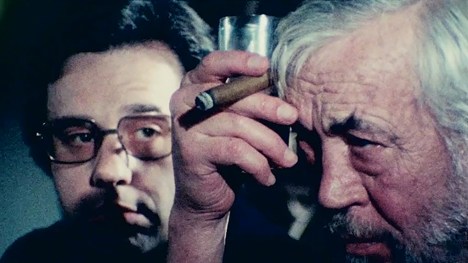
They’ll Love Me When I’m Dead serves as a convincing argument that The Other Side of the Wind works better as a story than as an actual object that exists.

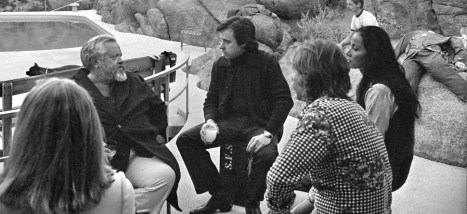
They’ll Love Me When I’m Dead is a feature-length documentary that is only a few minutes shorter than its subject, providing an exploration of The Other Side of the Wind, from its conception through it development and into its long and storied afterlife. It is a very exciting and engaging tale, one that sweeps across Hollywood history, delving into a variety of nooks and crannies. It is a story that is intertwined with dissolving marriages and international politics, of bad luck and tremendous arrogance. All of this existing in the shadow of Orson Welles.

They’ll Love Me When I’m Dead offers an account of the production of Orson Welles’ ill-fated experimental piece of metafiction. It is perhaps a testament to The Other Side of the Wind that it occasionally feels like They’ll Love Me When I’m Dead can perhaps be folded into the wild ambitions of an ageing filmmaker working on a project that would not materialise during his life-time. Towards the end of They’ll Love Me When I’m Dead, archive footage of Orson Welles finds the auteur musing on his next project.

“Maybe it isn’t even the picture,” he confesses to the press. “Maybe it’s just talking about the picture.” Maybe The Other Side of the Wind is not the real headline. Maybe They’ll Love Me When I’m Dead is the real headline.

Continue reading

Non-Review Review: The Other Side of the Wind

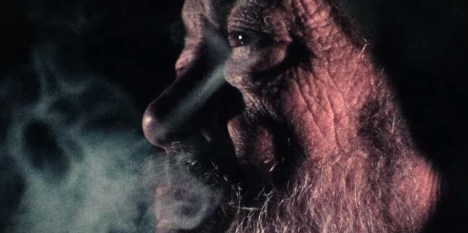
It is still strange to think of The Other Side of the Wind as an object that actually exists.

The film has haunted film films for decades, the prospect and potential of one last Orson Welles film that remains to be found long after the iconic director’s passing. The footage had all been shot. The material was gathered. All that had to be done was to journey through those hours and hours of material, in search of something resembling a feature film. It evokes that famous story about how Michelangelo approached sculpting, except that instead of a lump of marble, this work of art is to be subtracted from mountains of film.

Of course, there is a valid debate to be had about whether the version of The Other Side of the Wind that has been screened can claim to be the real or actual version. After all, the film arguably only ever existed inside the head of Orson Welles. After his passing, the only thing that could be released was an approximation of his vision, an impression of his filmmaking. This is particularly true given the extent to which Welles relied on editing in his filmmaking. Welles famously boasted to Cahiers du Cinema that editing was more important than mise en scene.

However, watching The Other Side of the Wind, there is a strong sense that Welles himself would approve this ambiguity, that he would actively encourage it. The Other Side of the Wind is a knowingly twisty and slippery piece of work, a wry and iconic piece of film that somehow still seems avante garde more than four decades after it was originally shot. There is a sense in which The Other Side of the Wind feels like sly and biting joke, one told by a comedian with pitch-perfect timing. Only one question remains. Who is the butt of this joke?

Continue reading

Non-Review Review: Overlord

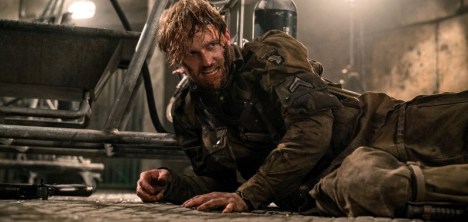
Overlord is a film that works a lot better in concept than in does in execution.

The idea of constructing a pulpy monster narrative around Nazi atrocities during the Second World War has a certain appeal to it. Not only does it evoke the sort of trashy fiction that that often existed at the margins of popular culture, but it also suggests the speculative lenses through which audiences process trauma, the way in which mass media filters horrors almost beyond human comprehension into something tangible and visceral, creating an uncanny and uncomfortable prism through which anxieties over these horrors might be channeled.

Russelling up some fun.

The horrors inflicted by the Nazis are almost impossible to fully comprehend; the systemic brutality inflicted upon those marginalised groups under their authority, the destruction that they wrought across Europe. These traumas linger in the popular memory. While the reality of those atrocities must never be forgotten or downplayed, there is something very powerful in the idea of translating that to the screen through the cinematic language of horror. Like Wolfenstein, Overlord seems to suggest an impressionistic portrait of the horrors of the period.

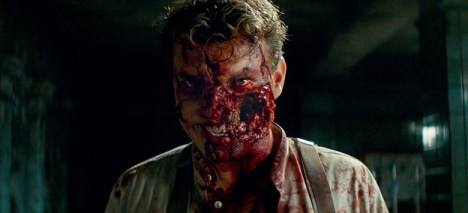
This approach is intriguing, and there are moments when Overlord works very well, when the film is creepy and unsettling in all the ways that it should be creepy and unsettling. However, the film suffers greatly when the script tries to impose a familiar framework on these horrors, when it runs through the checklist of storybeats expected for a major modern cinematic release. Put simply, Overlord works best when it aspires to be Captain America: The First Avenger, but as a horror film” and it works worst when it just tries to be Captain America: The First Avenger.

I want to take his face… off.

Continue reading

Non-Review Review: Widows (2018)

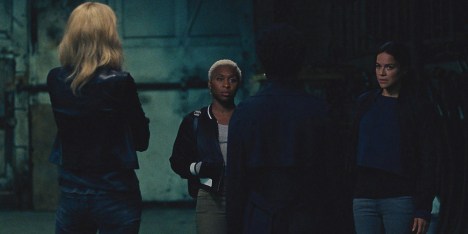
At its most basic, Widows is a testament to applying the skill and craft of two filmmakers working at the very top of their game to a sturdy and reliable genre framework.

The basic plot of Widows is relatively straightforward, adapted from Lynda LaPlante’s book by way of a very successful British television miniseries. A group of women find themselves drawn into an unlikely life of crime when their husbands are killed during a botched robbery. Caught between corrupt politicians and scheming gangsters, the women are thrown out of their comfort zone as their leader commits to completing a heist that was carefully and meticulously planned by her late husband. It’s pulpy, it’s trashy, it’s fun.

Widows of opportunity.

However, the beauty of Widows lies in applying the skill of Gillian Flynn and Steve McQueen to this set-up. Flynn is one of the biggest writers working today, known for both her novels and for her work on screenplays. Gone Girl was enough of a cultural force to turn its title into a verb, and embodied a certain kind of sleek self-aware trashy storytelling style. McQueen is a great writer in his own right, but already one of the most esteemed and respected directors working in contemporary cinema; known for his work on Shame or Twelve Years a Slave.

Widows is a movie that is completely unashamed of the trappings of its story, a familiar story about unlikely criminals who find themselves forced into “one last job”, with the biggest irony being that it is somebody else’s last job. Widows never looks down upon the heightened aspects of its narrative, nor does it feel a need to elevate or legitimise them. Instead, Widows allows its intelligence and insight to fold into the contours of this slick stylish crime thriller. The result is simply dazzling.

Stealy resolve.

Continue reading

Non-Review Review: Sorry to Bother You

Sorry to Bother You is striking, vibrant and vital. And essential.

Boots Riley’s directorial debut is a work of striking confidence, one that emerges almost perfectly formed with the skill and craft of a director much more experienced. Sorry to Bother You knows exactly what it is doing from one moment to the next, without any sense of hesitation of self-doubt. Sorry to Bother You is strikingly self-assured, maintaining an incredible level of high-energy across its runtime. This sustained propulsive dynamism in infectious, as the movie bounces from one big idea to the next.

Dialing up the social commentary.

The most obvious antecedents of Sorry to Bother You are the vibrant science-fiction social satires of the eighties, most notably the work of Paul Verhoeven that used a hyper-stylised aesthetic to depict the grosteque excesses of capitalism. Of course, the true horror of Sorry to Bother You lies in the sense of how the world itself has moved to close the gap over the past three decades. Although Sorry to Bother You unfolds primarily in a lightly fictionalised Oakland, the most unsettling aspect of the film is how close it feels to the modern status quo.

Sorry to Bother You is a work of bold vision.

Few satires are a patch on this.

Continue reading

Non-Review Review: First Man

First Man offers a novel take on a familiar story.

The moon landing is one of the most important moments of twentieth century history, a defining for both America and the larger world. In fact, it remains emblematic of the furthest soil to which  man has ventured to this point. Our species had crossed the threshold of the upper atmosphere before and has done so since. In fact, mankind has even gone back to the moon, although those trips are fading from living memory. The moon landing remains a cultural and historical touchstone, and has been explored from countless perspectives.

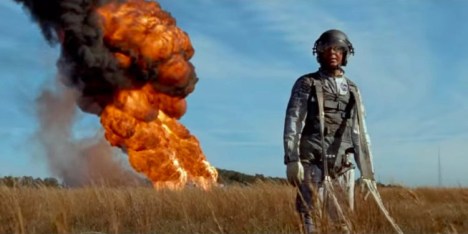
Take your protein pill and put your helmet on.

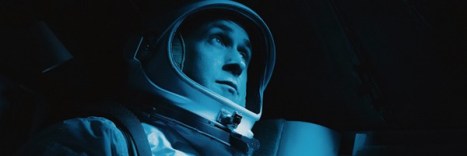
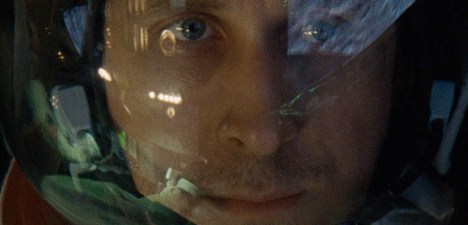
It takes a lot to find a fresh pair of eyes on this journey, but Damien Chazelle does exactly that. The director makes this clear as early as the opening scene. The first time that the audience sees the Earth as a planet, it is not through an establishing shot or the windows of the makeshift space craft. It is reflected in the visor of Niel Armstrong, the warm blue horizon cutting across his visor just below his striking and piercing eyes. Ryan Gosling has always been an actor capable of communicating much through his eyes, and First Man asks us to appreciate space reflected back from them.

So much of First Man is told either focused on or looking through the eyes of Neil Armstrong; the majesty of space and lunar surfaces reflected in the visor of his helmet, or various first-person shot from inside elevators or falling swiftly to Earth. The audience is placed very much in Armstrong’s shoes. Even when Chazelle isn’t literally shooting the film from Armstrong’s perspective, he favours tight close-ups and handheld camera work in confined spaces to suggest that the audience is literally trapped within that space with Armstrong.

Rocket man.

There is no small irony in this, and Chazelle knows it. It seems strange that freshest pair of eyes on the lunar mission should be those of the first man to set foot on the moon. One might have expected the mythology to start there, but instead Armstrong has long remained a figure of mystery. Tacit and introverted, Armstrong has always seemed more like a legend than a human being. The novelty and the power of First Man comes from studying the man who made both that small step and that giant leap.

In doing so, First Man offers a powerful and intimate exploration of a very personal story that just happens to be told on the broadest canvas imaginable.

All fired up.

Continue reading