• Following Us

  • Categories

  • Check out the Archives


  • Awards & Nominations

Doctor Who: Kerblam! (Review)

Watching Kerblam! makes for a very strange sensation.

As with the earlier stretch of the eleventh season, there is a sense that Chris Chibnall is consciously harking back to the era overseen by Russell T. Davies. This explains the opening present-future-past triptych of The Woman Who Fell to Earth, The Ghost Monument and Rosa. It also accounts for the positioning of Arachnids in the U.K. as an opportunity to spend time in the contemporary United Kingdom for the twin purposes of character development and broad political commentary.

A clean record.

Kerblam! is the kind of futuristic story that Davies would frequently tell early in his own seasons, like New Earth, Gridlock or Planet of the Ood. It might also be reflected in episodes like The Long Game or Midnight. Interestingly, the episode is populated with the sort of politically-coded iconography that defined those stories, iconography that had largely been stripped out of The Ghost Monument in favour of some broad asides about how late-stage capitalism is a destructive rat race without any real depth to them.

Kerblam! is very overtly a story about hypercapitalism, with the eponymous company obviously standing in for Amazon. This is much more overtly political than any subtext that could be read into the season’s other “future” stories like The Ghost Monument or The Tsuranga Conundrum. Following on from episodes like Arachnids in the U.K. and Demons of the Punjab, it seems like Kerblam! might be positioned as bit of biting social commentary, using the broadly drawn science-fiction future in the same way as even Moffat era tales like The Beast Below, Smile or Oxygen.

Doesn’t scan.

On a purely surface level, Kerblam! looks like it might engage with the legacy of the Davies era as more than just a production aesthetic, understanding the potential to use a cartoonish and exaggerated science-fiction framework to slip in some genuinely provocative social commentary for family consumption. One of the great ironies of the Chibnall era has been the narrative that it is “too PC!”, despite the fact that it has actually been surprisingly moderate in its political ambitions. The surface level design of Kerblam! looks like a breath of fresh air in that context.

Unfortunately, the episode takes a number of very sharp swerves and veers crazily off course, featuring the surreal assumption that “the systems aren’t the problem.”

Difficulty Fezzing up to reality.

Continue reading

Non-Review Review: The Christmas Chronicles

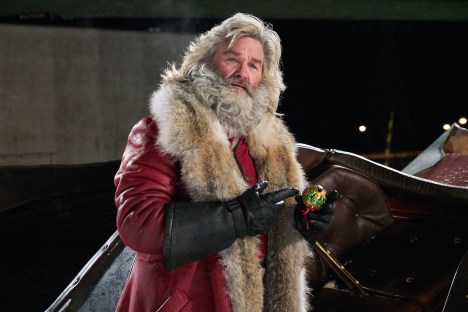
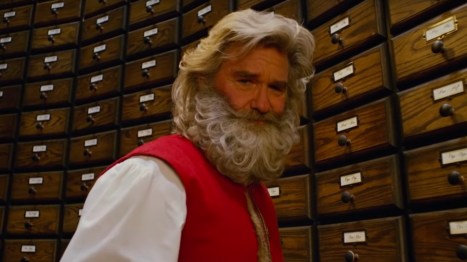
The Christmas Chronicles is corny, clumsy, cheesy. It is more than a bit naff, to the point that it frequently seems to run on naff.

It is not especially inventive or creative with its premise, and often seems to have opted for the easiest manner of jumping from one set piece to the next. The Christmas Chronicles is incredibly broad, to the point where it even includes a weird castration joke about a computer-generated elf wielding a chainsaw in what had been (up until that point) a completely non-lethal. The film takes a fairly standard Christmas movie premise – what if a bunch of kids have to work with Santa to save Christmas? – and goes through the motions with it.

No Claus for concern.

Truthfully, that is about enough. It isn’t just that Christmas is a time for generosity and cheer, it is that Christmas is also a time to welcome very simple and very striaghtforward entertainment designed to be consumed by families with across a broad range of ages, in varying degrees of consciousness and sobriety. There is a time and a place for the broadly-drawn hijinx that drive The Christmas Chronicles, and Christmas itself would seem to be it. It is an affectionate old-fashioned family movie throwback to a time when emotional arcs could be drawn in crayon and a handful of creative juxtapositions could sustain a film.

The Christmas Chronicles pulls it off. Just about.

Filed by letter.

Continue reading

New Podcast! Scannain Podcast (2018) #43!

It’s time for the latest Scannain podcast! A somewhat abridged edition this week, due to time constraints.

This week, I join Jay Coyle and Grace Duffy to discuss the week in film. As usual, we talk about the top ten and the new releases, as well as what we’ve watched this week. In this episode, Jay discusses continues his disaster movie marathon with Volcano and the questionable inclusion of Cliffhanger. Varda Season continues apace. Meanwhile, Grace gets into the Christmas spirit and walks us through some highlights of her binge of research into Netflix’s Christmas films.

The news this week is abridged, but there’s a brief discussion of the passing of Stan Lee and the awards given out by Irish Film London before the Irish Film Festival London.

The top ten:

  1. Hurricane (Squadron 303)
  2. Goosebumps II: Haunted Halloween
  3. Overlord
  4. Johnny English Strikes Again
  5. Smallfoot
  6. The Nutcracker and the Four Realms
  7. Widows
  8. A Star is Born
  9. Bohemian Rhapsody
  10. The Grinch

New releases:

You can download the episode here, or listen to it below.

Non-Review Review: They Shall Not Grow Old

They Shall Not Grow Old is a marvelous technical accomplishment, and an adequate if flawed documentary.

A lot of the debate and discussion around They Shall Not Grow Old focuses on the manner in which director Peter Jackson has “updated” or “remastered” existing archival footage of the First World War to bring the documentary to life. They Shall Not Grow Old features real footage of the conflict shot at the same time, albeit digitally manipulated do that it could be rendered in high definition, in colour and widescreen. There are certain segments of film fandom that view this as an act of cinematic vandalism, of destruction of the historical record in a desperate populist bid.

However, this overlooks the substance of They Shall Not Grow Old as an actual documentary, reducing Jackson’s attempt to craft a visceral and tangible record of the First World War to a piece of trivia or a cinematic novelty. This is both a disservice to the documentary itself and also something of a boon. The narrative that Jackson is attempting to reconstruct with the materials available to him is interesting, perhaps much more interesting than debates about one particular facet of the movie’s production.

They Shall Not Grow Old is an ambitious effort, but it is also a deeply flawed one. Its flaws are in many cases interwoven with its virtues, with everything that makes it so unique also serving to impose rigid formal boundaries upon the work that Jackson cannot escape simply by reframing his footage.

Continue reading

Non-Review Review: The Girl in the Spider’s Web

The Girl in the Spider’s Web is essentially a high concept shorn of any sense of authorship.

Lisbeth Salander is one of the very few breakout fictional characters of the twenty-first century, a concept that immediately latched on to the public imagination following the publication of Stieg Larsson’s Män som hatar kvinnor in 2005. Salander was a character who seemed to speak to the turbulent new century, a digitally native avenging angel who unleashed her wrath against a violent and misogynist establishment. Salander seemed to speak immediately and viscerally to her moment.

Phoning it in.

A Swedish language film was released four years later, featuring a career-defining performance from Noomi Rapace, which seemed to be enough to singlehandedly assure the young actor an English-language career. Hollywood quickly noticed and immediately commissioned a remake that would be directed by David Fincher, and which would go on to be nominated for five awards. Rooney Mara would effectively launch her career with a Best Actress nomination for her performance of Salander.

All of these are incredible accomplishments for a character and concept that in someways seemed clichéd and nineties. Män som hatar kvinnor was the kind of serial killer narrative that has been ubiquitous in the nineties, but largely supplanted by terrorist stories in the new millennium. As an archetype, Salander was very much of a piece with cyberpunk hackers with which Hollywood had clumsily flirted in movies like Hackers or The Matrix or Johnny Mnemonic.

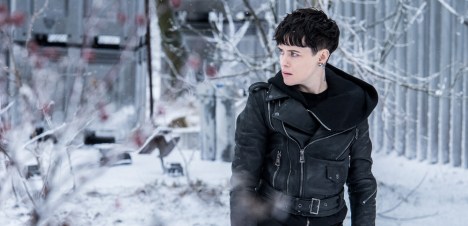
Snow escape.

Salander was elevated by two things. The first was a prescient understanding of the appeal of a feminine avenging angel dismantling systems of misogynist oppression. If anything, Salander seemed ahead of her time, and should be perfectly pitched for the #metoo moment. However, the other important aspect of Salander was a strong sense of authorship and craft. Noomi Rapace embodied the character in the Swedish-language original, and David Fincher helped to elevate pulpy material to top-tier filmmaking in the American reimagining.

All of this makes The Girl in the Spider’s Web an interesting , if deeply unsatisfying case study of what happens when anything resembling a distinct creative voice is ripped away from Salander and she is stuck in a much more bland and conventional film. The results are deeply frustrating, but affirm the level of talent involved in the character’s earlier adventures on page and screen.

Everything burns.

Continue reading

Non-Review Review: Colette

The story at the heart of Colette is familiar, even to those with little knowledge of its inspiration.

Colette is a story about the eponymous French writer, who rose to fame on the back of a series of novels that fictionalised her own life through the lens of a character named Claudine. Keira Knightley stars in the title role, a young woman from the country who finds herself swept into Paris by her older and more established husband. Publishing under the pen name “Willy”, Henry Gauthier-Villars is something of a cad. He is quick to capitalise on his wife’s artistic voice and to claim her successes for his own. Meanwhile, Colette struggles for her creative freedom and to find a way to express herself.

Go, West!

The broad strokes of Colette are fairly routine, the film following the rhythms and structures of the modern historical biography. Reflecting the modern creative and political climate, there is a great deal of emphasis placed on Colette as a feminist narrative, the story of a young woman trying to assert control over her own voice and come to terms with her own identity. It is certainly a timely story, even if Colette follows the standard biographical film playbook beat-for-beat. Very few developments in Colette come as a surprise, and many of the film’s twists and reversals are helpfully signposted from the get-go.

However, Colette works much better than that assessment might suggest. A lot of this is down to a clever and nimble screenplay from Richard Glatzer, Wash Westmoreland and Rebecca Lenkiewicz. Colette is aware of all the marks that it needs to hit, and that frees the screenplay up to be a little playful in how it develops its beats and what it does when it hits each mark. Colette is a fascinating hall of mirrors, a movie packed with twisted reflections and symmetries, luxuriating in the blurred boundaries between reality and fiction. Coupled with a pair of charming lead performances, this elevates Colette very well.

A picture-perfect marriage.

Continue reading

Non-Review Review: Fantastic Beasts – The Crimes of Grindelwald

Fantastic Beasts: The Crimes of Grindelwald knows its audience.

The Crimes of Grindelwald is a film consciously aimed at the audience member who has charted and navigated the family trees of the Harry Potter franchise, who knows the finer details of families that were never explicitly featured in the original series and who can recognise names that were never spoken aloud. This is a film that is geared towards the kinds of fans who devour supporting material, who pour enthusiastically and endlessly over the appendices to The Lord of the Rings.

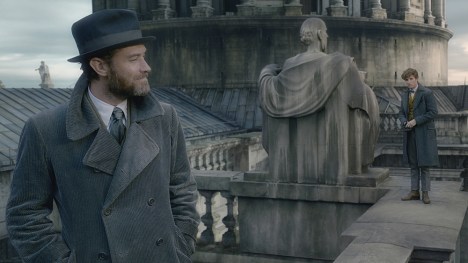
Law student.

This is not to mock or belittle those sorts of fans. Indeed, there is something infectious and exciting in that enthusiasm, in standing outside a cinema and hear enthusiastic six-year-olds with a much better grasp of the dynamics at play than the adults who accompanied them. The eagerness with which these fans pour over the finer details is genuinely heartening, and some of it might even be absorbed by osmosis as they boast about “when” they “got” some twist or other. This a movie aimed at those who devour scenes of exposition and love a good flashback or six.

The only issue is that The Crimes of Grindelwald has precious little for the more casual audience member, whether the casual cinema-goer who just wants a night full of wizards and witches or the more relaxed fan who has only watched the films or read the books once a few years ago. For those audience members, The Crimes of Grindelwald does not offer nearly enough. Or it offers too much.

Partially wanted for crimes against fashion.

Continue reading

Non-Review Review: Disobedience

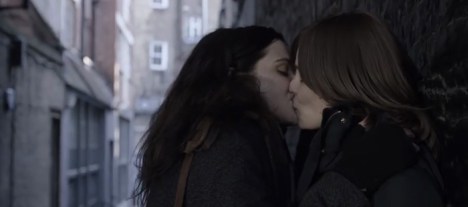
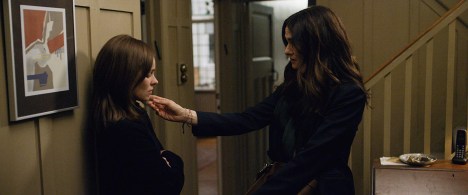
Disobedience is the statistical mean derived from its premise, filtered through the lens of modern awards fare.

Disobedience is the story of two women trapped within the Orthodox Jewish community in contemporary (or close to contemporary) London. Ronit Krushka returns home upon receiving word of her father’s death. Her return shocks the community, which is still recovering from the scandal of her departure years earlier. Ronit arrives to discover that her old friend Esti and her cousin Dovid have married in her absence, Ronit’s return serving to stoke old tensions and poke at still-healing wounds within the community.

Rachels’ Vice.

Disobedience is an adaptation of Naomi Alderman’s novel, and is very much an archetypal example of contemporary prestigious drama. Disobedience is effectively a delivery method for a set of striking performances from its leading triptych, but is also largely anemic; this is a movie that confuses inertia for profundity and lethargy for restraint. Disobedience is populated by characters who seem more comfortable talking around things rather than about them. There is undoubtedly an argument to be made about such an approach seeming naturalistic, but here is largely dull.

Disobedience seems afraid of its central tensions, wary of navigate a minefield that it has chosen for itself. The result is a movie that feels largely ornate. It has a great cast and some big ideas, but never seems to know quite what to do with either.

Touching reunion.

Continue reading

Non-Review Review: Cam

The most horrific aspects of Cam have little to do with the literal monster lurking at its core.

It is almost half an hour before the central plot of Cam kicks into gear. It is a credit to both director Daniel Goldhaber and writer Isa Mazzei that Cam sustains itself as a horror even through this (relatively) long establishing stretch. There is something inherently skin-crawling about that extended introductory sequence, which is essentially a depiction of “business as usual” for central character Alice. The opening scenes of Cam very skilfully and very creepily capture the commodification and performativity of both cam-girl-ing in particular and social media in general.

Time for reflection.

Watching the opening stretch of Cam, the audience might read social media itself as the monster, a horrific force capable of warping and bending individuals to its will. Even before Alice realises that something is wrong, there is a sense that the audience has taken a trip through the looking glass. The pink neon glow, the way the camera snakes down hallways, the casualness with which Alice picks up her dinner from a delivery man while covered in corn syrup (and little else), the repeated framing of shots to emphasise mirrors and screens as images trapped and projected.

Indeed, the obligatory bridge between the second and third acts of the film might be the biggest issue with Cam, the clumsy in-universe explanation of the strange entity lurking at the centre of the story and function that it performs. However, this is a testament to the quality and imagination of the rest of the film around that exposition. The monster in Cam is so familiar and so relevant to contemporary society that it almost needs no explanation at all. Cam is so effective a horror story that it arguably doesn’t even need its monster.

“Feed me.”

Continue reading

Non-Review Review: The Old Man and the Gun

There’s a charming gentleness to The Old Man and the Gun, an old-fashioned charisma that reflects its octogenarian leading man.

The Old Man and the Gun has been largely branded as the last feature film to star Robert Redford. Of course, show business retirements are notoriously fickle, as Clint Eastwood has repeatedly demonstrated and will likely continue to demonstrate with The Mule. It isn’t too hard to imagine Robert Redford returning to the screen (or behind the camera) in a couple of years, his roguish grin enough to forgive the broken promise that audiences probably never wanted him to keep anyway. However, it is still impossible to escape the sense of The Old Man and the Gun as a farewell piece, a tribute sculpted in the image of its lead.

Every good thief should know a solid fence.

The Old Man and the Gun is gentle, sweet and has charm to spare. As a performer, Redford is defined by a star quality that feels increasingly old-fashioned in an era where blockbuster cinema is driven by established intellectual property and awards-season fare seems to be shaped by recognisable directors. Redford was always an actors whose central appeal lay in how hard it was to dislike him. Redford had a roguish charm that offset a more fundamental decency, a movie star who seemed like he’d have stories to tell over a nice drink, but never at anybody else’s expense.

If The Old Man and the Gun is to be Redford’s cinematic swansong, there are certainly worse ways to go.

The Old Man and the Gun infamously blew its casting budget on Robert Redford, who insisted that he could play both title characters.

Continue reading