• Following Us

  • Categories

  • Check out the Archives


  • Awards & Nominations

Online Film Critics’ Society Awards, 2018

Christmas is over, but awards season keep right on truckin’.

I’m a member of a couple of critics’ organisations, so we’ve been releasing a couple of these lists upon which I voted. I’ve also released my own top ten as part of a Scannain end-of-year podcast.

In the meantime, the Online Film Critics’ Society have released their end of year awards. Thrilled to be a part of the group, who are voting on films released internationally during the calendar year of 2018. As such, it will be a different pool of films than the Dublin Film Critics Circle awards.

Anyway, without further ado…

Continue reading

My 12 for ’18: “Spider-Man: Into the Spider-Verse” & Doing This One Last Time

It’s that time of year. I’ll counting down my top twelve films of the year daily on the blog between now and New Year. I’ll also be discussing my top ten on the Scannain podcast. This is number four.

“Alright, let’s do this. One. Last. Time.”

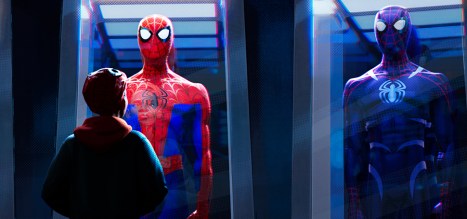
There were few cinematic experiences this year as joyous as Spider-Man: Into the Spider-Verse. I first saw it at a preview screening, surrounded by children of all ages. This was entirely appropriate. After all, Into the Spider-Verse is a movie that connects immediately and emotionally to any audience member’s inner child. Like many of the best modern family films, it understand the wonder and awe with which children see the world. It also understands the intelligence with which children process information, something adults often overlook.

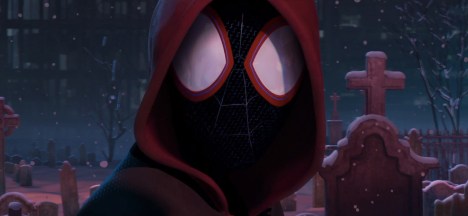
A lot has been written about the fantastic animation employed in making Into the Spider-Verse. The technique is revolutionary and jaw-dropping; everything from the use of Ben Day dots to the shading using red and green to create an uncanny depth perception to the blurring of various styles for characters like “Spider-Man Noir” or “Peter Porker, the Spectacular Spider-Ham.” It is no surprise that Sony are attempting to copyright the animation process, to render it proprietary. The film would make a good case for its place on the list based on animation alone.

However, what has been less discussed in terms of Into the Spider-Verse is the actual storytelling. Part of this is obviously visual, and reflected in all of the praise that the animation is receiving. However, a lot of this is in the scripting and the structuring of the film. Into the Spider-Verse is a revolutionary film in a technical sense, a breathtaking cinematic accomplishment bursting at the seams with a remarkable visual imagination. It is also a story that understands how such stories are told. It also understands that the audience understands how such stories are told.

Into the Spider-Verse is a thoroughly modern superhero film, a narrative that is consciously designed for a contemporary audience that have been trained to process information in a more dynamic and exciting way. Even beyond its long overdue acknowledgement that “anybody can wear the mask”, Into the Spider-Verse is very much a film for 2018.

Continue reading

Non-Review Review: Second Act

In structural terms, Second Act is effectively a romantic comedy. It just hits upon the novelty of stripping out a secondary lead.

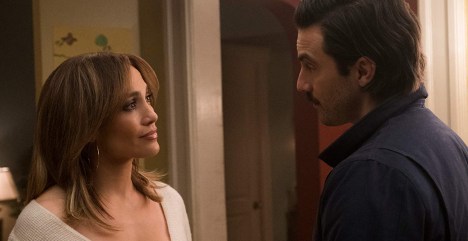
Second Act is the story of Maya Vargas, as played by Jennifer Lopez. Maya works as a manager at a local supermarket, where she has found a way to turn the business into a local institution due to her quick-thinking and her understanding of what customers actually want. Maya is grounded, smart and reasonably successful in her chosen field. However, she is also fundamentally unsatisfied. She aspires to something greater than the life that she currently lives, and fate conspires to elevate her through a case of mistaken (or at least obscured) identity.

Streets ahead.

Second Act is a familiar aspiration fantasy, anchored in the idea that personal reinvention is possible through a combination of imagination and insight, that people are capable of transcending their circumstances or their bad luck through a combination of intelligence and commitment. Although Maya only has a single love interest over the course of the film, the boyfriend with which she starts the adventure and who is promptly sidelined, the beats and rhythms of Second Act are taken wholesale from the romantic comedy template.

Perhaps the love affair at the heart of Second Act is Maya learning to properly love herself.

Milo’s to go.

Continue reading

Non-Review Review: Vice

Vice feels at once like an extension of both Adam McKay’s work on The Big Short and recent innovations on the biographic picture format codified by I, Tonya.

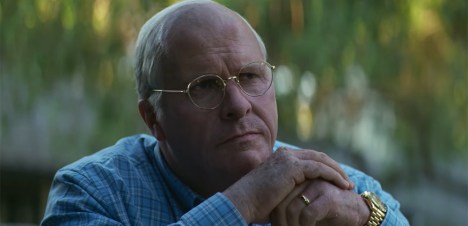
At its core, Vice is the biography of a man whose defining attribute is how unassuming he appears. The opening text lays out the challenges facing the production team in trying to structure a biographical film around a man who has spent his life lurking at the edge of the frame, how hard it can be to extrapolate his inner workings from the outline of his journey through the world. Dick Cheney worked very hard to erase his own footprint; it is with no small irony that the film notes how thoroughly Cheney cleared his own email servers.

No need to be a Dick about it.

The film’s anonymous narrator, himself framed as perfectly average individual, repeatedly stresses how “ordinary” the central character presents himself. At one point, he advises a former colleague that the new standard operating procedure is “softly, softly.” Similarly, the documentary acknowledges the lacunas in the narrative that is constructing, how difficult it is – to evoke a different Shakespearean play than he chooses to quote – “to see the mind’s construction in the face.”

The result is fascinating, a character study that becomes an exploration of systemic flaws and inequities. Vice is a story about a man who appears to have no fixed political beliefs, no strong political identity, no clear political voice. Instead, Vice is a study of the politics of power as politics of itself, a tale about a man whose central political motivation is not ideological or existential, but purely practical. Vice is the tale of the will to power of a perfectly mundane and average individual, and the carnage wrought on his journey towards that power.

Vice City.

Continue reading

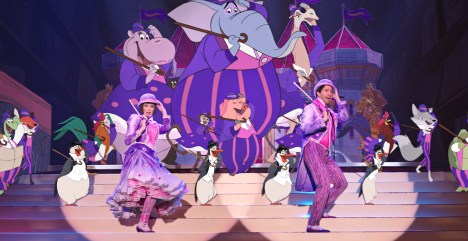
Non-Review Review: Mary Poppins Returns

Mary Poppins Returns largely accomplishes what it sets out to do.

Mary Poppins Returns is a belated sequel to the original film, and very clearly – and very strongly – takes that original film as its major influence. Indeed, many of the relative strengths and weaknesses of Mary Poppins Returns are carried over directly from the previous film. Mary Poppins Returns is visually inventive, narratively accessible, highly unfocused, and episodic in structure. These are all aspects that it shares with the beloved family classic that spawned it, for better and for worse.

The nanny’s state.

There is an endearing energy in Mary Poppins Returns, and a comforting nostalgia. Indeed, Mary Poppins Returns to the sort of film that was already endangered when Mary Poppins was released, the cinematic equivalent of vaudeville entertainment; a collection of largely isolated sketches tied together by the thinnest of string, serving as a showcase for the creative talents of everybody involved from the performers to the animators to the set designers. Mary Poppins Returns comes remarkably close to capturing the spirit and the appeal of the original.

However, Mary Poppins Returns struggles slightly to balance its fidelity for (and veneration of) the original with the demands of a modern family blockbuster, the film occasionally caught in the push-and-pull of familiarity and modernity. It doesn’t quite work, but it gets close enough for those craving an old-fashioned feel-good family film.

No need to make a song and dance about it.

Continue reading

Into the Dark: New Year, New You (Review)

Into the Dark is the new anthology series from Blumhouse.

A horror anthology series seemed inevitable. There is a rich tradition of television series built around using the anthology format to tell horror stories; The Twilight Zone, The Outer Limits, Tales from the Crypt. More than that, recent years have seen a resurgence in the popularity of anthology television. This is most obvious in the seasonal anthology structure of series like American Crime Story or American Horror Story, but is also reflected in the popularity and success of series like Black Mirror or Philip K. Dick’s Electric Dreams.

New year is the perfect time for… don’t make me say it

Horror is particularly suited to the anthology format. After all, having regular characters in a familiar setting tends to dilute both the suspense and the dread that runs through so much horror. The anthology format allows for a variety of characters, locations, formats and themes. Beyond that, Into the Dark is built around ninety-minute episodes, meaning that the series functions as an anthology of holiday-themed horror stories all telling self-contained tales.

Into the Dark is an effective reminder of just how much the medium of television has changed in recent years. Is Into the Dark best thought of as a television series or six feature films? The episodes are released online at Hulu. Unlike other net-native series Into the Dark eschews both the “all at once” binge model favoured by Netflix and the “one week at a time” approach that defines network television. Episodes are released when appropriate, rather than adhering to a rigid structure. It is an illustration of how fluid media is at the moment.
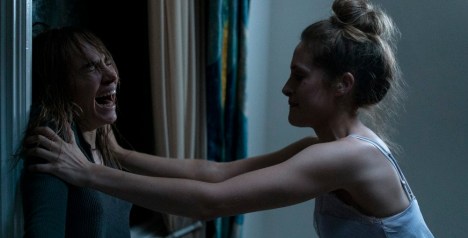
Pushed to the edge.

As the title implies, New Year, New You is the New Year entry in the series. Pooka! had been released for Christmas earlier in the month. New Year, New You is anchored in the themes of the holiday, in the ideas of renewal and reinvention. This is an interesting and audacious approach for a horror story to take. Certainly, New Year is a holiday that does not lend itself to horror as readily as Halloween or even Thanksgiving, and lacks the heightened irony of building a horror story around Christmas.

Perhaps accounting for this, New Year, New You leans heavily into dark comedy. The film does not work entirely consistently, effectively transitioning between three separate modes of horror within its ninety-minute runtime. There is very little novel or innovative to be found structurally in New Year, New You, which blazes through the familiar horror movie clichés with little in the way of insight or energy. There are moments when New Year, New You works rather well, particularly as it embraces absurdity in its third act. However, it is just too unfocused and uneven.

Deal with it.

Continue reading

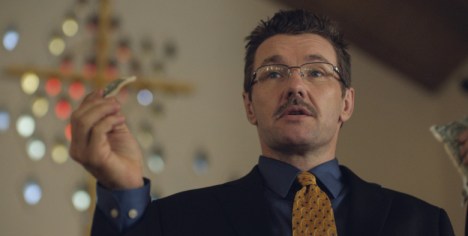
Non-Review Review: Boy Erased

Perhaps the most remarkable thing about Boy Erased is the amount of faith that writer and director (and supporting actor) Joel Edgerton puts in the material at hand.

Boy Erased is based on a memoir written by Garrard Conley, offering a fictionalised account of the writer’s time in gay conversion therapy in rural conservative America. The film is fiction to the extent that the names have been changed; Garrard Conley becomes Jared Eamons. However, Boy Erased never tries to disguise its influences or to assert ownership of the story. The end of the film includes pictures of the real-life inspirations for various characters, often illustrating how uncanny the film’s casting had been.

Bedfellows.

More than that, perhaps as a nod to the increased self-awareness within these sorts of stories, the film hints at its own fictionalisation. The article and book that Jared decides to write towards the end of Boy Erased is very plainly the basis of the film that audience is watching. There is something intriguing in that, in the way that Boy Erased folds itself into its own narrative. The ending of Boy Erased is rooted in the characters responding to the story that Jared has written of his experiences, a clever and reflexive narrative choice that is consciously (and shrewdly) underplayed.

However, the fact that this is the closest that Boy Erased comes to a subversive or deconstructive moment only underscores the matter-of-factness with which Edgerton’s handled the material. Outside of using the origins of the film to provide the basis for a third-act catharsis within the film, Edgerton takes a very straightforward approach to this story. He never seems particularly interested in bending the narrative out of shape or of heightening particular elements for dramatic tension.

Syke out.

In its own weird way, Boy Erased feels decidedly conservative for a contemporary awards film. It is much less energised or dynamic than other similar works, such as the addiction drama Beautiful Boy starring Lucas Hedges’ Lady Bird co-star Timothée Chalamet. This creative restraint is not a criticism in any way; quite the opposite. Edgerton trusts the story that he has been given, and trusts his cast to deliver. Boy Erased is not a showy or ostentatious piece of work, instead a film constructed to specification with care and craft.

Boy Erased is a film that exists primarily as a vehicle for its subject and for its cast, and that is a credit to Edgerton’s approach to the material.

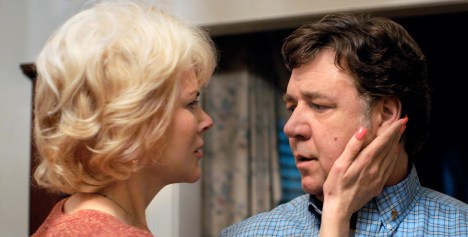
They said that he needed this, but it couldn’t be father from the truth.

Continue reading

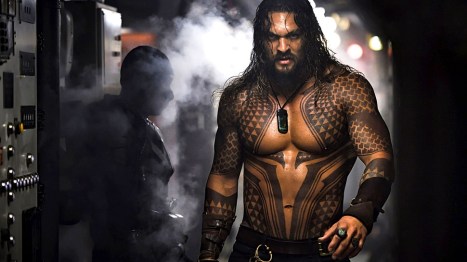
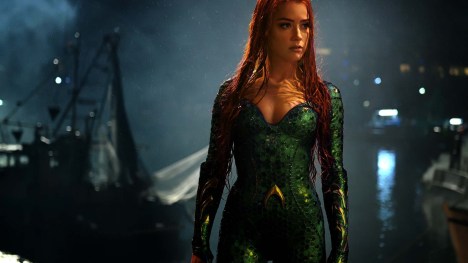
Non-Review Review: Aquaman

Aquaman is not a disaster on the scale of Justice League. It is perhaps closer to Green Lantern.

This comparison makes a certain amount of sense. Both Aquaman and Green Lantern are defined by the influence of writer Geoff Johns. Johns is an interesting figure, having broken into the entertainment world through film. He famously worked as a personal assistant to Richard Donner. However, Johns is best known for his work in comic books, particularly at DC when he enjoyed long character-defining runs on properties like Justice Society of America, The Flash and Green Lantern. A controversial figure, Johns is a strong writer with a great sense of a property’s core appeal.

Sink or swim time.

However, Johns’ skill with comic books does not translate to cinema. Green Lantern was largely influenced by Johns’ own work on the title, which remains a highlight of DC’s twenty-first century output. The feature film employed Johns’ characterisation of Hal Jordan, ported over a lot of his revamped mythology for the character, and even employed one of his own creations as the primary villain. However, a good comic book run did not translate to a good film. Green Lantern was more focused on being a faithful adaptation of the comic than a satisfying film in its own right.

Aquaman suffers from the same fundamental issue. The movie is packed to the gill with continuity references, particularly to Johns’ reworking and reimagining of the character, which has been repackaged as an omnibus collection to mark the release of the film. Aquaman features an incredibly dense mythology that is often delivered via awkward exposition dump, with characters bouncing between long tiring world-building dialogue scenes and epic computer-generated spectacle. Ironically, there is no room for any of this to breathe.

A Mera mistep-a.

Continue reading

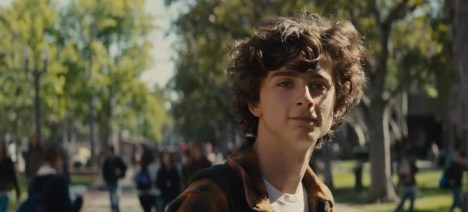
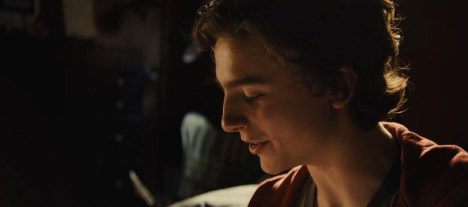
Non-Review Review: Beautiful Boy

Beautiful Boy is a cocktail essentially comprised of three contrasting main ingredients, none of which particularly gel.

Most obviously, it is a traditional performance-driven piece of awards fare designed to showcase the talents of Timothée Chalamet and Steve Carrell; there is a lot of shouting, a lot of confrontation, a lot of listless staring. On top of that, it is also a more modern piece of awards fare, one younger and hipper than stodgy old dramas about addiction; Beautiful Boy might be a good seventy-percent intercut montage set to music of beloved artists like David Bowie and John Lennon. The remaining third is a fifties moral panic anti-drugs film for the twenty-first century.

This movie is Timothée Chala-meh.

These three styles of film are constantly battling within Beautiful Boy. There must be a way to synthesise these three competing approaches into a holistic and satisfying piece of work, but instead Beautiful Boy bounces frantically from one mode to another, never settling on a single cohesive tone or approach. This is disappointing, as Beautiful Boy is a very earnest and sincere piece of work. There’s a strong sense that the film is trying to articulate something that is both important and profound. However, it just cannot clearly translate that sentiment into speech.

Beautiful Boy is a mess of a film, but a fascinating mess in a number of places.

Yes. Most of the screenshots of this film will be of Timothée Chalamet. Why?

Continue reading

Non-Review Review: Bumblebee

In some respects, Bumblebee feels like the Transformers movie that the franchise has been trying and failing to produce for over a decade.

Bumblebee has its share of problems. Some of those are inherited from a franchise working from a template established by Michael Bay, which means that the style of action direction carries over in certain cases. Some of those are inherited from the fact that the film is “based upon the toys produced by Hasbro Entertainment”, which means that the film occasionally feels obliged to cram in various characters and elements for reasons more toyetic than narrative.

“You really don’t get this ‘robots in disguise’ thing, do you?”

That said, Bumblebee largely works due to a combination of factors. Hailee Steinfeld is the most likable protagonist in the series to date, if not the most likable character in general. The direction from Travis Knight largely steers clear of the cluttered excesses that define the other films in the franchise. The script from Christina Hodson cleverly pushes the film down both in scale and spectacle, meaning that Bumblebee is the first Transformers film not to loose sight of its humanity (let alone its human characters) in its storytelling.

Bumblebee is perhaps not the best film that it could be, but is very easily the best Transformers film to date.

A girl and her robot.

Continue reading