• Following Us

  • Categories

  • Check out the Archives


  • Awards & Nominations

Non-Review Review: Psycho (1960)

Psycho is a masterpiece from Alfred Hitchcock, a uniquely American horror story that redefined and codified the horror genre. Even after one has already seen the film, and knows the twists and the plotting detours that Hitchcock’s adaptation of Robert Bloch’s novel might make, it’s still a powerful and compelling piece of cinema. Hitchcock laid a template here that would inform generations of horror films that followed, with the DNA of Psycho to be found even in the most unlikely of places.
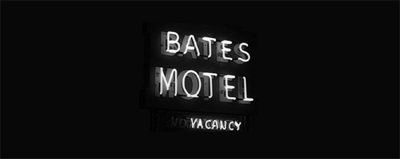
“You can checkout any time you like, but you can never leave…”

Note: Hitchcock famously guarded the ending to this project. “Don’t give away the ending — it’s the only one we have!” he pleaded in advertisements. However, it has been fifty-two years, so I fear that the statute of limitations on potential spoilers has expired. After all, Psycho has been so massively influential it’s hard not to know what happens. If, by some fluke, you know nothing about the film… see it! See it now! We’ll still be here when you get back.

Continue reading

Alfred Hitchcock Presents: The Horse Player (Review)

As part of the “For the Love of Film” blogathon, I’ll be taking a look at Alfred Hitchcock’s contributions to his celebrated anthology series Alfred Hitchcock Presents. I’ll be looking at some of the episodes of the classic show that he directed. The “For the Love of Film” blogathon this year is raising money to keep one of Hitchcock’s earlier works, The White Shadow (which he wrote, edited, designed and assistant-directed), available on-line and streaming for free. It’s a very worthwhile cause and you can donate here.

The Horse Player actually makes for a nice conclusion to our run of Alfred Hitchcock Presents reviews. It aired in 1961, towards the end of the sixth season of the anthology show, a year before the show would be rebranded The Alfred Hitchcock Hour. It was the second last half-hour show that Hitchcock personally directed, but is generally agreed to be much stronger than his final effort, a morality play titled Bang! You’re Dead. Instead, The Horse Player is an enjoyable and engaging meditation on those cardinal virtues of faith, hope and charity.

Continue reading

Alfred Hitchcock Presents: Dip in the Pool (Review)

As part of the “For the Love of Film” blogathon, I’ll be taking a look at Alfred Hitchcock’s contributions to his celebrated anthology series Alfred Hitchcock Presents. I’ll be looking at some of the episodes of the classic show that he directed. The “For the Love of Film” blogathon this year is raising money to keep one of Hitchcock’s earlier works, The White Shadow (which he wrote, edited, designed and assistant-directed), available on-line and streaming for free. It’s a very worthwhile cause and you can donate here.

Hitchcock’s collaborations with Roald Dahl are always worth the time, and I have to admit I have a special fondness for A Dip in the Pool, which is a bitter little comedy about a bet that goes very far wrong. It’s a wonderfully cynical little story about a compulsive gambler who makes an impressive bet on a sure thing. Of course, this being Alfred Hitchcock Presents, there’s no such thing as a sure thing. Filled with Dahl and Hitchcock’s trademark bleak humour and a wonderful central performance from Keenan Wynn, A Dip in the Pool makes for an entertaining little drama.

Continue reading

Alfred Hitchcock Presents: Mr. Blanchard’s Secret (Review)

As part of the “For the Love of Film” blogathon, I’ll be taking a look at Alfred Hitchcock’s contributions to his celebrated anthology series Alfred Hitchcock Presents. I’ll be looking at some of the episodes of the classic show that he directed. The “For the Love of Film” blogathon this year is raising money to keep one of Hitchcock’s earlier works, The White Shadow (which he wrote, edited, designed and assistant-directed), available on-line and streaming for free. It’s a very worthwhile cause and you can donate here.

Mr. Blanchard’s Secret is a fun watch, if only for the joy of watching Hitchcock gleefully spoofing Hitchcock. Pitched by the director as “a tale of mystery and intrigue, played in middle-class suburbia” during his introduction, Mr. Blanchard’s Secret reads an affectionate parody of Rear Window, perhaps the Hitchcock film that lends itself so easily to comedic skewering. Mr. Blanchard’s Secret is hardly a groundbreaking or astonishing piece of television, but it is highly enjoyable and quite clever, proving that Hitchcock has a wonderful sense of humour about himself. (As if we needed proof.)

Continue reading

Alfred Hitchcock Presents: The Hidden Thing (Review)

As part of the “For the Love of Film” blogathon, I’ll be taking a look at his celebrated anthology series Alfred Hitchcock Presents. The “For the Love of Film” blogathon this year is raising money to keep one of Hitchcock’s earlier works, The White Shadow (which he wrote, edited, designed and assistant-directed), available on-line and streaming for free. It’s a very worthwhile cause and you can donate here. I thought it might be worth taking a look at an episode from a director other than Hitchcock.

The Hidden Thing is a bit of a strange little episode. It has a strong central theme, even if it is a little blunt about it. It also has an interesting set-up, playing off a sense of unjust randomness. However, it never really ties all of its ideas together, finishing on a rather bland and – inappropriately enough – forgettable ending. In many ways, it seems like the ending to The Hidden Thing is a twist that just fell apart and, rather than enhancing the surrounding story, ultimately detracted from the episode.

Continue reading

Alfred Hitchcock Presents: Banquo’s Chair (Review)

As part of the “For the Love of Film” blogathon, I’ll be taking a look at Alfred Hitchcock’s contributions to his celebrated anthology series Alfred Hitchcock Presents. I’ll be looking at some of the episodes of the classic show that he directed. The “For the Love of Film” blogathon this year is raising money to keep one of Hitchcock’s earlier works, The White Shadow (which he wrote, edited, designed and assistant-directed), available on-line and streaming for free. It’s a very worthwhile cause and you can donate here.

Banquo’s Chair has a rather standard little plot. There’s no sense that any of the ideas are overcrowding one another, or that they’ve been rushed along to fill the twenty-five minute slot. Indeed, the plot and the script are about as standard as they could be, using a simple set up to play through a familiar drama and leading to a somewhat trite and predictable conclusion. Without being harsh, I think that’s a fair description of Banquo’s Chair. However, it is well served by an experienced cast and by Hitchcock’s direction. Neither truly distinguishes it from the rest of the series, but they do elevate a fairly simple set-up into an entertaining little adventure.

Continue reading

Alfred Hitchcock Presents: The Case of Mr. Pelham (Review)

As part of the “For the Love of Film” blogathon, I’ll be taking a look at Alfred Hitchcock’s contributions to his celebrated anthology series Alfred Hitchcock Presents. I’ll be looking at some of the episodes of the classic show that he directed. The “For the Love of Film” blogathon this year is raising money to keep one of Hitchcock’s earlier works, The White Shadow (which he wrote, edited, designed and assistant-directed), available on-line and streaming for free. It’s a very worthwhile cause and you can donate here.

Due to circumstances outside our control, tragedy will not strike tonight. I’m dreadfully sorry, perhaps some other time.

– Hitchcock’s introduction; well, at least he apologises

The Case of Mister Pelham picked up the series’ first Emmy nomination, with Hitchcock himself nominated for outstanding direction. It’s not too hard to see why, as The Case of Mister Pelham is a wonderfully compelling piece of television, a psychological character study masquerading as a supernatural mystery. In many ways, it feels like the best episode of The Twilight Zone that was never an episode of The Twilight Zone. It’s sharp, cleverly constructed, and features and astounding central performance from Tom Ewell as the eponymous Mister Pelham. What more could you want?

Continue reading

Alfred Hitchcock Presents: Breakdown (Review)

As part of the “For the Love of Film” blogathon, I’ll be taking a look at Alfred Hitchcock’s contributions to his celebrated anthology series Alfred Hitchcock Presents. I’ll be looking at some of the episodes of the classic show that he directed. The “For the Love of Film” blogathon this year is raising money to keep one of Hitchcock’s earlier works, The White Shadow (which he wrote, edited, designed and assistant-directed), available on-line and streaming for free. It’s a very worthwhile cause and you can donate here.

Breakdown is an interesting concept, but one that feels like it has been adapted into the wrong medium. Most of the story centres around an executive who survives a car crash, paralysed. We are treated to his inner monologue as various people come along and interact with him. Adapted by Francis M. Cockrell and Louis Pollock from the latter’s short story, I can’t help but feel the concept might have worked better as a radio play than in television. Still, the idea is solid, and Joseph Cotton gives a nice central performance. It just feels a bit clunky for a television adaptation.

Continue reading

Alfred Hitchcock Presents: Revenge (Review)

As part of the “For the Love of Film” blogathon, I’ll be taking a look at Alfred Hitchcock’s contributions to his celebrated anthology series Alfred Hitchcock Presents. I’ll be looking at some of the episodes of the classic show that he directed. The “For the Love of Film” blogathon this year is raising money to keep one of Hitchcock’s earlier works, The White Shadow (which he wrote, edited, designed and assistant-directed), available on-line and streaming for free. It’s a very worthwhile cause and you can donate here.

Good evening. I’m Alfred Hitchcock, and tonight I’m presenting the first in a series of stories of suspense and mystery called – oddly enough – Alfred Hitchcock Presents. I shall not act in these stories, but will only make appearances, something in the nature of an accessory before and after the fact: to give the title to those of you who can’t read, and to tidy up afterwords for those who don’t understand the ending.

– Hitchcock lays down the rules

It’s interesting to look back at Hitchcock as a director who had an exceptional gift for working with material that might be derided as “trashy.” Certainly, if one divorces the subject matter from the director himself, a significant amount of his work can be seen as somewhat exploitative, inside genres that are traditionally dismissed by those more serious and elitist film commentators. (Indeed, one could argue that Psycho laid the foundation for the much-maligned “slasher” genre.) I’ve actually found this a significant appeal in examining Hitchcock’s work. Like many of the very best directors ever to work in film, he has a knack for elevating his subject matter beyond the expectations of the genre. I think that his anthology television show, Alfred Hitchcock Presents, is especially fascinating, because it illustrated the director taking an entire medium far more serious than many of his contemporaries.

Continue reading

Non-Review Review: High Anxiety

I quite enjoyed High Anxiety, even if it didn’t rank quite as high as some of Brooks’ other efforts. While it still possesses the same wonderful wry moments, High Anxiety is a Mel Brooks film that arguably works better as a farce than as a parody. I suspect that this has something to do with the director’s intended target. While Westerns were ripe for mockery in Blazing Saddles and old horror films were perfectly suited to the sense of humour in Young Frankenstein, it always seemed like Alfred Hitchcock was aware of his own filmmaking style, and seemed to occasionally be gently mocking it himself, rather than playing his heightened suspense with a po-faced sincerity. I think that parody and satire work best when they represent an attack on a target that suffers from a little bit too much self-importance, while Hitchcock’s films are generally a little more self-aware than that.

Gone to the birds?

Continue reading