• Following Us

  • Categories

  • Check out the Archives


  • Awards & Nominations

Doctor Who: Planet of the Spiders (Review)

To celebrate the fiftieth anniversary of the longest-running science-fiction show in the world, I’ll be taking weekly looks at some of my own personal favourite stories and arcs, from the old and new series, with a view to encapsulating the sublime, the clever and the fiendishly odd of the BBC’s Doctor Who.

Planet of the Spiders originally aired in 1974.

Oh dear, this is getting monotonous.

– the Doctor sums it up

Jon Pertwee’s final season is a real shame. The actor was, at the time, the actor who had served the longest period of time in the lead role. Starring as the Doctor for five years, and appearing as the face of the show during an era of renewal and reinvention, the actor deserved a much strong swansong. The year had started relatively strong with The Time Warrior, which I would rank among the best stories of the Pertwee era. However, every story after that just felt like it was treading water, revisiting old triumphs while biding time until the finalé. We had a Dalek episode in Death to the Daleks. We had a Malcolm Hulke lizard story with Invasion of the Dinosaurs. We had an off-world social commentary story in The Monster of Peladon. All felt like the cast and crew were just worn out, just going through the motions.

Sadly, Planet of the Spiders continues this trend, rather than bucking it.

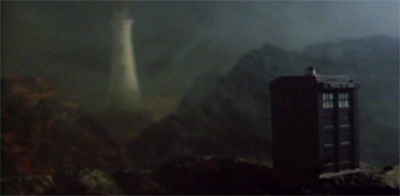
Kiss of the spider-queen...

Kiss of the spider-queen…

Continue reading

Doctor Who: Invasion of the Dinosaurs (Review)

To celebrate the fiftieth anniversary of the longest-running science-fiction show in the world, I’ll be taking weekly looks at some of my own personal favourite stories and arcs, from the old and new series, with a view to encapsulating the sublime, the clever and the fiendishly odd of the BBC’s Doctor Who.

Invasion of the Dinosaurs originally aired in 1974.

How are you feeling now?

Hungry, tired and I’ve got a headache.

– Mark asks Sarah Jane how her viewing went. I can empathise.

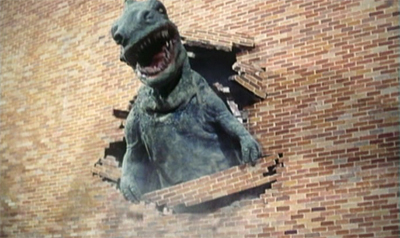
Ah, ambition. It’s hard to fault it… although there is a point where you simply have to. Invasion of the Dinosaurs crosses that line in the first episode. I know that Doctor Who is a BBC television serial. I understand that the classic series hardly had a huge amount of money to hand when it needed special effects. I am well aware that the special effects for the following season’s The Ark in Space amount to some bubblewrap and green paint. There is an art to watching many of these classic stories, and that art involves being wilfully blind to the fact that the special effects aren’t up to scratch. Beyond that, it’s arbitrary. There’ll always be one silly special effect that undermines an otherwise impressive episode – which special effect and which episode will vary from person to person.

However, Invasion of the Dinosaurs makes the special effects the whole point of the exercise. The title tells you that you should be watching the dinosaurs. Malcolm Hulke was given the brief to write a story about dinosaurs in contemporary London. There might be a plot underneath it all, but the serial expects that you are here for the dinosaurs. And, if you are…

I’m sorry. I’m so sorry.

A smashing time...

A smashing time…

Continue reading

Doctor Who: Colony in Space (Review)

To celebrate the fiftieth anniversary of the longest-running science-fiction show in the world, I’ll be taking weekly looks at some of my own personal favourite stories and arcs, from the old and new series, with a view to encapsulating the sublime, the clever and the fiendishly odd of the BBC’s Doctor Who.

Colony in Space originally aired in 1971.

Are you some kind of scientist?

I’m every kind of scientist.

– Caldwell and the Doctor

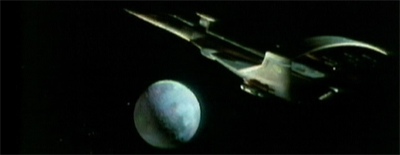
Colony in Space is an interesting story for many reasons. For one thing, it’s the first colour adventure to travel to another world. It was the first time since Jon Pertwee took over the title role that the character had been allowed to leave the surroundings of modern-day Earth. Even if he did land in a quarry. Colony in Space demonstrated the possibilities to tell futuristic and extraterrestrial stories in the new and remodelled version of Doctor Who, and the show began to slowly venture further and further afield over the next few years, with the Doctor finally regaining control of his TARDIS in The Three Doctors a little under two years later.

However, Colony in Space is also interesting because it is a script from Malcolm Hulke, who has really become one of the more Doctor Who script writers more inclined to pepper his scripts with political and moral philosophy. Colony in Space is an interesting exploration of those themes, even if it does run a little bit long in places. (That said, Hulke is one of the better writers of the six-part format in the show’s history.)

Go on, try to fight the urge to pronounce the episode title like "colony... IN SPACE!"

Go on, try to fight the urge to pronounce the episode title like “colony… IN SPACE!”

Continue reading

Doctor Who: The Claws of Axos (Review)

To celebrate the fiftieth anniversary of the longest-running science-fiction show in the world, I’ll be taking weekly looks at some of my own personal favourite stories and arcs, from the old and new series, with a view to encapsulating the sublime, the clever and the fiendishly odd of the BBC’s Doctor Who.

The Claws of Axos originally aired in 1971.

Are you trying to tell me you can absorb the total output of this complex in a police box?

Yes.

– Hardiman and the Master discover that self-confidence is a genetic Time Lord trait

The Claws of Axos tends to come in for a fair bit of criticism for pretty much being the quintessential Earth-based Jon Pertwee story, with very little exceptional to distinguish it from the pack. Personally, I’m actually quite fond of it, perhaps precisely for that reason. I think you’re hard-pressed to find an adventure in the early part of Jon Pertwee’s tenure that so effectively and so efficiently captures the spirit of the show – both good and bad. That kind of makes The Claws of Axos stand out if only because it so perfectly embodies those early Pertwee years.

Eye see you…

Continue reading

Doctor Who: Horror of Fang Rock (Review)

To celebrate the fiftieth anniversary of the longest-running science-fiction show in the world, I’ll be taking weekly looks at some of my own personal favourite stories and arcs, from the old and new series, with a view to encapsulating the sublime, the clever and the fiendishly odd of the BBC’s Doctor Who.

Horror of Fang Rock originally aired in 1977.

So you found the trouble then?

Yes, I always find trouble.

– Vince and the Doctor

The show was on something of a hot streak when Horror of Fang Rock aired. While producer Philip Hinchcliffe’s tenure on the show is roundly praised, and is a personal favourite, the standard of the show had been particularly high. The beloved Talons of Weng-Chiang had closed out the previous season, following hot-on-the-heels of the well-regarded Robots of Death – both classic and iconic stories that stand as the very best of Tom Baker’s time in the lead role. Horror of Fang Rockis right on up there, as perhaps one of the best gothic horrors that the series has ever produced.

Something wicked this way comes...

Continue reading

Doctor Who: The Talons of Weng-Chiang (Review)

To celebrate the fiftieth anniversary of the longest-running science-fiction show in the world, I’ll be taking weekly looks at some of my own personal favourite stories and arcs, from the old and new series, with a view to encapsulating the sublime, the clever and the fiendishly odd of the BBC’s Doctor Who.

The Talons of Weng-Chiang originally aired in 1977.

Ah! Eureka! Do you know what that is?

You ask me so that you can tell me.

That’s right. It’s a trionic lattice, an integral part of a time cabinet. It’s impossible to open it without it.

You mean it’s a key.

Yes. He’s not only a scientific fool, he’s an absent-minded one.

Perhaps he has another eureka.

No, eureka’s Greek for “this bath is too hot.”

– the Doctor and Leela

The Talons of Weng-Chiang is generally agreed to be one of the (if not the) greatest Doctor Who adventures ever produced. It tends to hover around the top of various official polls, with only Caves of Androzani and City of Death coming close to it in public opinion. As such, I feel a little bit guilty when I confess that it doesn’t rank as one of my absolute favourite adventures. I like it a great deal, I think it embodies a great deal of what works about the Philip Hinchcliffe era of the show. However, if I’m looking for a dark pseudo-historical adventure, I am more likely to pick either The Pyramids of Mars or The Horror of Fang Rock.

I can see why a lot of people respond to The Talons of Weng-Chiang, and it has a lot to recommend it, but there are a number of minor problems that hold the serial back from the cusp of perfection, in my opinion.

Read it at your (Yellow) Peril...

Read it at your (Yellow) Peril…

Continue reading

Doctor Who: Robot (Review)

To celebrate the fiftieth anniversary of the longest-running science-fiction show in the world, I’ll be taking weekly looks at some of my own personal favourite stories and arcs, from the old and new series, with a view to encapsulating the sublime, the clever and the fiendishly odd of the BBC’s Doctor Who.

Robot originally aired in 1974 and 1975.

There you are. Now come along, Doctor, you’re supposed to be in the sick bay.

Am I? Don’t you mean the infirmary?

No, I do not mean the infirmary. I mean the sick bay. You’re not fit yet.

Not fit? I’m the Doctor.

No, Doctor, I’m the doctor and I say that you’re not fit.

You may be a doctor, but I’m the Doctor. The definite article, you might say.

– Harry meets the Doctor

Robot feels a bit like trying to fit a round peg into a square hole, or a Tom-Baker-shaped peg into a Jon-Pertwee-shaped hole. At the time that Baker assumed the role as everybody’s favourite time-travelling phone-booth dweller, Pertwee had just finished the longest stint as the character, portraying the Doctor for five years. Of course, Baker himself would go on to break that record, playing the part for seven years, but it gives you a sense of just how big of a transition it was. As such, it’s easy to understand why outgoing producer Barry Letts felt the need to essentially cast Tom Baker in what feels distinctly like a Jon Pertwee story. As a concept, the central character aside, Robot feels like it would have fit in quite well as part of Pertwee’s last season, which is – I think – part of the problem here.

Tom Baker is a lot of things, but he’s not Jon Pertwee. As a result, Robot feels a little clunkier than it really should, as if the show is actively working against the character who should be driving it.

The Doctor will see you now...

The Doctor will see you now…

Continue reading

Doctor Who: Spearhead From Space (Review)

To celebrate the fiftieth anniversary of the longest-running science-fiction show in the world, I’ll be taking weekly looks at some of my own personal favourite stories and arcs, from the old and new series, with a view to encapsulating the sublime, the clever and the fiendishly odd of the BBC’s Doctor Who.

Spearhead from Space originally aired in 1970.

Oh well, at least he won’t get very far.

You mean, before your men shoot him again?

I don’t find that funny.

– The Brigadier and Liz discuss the Doctor’s (second) escape

Looking back now, it’s hard to believe that Spearhead from Space had so much riding on it, if only because of the deft combination of Robert Holmes’ sharp script and Derek Martinus’ confident direction. Indeed, the serial served as something of a second pilot for the show, demonstrating that the survival of the series during the transition between William Hatnell and Patrick Troughton had not been a fluke, broadcasting in colour for the first time, and setting up an entirely new status quo set primarily on present-day Earth. It’s a miracle that it all works so well, let alone that fact that it remains one of the most accessible adventures featuring the character.

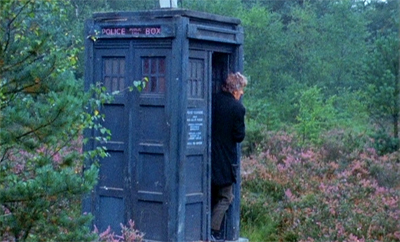
We need a Doctor in the TARDIS!

Continue reading

Doctor Who: The Daleks (Review)

To celebrate the fiftieth anniversary of the longest-running science-fiction show in the world, I’ll be taking weekly looks at some of my own personal favourite stories and arcs, from the old and new series, with a view to encapsulating the sublime, the clever and the fiendishly odd of the BBC’s Doctor Who.

The Daleks originally aired in 1963-4.

Make! no! attempt! to! capture! them! they! are! to! be! exterminated! you! understand! exterminated!

– four episodes in, the Daleks have a catchphrase

Because of the somewhat confusing naming conventions for the Hartnell era, where each individual episode had its own title, this one goes by a variety of names: The Mutants, The Dead Planet, or The Daleks. Still, if you’re reading this, you probably know the serial I’m talking about. It’s the one that introduced everyone’s favourite psychotic little pepper pots.

Taking the plunger…

Continue reading

The Spirit Archives, Vol. 16 (Review/Retrospective)

We’re more than half-way through Will Eisner’s tenure on The Spirit, and I find myself struggling, just a bit, to come up with something novel to say about it. After all, I’ve gone on and on (and on and on) about how Eisner has handled the weekly strip for the bones of about 10,000 words at this point. As much as I like to examine each six-month period on its own terms and merits, there comes a point where I have to concede that this is just one giant project, and a lot of what I can say about it I have already said. Sure, there are some new themes and ideas, and Eisner always enjoys putting a new slant on old concepts, but I can’t help but feel that this extended bunch of reviews and retrospectives will wind up tripping over each other. (I say that as if they haven’t already.)

With that in mind, just because I might have a bit less to say about The Spirit Archives, Vol. 16 doesn’t mean that it isn’t a great collection of stories. We are, after all, in the middle of the most celebrated part of Eisner’s run. This collection is pretty consistently smart, funny and moving. Just because this reviewer is struggling not to cover old ground doesn’t mean that Eisner is any less of a master.

A web of deceit...

A web of deceit…

Continue reading