• Following Us

  • Categories

  • Check out the Archives


  • Awards & Nominations

Doctor Who: Timelash (Review)

To celebrate the fiftieth anniversary of the longest-running science-fiction show in the world, I’ll be taking weekly looks at some of my own personal favourite (and not-so-favourite) stories and arcs, from the old and new series, with a view to encapsulating the sublime, the clever and the fiendishly odd of the BBC’s Doctor Who.

Timelash originally aired in 1985.

I don’t trust you. You’re being too reasonable.

– Peri’s on to him

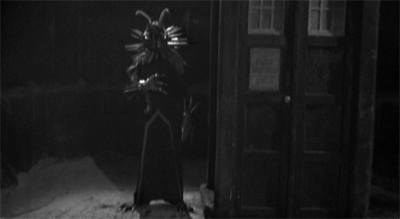
Timelash is on the short list of serials broadly agreed to be “the worst Doctor Who stories ever.” Given how prone science-fiction fans are to bickering about absolutely everything, and how impossible it is to find consensus, that’s really saying something. More than that, it ranks with quite a few Colin Baker stories among that list. I can’t help but wonder if part of the problem with Baker’s tenure isn’t a lack of classic episodes (Revelation of the Daleks and Vengeance on Varos surely count), but the batting average skewed by so many truly terrible stories.

Any season containing Timelash would be ridiculed, but it’s hard to imagine that any year of television containing Attack of the Cybermen, Timelash and The Mark of the Rani couldn’t help but raise questions about the show’s future at the BBC.

The face of evil...

The face of evil…

Continue reading

Doctor Who – School Reunion (Review)

To celebrate the fiftieth anniversary of the longest-running science-fiction show in the world, I’ll be taking weekly looks at some of my own personal favourite stories and arcs, from the old and new series, with a view to encapsulating the sublime, the clever and the fiendishly odd of the BBC’s Doctor Who.

School Reunion originally aired in 2006.

You can tell you’re getting older. Your assistants are getting younger.

– Sarah Jane to the Doctor

Coming at the start of the revived show’s second season, School Reunion changed the way that the show related to its long and complex history, explicitly confirming what had been implied at least as early as Dalek and Aliens of London, that this was indeed the same Doctor who had had all of those adventures for all those years on British television. Bringing back the iconic pepper pots was one thing, as was name-dropping the paramilitary outfit from early in the original show’s run.

However, bringing back the most fondly remembered companion of the classic television show and affirming that she had travelled with this man for several years provides a firm anchor to the past. Looking back now, it’s hard to appreciate how dramatic a shift this was, and just what it represented. However, it’s hard to imagine that Doctor Who could get to the point where the Doctor could recruit a Silurian detective and her Sontaran butler in Victorian England without School Reunion.

It changed the game.

(Anthony Stewart) Head master...

(Anthony Stewart) Head master…

Continue reading

Doctor Who: The Rescue (Review)

To celebrate the fiftieth anniversary of the longest-running science-fiction show in the world, I’ll be taking weekly looks at some of my own personal favourite stories and arcs, from the old and new series, with a view to encapsulating the sublime, the clever and the fiendishly odd of the BBC’s Doctor Who.

The Rescue originally aired in 1965.

Oh, but Doctor, the trembling’s stopped.

Oh, my dear, I’m so glad you’re feeling better.

No, not me, the ship.

– Barbara and the Doctor

The Rescue is a surprisingly sturdy two-parter, following directly on from The Dalek Invasion of Earth. Despite the fact it’s noticeably brief, the adventure is fairly important in the grand scheme of Doctor Who, representing the first time that the show has a recruited a new companion since our bunch of time-travelers departed Earth. However, it’s also a well-told little story, and one which emphasises the relatively subtle shift in the Doctor’s character and role in the story.

While An Unearthly Child and The Daleks presented the character as a cantankerous and untrustworthy trickster, the show has gradually pushed the character into the role of the hero, culminating in the Doctor’s successful attempt to save the whole planet Earth in The Dalek Invasion of EarthThe Rescue continues this trend, presenting the Doctor as a genuinely sympathetic and compassionate old man, pretty far from the grump we first met.

The version of the Doctor we see in The Rescue feels a lot more like the character we’d come to love over the rest of the show’s fifty-year history.

Here' there be monsters...

Here’ there be monsters…

Continue reading

Doctor Who: The King’s Demons (Review)

To celebrate the fiftieth anniversary of the longest-running science-fiction show in the world, I’ll be taking weekly looks at some of my own personal favourite stories and arcs, from the old and new series, with a view to encapsulating the sublime, the clever and the fiendishly odd of the BBC’s Doctor Who.

The King’s Demons originally aired in 1983.

Do our demons come to visit us? Bid them attend us.

Demons? Very odd indeed.

Makes a nice change for you not to take everything in your stride, I must say.

– King John, the Doctor and Tegan set the mood

The show’s twentieth anniversary deserved better than this. Okay, there are a number of qualifications that can made, excuses that can be offered. The King’s Demons was never intended to close out the season, and was instead intended as a two-part episode to bridge into the triumphant return of the Daleks, a return that ended up postponed a year and reworked into Resurrection of the Daleks. There’s also the fact that The King’s Demons wasn’t the last piece of Doctor Who to air as part of the show’s twentieth anniversary year, even if it was the season finalé. The Five Doctors would be broadcast later in the year to celebrate the anniversary.

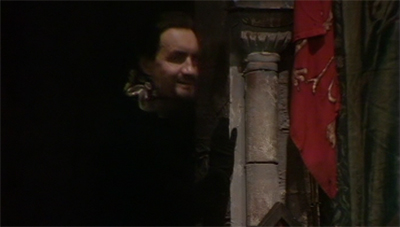
However, none of these excuses take away from the fact that The King’s Demons is an exceptionally weak piece of television, and a demonstration of everything wrong about how John Nathan Turner and the Doctor Who production staff approached the show’s twentieth season.

Hardly a Master piece...

Hardly a Master piece…

Continue reading

Doctor Who: Earthshock (Review)

To celebrate the fiftieth anniversary of the longest-running science-fiction show in the world, I’ll be taking weekly looks at some of my own personal favourite stories and arcs, from the old and new series, with a view to encapsulating the sublime, the clever and the fiendishly odd of the BBC’s Doctor Who.

Earthshock originally aired in 1982.

I would suggest you get your people well back. The hatch may be booby-trapped.

What about you?

Well, my arms are only this long. I can’t get any further away.

– the Doctor and Scott

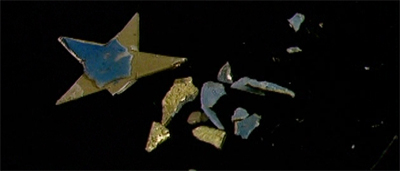
Earthshock is regarded as one of the stronger stories of Peter Davison’s tenure on Doctor Who. It’s easy enough to see why. After all, it features not one but two memorable twists. It also harks back to the classic “base under siege” stories of the Patrick Troughton era. While it’s still very clearly a piece of early eighties Doctor Who, its production values hold up rather well compared to adventures from that era of the show. It’s written by Eric Saward and, like The Visitation, it has that same sense of tension and pace, building towards a truly massive final twist.

And yet, despite that, I find it very difficult to love Earthshock. I suspect a lot of that is down to how it seems like Doctor Who learned all the wrong lessons from Earthshock, retroactively tainting an otherwise very solid serial.

Shattered...

Shattered…

Continue reading

Doctor Who: Warriors’ Gate (Review)

To celebrate the fiftieth anniversary of the longest-running science-fiction show in the world, I’ll be taking weekly looks at some of my own personal favourite stories and arcs, from the old and new series, with a view to encapsulating the sublime, the clever and the fiendishly odd of the BBC’s Doctor Who.

Warrior’s Gate originally aired in 1980. It was the third instalment of the E-Space Trilogy.

We found it.

Yes, well, that’s one of the advantages of living in a rapidly shrinking micro-universe.

What are the others?

Other what?

Other advantages?

Ah, well, it’s difficult to say.

– Adric, the Doctor and Romana discuss modern living

I’m actually very, very fond of Warriors’ Gate. It’s a piece of bold science-fiction that actually manages to accomplish what a lot of these stories in Tom Baker’s final season try to do. It offers an effective bit of speculative fiction while playing to the theme of entropy, decay and collapse. Both Stephen Gallagher’s fine script and Paul Joyce’s direction come together to produce a very thoughtful and clever Doctor Who story that manages to avoid a lot of the problems facing this era of the show.

More than that, though, it turns some of those disadvantages into advantages. After all, when else is the show’s tiny production budget going to produce something this beautiful?

Shades of grey...

Shades of grey…

Continue reading

Doctor Who: The Power of Kroll (Review)

To celebrate the fiftieth anniversary of the longest-running science-fiction show in the world, I’ll be taking weekly looks at some of my own personal favourite stories and arcs, from the old and new series, with a view to encapsulating the sublime, the clever and the fiendishly odd of the BBC’s Doctor Who.

The Power of Kroll originally aired in 1978 and 1979. It was the fifth part of The Key to Time saga.

What? Well, you’d better introduce me.

As what?

Oh, I don’t know. As a wise and wonderful person who wants to help. Don’t exaggerate.

– the Doctor and Romana meet the locals

The Power of Kroll is a strange little serial, apparently the result of Robert Holmes being told to create the largest monster even on Doctor Who. Holmes wasn’t necessarily convinced that this was the best idea (and one can sense that from the story), but the adventure isn’t quite the mess that most people would have you believe. At the very least, it serves as a dry run (see what I did there) for the much stronger Caves of Androzani, but it also has an interesting idea or three along the way.

The power of CSO, more like...

Continue reading

Doctor Who: The Androids of Tara (Review)

To celebrate the fiftieth anniversary of the longest-running science-fiction show in the world, I’ll be taking weekly looks at some of my own personal favourite stories and arcs, from the old and new series, with a view to encapsulating the sublime, the clever and the fiendishly odd of the BBC’s Doctor Who.

The Androids of Tara originally aired in 1978. It was the fourth part of The Key to Time saga.

Ah! That takes me back… or forward… that’s the trouble with time travel, you can never remember…

– The Doctor

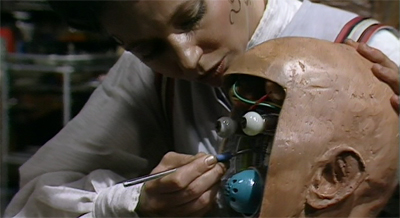
There are some things that I know I should probably feel guilty about – cases where my opinion is so clearly distinct from the general consensus that I feels some sense of obligation to apologise for my radical and far-out ideas. While it falls just short of that mark, I honestly enjoy The Androids of Tara as the best story of The Key to Time. I’ll concede it isn’t as masterfully written as The Ribos Operation, nor as full of wonderfully clever constructs as The Pirate Planet, but The Androids of Tarais a refreshingly small-scale adventure that manages to accommodate the awkward humour that this era of the show is accustomed to, while remaining an excellent adventure in its own right.

Eyes without a face...

Continue reading

Doctor Who: The Pirate Planet (Review)

To celebrate the fiftieth anniversary of the longest-running science-fiction show in the world, I’ll be taking weekly looks at some of my own personal favourite stories and arcs, from the old and new series, with a view to encapsulating the sublime, the clever and the fiendishly odd of the BBC’s Doctor Who.

The Pirate Planet originally aired in 1978. It was the second part of The Key to Time saga.

Excuse me, are you sure this planet’s meant to be here?

– The Doctor

I have to admit, I admire The Pirate Planet for its lofty aim. Douglas Adams’ script is vast and impressive and epic, incorporating and number of brilliant high concept ideas, traditional science-fiction story-telling devices, and healthy sense of humour into one Doctor Who story. Unfortunately, the production is restricted both by the technical limitations of the time, but also by the sense that there’s simply too much going on over the course of this four-episode adventure. Still, it’s as bold, fun and imaginative as any Doctor Whostory, and showcases the series at its most ambitious. There’s nothing wrong with that.

Pulling a fast one...

Continue reading

Doctor Who: Pyramids of Mars (Review)

To celebrate the fiftieth anniversary of the longest-running science-fiction show in the world, I’ll be taking weekly looks at some of my own personal favourite stories and arcs, from the old and new series, with a view to encapsulating the sublime, the clever and the fiendishly odd of the BBC’s Doctor Who.

Pyramids of Mars originally aired in 1975.

Yes, that’s resonating tuner. Part of an anti-gravity drive. Oh! They must be building a rocket.

Egyptian mummies building rockets? That’s crazy.

– the Doctor and Sarah Jane demonstrate how arbitrary “crazy” is on this show

Pyramids of Mars is a classic slice of Doctor Who. It’s a piece of television that I dearly love, even if it is quite clear watching it that Robert Holmes was re-writing it by the seat of his pants. It’s got all the right ingredients for the Philip Hinchcliffe era of the show. Tom Baker is on phenomenal form. Sarah Jane has full adapted to being the only companion again. There’s one of those nice period settings that the BBC does so well. There’s an ancient evil arising to destroy the planet, and maybe the universe. Said evil is deliciously hammy, yet somehow quite intimidating.

Pyramids of Mars is the perfect storm, a carefully mixed cocktail of Doctor Who in the Hinchcliffe era. Given that the Hinchcliffe era is generally regarded as one of the best periods in the show’s history, that should give an idea of just how impressive it is.

Because "Sutekh the Benign" doesn't sound quite so threatening...

Because “Sutekh the Benign” doesn’t sound quite so threatening…

Continue reading