• Following Us

  • Categories

  • Check out the Archives


  • Awards & Nominations

The X-Files – Colony (Review)

This August (and a little of September), we’re taking a trip back in time to review the second season of The X-Files. In November, we’ll be looking at the third season. And maybe more.

Colony is another second season game changer. As with other episodes in the second season, there’s a sense that the production team are really getting to grips with what works with the show – laying groundwork and defining a template that they can work with into the show’s third season. While the Duane Barry and Ascension two-parter had been an act of desperation to work around Gillian Anderson’s pregnancy, Colony and End Game is a two-parter that the show embraced entirely of its own volition.

These two two-part episodes really set the template for the show going forward. There’s a sense that Chris Carter and his team were really defining what a season of The X-Files should look like, giving them a blueprint that they might build on in the years ahead. From the second season through to the sixth, the show would stick quite rigidly to the idea of two big two-parters in the middle of the season, quite apart from any multi-part stories bridging the seasons.

Lights in the sky...

Lights in the sky…

These two parters were typically broadcast as part of the “sweeps”, and inevitably focused on the show’s alien conspiracy mythology. Even the more stand-alone two-parters like A Christmas Carol and Emily or Dreamland Part I and Dreamland Part II still build off the series’ central mythology. Given those were the points at which the show got the highest exposure, and the point where the show worked hardest to draw in an audience, it’s no surprise that the mythology arc rose to such prominence.

Duane Barry and Ascension undoubtedly set a precedent, but those episodes were prompted by factors outside the control of the creative team. However, Colony and End Game really solidified that precedent into a guiding principle for the show. This two-parter comes to codify and cement a lot of the things that the show’s mythology comes to take for granted. For better and worse.

Quite pointed...

Quite pointed…

Continue reading

Thor & Loki: Blood Brothers (Review/Retrospective)

With the release of Marvel’s big-budget superhero action movie Thor this summer, we’re taking a month to celebrate the God of Thunder. Check back each Wednesday for a Thor-related review.

One of the slew of hardcovers released to coincide with Kenneth Branagh’s epic adaptation of the classic Marvel comic book Thor, Thor & Loki: Blood Brothers is basically just a repackaging of the classic four issue Loki miniseries written by Robert Rodi and painted by Esad Ribic in the nineties. Much like Lex Luthor: Man of Steel, the miniseries was repackaged with a slew of extras and re-released in order to capitalise on a hungry market place. (Luthor, as it was rebranded, was released after the success of the another villain-themed graphic novel from the same creative team, the superb Joker). Still, despite the fact that the “Thor &” part of the title was just stuck on there to tie the book to the film, it’s a lovely little story which perfectly captures a lot of the charm and appeal that the Norse backdrop offers to epic comic book stories.

Commander and (mis)chief...

Continue reading

Absolute New Frontier (Review/Retrospective)

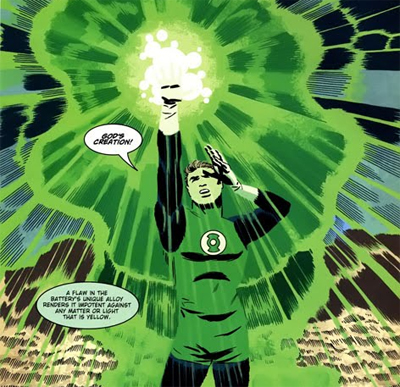
This post is part of the DCAU fortnight, a series of articles looking at the Warner Brothers animations featuring DC’s iconic selection of characters. This is a comic book review of the graphic novel which inspired the animated movie Justice League: New Frontier

Today some would say that those struggles are all over– that the horizons have been explored– that all the battles have been won– that there is no longer an American frontier.

The problems are not all solved and the battles are not all won– and we stand today on the edge of a new frontier– the frontier of the 1960s– a frontier of unknown opportunities and perils– a frontier of unfulfilled hopes and threats.

– John F. Kennedy, 1960

It’s a Kennedy-era superhero saga, capturing a lot of the spirit of the sixties, the era that really saw DC comics – and comic books as a whole – massively reinvent themselves.

Green Lantern's light...

Continue reading

Absolute Sandman: Volume IV

It’s over. Wow. It has been a long haul, but an impressive and richly rewarding one. Having read the entire collection again over the space of about a month, I have even more appreciation for the wonder of Neil Gaiman’s writing. The volume is pretty much perfect, featuring (in my opinion) the most consistently brilliant artwork of the four volumes and a fitting conclusion to a saga that has run for 1,500 pages already. It’s hard enough to write a fitting conclusion to a two-hour movie or a novella. How does Gaiman manage to tie up everything so ridiculously well?

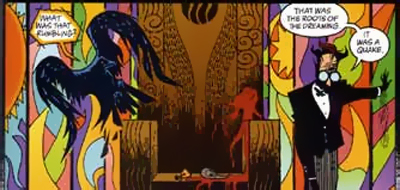
An empty throne? Foreshadowing, you say?

An empty throne? Foreshadowing, you say?

Warning: This review contains spoilers (as any review of the collection will). They’re minor, they’ve been foreshadowed throughout the collection and pretty much made explicit at the climax of the Volume 3. Still, consider yourself appropriately warned.

Continue reading