• Following Us

  • Categories

  • Check out the Archives


  • Awards & Nominations

The X-Files – The Goldberg Variation (Review)

This November, we’re taking a trip back in time to review the seventh season of The X-Files and the first (and only) season of Harsh Realm.

Jeffrey Bell does whimsical very well.

The Rain King and The Goldberg Variation are perhaps Bell’s two strongest contributions to The X-Files, and they stand as some of the show’s most light-hearted episodes. In a way, Bell was the perfect new writer for a show moving from moody Vancouver down to sunny Los Angeles, with his best contributions to the show managing to preserve the weirdness that fans had come to know and love while turning up the brightness at the same time. They were episodes that felt much more applicable to the show’s new home in California.

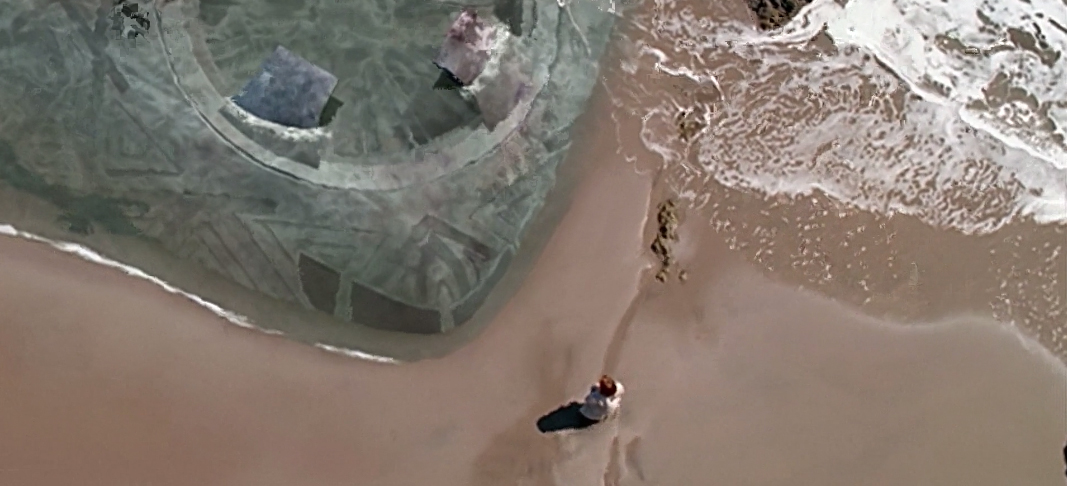
Eye see...

Eye see…

The Rain King and The Goldberg Variation are bright episodes, and not just in a literal sense. There is an optimism that runs through both scripts, suggesting that maybe the world is not an inherently hostile place and maybe not every X-file is plotting to eat your liver or carve out your cancer. Strange things happen in the world on every day, and some times those strange things can be wondrous as well as terrifying. While quite far removed from the aesthetic of the first five seasons, The Rain King and The Goldberg Variation are no less true to the spirit of the show.

The Goldberg Variation is light entertainment. It is so light that there are points where it almost seems ready to float away. That may not be such a bad thing.
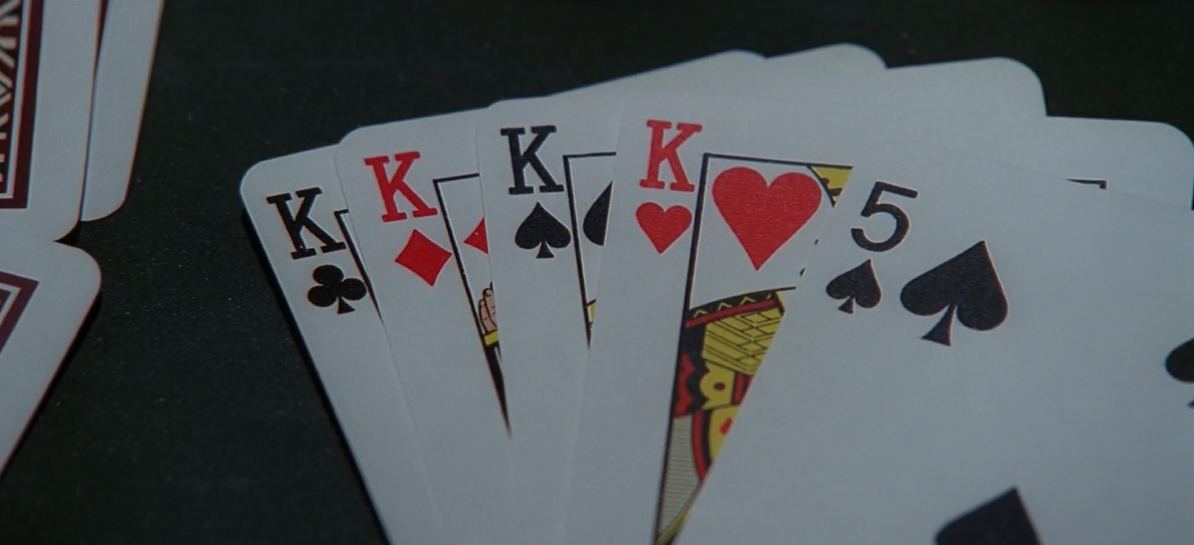
Sometimes you have to play the hand you're dealt...

Sometimes you have to play the hand you’re dealt…

Continue reading

The X-Files – Millennium (Review)

This November, we’re taking a trip back in time to review the seventh season of The X-Files and the first (and only) season of Harsh Realm.

There are any number of ironies around the cancellation of Millennium.

The show was cancelled by Fox to make room for Harsh Realm, hoping that Chris Carter’s new show would perform better in the Friday night slot. Of course, that did not turn out to be the case; Harsh Realm was cancelled after only three episodes had been broadcast, all failing to even match the already low numbers of the third season of Millennium. A show in its third season was cancelled to make room for a hip new show that was pretty much dead on arrival. However, that is not the only irony.

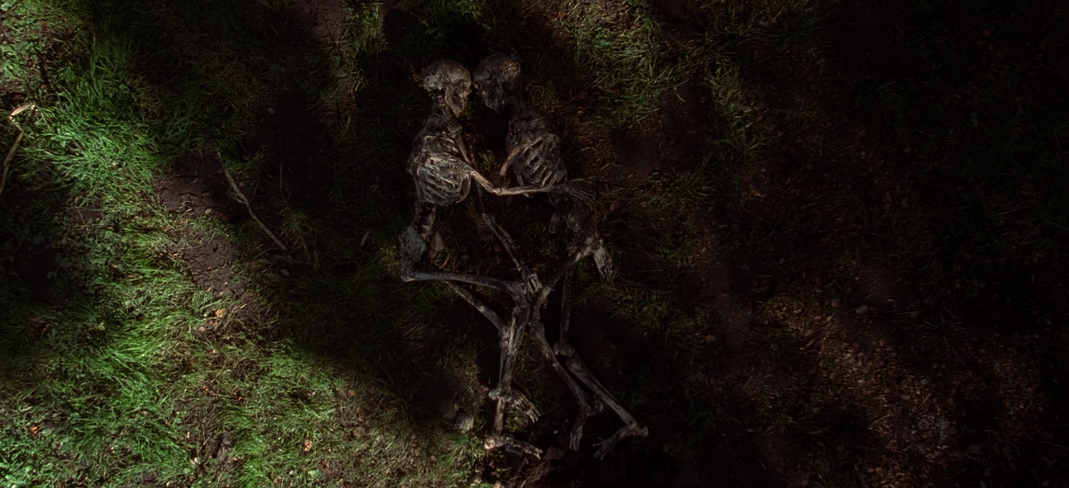
Frank Black's return...

Frank Black’s return…

Millennium concluded with Goodbye to All That in May 1999. The show fell seven months shy of its own deadline. If Fox had commissioned only eight new episodes, the creative team would have been able to take the show right up to the turn of the millennium itself. (Well, in a way that would make sense to most viewers. “Nobody likes a maths geek, Scully.” Even one who is technically correct.) It seems like Frank Black would not get to see the arrival of the date that had defined his show. (It was the title, after all.)

If Christmas is the season of goodwill to all men, then it is a nice gesture that The X-Files invited Frank Black to ring in the new year (and the new millennium) with them. It might not be much more, but it is a nice gesture.

... is just one thing that fans remember about this episode.

… is just one thing that fans remember about this episode.

Continue reading

The X-Files – The Sixth Extinction (Review)

This November, we’re taking a trip back in time to review the seventh season of The X-Files and the first (and only) season of Harsh Realm.

The fate of individual human beings may not now be connected in a deep way with the rest of the universe, but the matter out of which each of us is made is intimately tied to processes that occurred immense intervals of time and enormous distances in space away from us. Our Sun is a second- or third-generation star. All of the rocky and metallic material we stand on, the iron in our blood, the calcium in our teeth, the carbon in our genes were produced billions of years ago in the interior of a red giant star. We are made of star-stuff.

– Carl Sagan’s Cosmic Connection

Sea of blood...

Sea of blood…

Continue reading

The X-Files – Biogenesis (Review)

This July, we’re taking a trip back in time to review the sixth season of The X-Files and the third (and final) season of Millennium.

‘When Alexan­der saw the breadth of his domain, he wept for there were no more worlds to con­quer.’ Ben­e­fits of a clas­si­cal education.

– Hans Gruber, Die Hard

In hindsight, “ending” the mythology with a two-parter in the middle of the season was always a risky proposition.

Airing Two Fathers and One Son during February Sweeps was a logical decision. Ending the mythology that had been running through the show for five-and-a-half seasons was certain to grab the attention of casual viewers, reeling them in to boast up ratings. The X-Files had always aired mythology two-parters during Sweeps, putting them forward as examples of the best that the series could do and cementing the show’s claim to be “blockbuster television.” Choosing to wrap up the mythology during February Sweeps was just an extension of that approach.

Look what just washed up...

Look what just washed up…

And it worked. Two Fathers earned the second highest Nielsen score of the sixth season, landing just behind The Rain King. Two Fathers was the last time that The X-Files would rate so highly. As such, the decision to “close off” the mythology in the middle of the season was a very shrewd decision. However, it did raise questions about what the show would do at the very end of season. After all, The X-Files liked to bookend its seasons with mythology episodes, counting on a mythology cliffhanger to carry viewers across the long gap between seasons.

How do you tell a mythology story when you’ve just worked so hard to tidy it all away?

Behind the curtain...

Behind the curtain…

Continue reading

The X-Files – Field Trip (Review)

This July, we’re taking a trip back in time to review the sixth season of The X-Files and the third (and final) season of Millennium.

Field Trip works well as the penultimate episode of the sixth season.

It returns to a lot of big ideas threaded through the sixth season, particularly as they relate to endings and mortality. It also pushes the bond between Mulder and Scully to the fore; it feels like something of a spiritual successor to both Bad Blood and Folie á Deux in its portrayal of the dynamic between Mulder and Scully, charting a rough arc in how Mulder and Scully come to see themselves and each other. Even beyond all that, it contains another surrogate romantic relationship for Mulder and Scully, this time in Wallace and Angela Schiff.

A lot to digest...

A lot to digest…

More to the point, Field Trip seems to hit on the core anxieties at the heart of the sixth season. It is a meditation on the show’s success and the status quo that has to be so careful maintained to keep the show from tipping over. As with TriangleDreamland IDreamland II, How the Ghosts Stole Christmas and Monday, our heroes find themselves trapped in something of a weird alternate reality. The climax of Field Trip hinges on both Mulder and Scully deducing that their world operates according to the logic of a television show.

However, Field Trip is perhaps most intriguing in the way that it proposes two separate endings to The X-Files. The humongous fungus at the heart of Field Trip offers both Mulder and Scully a conclusion to their six-year journey, an opportunity for closure and satisfaction. In doing so, Field Trip suggests that it is the central tension at the heart of The X-Files that keeps the show young. There is no way to end the show without absolutely and definitively declaring that one of the characters is right and the other is wrong.

Down the rabbit hole...

Down the rabbit hole…

As such, the endings seem mutually exclusive. Field Trip suggests that endings designed to satisfy Mulder and Scully and mutually exclusive and irreconcilable – recalling the implication in Bad Blood that both Mulder and Scully filter the same events through different lenses. However, Field Trip is rather more optimistic in its assessment of the dynamic between Mulder and Scully. While it might not be able to provide an ending to the show that satisfies both, Field Trip suggests that the duo have reconciled themselves to each other.

Whereas Bad Blood seemed to state that Mulder and Scully would never share the same perspective, Field Trip suggests that both characters have evolved and matured to the point where they can see the world through the eyes of the other. Bad Blood featured the two characters positing wildly different accounts of the same event, but Field Trip only resolves when Mulder and Scully come to share each other’s perspective. It feels entirely appropriate to close out the sixth season suggesting a new harmony between the two leads.

It's a dirty job...

It’s a dirty job…

Continue reading

The X-Files – Alpha (Review)

This July, we’re taking a trip back in time to review the sixth season of The X-Files and the third (and final) season of Millennium.

After a couple of misfires in the first few seasons, The X-Files had most steered clear of “classic” monsters. The first season had struggled with werewolves and ghosts and cryptozoology in Shapes and Shadows and The Jersey Devil respectively. 3 had been the show’s first “true” vampire episode, and had ended up as a bit of a mess. Perhaps it indicated that The X-Files was not a show that did “traditional” monsters particularly well; or maybe it was just a sign that the creative team were still figuring out how to make the show.

There was some evidence that the show might have been getting better at this sort of thing. In the fourth season, Elegy had been a (mostly) effective traditional ghost story. In the fifth season, Bad Blood had demonstrated that it was possible to make a good episode of The X-Files about vampires. Perhaps it was time to try another werewolf story. After all, the budget on The X-Files was bigger than it had ever been. There would likely be no better time to tell a classic werewolf story. Sadly, Alpha is anything but a classic werewolf story.

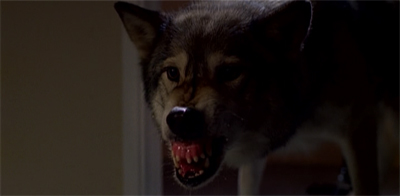
Hungry like the wolf...

Hungry like the wolf…

Continue reading

The X-Files – S.R. 819 (Review)

This July, we’re taking a trip back in time to review the sixth season of The X-Files and the third (and final) season of Millennium.

And we’re back on familiar ground.

The first half of sixth season of The X-Files is perhaps the weirdest that the show ever really became. It seemed like the series transformed into a goofy workplace romantic comedy, as Mulder and Scully worked at boring desk jobs during the day before investigating paranormal activity together in their spare time. It was utterly unlike anything that the show had done before or anything that it would do after. It is very strange to see so many oddities packed together so tightly.

He survived by the Skin(ner) of his teeth...

He survived by the Skin(ner) of his teeth…

Triangle, Dreamland I, Dreamland II, How the Ghosts Stole Christmas and The Rain King have enough surreal content to sustain two or three seasons of The X-Files. Broadcasting them almost back-to-back left some fans a little shell-shocked. At the time, it must have seemed like The X-Files had become a completely different television show than it had been only five or six months earlier. However, with the benefit of hindsight, it becomes clear that those episodes were just a very strange blip in the larger context of the series.

S.R. 819 is the episode that marks the clear return to the classic “tried and tested” model of The X-Files. It has everything from ambiguous conspiracies to body horror to car park confrontations. It is very much business as usual. Which is both the best and worst thing about it.

Do the Mathes, son...

Do the Mathes, son…

Continue reading

The X-Files – How the Ghosts Stole Christmas (Review)

This July, we’re taking a trip back in time to review the sixth season of The X-Files and the third (and final) season of Millennium.

Building off episodes like Triangle and Dreamland, How the Ghosts Stole Christmas continues to develop and expand upon the sixth season’s fascination with issues of time and love.

With the closing of the X-files in The End, it seems like The X-Files has abandoned any real focus on the procedural element of the series. Instead of being a show about two people employed to investigate weird phenomenon together, it seems that The X-Files has evolved into a series about two people who investigate weird phenomena in their spare time. It seems likely that Mulder would have invited Scully on his Christmas Eve stake out even if they were working on the X-files together, but the fact that this is a recreational activity certainly recontextualises it.

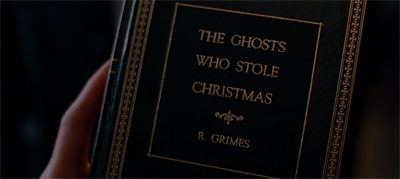
Semi-title drop!

Semi-title drop!

The first half of the sixth season of The X-Files is perhaps the most invested that the show has ever been in the nature of the relationship between Mulder and Scully. After all, the seventh season shies away from questions concerning a Mulder and Scully romance; the eighth season keeps William’s parentage a mystery until the last possible moment. The opening stretch of the sixth season is really the only point in the show’s run where the series has an extended conversation about what the two mean to one another and how they express that.

How the Ghosts Stole Christmas is essentially an episode about Mulder and Scully receiving paranormal couples’ counseling that goes horribly wrong.

"Merry Christmas, everybody!"

“Merry Christmas, everybody!”

Continue reading

The X-Files – Dreamland II (Review)

This July, we’re taking a trip back in time to review the sixth season of The X-Files and the third (and final) season of Millennium.

Morris Fletcher is (and remains) one of the more interesting aspects of the Dreamland two-parter.

Fletcher would go on to become perhaps the most unlikely recurring character in the history of The X-Files. Michael McKean would reprise the role for a brief cameo in Three of a Kind at the end of the season. As with Kersh, he would disappear from the show’s world for the troubled seventh season, but would return the following year. He made a guest appearance in All About Yves, the finalé of The Lone Gunmen. Fletcher would then follow the Lone Gunmen back to The X-Files, appearing in Jump the Shark during the final season.

And the shippers went wild...

And the shippers went wild…

A large part of what makes Fletcher work is the wonderful guest performance of Michael McKean. McKean is a veteran actor with a long history of great work, dating back to his breakout role as Lenny (and Squiggy) on the sitcom Laverne and Shirley. Along with the move to Los Angeles, the sixth season of The X-Files began to drift away from Chris Carter’s initial reluctance to cast recognisable actors in significant roles. The X-Files: Fight the Future had featured guest appearances from Martin Landau, Blythe Danner, Armin Muller-Stahl and Glenne Headly.

The two-parter built around Michael McKean paves the way for appearances from Ed Asner, Lily Tomlin and Bruce Campbell. These are all superb guest performances, and consciously play into the idea that the sixth season of The X-Files has taken on a more playful or vaudevillian style. It is too much to describe these guest roles as “stunt casting” in the same way that putting Jerry Springer in The Post-Modern Prometheus or Burt Reynolds in Improbable was stunt casting, but the casting decisions are part of a broader change in the show.

Our man Morris...

Our man Morris…

On paper, Morris Fletcher could easily come off as a one-note creep. After all, he is a character who thinks nothing of using his body swap with Fox Mulder to cheat on his wife of twenty years. There is a creepy and pervy banality to his evil, one that mirrors that of Eddie Van Blundht in Small Potatoes. However, while Small Potatoes felt a little too sympathetic to pathetic Eddie Van Blundht, Dreamland strikes a better balance in its portrayal of Morris Fletcher. McKean plays Fletcher as a very human character, but one who is no less creepy for his well-practiced charm.

It goes almost without saying that Michael McKean’s guest performance is a major reason why Dreamland (mostly) works.

Not particularly reflective...

Not particularly reflective…

Continue reading

The X-Files – Triangle (Review)

This July, we’re taking a trip back in time to review the sixth season of The X-Files and the third (and final) season of Millennium.

There are a lot of reasons to celebrate Triangle.

The episode gets a lot of attention for its wonderful use of long tracking shots. According to Chris Carter’s commentary, there are only twenty-four individual shots stitched together to produce the forty-five-minute episode. Considering the amount of split-screen action at the climax, that is not a lot. Triangle is an artistic tour de force for writer and director Chris Carter. The success that both Birdman and True Detective enjoyed in 2014 due to their extended takes suggests that Carter was significantly ahead of the curve.

Dragging up the past...

Dragging up the past…

There are other aspects to note. Triangle also ushers in a new mood and tone for the sixth season of The X-Files. The show had moved to Los Angeles, and would struggle with how to retain its identity in the new (and bright) surroundings of California. The Beginning and Drive had both answered the question in their own way, but Triangle ushers in a whole new approach to storytelling. Triangle is the first of a series of light and breezy episodes in the early stretch of the sixth season where The X-Files almost turns into a paranormal sitcom.

However, there is one other reason to celebrate Triangle. It is an extended forty-five minute pun on the word “ship.”

Cigarette-Smoking Nazi...

Cigarette-Smoking Nazi…

Continue reading