• Following Us

  • Categories

  • Check out the Archives


  • Awards & Nominations

The X-Files – The Host (Review)

This August (and a little of September), we’re taking a trip back in time to review the second season of The X-Files. In November, we’ll be looking at the third season. And maybe more.

The Host and Little Green Men represent a fantastic one-two punch combination to open the second season of The X-Files. It’s very hard to think of two back-to-back standalone stories that most effectively sum up the show, capturing a lot of what makes the series so beautifully compelling and enduring. The two episodes are also quite surprising. It feels strange that Chris Carter didn’t write Little Green Men, given the importance of the premiere to the show. However, in light of that, it also feels strange that Carter did write The Host.

Working on The X-Files, Carter tends to gravitate towards “event” episodes. His name is frequently seen on episodes that push the show forward – in multiple senses. Carter is the architect of the show’s grand mythology, so his name pops up quite frequently on those scripts. However, Carter is also prone to write occasional “big” episodes of a given season. He wrote and directed The Post-Modern Prometheus and Triangle, for example, two of the more unique and distinctive episodes of the fifth and sixth seasons.
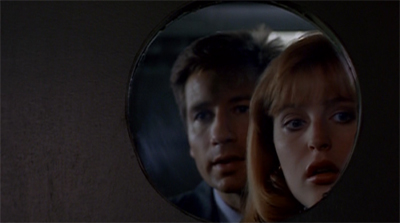
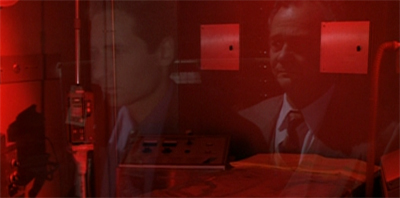
Through the looking glass...

Through the looking glass…

So, seeing Chris Carter’s name on the first “monster-of-the-week” of the new year rather than the all-important season premiere feels a little strange – particularly since The Host is an episode that seems a lot less ambitious than Little Green Men. After all, Little Green Men depicted Samantha Mulder’s abduction, revealed the show’s aliens and tried to make Vancouver look like Puerto Rico. In contrast, The Host is about an overgrown mutant worm.

And yet, perhaps that’s the point. The second season of The X-Files was a massively important year for the show. Along with the Fox Network itself, this was the year that The X-Files defined its own identity and really began to aggressively carve out a niche. The show did not make the top 100 shows of the 1993-1994 season, but almost reached the top 50 shows of the 1994-1995 season. That’s a meteoric rise, and the second season is very ruthlessly refining itself.
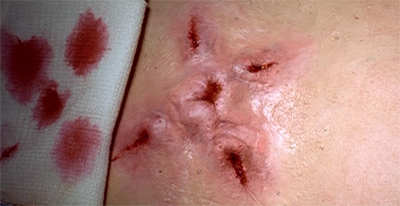
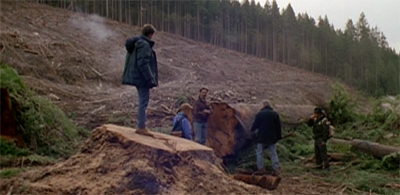
X marks the spot...

X marks the spot…

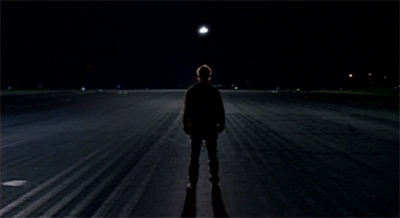
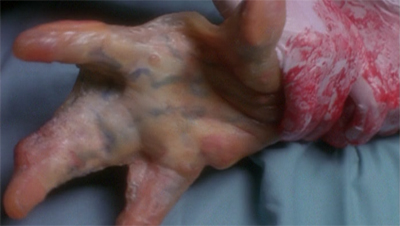
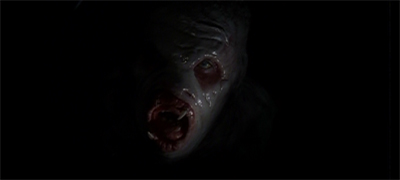
To describe The Host as a simple “monster-of-the-week” is to miss the point entirely. The show doesn’t exist yet another entry in a genre that the show established during its first year on the air. Instead, The Host is clearly constructed to be the monster-of-the-week episode. It’s an hour of television that is designed to get a reaction, to push buttons, to get people talking. This is an episode squarely aimed at anybody who heard the buzz over the summer hiatus and wanted to see what the fuss was about.

It works very well in this capacity. There is a reason that The Host as endured as a classic episode of The X-Files, packed with all manner of iconic and memorable imagery. Chris Carter constructed The Host as an example of what The X-Files does very well – and it’s a piece of science-fiction horror that sticks with people. It’s incredibly hard to forget. And that’s the beauty of it.
A monster mash-up...

A monster mash-up…

Continue reading

The X-Files – Season 1 (Review)

Trying to appraise the first season of any show is quite different from judging any other season. While all subsequent seasons have some measure of continuity to build off, some experience to guide the cast and crew, some familiarity to play into or away from, the first season literally starts with nothing. Even when there’s a sizeable gap between the production of the pilot and the start of work on the series proper (with over a year between the filming of The Pilot and Deep Throat), there’s still a sense we’re watching the production team settle into their roles.

All of this is a round-about way of saying that the first season of The X-Files is not a great season of television, judged on its own merits. It’s certainly not the strongest season of the show, which would go from strength-to-strength over the next three years, while also having an ambitious (if not entirely successful) fifth season. The first season of The X-Files is probably the weakest of the first five years of the show, but to express it in those terms is to miss the point.

The first season does a pretty great job laying the ground rules for the franchise, and offers a pretty solid indication of the talent involved in the show, if they can figure out what they want to do. (With quite a few episodes serving as examples of what the show doesn’t want to do.)

xfiles-deepthroat7

Continue reading

The X-Files – The Erlenmeyer Flask (Review)

When you think about it, The X-Files conspiracy mythology is just a fancy way of dressing up generational “daddy issues.” Both Mulder and Scully have problems with their fathers, and it plays into the show’s wider themes. The X-Files is, appropriately enough, a show that helps define what is known as “Generation X”, the generation born following the post war baby boom, as the afterglow from America’s ascent to global superpower began to wear off. Existing in the wake of the Cold War, in a unipolar world, The X-Files was a vehicle for introspection.

One of the recurring themes of the show, and one that has come up quite a bit in the first season, is the weight of history bearing down on the current generation. Living in the shadow of Watergate, dealing with the revelation of the Tuskegee Syphilis Experiments, coping the Vietnam and other skeletons, it’s little wonder that Generation X seemed completely disillusioned with their elders. Jamie Notter argued that “unlike their parents who challenged leaders with an intent to replace them, Generation Xers tend to ignore leaders.”

Christine Henseler would go further, suggesting that there’s something close to righteous anger in the attitude that Generation X holds to its parents, holding “a world view” that “is based on change, on the need to combat corruption, dictatorships, abuse, AIDS.” The Erlenmeyer Flask seems the perfect place to end this season then, pushing all this uncertainty to the fore and killing the series’ much-loved father figure.

Bodies of proof...

Bodies of proof…

Continue reading

The X-Files – Darkness Falls (Review)

Darkness Falls is the best script Chris Carter has written so far. It it is far superior to Fire or Space or Young at Heart or The Jersey Devil or even The Pilot. It’s quite possibly the strongest normal “monster-of-the-week” episode that Carter ever wrote, discounting his work on “special” episodes (like Post-Modern Prometheus or Triangle) or even some mythology stories (I’m quite fond of Redux).

Darkness Falls is – at its most basic – just a very strong monster-of-the-week installment, hitting all the right buttons to provide an atmospheric horror thriller.

If a tree falls in the woods...

If a tree falls in the woods…

Continue reading

The X-Files – Shapes (Review)

Shapes feels like something of a companion piece to Shadows. Both are very traditional horror monster stories, feeling a little dated and out of place among the more modern paranoia of The X-Files. Shapes might carefully avoid using the word “werewolf”, instead dressing up the classic movie monster in loose fitting Native American mythology, but it feels like an attempt to pay homage to one of the definitive Hollywood monsters. Unfortunately, like Shadows, it winds up feeling a little stale and tired, a little too familiar and cliché.

It’s a werewolf story that lacks bite.

Chew on this...

Chew on this…

Continue reading

The X-Files – Miracle Man (Review)

The biggest problem with Miracle Man is that it’s a Howard Gordon script. I don’t mean to diminish Gordon’s contributions to the show. Gordon is one of the strongest contributors to this rocky first season (only Morgan and Wong can claim to be stronger, and they also have their misfires), and he – along with frequent partner Alex Gansa – seems to have the strongest grip on Mulder as a character. And therein lies the most fundamental problem with Miracle Man, the horribly clumsy and muddled ending aside.

Miracle Man feels like it focuses on the wrong lead. It tackles themes and subject matter the show would revisit more successfully in the years ahead, in episodes like Revelations and All Souls. However, the religion-themed episodes in the years ahead would typically focus on Scully – contrasting her religious faith with her scientific skepticism to provide Anderson with some of the best work she’d do on the show.

Instead, Miracle Man digs its character hooks into Mulder, tying back to the disappearance of Samantha for no reason other than “well, this story needs to be about Mulder for some reason.”

Symbolism!

Symbolism!

Continue reading

The X-Files – E.B.E. (Review)

While the show was on the air, it seemed like the series’ “mythology arc” – the on-going recurring story arc concerning the government and the Syndicate and the aliens and the colonists and Samantha Mulder – was the best part of the show. Given how The Truth bungled tying up all the loose ends generated over nine years of mythology, hindsight has been somewhat harsh to these episodes. It’s a lot harder to get caught up in Mulder’s cat-and-mouse game against the government when you know the show won’t bother to offer a satisfying conclusion.

And yet, perhaps that isn’t the appeal of these conspiracy episodes. Perhaps these over-arching mythology episodes didn’t grab our attention because they promised long-form storytelling with set-up and pay-off. Certainly, there’s little direct connective tissue between The Pilot, Deep Throat, Fallen Angel and E.B.E., barring the appearance of Deep Throat, who has also guested in shows like Eve or Ghost in the Machine or Young at Heart. At this point in the run, there’s no hint of Mulder’s convoluted familial ties this stretched secret conspiracy, no suggestion the government was complicit in the abduction of Mulder’s sister.

Instead, E.B.E. offers another clever and interesting suggestion about why this government conspiracy plot line appeals to us. It’s nothing to do with a developing story arc, at least not in this place. It’s just a wonderful channel through which we may express our mistrust of authority, the most direct way to focus our well-honed paranoia against those in government, the most straight-forward expression of post Cold War anxiety.

The truth was in here...

The truth was in here…

Continue reading

The X-Files – Young at Heart (Review)

Continuing on from Lazarus, there’s something about Young at Heart that feels very rote, very paint-by-numbers. It’s as if the show has worked so hard to define itself in the first half of the season that the second half of the first season has been dedicated to settling into routine. As far as Chris Carter scripts go, Young at Heart is roughly on par with Fire, and nowhere near as bad as Space, although that’s damning with faint praise. At this rate, Carter should begin to turn out episodes worth watching at some point in the fifth season.

Featuring yet another blast from the past, more gratuitous use of Deep Throat and reckless placing of Scully in danger, Young at Heart feels more like it was assembled from a rough blueprint of what an episode of The X-Files should look like, rather than because it was a story worth telling.

Keep it handy...

Keep it handy…

Continue reading

The X-Files – Lazarus (Review)

And, with Lazarus, we enter a long mediocre stretch in the second half of the first season of The X-Files. To be fair, none of the episodes in this run are anywhere near as bad as Space, but – with the exception of E.B.E., Tombs and The Erlenmeyer Flask – they all feel a little flat. It’s as if the first half of the season was more experimental, as The X-Files tried to figure out what it wanted to be, with the second half dedicated to settling into its particular groove.

Lazarus isn’t terrible. It just feels a little rote, a little paint-by-numbers, a littler average and safe. It’s a conventional enough supernatural (or psychological) thriller, but it lacks that extra “umph” to make it something particularly worthy of a viewer’s time.

The mask is slipping...

The mask is slipping…

Continue reading

The X-Files – Fire (Review)

Well, Fire is probably Chris Carter’s strongest script since The Pilot. I suppose we should be grateful for that, at least.

All fired up...

All fired up…

Continue reading