• Following Us

  • Categories

  • Check out the Archives


  • Awards & Nominations

Star Trek: Enterprise – Bound (Review)

This May, we’re taking a look at the fourth (and final) season of Star Trek: Enterprise. Check back daily for the latest review.

Bound is, for all intents and purposes, the last standalone episode of Star Trek of the Rick Berman era.

There are five more episodes following Bound, but they consist of two two-parters and the official series finale. Bound is very much the last “regular” episode of Star Trek: Enterprise to be produced, the last episodic adventure in the series. In fact, given the trends in contemporary television that are nudging the format towards serialisation and long-form storytelling, it seems entirely plausible that Bound could be the last standalone episode of Star Trek ever produced.

Strike a pose.

Strike a pose.

As such, it is a shame that Bound is a complete and utter disaster. It is an embarrassment to the series and to the franchise. More than that, it is an embarrassment that was written by the fourth season showrunner and which feels very much like the big ideas of the fourth season carried to their logical conclusion. Bound recalls the horrible sexism of episodes like Precious Cargo and Bounty, cloaking its objectionable sexual politics in the guise of nostalgia. Arguably the best things about Bound is that it makes Rajiin seem well-constructed in comparison.

Bound is easily the worst episode of the season and a strong contender for one of the worst episodes of the series. What better way to remember Enterprise?

Nostalgic sexism, hoy!

Nostalgic sexism, hoy!

Continue reading

The X-Files – One Son (Review)

This July, we’re taking a trip back in time to review the sixth season of The X-Files and the third (and final) season of Millennium.

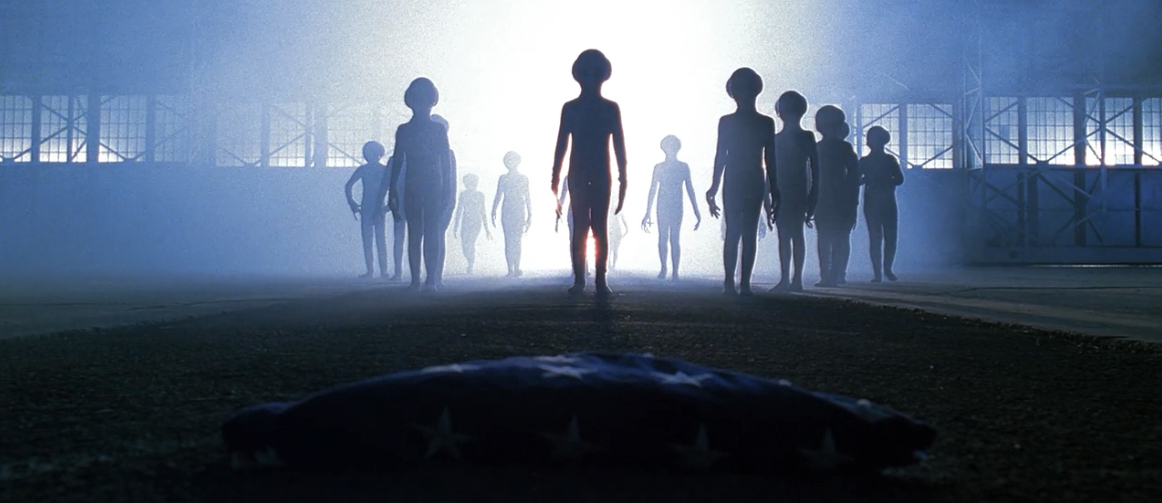
Two Fathers and One Son are a mixed bag.

They are very messy and convoluted episodes of television, attempting to resolve a long-running plot without committing to a resolution. They swing wildly between clichéd ambiguity and b-movie exposition. They strain to stitch together half-a-decade of storytelling into a ninety-minute finalé, while trying to avoid drawing attention to any of the countless elements that might contradict or undermine the story that they are telling. They are both ambitious and efficient, energised and noncommittal.

They're here.

They’re here.

At the same time, Two Fathers and One Son make a valiant effort to bring the vast sprawling global conspiracy down to a more manageable level. Over the years, the conspiracy has evolved from a few alien abductions to a vast plot against the majority of mankind. Although they doesn’t always succeed, Two Fathers and One Son try to ground this crazy story about faceless rebels and looming colonisation in the trauma of a single family unit. The fate of mankind plays out against the backdrop of a family collapsing under its own weight.

While it doesn’t work as well as it might, it does help to draw attention to the larger themes that have played out across The X-Files as they relate to power and control, legacy and guilty, abuse and exploitation. It seems appropriate that Two Fathers and One Son should push these ideas to the fore as it attempts to close off the show’s long-running conspiracy thread, reminding viewers of what it was actually talking about.

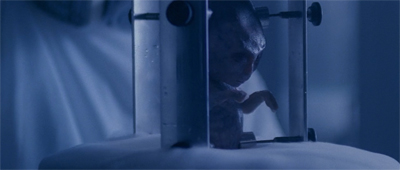
Baby steps...

Baby steps…

Continue reading

Star Trek: Deep Space Nine – Progress (Review)

Star Trek: Deep Space Nine is twenty years old this year. To celebrate, I’m taking a look at the first season. Check back daily for the latest review or retrospective.

Progress is the best episode of Star Trek: Deep Space Nine‘s first season to date. Of course, there are better episodes ahead – two of them clustered at the end of the show’s truncated first year – but Progress still represents a considerable improvement over anything that has come before. It isn’t quite perfect, but it does have a nice character focus and takes advantage of the show’s unique perspective and position. It’s evidence that the writing staff were at least engaging with the show’s status quo and trying to work with it to tell interesting stories, with Progress offering an early pure example of what Deep Space Nine story should probably look like.

While the first season has been quite bumpy (although notably less bumpy than any of the opening seasons of the other three Star Trek spin-offs), Progress offers a demonstration that we are getting somewhere. The title might apply as much to the status of the show itself as to the themes of the episode.

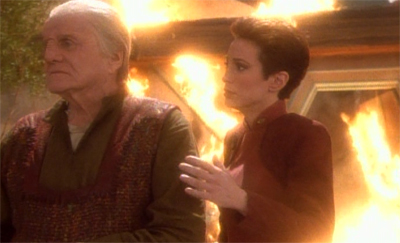
Burning down the house...

Burning down the house…

Continue reading