• Following Us

  • Categories

  • Check out the Archives


  • Awards & Nominations

Non-Review Review: Doctor Strange

Some Marvel films succeed by pushing against the house style to provide a clear and unique artistic sensibility, like Iron Man III and Guardians of the Galaxy, films that are undeniably informed by the stylistic sensibilities of their directors as much (if not more than) the concerns of the shared universe. Those films are never distinctive enough to compare to the work done by Tim Burton or Christopher Nolan, but they stand out from the rest of the Marvel production slate for their willingness to tell a different story in a different style.

Some Marvel films suffer from their adherence to the production company’s house style. Just about anything interesting was smothered out of Thor: The Dark World, which frequently seemed to have been written and edited by a computer algorithm designed to amplify the well-received elements of the first film and graft them on to a familiar structure. Even some of the relatively strong films on the slate are not immune, with Captain America: The Winter Soldier and Captain America: Civil War unable to follow their bolder ideas to conclusion.
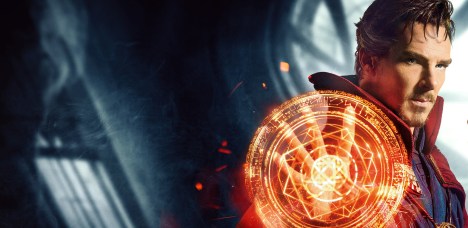
It's a kind of magic...

It’s a kind of magic…

However, there are also films that succeed through their understanding of the studio’s house style and sensibilities, working firmly within the structures and boundaries of what might be termed “the Marvel Cinematic Method.” These films do not just acknowledge the expectations imposed upon these blockbusters, they play towards them. In doing so, they embrace the stability and consistency that such a tried-and-tested approach affords, affording the production team the opportunity to craft enjoyable adventures starring likable actors doing fun things.

The original Thor is perhaps the best example of this approach. Often underrated and overlooked in assessments of Marvel’s cinematic output, Thor ranks among the very best of the company’s feature film slate by virtue of its willingness to embrace the stock superhero story at the heart of the script and focus upon making its cast likeable and its plot moving. There is a solid argument to be made that Thor is the purest solo superhero movie produced in quite some time, dating back to Richard Donner’s Superman. No irony or deconstruction in sight. Just simplicity.

Hair today...

Hair today…

Doctor Strange wisely opts for a similar approach. There are very few surprises to be found in the plotting and structuring of the film. The movie unfolds almost exactly as the audience expects. All the pieces are there, and they are assembled with the reliability of the very expensive watch that the title character chooses to carry around as a memento. The arrogant lead character humbled by tragedy. The nihilistic opponent who embraces the end of all things. The romantic co-lead. The stoic supporting character immune to our hero’s charm. The fallen mentor.

Doctor Strange is not particularly interested in subverting or twisting these stock elements. Instead, it focuses on honing them to a fine point, executing them with the help of a spectacular cast and a knowing grin. More than that, the relative simplicity of the plot framework allows director Scott Derrickson to hang some really impressive choreography and set pieces. The Marvel films have been (fairly) criticised for a certain textural “sameness”, and so the visual and aural stylings of Doctor Strange come as a breath of fresh air.
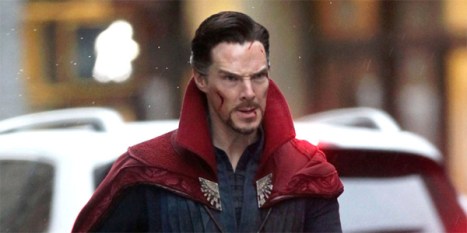
Strange fascination.

Strange fascination.

Continue reading

Netflix and Marvel’s Luke Cage – Season 1 (Review)

Luke Cage is an exceptional black superhero show.

Those twin concepts cannot be divorced from one another. The thrill of Luke Cage is how skilfully and how cleverly executive producer Cheo Hodari Coker interweaves those two strands. Luke Cage is not simply a story about Harlem that happens to feature superpowers, nor is just a superhero story that happens to feature African American characters. Coker carefully crafts the show that those two parts of itself become inseparable and indivisible. Luke Cage relishes its superhero storybeats, and bringing them together in service of a different kind of protagonist.

lukecage-nowyourmine29

It feels entirely appropriate that Luke Cage should be the focus of this series, the first superhero story of the franchise age to focus on a black protagonist. (There are a number of earlier examples from Blade to Catwoman to Steel, but those largely predate the current shared-universe-driven popular consciousness.) Luke Cage was the first black comic book hero to have his own on-going monthly title, and one of the earliest high-profile examples of a black superhero character not to incorporate “black” into his name, like the Black Panther or Black Lightning.

Of course, it feels shameful that it took this long. Hawkeye has somehow managed to appear in four blockbuster feature films before Marvel Studios produced a franchise film with a black lead actor. Spider-Man has been rebooted three separate times, but Black Panther will not open until 2018. Guardians of the Galaxy came out of nowhere long before Marvel Studios or Warner Brothers opened a summer tentpole superhero film with a minority or female lead. Meanwhile, Marvel has an influx of blonde white guys named Chris.

lukecage-dwyck2a

As such, Luke Cage is definitely overdue. And it keenly understands this. Every aspect of Luke Cage is filtered through an African American perspective that helps to give it a vibrance and energy that revitalises the format. In terms of plotting and structure, Luke Cage is perhaps the most traditional superhero story since Thor. However, the true beauty of the thirteen-episode miniseries lies in the improvisation around those beats and how the production team choose to hit the requisite notes. Luke Cage feels like an extended jazz album riffing on old standards.

However, as delayed as this appearance might be, it still feels perfectly attuned to the climate of late 2016. As Method Man reflects in and interview with the Sway Universe podcast in Soliloquy of Chaos, a great example of how keenly Luke Cage engages with black culture, “You know, here’s something powerful about seeing a black man that’s bulletproof, and not afraid.” That has never been more true.

lukecage-dwyck9a

Continue reading

Luke Cage – Moment of Truth (Review)

There is a lot to be said for how the Netflix television series choose to introduce their central characters.

The first season of Daredevil opens with the eponymous vigilante laying a brutal smackdown on Turk and breaking up a people-smuggling ring, clearly establishing the world of the show and the character’s rougher edges. The second season opened with a similar action set-piece in which the masked hero tracks a bunch of armed robbers to a downtown church leading to a suitably atmospheric image. Jessica Jones lifted its opening scene from Brian Bendis and Michael Gaydos’ Alias, with the hero smashing a deadbeat client through the glass pane on her door.

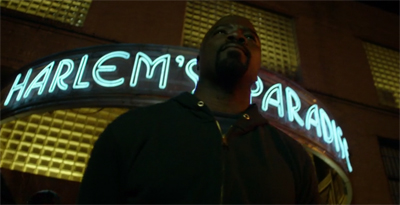
lukecage-momentoftruth

These are all sequences intended to set up the year ahead. The first season of Daredevil is preoccupied with the question of whether Matt is trying to do good or whether he is simple enabling his own baser impulses. The second season of Daredevil is much more of a traditional superhero tale with prophecies and ninja cults, along with super assassin ex-girlfriends. The broken glass in the door to Jessica’s office becomes a recurring motif across the first season of Jessica Jones, a reminder of how the character is constantly clearing up the shattered remains of her life.

In contrast, Luke Cage opts to introduce its character in a very different manner. Although Moment of Truth inevitably builds to an action set piece, that action set piece is tucked away neatly in the final minutes of the episode, feeling almost like an afterthought. Instead, Moment of Truth sets the tone for the season ahead. It opens with an extended conversation in a barbershop that covers topics from the merits of former Los Angeles Lakers (and Miami Heat) coach Pat Riley to whether Al Pacino has an “eternal ghetto pass.”

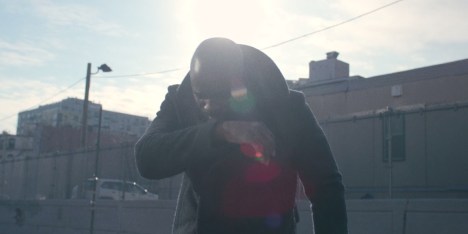
lukecage-momentoftruth1

It is a very relaxed conversation. And in many ways, Luke Cage is a very relaxed kind of show. That is in many ways the best thing that can be said about the series and the worst thing that can be said about it. Luke Cage unfolds at a pace that might be affectionately described as stately and cynically dismissed as glacial, taking its time hitting expected beats. However, the greatest strength of Luke Cage is the confidence and verve with which it hits those marks. Luke Cage is a pleasure to watch, a show charming enough that it earns enough goodwill to take its time.

Luke Cage starts as it means to go on. Charming and comfortable in itself, relaxed and confident. Despite the plotting a structural similarities that run through the season, this is a decision that immediately distinguishes itself from Daredevil and Jessica Jones. Like its lead character, Luke Cage walks tall and acts like it is bulletproof.

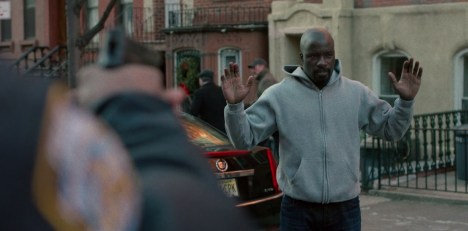
lukecage-momentoftruth2

Continue reading

Non-Review Review: Captain America – Civil War

Captain America: Civil War is, in some ways, a little too civil.

The third film in the series (following Captain America: The First Avenger and Captain America: The Winter Soldier) is produced to the highest professional standard. It is sleek and stylish, well-constructed and cleanly edited. It is always clear what is going on, no mean feat for a film with a cast this expansive. Character motivations are always entirely clear, even if there’s seldom any effort to explain why these characters have these motivations. It is a well-oiled, well-lubricated machine that hits all its marks and zips through its two-and-a-half hour runtime.

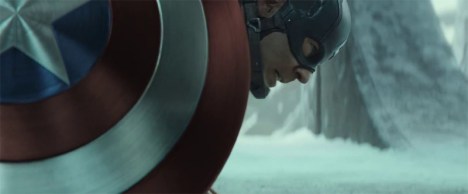
America, #!?> yeah...

America, #!?> yeah…

The biggest problem with Civil War is that it is a little too clean and professional, a little too mechanical and a little too impersonal. The film’s plot is anchored in some pretty heavy ideas about collateral damage and the responsibility that comes with unilateral intervention, but the script contorts awkwardly to ensure that things never get too heavy. “We’re still friends, right?” the Black Widow quips during her throwdown with Hawkeye, and Civil War is very careful to ensure that it doesn’t damage anything that cannot be replaced.

This is a perfectly reasonable approach to the film, given how many more films are leaning upon it, but it also feels a little forced. There are points at which Civil War bends itself into unnatural shapes to ensure that it can have its cake and eat it too.

He ain't heavy, he's my Rhodey...

He ain’t heavy, he’s my Rhodey…

Continue reading

Daredevil – A Cold Day in Hell’s Kitchen (Review)

This month, we’re doing daily reviews of the second season of Daredevil. Check back daily for the latest review.

And so we reach the end of the second season of Daredevil.

Except it is very clearly not the end. “This is not the end,” Elektra whispers as she lies dying in Matt’s arms. Although Elektra has hardly been the most honest or reliable character across the run of the season, she seems to be telling the truth. While the first season of Daredevil made a point to square away most of its characters and plot points at the end of the run, the second season consciously leaves things dangling. Nelson and Murdock has been dissolved. Elektra’s body has been stolen. The Hand are not defeated.

The dead only quickly decay...

The dead only quickly decay…

The first season ended in a relatively tidy fashion, with only a few oblique hints towards what the future might hold. The most significant of these loose ends, Wilson Fisk being taken to a holding cell, was consciously put on the backburner when the second season began. Although the second season would pick up on that storythread, it would not do so until the cliffhanger of Guilty as Sin leading into Seven Minutes in Heaven. There was a sense that the audience could have left Matt Murdock there and been happy. At least until The Defenders.

The end of the second season is much more ambiguous. There is no sense that anything is being left anywhere for an extended period of time. Whether those dangling plot threads will be addressed in a hypothetical third season of Daredevil or during The Defenders, it is clear that audiences are being kept on a hook.

"John Luther and James Bond both recommended this, so I thought I'd be foolish not to give it go..."

“John Luther and James Bond both recommended this, so I thought I’d be foolish not to give it go…”

Continue reading

Daredevil – Seven Minutes in Heaven (Review)

This month, we’re doing daily reviews of the second season of Daredevil. Check back daily for the latest review.

The relationship between the first and second seasons of Daredevil is quite complicated.

There is an obvious reason for this. The show’s production team changed between the first and second season, with the role of executive producer shifting from Steven DeKnight to Marco Ramirez and Doug Petrie. As a result, there is a clear change in emphasis and storytelling style; much like there was a shift from the two episodes overseen by Drew Goddard at the start of the first season to the later episodes overseen by DeKnight. Different producers bring a different perspective to their material. It is only natural.

"None of you seem to understand. I'm not locked in here with you... you're locked in here with me!"

“None of you seem to understand. I’m not locked in here with you… you’re locked in here with me!”

So there are major differences in the content and themes of the first and second season. Recurring elements that had been important to DeKnight are shuffled in the background to afford attention to aspects that intrigue Petrie and Ramirez. Matt’s Catholicism is less important than it was; Matt’s career as a lawyer is more central than it had been. Even the structural emphasis of the season shifts. DeKnight put Matt Murdock and Wilson Fisk on a collision course. Petrie and Ramirez prefer to have their characters running in parallel.

That said, there are moments when the first season bubbles through. There are strange thematic links that pop up from time to time, but are truncated or brushed aside. More striking, however, is how closely Ramirez and Petrie hew to the structural elements of the first season. In many ways, this is not surprising. One of the most consistently intriguing aspects of the second season is the energy that it expends on structure rather than plot or character. That is particularly true with Seven Minutes in Heaven.

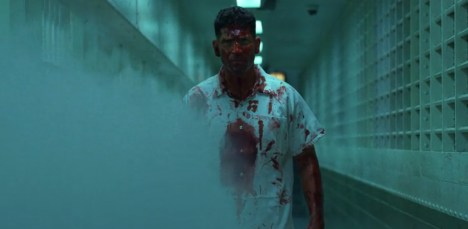
A Punishing schedule...

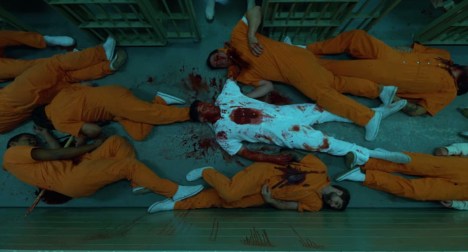
Orange is the new dead.

Continue reading

Daredevil – Penny and Dime (Review)

This month, we’re doing daily reviews of the second season of Daredevil. Check back daily for the latest review.

Penny and Dime closes out the first act of the second season of Daredevil.

It effectively brings an end to the “Daredevil vs. Punisher” section of the season, excluding a brief reprise in .380 towards the end of the year. It does so by offering perhaps the most straightforward “Punisher” story of the season, with Frank Castle effectively finishing the task of dismantling the Kitchen Irish so that his family might rest in peace and he might be remanded in custody. Bringing the arc to a close so early is a fairly bold move from producers Marco Ramirez and Doug Petrie. The temptation would have been to run the arc across the full season.

That's not creepy.

That’s not creepy.

In theory, the idea of structuring a thirteen-episode season of Daredevil as a collection of mini-arcs that coalesce makes a great deal of sense. In some respects it is a very “comic-book-y” way of structuring the season. It recalls Scott Snyder’s structuring of mega-arcs like Black Mirror or Zero Year into easily-digestible three- or four-issue chunks. The idea of spending four issues introducing the Punisher before moving on to another run developing his arc and introducing Elektra is a clever storytelling idea. It helps establish “binge-able chunks.”

Unfortunately, this is a rather mixed bag in practice. The second season of Daredevil is full of very clever ideas and is very meticulously crafted, but it lacks a sense of purpose and a commitment to realising these ideas. While Penny and Dime is a very neat episode in theory, it is fairly clunky in practice. It becomes even clunkier in hindsight.

Yeah, that's not creepy at all...

Yeah, that’s not creepy at all…

Continue reading

Netflix and Marvel’s Daredevil – Season 2 (Review)

This month, we’re doing daily reviews of the second season of Daredevil. Check back daily for the latest review.

The second season of Daredevil is a dysfunctional mess.

Unfortunately, it is not a particularly interesting mess.

daredevil-380b1

Continue reading

Jessica Jones – AKA WWJD? (Review)

AKA WWJD?, AKA Sin Bin and AKA 1,000 Cuts represent the emotional climax of Jessica Jones.

The key is in handing the show over to its two strongest performers. Whether together or separately, Krysten Ritter and David Tennant are always engaging to watch. These three episodes push Jessica and Kilgrave into a sequence of tight interactions with one another. The dynamic between the two characters is constantly evolving and reversing, but the two actors are strong enough that every second is riveting television. While AKA Smile brings the season to an exciting close, there is nothing quite as powerful as watching Ritter and Tennant play off one another.

jessicajones-wwjd10a

Jessica Jones has a very good ensemble, with a lot of the roles cast very carefully and most the supporting players sketched out and developed. However, the core of the season is about Jessica Jones confronting and vanquishing Kilgrave, the man who abused her and countless others. It is highly debatable whether Kilgrave needed to be the focus of the season, particularly in the earlier episodes where he didn’t really have much to do, but Jessica Jones has reached the point where it can throw Jessica and Kilgrave into direct confrontation with one another.

AKA WWJD? makes it clear that the confrontation between Jessica and Kilgrave will not be physical in nature. This is not a conventional super hero battle; Jessica will not be using her power to smash Kilgrave, and Kilgrave cannot use his mind control to manipulate Jessica. Instead, AKA WWJD? confirms that the confrontation between Jessica and Kilgrave will be emotional and psychological in nature; a victim confronting her accuser in pursuit of closure and satisfaction.

jessicajones-wwjd11a

Continue reading

Netflix and Marvel’s Jessica Jones (Review)

Jessica Jones is a bold and ambitious piece of work.

In many ways, it takes what worked about Daredevil, and improves upon a lot of it. It offers a grounded take on the shared Marvel universe, one even further disconnected from the world of The Avengers. It offers a likable cast of actors playing a bunch of nuanced and well-developed characters, avoiding some of the stock comic relief that bogged down Daredevil at certain points in the series. It is smart and provocative in a way that many of Marvel’s more mainstream offerings are not, taking advantage of the relatively smaller platform to tell a more niche story.

jessicajones-sinbin28a

There are issues, of course. The biggest problem with Jessica Jones is that the series feels about four episodes too long for the format that it has adopted. While each of the episodes work as a distinct unit of story, Jessica Jones is much more of a single story than Daredevil was. The problem is that the story occasionally feels like it goes through narrative loops and down narrative cul de sacs to stretch out to the thirteen-episode order. While the more episodic structure of the first half of Daredevil was not ideal, it allowed for a smoother twelve-hour storytelling experience.

Still, this is a rather small problem. The world and characters of Jessica Jones are interesting enough to sustain interest even when it feels like the plot is stalling. Jessica Jones is clever, exciting and engaging.

jessicajones-ladiesnight7

Continue reading