• Following Us

  • Categories

  • Check out the Archives


  • Awards & Nominations

The X-Files – Three Words (Review)

This October/November, we’re taking a trip back in time to review the eighth season of The X-Files and the first (and only) season of The Lone Gunmen.

There is no “to be continued…” explicitly linking DeadAlive to Three Words, but there doesn’t have to be.

In this final stretch of the eighth season, The X-Files adapts a somewhat serialised narrative model. Although stories like Empedocles and Vienen technically serve as “monster of the week” stories that stand alone, they feel very particular to this moment in the show’s history. Mulder’s return to the land of the living in DeadAlive does not mark a return to the status quo, despite his best efforts. Instead, it creates a highly volatile (and, by its nature, transitory) set-up that cannot be maintained over an extended period.
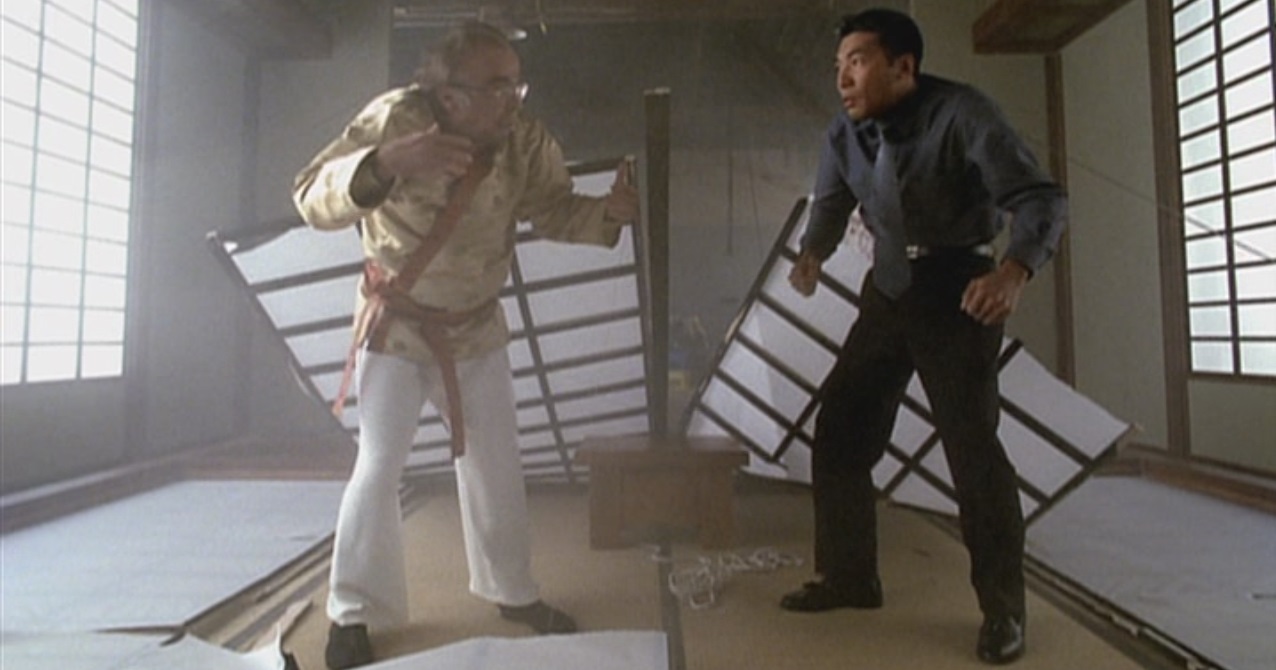
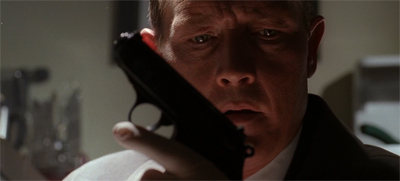
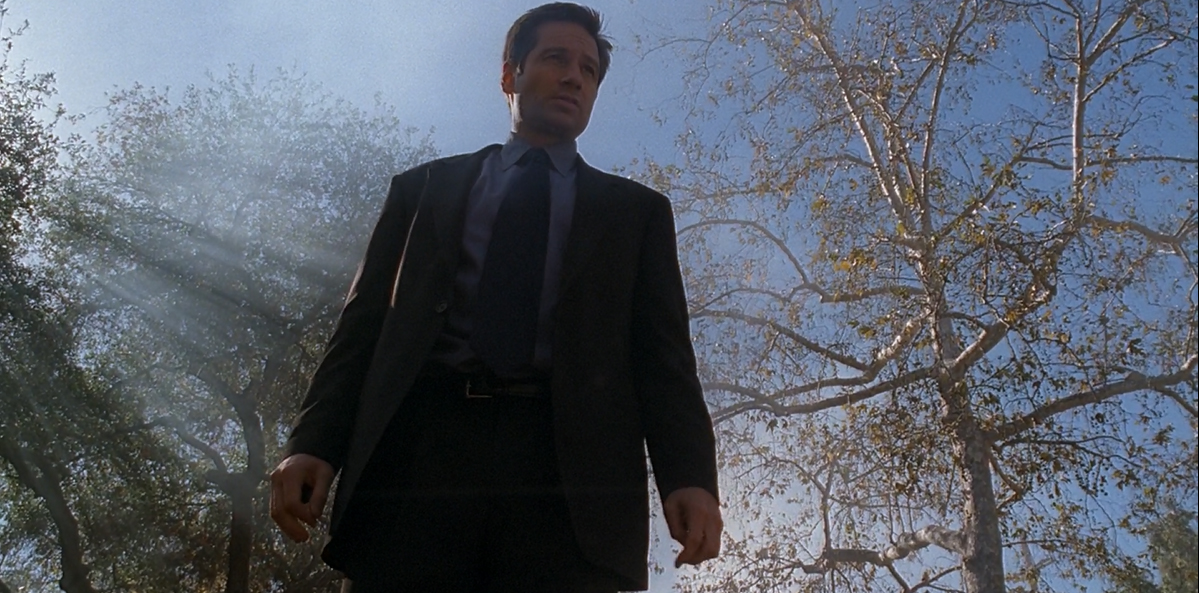
Howard Salt was willing to go to any lengths to return the President's copy of The X-Files film.

Howard Salt was willing to go to any lengths to return the President’s copy of The X-Files film.

This is not a sustainable status quo. This is not “business as usual.” This is not what the ninth season will look like. This is not like those other changes to the status quo that occurred at the start of the second and sixth seasons, when Mulder and Scully were taken off the X-files but continued to investigate cases that were X-files in all but name. Episodes like Blood or How the Ghosts Stole Christmas could be transitioned into a regular season order with a minimum of changes, but these episodes all feel uniquely tailored to this point in the show’s history.

As such, the end of the eighth season takes on a loosely serialised quality, and not just in the story of the new mythology or the so-called “super soldiers.” The character dynamics evolve and grow, with the individual episodes seeding character development leading the season finalé. Episodes like Three Words and Vienen make it increasingly clear that Mulder is not back in an permanent sense by first pushing him away from the X-files and then firing him from the FBI. Scully’s pregnancy is actually allowed to progress at this point in the season.
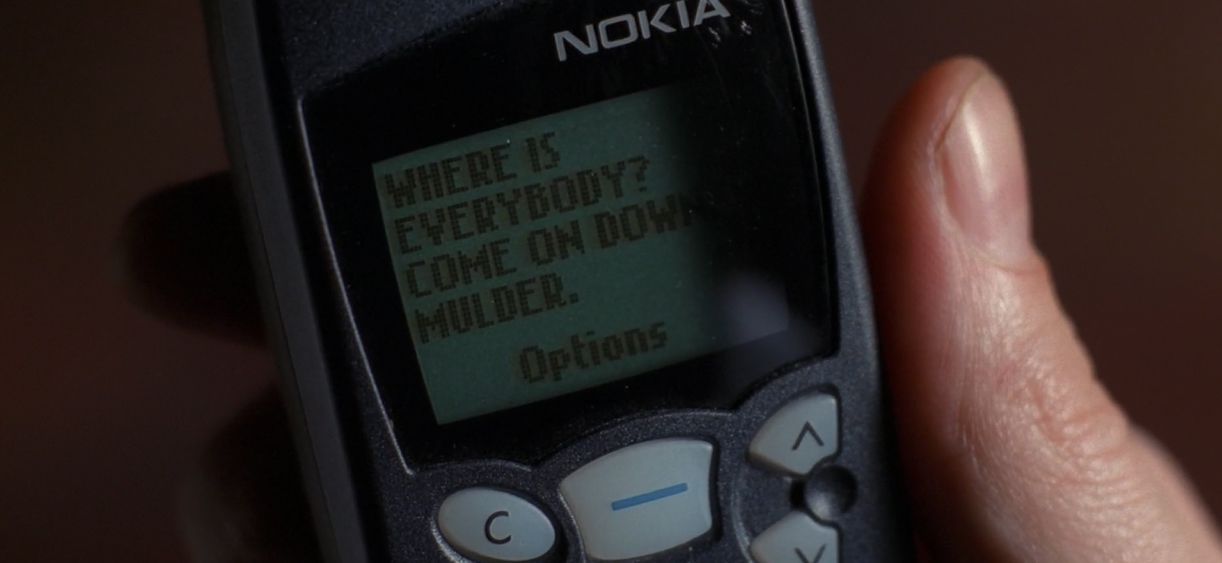
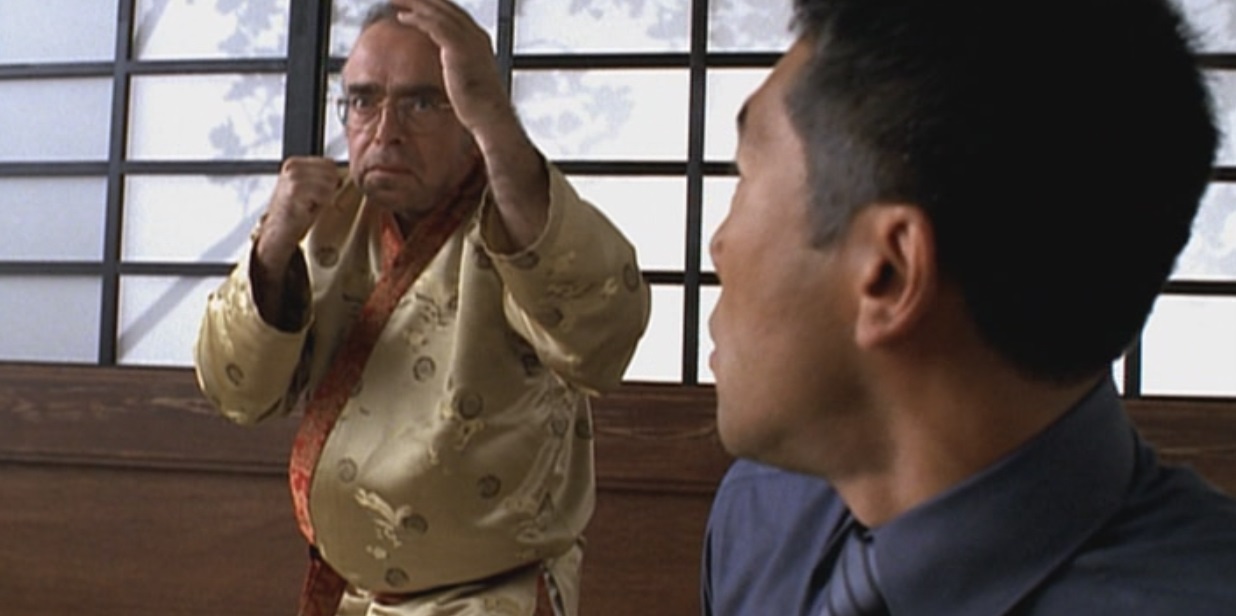
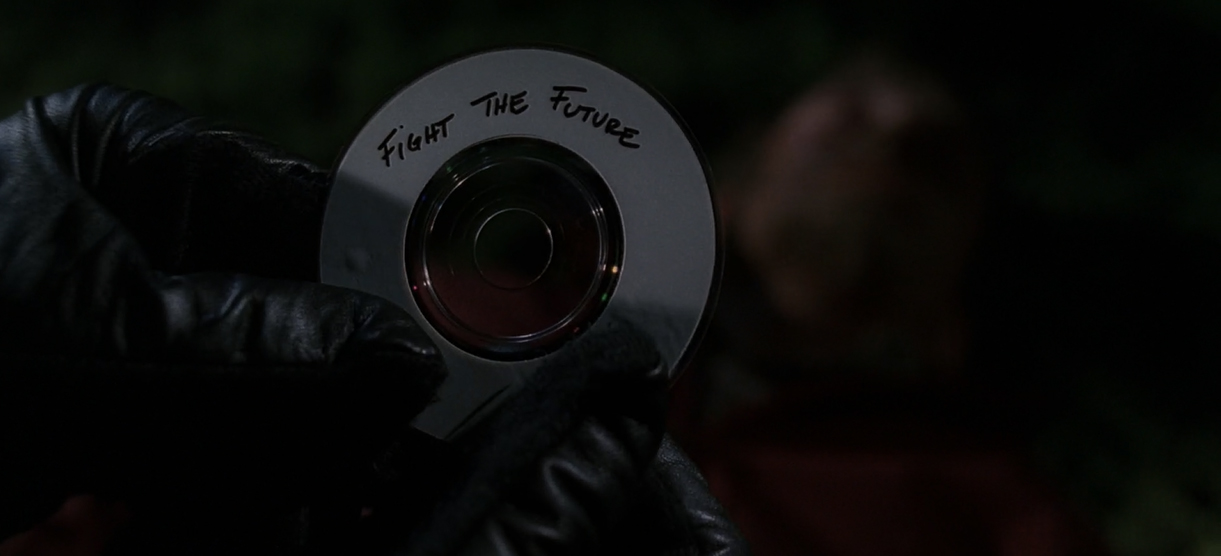
He's back!

He’s back!

This serialisation is apparent in the discrepancies between the production and broadcast order. As with extended sections of the fourth season, the final stretch of the eighth season was produced in a different order than it was broadcast. Unlike the fourth season, however, this shift does not create any dissonance as significant as the conflict between the version of Never Again that was filmed and the one that was broadcast. Despite being produced in a different order, these stories could not work in any order other than the broadcast order.

Although The X-Files frequently gets credit for pioneering and popularising (or, at the very least, re-popularising) serialised narratives on prime-time television, the final stretch of the eighth season is perhaps the serialised stretch of the entire nine-year run.
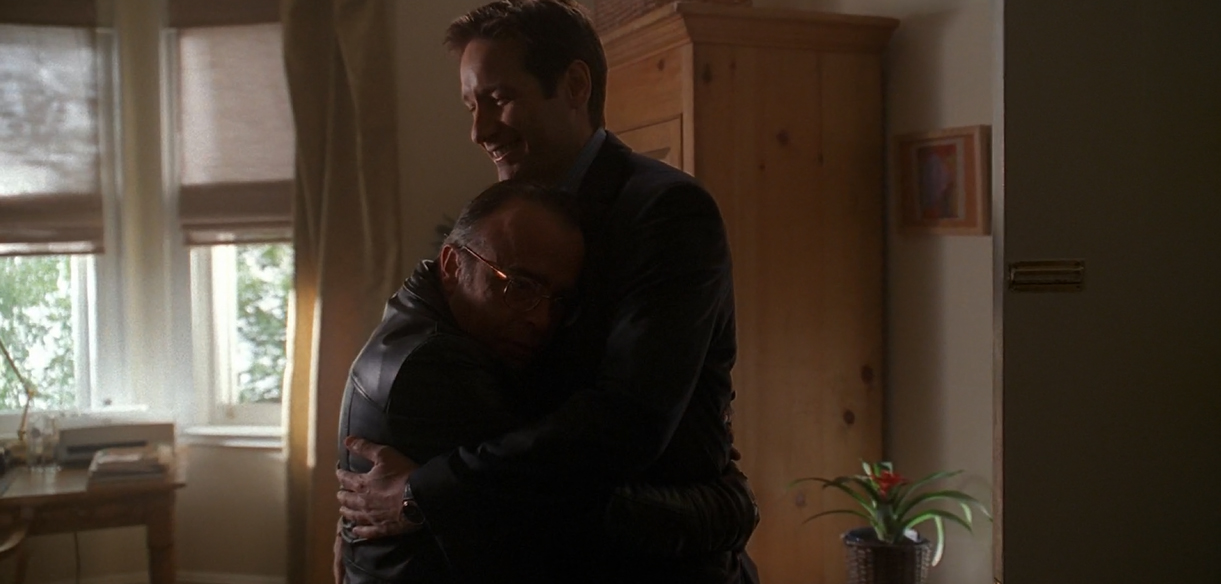
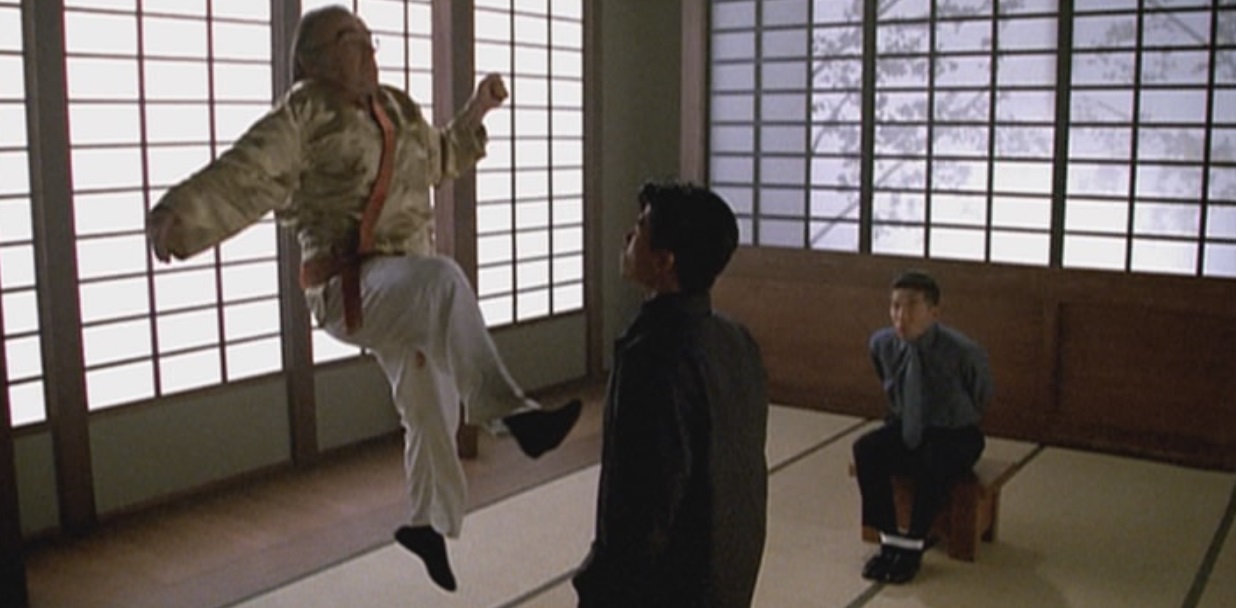
A touching reunion...

A touching reunion…

Continue reading

The X-Files – DeadAlive (Review)

This October/November, we’re taking a trip back in time to review the eighth season of The X-Files and the first (and only) season of The Lone Gunmen.

The X-Files is dead. Long live The X-Files.

What is dead may never die...

What is dead may never die…

Continue reading

The Lone Gunmen – Bond, Jimmy Bond (Review)

This October/November, we’re taking a trip back in time to review the eighth season of The X-Files and the first (and only) season of The Lone Gunmen.

If The Pilot is a proof of concept, then Bond, Jimmy Bond is all about demonstrating that The Lone Gunmen can work on a weekly basis.

Second episodes are more important than most viewers realise. While television pilots typically enjoy larger budgets and looser schedules in an effort to demonstrate that a concept can work as a television show, second episodes are very much about demonstrating precisely how that model will be applied to the structure of a weekly television show. The second episode is about transitioning from a pilot into a weekly schedule. As such, Bond, Jimmy Bond is much more indicative of the first season of The Lone Gunmen than The Pilot was.

All set.

All set.

So Bond, Jimmy Bond is largely about laying groundwork for what follows, and for setting the tone for what comes next. The title makes this clear, introducing the fifth and final member of the leading ensemble. While The Pilot had made room for Zuleikha Robinson as the mysterious Yves Adele Harlow, Bond, Jimmy Bond introduces Stephen Snedden as the well-meaning but none-too-bright James “Jimmy” Bond. This is the cast as it will remain for the rest of the run, give or take a guest appearance from Kimmy the Nerd.

However, there are also changes behind the scenes. Rob Bowman directed The Pilot, his last piece of work with Ten Thirteen before leaving to concentrate on feature film work like Reign of Fire and Elektra. On the commentary to The Pilot, Frank Spotnitz affectionately joked that they couldn’t afford Bowman. That seems perfectly believable, given Bowman’s rising star. As such, Bryan Spicer was drafted in to direct Bond, Jimmy Bond. Spicer would direct the lion’s share of the show, helming six of the show’s thirteen episodes.

"I know kung-fu..."

“I know kung-fu…”

Spicer was very much the logical choice. He had only directed a single episode of The X-Files, but it was an important episode from the perspective of The Lone Gunmen. Spicer had helmed Three of a Kind towards the end of the show’s sixth season, the second Gunmen-centric episode and the show that provided a clear inspiration for the television series. In its own way, Three of a Kind was as much a pilot for The Lone Gunmen as Unusual Suspects or The Pilot had been, and Bryan Spicer was a perfectly logical choice for for the show’s signature director.

However, Bond, Jimmy Bond also cements some other details that will be important for the rest of the season. The Pilot had been an off-beat thriller, but it was a story with incredibly high dramatic stakes and a solid dramatic arc. The Pilot skewed, consciously or not, more towards a quirky thriller than an action comedy. As such, the wacky hijinks of Bond, Jimmy Bond are much more in line with the tone of the series than the grave threat that was posed in The Pilot. For better or worse, Bond, Jimmy Bond sets the agenda for the season ahead.

The last time Ten Thirteen got accused of mimicking The Matrix, everything worked out perfectly...

The last time Ten Thirteen got accused of mimicking The Matrix, everything worked out perfectly…

Continue reading

The Lone Gunmen – Pilot (Review)

This October/November, we’re taking a trip back in time to review the eighth season of The X-Files and the first (and only) season of The Lone Gunmen.

It is meant to be a joke.

It is an episode known as The Pilot, because it is a proof of concept for a new series that can be shown to executives in the hopes that they might green-light it and give the production team a series order. That is, after all, what a television pilot is. It is the first episode of a television show to be filmed, usually with considerable space between it and the rest of the first season. There is time for network notes and feedback, to determine what works and what doesn’t. There is space for recasting and reshooting, which becomes more problematic on a weekly schedule.

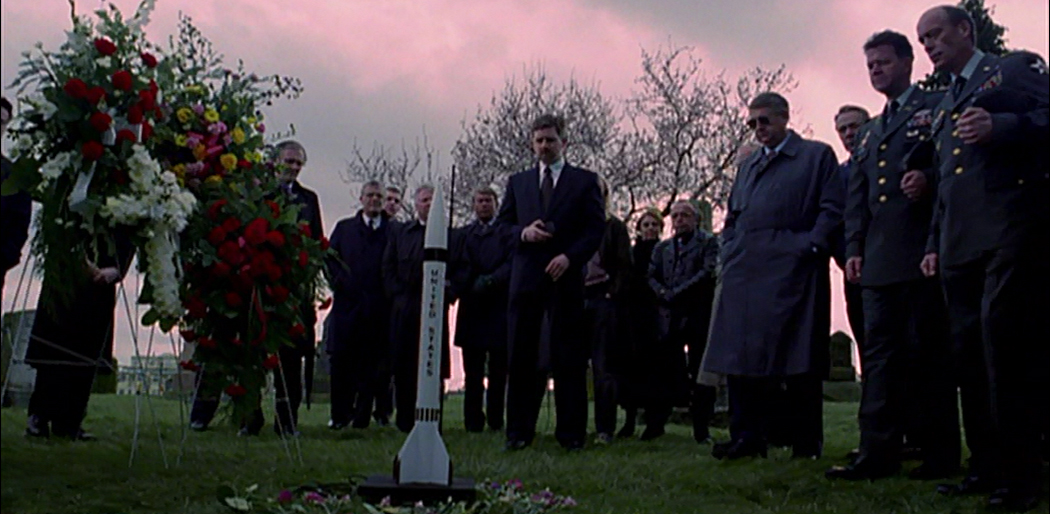
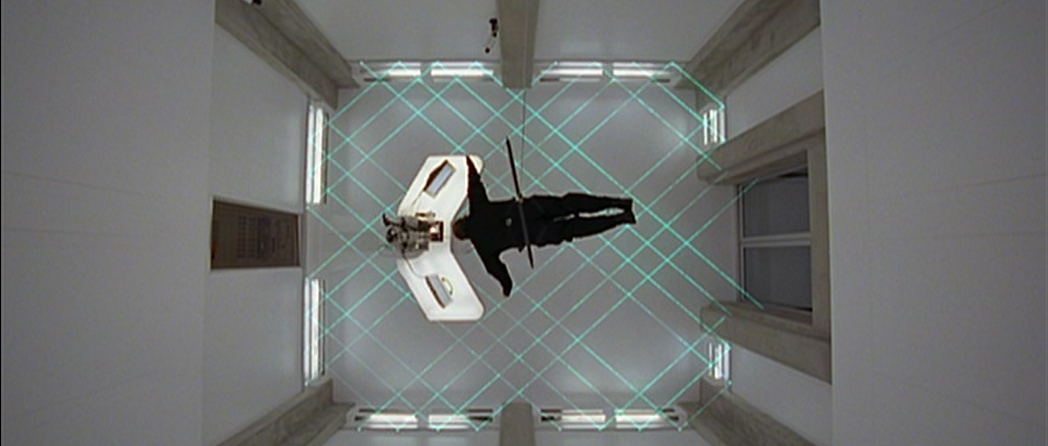
Rocket man.

Rocket man.

However, the fact that the first episode of The Lone Gunmen is called The Pilot is also a rather wry punchline. It is a self-aware reminder that the show takes itself considerably less seriously than Millennium or Harsh Realm. After all, even if this weren’t the very first episode of a new television show, it might be called The Pilot. Based purely on the plot, the episode might have been called The Pilot. It is an episode about a sinister plot to hijack planes using advanced technology. So calling the episode The Pilot is a cheesy and goofy bit of wordplay.

Of course, there is very little funny about it in hindsight.

Don't leave us hanging...

Don’t leave us hanging…

Continue reading

The X-Files – This is Not Happening (Review)

This October/November, we’re taking a trip back in time to review the eighth season of The X-Files and the first (and only) season of The Lone Gunmen.

The eighth season of The X-Files is remarkable in a number of ways.

It accomplishes a lot of things, and does them in a very logical and linear way. The departure of David Duchovny at the end of the seventh season set an agenda for the season ahead, and gave the production team a very clear set of goals. The eighth season required more discipline and planning than any of the previous seven seasons, with less room for improvisation or error. If Chris Carter and his team were to succeed at bringing the eighth season to life, it would require even more care and discipline than the show usually required.

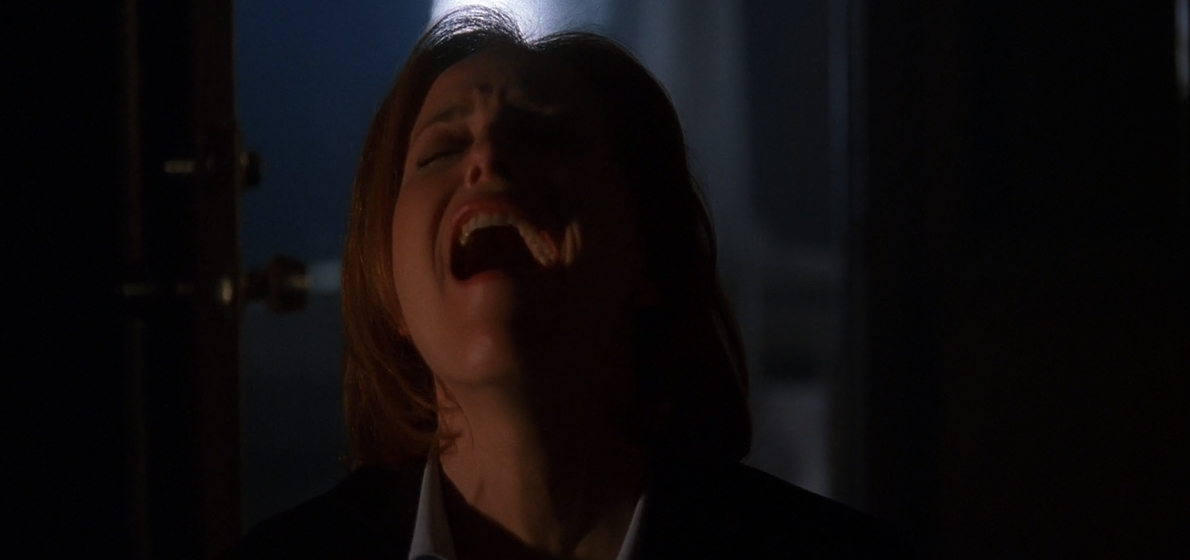
"Nooooo!"

“Nooooo!”

One of the least discussed aspects of the eighth season is the care that the production team took to structure it. The eighth season of The X-Files is the most meticulously and carefully structured season of The X-Files, clearly adhering to an internal three act structure. The first seven or eight episodes (Within to Via Negativa or Per Manum) are all set-up. The next five (Surekill to Medusa) explored that new set-up. The final eight (This is Not Happening to Existence) closed out the plots and threads of the season, leaving the show in a very different place.

The decision to shift Per Manum around in the broadcast order changes things slightly, but there is still a sense that the eighth season was entering its end game in late February 2001. Positioned at the start of the season’s third act, This is Not Happening offers perhaps the bleakest cliffhanger and puts our heroes at their lowest possible point. Adhering to the classic three-act structure, This is Not Happening serves as the emotional climax of the season. With a five week gap between the broadcast of This is Not Happening and DeadAlive, this is one hell of a cliffhanger.

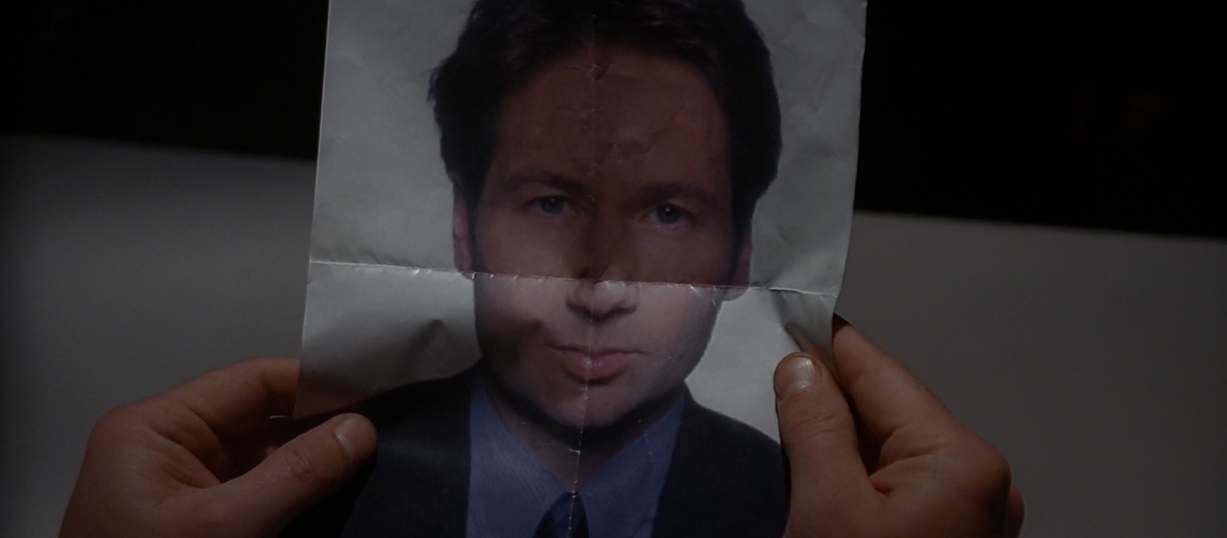
"Have you seen this devilishly handsome man?"

“Have you seen this devilishly handsome man?”

Continue reading

The X-Files – Medusa (Review)

This October/November, we’re taking a trip back in time to review the eighth season of The X-Files and the first (and only) season of The Lone Gunmen.

Medusa is an odd episode of the eighth season, precisely because of its normality.

Medusa was produced directly before This is Not Happening, the episode that marked the return of David Duchovny to the show as a regular; he would remain a regular for the rest of the season. When it came to the broadcast order of the season, the episodes were shuffled around slightly. Medusa aired directly before Per Manum, an episode which featured an appearance by David Duchovny in flashback. Whether the season is watched in broadcast or production order, David Duchovny’s name appears in the opening credits from the next episode until the end of the season.

"I want to take his face... off."

“I want to take his face… off.”

Medusa marks the end of the short-lived “Scully and Doggett era” of The X-Files. This is the last point in the eighth season (and also the last point ever) that Doggett and Scully have a show to themselves. The ninth season introduces the characters of Monica Reyes and Walter Skinner to the opening credits. Of course, it is interesting to wonder whether there ever really was a “Scully and Doggett era.” Certainly, the eighth season took its time to let Scully and Doggett get comfortable with one another between Within and Via Negativa.

This puts Medusa in the very strange position of having to close out an “era” of the show that essentially spanned four episodes: Surekill, Salvage, Badlaa and Medusa. This is the eighth season’s last example of “business as usual”, which seems all the more unusual that business has only recent approached something resembling normality.

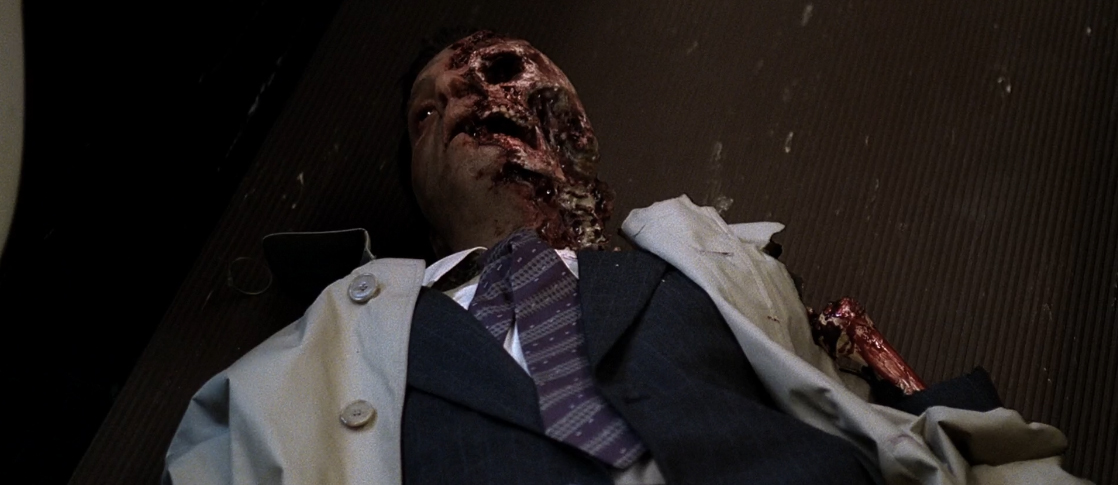
He's practically just skin and bones...

He’s practically just skin and bones…

Continue reading

The X-Files – The Gift (Review)

This October/November, we’re taking a trip back in time to review the eighth season of The X-Files and the first (and only) season of The Lone Gunmen.

Sweeps have arrived. And so has David Duchovny.

David Duchovny appeared in three of the four episodes of The X-Files broadcast in February 2001. (The fourth, Medusa, is very much the “blockbuster” episode of this stretch of the season, with a large budget and impressive scale.) This was very much a conscious choice on the part of the production team. Although Duchovny’s shooting schedule meant that the episodes were filmed across the season, the show made a choice to broadcast them all as part the February Sweeps.

He's back...

He’s back…

Indeed, even the order of the episodes in question has been jumbled around. The Gift is the third broadcast episode of the eighth season to feature an appearance by David Duchovny; it was filmed before Badlaa, but broadcast after it so as to open the Sweeps season. However, Per Manum would be the fourth broadcast episode of the eighth season to feature an appearance by David Duchovny; not only was it filmed before The Gift, it was actually filmed between Via Negativa and Surekill.

There is a sense, looking at the differences between the production and broadcast orders of the eighth season, that the production team were well aware of just how big a deal the return of David Duchovny would be. In fact, the decision to broadcast The Gift before Per Manum seems like a very canny attempt to tease those viewers excited about the return of Mulder. The character is much more prominent in Per Manum, so it feels like the decision to air his smaller supporting role in The Gift earlier is an effort in building suspense and excitement.

"The name's Doggett, John Doggett."

“The name’s Doggett, John Doggett.”

The Gift doesn’t offer much in the way of advancement for the season’s on-going story arcs. Although the teaser is smart enough to build to the reveal of David Duchovny, the character only appears in quick flashes throughout the episode. Mulder has less than half-a-dozen lines over the course of the show’s forty-five minutes. He does not directly encounter (or engage with) Doggett or Scully, only appearing for a brief moment as a vision in the basement at the end of the episode. Fans eagerly anticipating Mulder’s return would undoubtedly be frustrated.

However, there is something almost endearing in the show’s playful teasing of its fanbase. It feels almost like the show getting comfortable with itself once again. Indeed, the structure of the episode – paralleling Mulder’s investigation with that of Doggett rather than intersecting them – seems to suggest that perhaps the show might be in good hands without the need to have Mulder literally validate his successor.

Now that's branding...

Now that’s branding…

Continue reading

Harsh Realm – Three Percenters (Review)

This November, we’re taking a trip back in time to review the seventh season of The X-Files and the first (and only) season of Harsh Realm.

Three Percenters is written by Frank Spotnitz.

Spotnitz is the longest serving staff writer on The X-Files, with the exception of Chris Carter. He worked with Carter in shaping and defining the mythology, sharing credit on some of the biggest episodes of the series. He is credited as a screenwriter on both The X-Files: Fight the Future and The X-Files: I Want to Believe. He is the only writer apart from Carter to work on all Millennium, Harsh Realm and The Lone Gunmen. As such, Spotnitz is an essential part of the Ten Thirteen family.

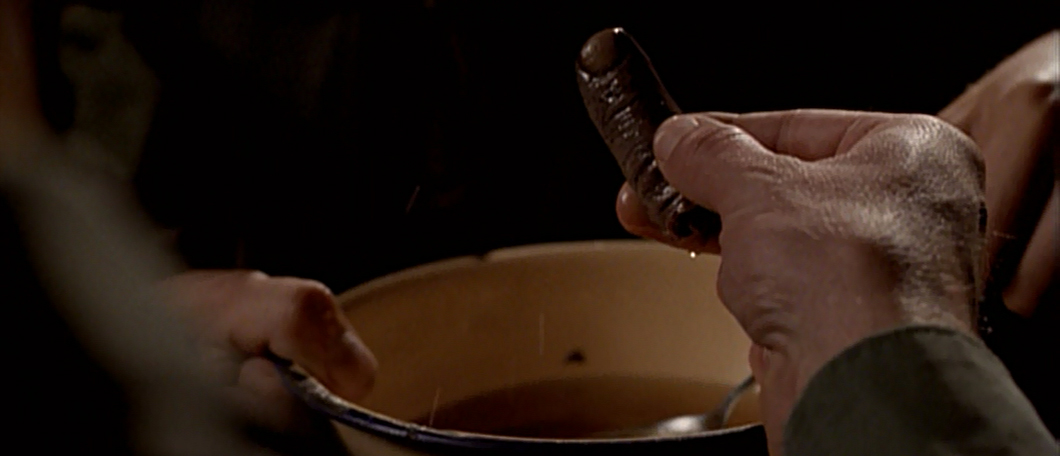
Talk about finger food...

Talk about finger food…

Spotnitz has a very clear of structure. Working on The X-Files, he was renowned for his ability to “break” a story, to split it down to its constituent elements and to make it make sense. His first credit on The X-Files was the script for End Game, which was a hugely important part of shaping and defining the mythology of the show. His two scripts for the first season of Millennium (Weeds and Sacrament) capture the spirit of the show in that moment in time, for better and for worse. It makes perfect sense for Spotnitz to script a first season episode of Harsh Realm.

However, Spotnitz’s script for Three Percenters perhaps demonstrates one of the problems with these initial nine episodes. Spotnitz is very good at understanding story structure and logic, but Harsh Realm doesn’t really have a set formula or template that he might be able to apply. Five episodes into its run, the show hasn’t settled into a grove in the same way that Millennium or The X-Files had. This perhaps explains why Three Percenters feels so odd and uneven; it occasionally seems like Spotnitz just pasted over a template from The X-Files itself.

Walking on water...

Walking on water…

Continue reading

The X-Files – Closure (Review)

This November, we’re taking a trip back in time to review the seventh season of The X-Files and the first (and only) season of Harsh Realm.

Sein und Zeit and Closure don’t fit together at all.

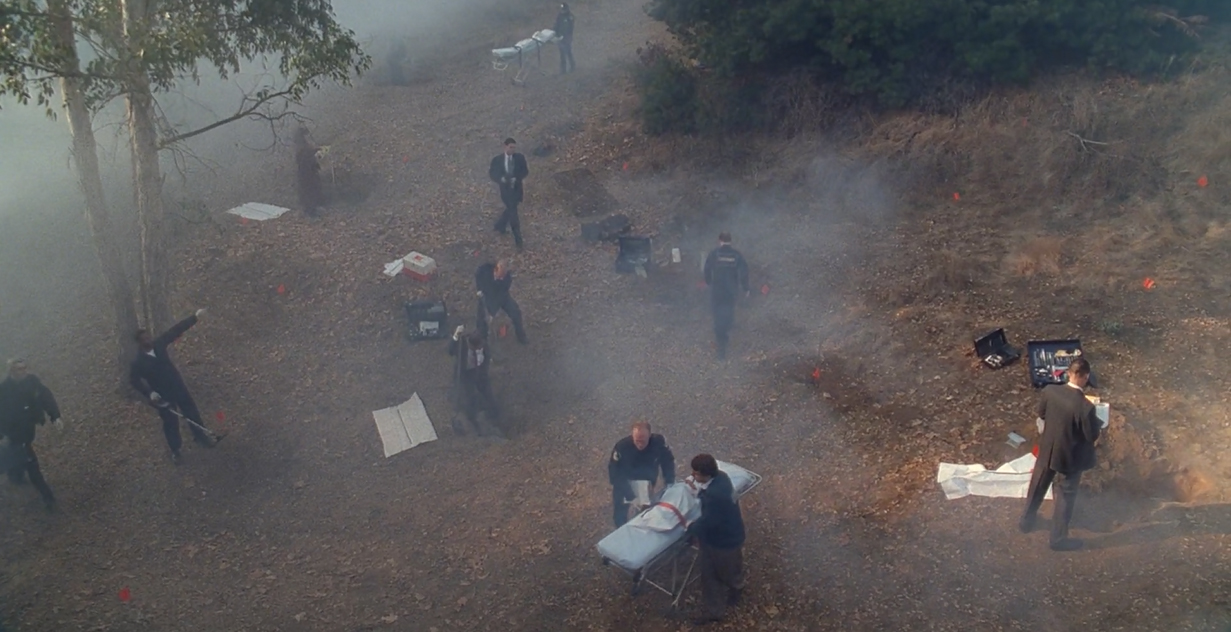
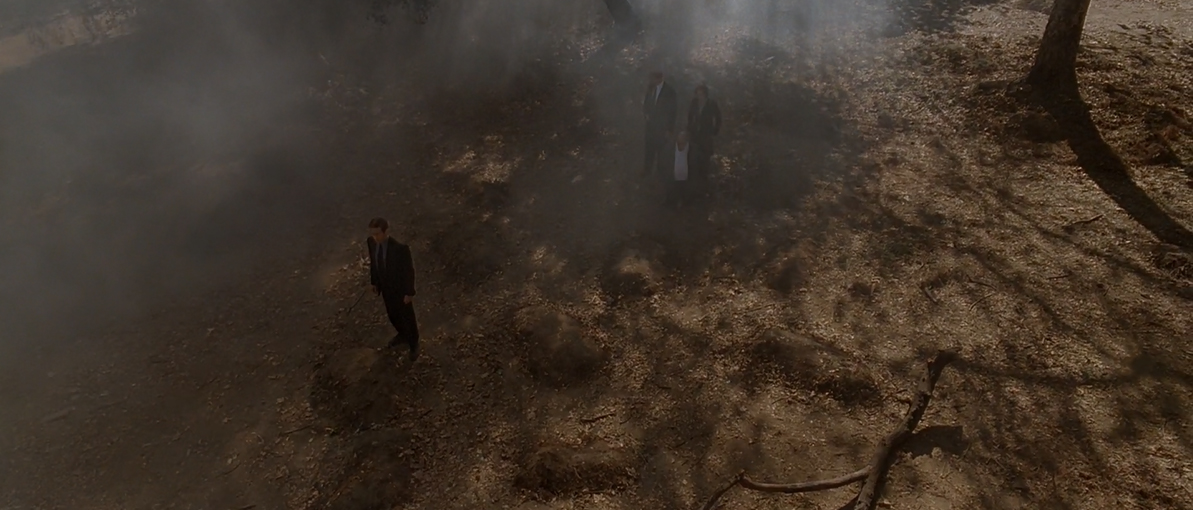
There is a nice symmetry to the stories, with Sein und Zeit closing with Mulder standing amid a mass grave and Closure opening with the excavation of the same mass grave. The contrast between the two shots of the same space says a lot about the differences between Sein und Zeit and Closure. Sein und Zeit is an episode that isolates Mulder, demonstrating how alone he truly is in the world and how all his beliefs might be empty; Closure responds by cluttering up the narrative and revealing an absurdly convoluted explanation of what happened to Samantha.

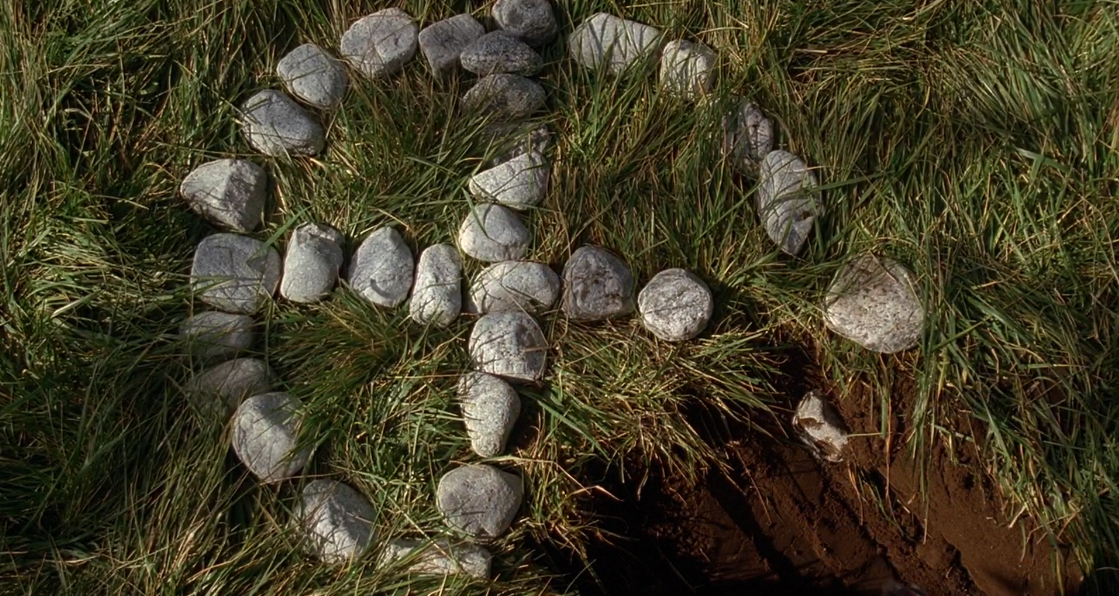
A grave subject...

A grave subject…

Even the themes of the two episodes are almost unique. Both Sein und Zeit and Closure are driven by Mulder’s desire to make sense of what happened to his sister, but both adopt diametrically different approaches towards the question. Sein und Zeit proposes that the world is a random and cruel place where bad things happen to children for no reason beyond the sadistic whims of strangers, while Closure embraces the idea that there is a larger scheme in which these horrible events occur.

There is a yin-and-yang structure to Sein und Zeit and Closure, a sense that the two episodes are almost at odds with one another when it comes to the fate of Samantha Mulder. Closure offers something approaching hope. It is too much to describe Closure as a happy-ending to the character arc that ran through the first seven seasons of the series, but it does offer Samantha an ending that is not soul-destroyingly bleak. It offers Mulder resolution and understanding. In his own words, it offers him freedom.

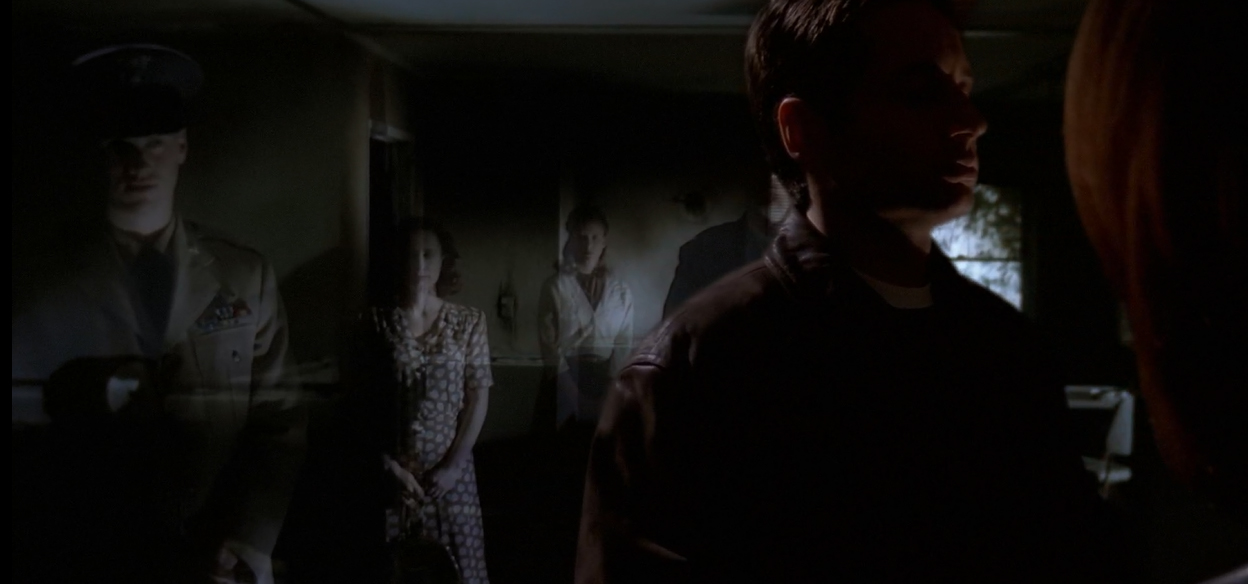
"Conscience... it's just the voices of the dead... trying to save us from our own damnation."

“Conscience… it’s just the voices of the dead… trying to save us from our own damnation.”

It is a very hopeful suggestion. It is a particularly hopeful suggestion coming at the middle of the show’s seventh season, as the resolution to Mulder’s character arc. The audience has spent seven years watching Mulder deal with the trauma of the loss of his sister, wrestling with the fear that he might never find an answer; or that he might find an answer that fails to make sense of it all. What if he found an answer that made sense of everything? What if Samantha’s disappearance wasn’t just part of a government conspiracy? What if it was part of something bigger?

What if the disappearance of Samantha Mulder meant everything?

A man alone.

A man alone.

Continue reading

The X-Files – Sein und Zeit (Review)

This November, we’re taking a trip back in time to review the seventh season of The X-Files and the first (and only) season of Harsh Realm.

Sein und Zeit and Closure don’t fit together at all.

There is a clear demarcation that exists between the two episodes, to the point where they cannot really be described as a single two-part story. Following the disappearance of Amber Lynn LaPierre from her home, Sein und Zeit closes with the arrest of a serial child-murderer and the discovery of a mass grave. There is not a whiff of the show’s central mythology to be found, despite Mulder’s insistence and anxiety. Although Closure picks up where Sein und Zeit left off, it embarks on its own separate story that does draw heavily from the show’s established mythology.

A grave subject...

A grave subject…

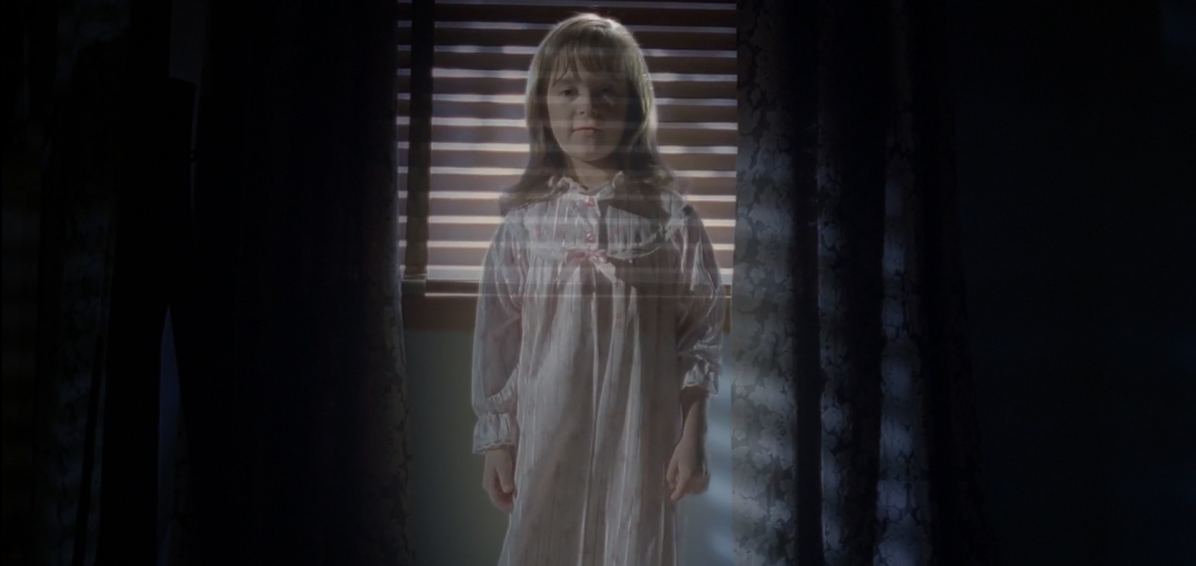
Even the guest casts of the two episodes are almost unique. Outside of David Duchovny and Gillian Anderson, only two guest stars appear in both episodes. Rebecca Toolan and Megan Corletto both play characters who die in Sein und Zeit, but appear as ghosts in Closure. The featured guest stars in Sein und Zeit do not reappear in Closure, and vice versa. Even the series’ recurring cast is firmly divided between the two halves; Walter Skinner appears in Sein und Zeit, while the Cigarette-Smoking Man plays an important role in Closure.

There is a yin-and-yang structure to Sein und Zeit and Closure, a sense that the two episodes are almost at odds with one another when it comes to the fate of Samantha Mulder. Sein und Zeit dares to ask what might happen if there was no rhyme or reason to her abduction; what if it was just a tragedy, like the tragedies that happen to happy families all the time? Mulder has invested so much of himself in the quest to explain what happened on that night in late November 1973; what would happen if there were no meaningful explanation?

"Conscience... it's just the voices of the dead... trying to save us from our own damnation."

“Conscience… it’s just the voices of the dead… trying to save us from our own damnation.”

It is a very bleak suggestion. It is a particularly bleak suggestion coming at the middle of the show’s seventh season, as the resolution to Mulder’s character arc. The audience has spent seven years watching Mulder dig deeper and deeper into a sinister conspiracy against mankind, largely motivated by the fact that his sister’s disappearance is a part of some larger puzzle. What if it wasn’t? What if Mulder’s whole quest were simply a lie that he had told himself? What if Mulder wanted to believe so badly that he convinced himself that this made sense?

What if the disappearance of Samantha Mulder meant nothing?

A man alone.

A man alone.

Continue reading