• Following Us

  • Categories

  • Check out the Archives


  • Awards & Nominations

Non-Review Review: Ant Man

Ant Man was always going to be a tough one to crack.

There are obvious reasons. Some of them involve the unique production history of the film, which arguably serves as an example of the downside of the tight managerial style operated by Disney and Marvel. Some of them are more fundamental, tied into the legacy and impact of the source material that make adapting Hank Pym and Janet Van Dyne to screen a particularly dicey proposal for a family-friendly blockbuster movie studio. There’s a lot of pressure on the film, and a lot that could go wrong.
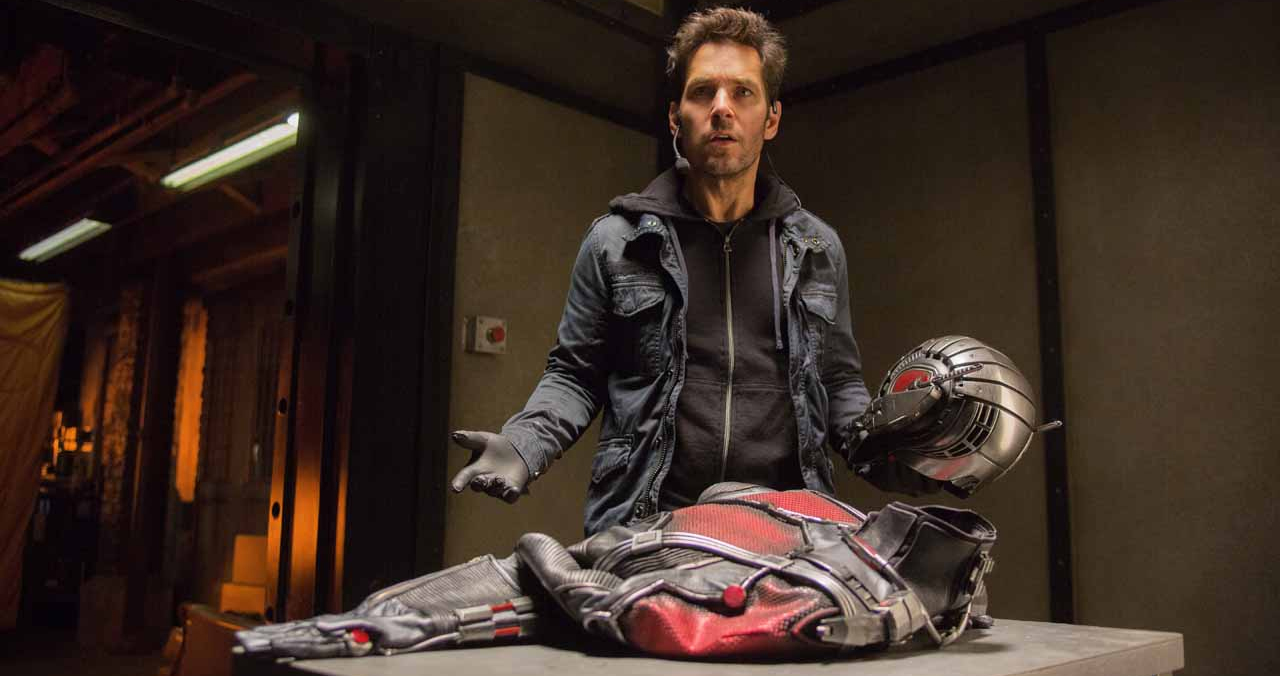
"You couldn't have called him 'Giant Man'?"

“You couldn’t have called him ‘Giant Man’?”

As such, director Peyton Reed does a pretty good job bringing the character to screen. Adam McKay and Paul Rudd adapted the original story written by Edgar Wright and Joe Cornish, providing a movie that sits more comfortably within the framework of the ever-expanding shared universe. Ant Man is a little clumsy in places, suffering from some of the stock weaknesses of the Marvel film franchises, but it is also clever and fun. All involved shrewdly play to the Marvel house style, offering a light run around populated by likable characters with clear-cut conflicts.

However, Ant Man‘s real strengths become obvious when the film deviates (even slightly) from the standard formula. After seven years of watching superhero films grow bigger and bigger, it’s nice to have a smaller story.
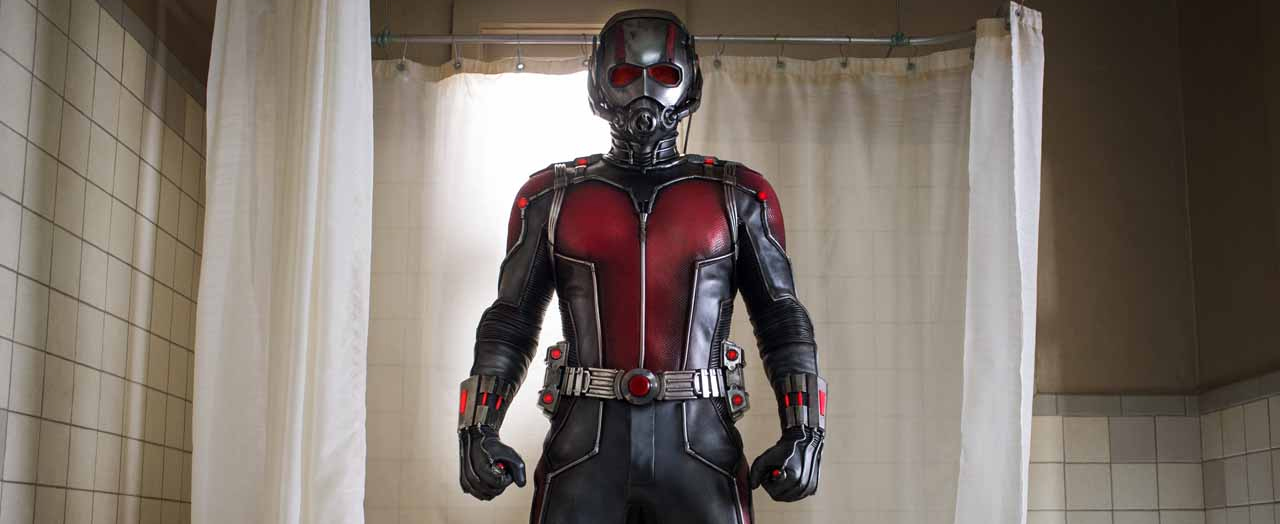
"One size fits all, eh?"

“One size fits all, eh?”

Continue reading

Non-Review Review: Magic Mike XXL

Well, if you’re going to do a sequel, it’s not a bad bet to go bigger.

Magic Mike XXL is a film that knows exactly what its audience wants, making a point to emphasise that this same attribute is what makes the “male entertainers” at the heart of the film so special. At one point, young heart throb Ken serenades his audience with a D’Angelo’s Untitled (How Does It Feel?), perfectly setting for the tone. Magic Mike XXL knows what its viewers are demanding, and dedicates itself to shamelessly satisfying their needs. The audience wants more, and they get more.

The problem with Magic Mike XXL is that it goes just a little bit too big. Bigger is not always better, as “male entertainer” (“Big”) Dick Richie discovers, spending the entire movie searching for the metaphorical “glass slipper.” The original Magic Mike ran a little bit too long at ten minutes short of two hours. Magic Mike XXL extends that runtime by twenty minutes. The result is a film that feels rather bloated. The pacing could be tighter. Some trimming and cutting might have served the film well.

Nevertheless, Magic Mike XXL maintains a lot of the charm and positive energy that made the original such a surprise hit. There is nothing wrong with trying to please your audience, even if there is such a thing as too much teasing.

Is the magic back?

Is the magic back?

Continue reading

Non-Review Review: The X-Files – Fight the Future

The X-Files: Fight the Future is often described as the mythology episode that somehow got released into theatres. In her review, Joyce Millman teased that Fight the Future was little more than “a two-hour episode of the show, except with better production values and a nicer wardrobe for Scully.” It is a fair point. It is not too hard to imagine a slightly cheaper version of Fight the Future split into two parts and replacing The End and The Beginning as the two-parter bridging the fifth and sixth seasons of the show.

Certainly, Fight the Future retains the late-stage mythology’s reluctance to provide any real sense of closure to the long-running plot about alien invasion and colonisation. Writers Chris Carter and Frank Spotnitz increase the stakes by using some of that sweet blockbuster money to pay for a gestating alien fetus, but what do Mulder and Scully actually accomplish? What would a viewer jumping from The End to The Beginning miss, except for the fact that the Well-Manicured Man has left the mortal plane to visit that great Somerset estate in the sky?

What you've all been waiting for, admit it...

What you’ve all been waiting for, admit it…

The answer is nothing, but that is not the point. As much as Fight the Future enjoys playing with the trappings of the mythology (black oil! bees! tanker trucks! space ships! Oklahoma City!), the film is only interested in the idea of alien colonisation as a vehicle to explore the show’s central relationship. Carter and Spotnitz have shrewdly realised that Fight the Future will have the largest possible audience for the show, and has decided to give the general public what they want.

As a two-hour mythology episode, Fight the Future leaves a lot to be desired. As a two-hour Mulder and Scully ship tease, it is right on the money.

Buried secrets...

Buried secrets…

Continue reading

Non-Review Review: Aonrú

Aonrú offers a fascinating insight into life on Cape Clear Island off the west coast of Cork. The small community had subsisted for years on farming and fishing – as the documentary notes, “the farmers were fishermen and the fishermen were farmers.” Now, due to a number of intersecting and overlapping hurdles – both natural and man-made – the community finds itself struggling to provide a future for itself. The thirty minute documentary examines what it must be like to live on Cape Clear.

Skilfully constructed from a myriad of first-person accounts, archive footage and beautiful images of the region, Aonrú explores the pace of life in one of the most remote parts of the country.

aonru1

Continue reading

Non-Review Review: Slow West

There is a reason that the western has fallen from popularity after its cinematic heyday.

For decades, it seemed like Hollywood punctuated its release of western films with sampling for other genre, returning time and again to the story of the men who shaped America from the ground up. Over the years, the familiar tropes have been deconstructed and reconstructed and deconstructed again. They have been mashed up and knocked down and spun around. They have been torn apart and thrown back together with reckless abandon. With all of that going on, it often seems like anything that the genre has to say has been said and repeated time and again.

Life is peaceful there...

Life is peaceful there…

There are probably still things to be said about the myth of the Old West, even if the genre seems as explored and catalogued as the American continent itself. There are little hidden pockets and eccentric spaces that might hold a surprise or several. Slow West doesn’t necessarily have anything new or revelatory to say about the western. It seems unlikely to shatter any illusions or break any preconceptions. A lot of the ground covered by Jay Cavendish and Silas Selleck on their trek westward will be familiar to anybody with a passing knowledge of the genre.

At the same time, there is a lyrical beauty to Slow West. The film is a haunting and evocative trip through a landscape that most viewers know better than their own locality. Slow West might not say anything particularly earth-shattering, but it does articulate itself clearly and elegantly. It is a meticulously crafted film, finely constructed and sumptuously filmed. It might be a tourist trip over well-travelled group, but it takes the most scenic route imaginable.

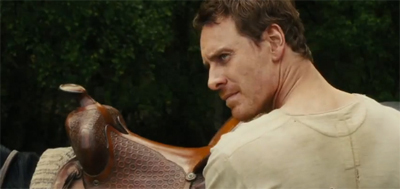
Saddle up!

Saddle up!

Continue reading

Non-Review Review: Entourage

Entourage is surprisingly inoffensive.

It has been four years since HBO’s showbiz comedy went off the air. In many respects, Entourage feels like a class reunion – even to somebody unfamiliar with the source material. There is a lot of affection here, no real sense of tension or stress. Everybody is perfectly comfortable, and the entire film has the feeling of something that everybody involved has been doing for quite some time. Anything that looks like a rough edge has been smoothed off, so the film glides along without any meaningful obstruction.

All at sea...

All at sea…

Entourage is not a great film on its own terms. However, it is not trying to be. Instead, it feels like an affectionate slice of nostalgia. It is telling that most of the cameos in the film tend to nod towards older actors and audiences. At one point, Johnny “Drama” Chase reflects that he was cast in the table read of The West Wing and he finds himself competing for roles against David Faustino of Married With Children. Faustino is just one cast member of Married With Children to cameo. Entourage feels familiar and safe, and entirely comfortable with those attributes.

The result is a functional cinematic adaptation for a show that probably did not need one. The stakes in Entourage never feel particularly high, the characters never seem particularly worried. It seems like Entourage was produced in the same way that it was intended to be enjoyed – in a rather relaxed and cordial fashion, without any real verve or energy.

Going for Gold...

Going for Gold…

Continue reading

Non-Review Review: Mr. Holmes

Memory is a tricky thing, particularly as distinct from history. History often occurs as a sequence of events, a laundry list and cause and effect and happenstance. Memory is the chord that we use to tie that all together, the narrative that we weave through these isolated events. Mr. Holmes is an exploration of the gulf as it exists between the two concepts, following an ageing Sherlock Holmes as he attempts to piece together his own faded memory from facts and evidence scattered around.

Adapted from Mitch Cullin’s A Slight Trick of the Mind, writer Jeffrey Hatcher and director Bill Condon position Holmes’ famous deductive prowess as a clever metaphor. Holmes’ ability to effortless build random strands of information into cohesive theories and explanations is set against two rather unconventional targets. As his faculties begin to fail him, Holmes tries to reconstruct memory from the few details available to him. At the same time, Holmes struggles with his own difficulties understanding human nature as it exists beneath these subtle hints and clues.

Holmes for Summer...

Private investigations.

Although the publication of A Slight Trick of the Mind predates the development of Steven Moffat and Mark Gatiss’ cult adaptation Sherlock, there is considerable thematic overlap between both stories. As with the BBC series, it seems like the Sherlock Holmes of Mr. Holmes is more concerned with the mystery that is other people than with any individual case. The result is a surprisingly (and effectively) low key film that plays more as a meditation on the human condition than as a convention Sherlock Holmes mystery.

There are points where Mr. Holmes does feel a little too heavy-handed or a little too manipulative in its exploration of the eponymous character. However, Condon very clever grounds the film in a beautifully vulnerable central performance from Ian McKellen.

The long walk Holmes...

The long walk Holmes…

Continue reading

The X-Files – Chinga (Review)

This May and June, we’re taking a trip back in time to review the fifth season of The X-Files and the second season of Millennium.

Chinga is the episode of The X-Files that was written by Stephen King.

That is a pretty big deal. Stephen King is one of the most influential American writers of the twentieth and twenty-first centuries. He is a writer who has enjoyed tremendous commercial success, but who has also balanced that popularity with considerable respect of critics and academics. His work has permeated popular cultured, and sparked all sorts of analysis and exploration. While no creator of that calibre works without at least some small level of backlash, King is one of the most successful American writers by any measure.

Play time!

Play time!

Writing about King in A Century of Great Suspense Stories, Jeffery Deaver argued that the author “helped free the popular name from the shackles of simple genre writing. He is a master of masters.” As such, he should be quite a comfortable fit for The X-Files. Even aside from any stylistic sensibilities that he might share with the series, King is a creator who manages to consistently producer work that might be dismissed as “genre”, but manages to compete with more prestigious and high-profiler literature.

The X-Files did something similar in the nineties. It was a show that frequently dabbled in cult genres – it was a show that dealt with horror and science-fiction themes on a regular basis. However, thanks to the craftsmanship of those involved, The X-Files was frequently able to compete with more “serious” fare at the major awards ceremonies. Chris Carter worked very hard to prevent the show from being relegated to the horror or science-fiction “ghetto.” It was a show that could slide to high-brow to low-brow over a single act; that was part of what made it so fun.

A bloody disaster...

A bloody disaster…

So landing King was very much a coup for The X-Files. He was one of the best-selling and most prolific American writers of the nineties, with his name all over a wealth of media. All that Chinga really needs to do is exist. It would be next to impossible for Chinga to be anything but “that episode of The X-Files written by Stephen King.” Indeed, it seems almost unreasonable to expect anything more from it. The hype on Chinga was unbelievable – as one might expect from a television show that had bagged one of the most popular fiction writers around.

Chinga is a very flawed piece of television, an episode that feels too much like an early draft than a fully-developed concept. The styles of Chris Carter and Stephen King blend reasonably well, but there is a sense that neither is pushing the other out of their comfort zone. Chinga is a pretty average piece of television, a pretty average Stephen King story, and a pretty average episode of The X-Files. While not necessarily a catastrophic failure, it is hardly a fantastic success.

"Yeah, I'm sure this vacation will be completely uneventful!"

“Yeah, I’m sure this vacation will be completely uneventful!”

Continue reading

Non-Review Review: Spy

Spy is broad, but it is funny. It might just be the best collaboration between director Paul Feig and actress Melissa McCarthy.

Feig reteams with McCarthy following on from the critical and commercial successes of Bridesmaids and The Heat. Both films were frequently cited as leading a new wave in female-led comedy, proving that audiences and critics would respond to classic comedy movie tropes executed with a largely female cast. Although Spy features an ensemble that is more gender-balanced, it remains a feminist comedy. Feig’s screenplay is never heavy-handed in its gender politics, but it wryly aware of how its female characters are wading into a traditionally masculine space.

I spy a winner...

I spy a winner…

Continue reading

Non-Review Review: San Andreas

San Andreas is a b-movie that desperately wants to be taken seriously.

The film is at its best when it engages with its corniness. The characters make terrible baseball-related puns as the world falls to pieces. Our protagonist has a clever idea inspired by a passer-by’s choice of headware. Paul Giamatti sells his seismological terror. A desperate mother decides to plough a boat through a window into the room where her daughter is already close to death. The disaster relief efforts are interrupted so that the news reporters can thank the team of hard-working seismologists who predicted the disaster whole minutes before it happened.

Pilot error?

Pilot error?

However, the film has no real sense of tone or mood. The script longs for a deeper resonance, and so aims a lot higher than it can actually hit. The main characters spend most of the disaster working through the death of a child several years earlier, with cliché flashbacks striving for heart-breaking but landing on groan-inducing. Plot points are dutifully and awkwardly set up, with characters spending most of the first act spewing obvious foreshadowing more than meaningful dialogue.

The result is a mismatched and uneven piece of work, a disaster movie in more than the way that the production team intended.

"Um, I found a plot hole..."

“Um, I found a plot hole…”

Continue reading