• Following Us

  • Categories

  • Check out the Archives


  • Awards & Nominations

Non-Review Review: Black ’47

This film was seen as part of the Audi Dublin International Film Festival 2018.

Black ’47 is a powerful piece of pulp storytelling, a bold and daring window into an under-served chapter of Irish history.

Directed by Lance Daly, working from a story derived by a variety of writers, Black ’47 is essentially a western set against the background of the Irish Famine. Of course, the reality is much more nuanced than that simple description would suggest, but it provides a suitable starting point for discussion. Indeed, all the genre elements are in place; a soldier returns home from war to discover the horrors that have befallen his family, and decides that there shall be no justice on earth save for that which he might exact by his own hand.

Black ’47 is a very sparse and rugged film. It would be a surprise if the nominal lead character, Feeney, speaks more than one hundred words. Indeed, at one point he explicitly rejects the English language as a tool of communication. The landscape of the film is rough and cold, the audience feeling the chill that runs through the film and almost smelling the decay in the air. Black ’47 reflects its rough and wild settings, and the characters who have been shaped and moulded by those surroundings.

Black ’47 is an effective piece of storytelling.

Continue reading

Non-Review Review: The Lodgers

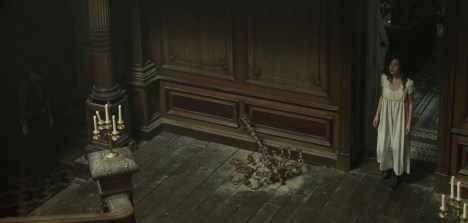
The Lodgers is a beautifully-directed and somewhat muddled gothic horror film.

The Lodgers literally drips with atmosphere, as one might imagine given the combination of writer David Turpin and director Brian O’Malley. Turpin has studied and lectured in English, writing his doctoral thesis on therianthropy. O’Malley directed Let Us Prey, one of the most visually striking and memorable Anglo-Irish horror films of the past couple of years. As such, a gothic horror set against the backdrop of Irish Independence seems very much in keeping with their aesthetics, and it does not disappoint.

The fall of the house of Lodgers.

The Lodgers is a rich piece of work, both in terms of visuals and themes. Like any good horror story, the subtext simmers through the work, O’Malley and Turpin tapping into rich veins of social and political anxiety, often weaving those threads together in a compelling and exciting manner. The Lodgers might be best described as the work of Edgar Allan Poe channeled through a seance with William Butler Yeats. It feels undeniably Irish, rooted in the land and its people.

At the same time, The Lodgers suffers slightly in its own internal mechanics. Like the big house at the centre of the story, the construction is largely sound. However, there is a sense that some upkeep and maintenance might be required. The Lodgers is undercut by a number of key defects including its casting and its dialogue. The Lodgers is visually striking and rich, but it stumbles in some of its more basic elements.

Stairway to heaven.

Continue reading

New Podcast! Scannain Podcast (2018) #4!

The Scannain podcast is back, baby!

Discussing the latest in film news here and abroad, the Scannain podcast is a weekly podcast discussion of what we watched, what we talked about, what is dominating and the box office, and what is lurking on the horizon film-wise. This week we discussed everything from Paul Thomas Anderson to P.T. Barnum, the launch of The Cloverfield Paradox on Netflix and the evolution of “direct-to-video” schlock.

I’m thrilled to be part of a panel including Niall Murphy and Stacy Grouden. Give it a listen below.

Non-Review Review: Finding Your Feet

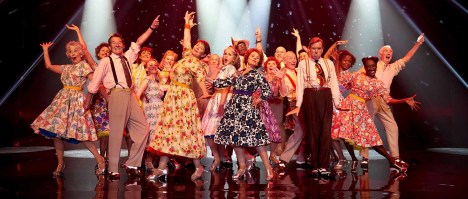
Finding Your Feet is a fairly placid and mostly unobjectionable film that adheres to an increasingly familiar formula, a gentle reminder that life can often begin at sixty.

Finding Your Feet largely coasts off the charm of its cast, who seem to be having an enjoyable time with one another and appreciating the opportunity to find themselves cast as romantic leads in a globe-trotting adventure. In particular, there is something disarming in seeing Timothy Spall cast as a charming romantic lead, a disarmingly sincere lovable rogue who inevitably scrubs up quite nicely. Finding Your Feet offers very few surprises, but that is part of the attraction, perhaps worried that too many surprises might throw off the presumed viewer.

Spall good, baby.

However, Finding Your Feet is too awkward and clumsy to allow the audience to get entirely caught up in the familiar beats and rhythms of the tale. The familiar plotting of Finding Your Feet helps compensate for some strange storytelling decisions, with major character arcs unfolding off-screen and the film trying to fill its run time with things happening rather than focusing on the people to whom these things are happening.

Finding Your Feet is bland and inoffensive, its central cast providing a disarming charm that the movie never quite earns.

The sequel will feature a new addition to the cast and will be titled, ‘So You Think You Can Charles Dance?’

Continue reading

65. Smultronstället (Wild Strawberries) – “Two Guys Die Alone 2018” (#152)

Hosted by Andrew Quinn and Darren Mooney, The 250 is a fortnightly trip through some of the best (and worst) movies ever made, as voted for by Internet Movie Database Users.

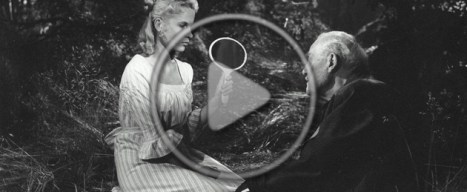
This time, a Valentine’s treat. Ingmar Bergman’s Wild Strawberries.

Professor Isak Borg embarks upon a road trip to receive an honourary doctorate from his university, but soon discovers that the fourteen hour car journey represents a trip into his past, reflecting on life lived and love lost as he comes to terms with his decisions and his relationships.

At time of recording, it was ranked the 152nd best movie of all time on the Internet Movie Database.

Continue reading

Non-Review Review: The Cloverfield Paradox

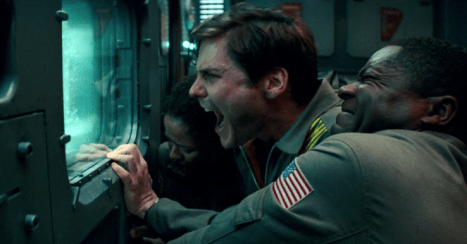
The Cloverfield Paradox is important. It’s just not very good.

The Cloverfield Paradox is a movie that seems destined to be overshadowed by the circumstances of its release. The Cloverfield Paradadox is one of several films that Netflix harvested from the increasingly beleaguered Paramount Pictures. Netflix will be handling the international distribution of Annihilation and picked up The Irishman when Paramount backed out. However, The Cloverfield Paradox remains one of the strangest fruits of this bitter harvest, in large part because of its pedigree, its production and its release.

It ain’t Clover ’til it’s Clover…

As the title implies, The Cloverfield Paradox is part of the shared universe of JJ Abrams films including Cloverfield and 10 Cloverfield Lane. Both were films that cleverly snuck up on audiences, and both were films that performed well for Paramount. As such, Paramount’s decision to sell off The Cloverfield Paradox seems strange – this is one of the company’s few successful properties, and there is even a fourth movie in the pipeline still aiming for a theatrical release. It seems a strange choice for Paramount to offload on Netflix.

Then again, the film’s production was notoriously troubled. The film was originally titled “The God Particle” before being changed to “Cloverfield Station” before finally being released as “The Cloverfield Paradox.” While the finished film looks impressive and has a top-notch cast, watching it is an incredibly disjointed experience. There is a sense that The Cloverfield Paradox has not been edited so much as filleted, that the audience is watching the leftover elements of a film that have been assembled from leftovers after the connecting tissue has been scraped from the bone.

Admiring the handiwork.

However, all of this is overshadowed by the circumstances of the film’s release, with Netflix finallising the deal to purchase The Cloverfield Paradox in late January, reportedly paying over $50m for it, and releasing it directly following the Super Bowl. There were no critics’ screenings, no advanced hype. There were simply two television spots promising viewers that they could watch the film on Netflix “after the game.” This was a brutally effective piece of marketting from Netflix, using the film to create a “disruption” to the established pattern of major movie releases.

This was an uncanny move, because all of the surrounding hype around this “event” glosses over the fact that The Cloverfield Paradox is just a new sheen on a familiar cliché. It is a “direct to video” film elevated to a seismic pop cultural phenomenon. And it is not even a good “direct to video” film.

Station-keeping.

Continue reading

Non-Review Review: The Mercy

It can be tempting when reviewing contemporary films to looks for some sort of profound meaning, some deep insight on the contemporary world reflected back on celluloid. This is particularly true in the current climate, when it seems like every piece of American pop culture is just waiting to be read as a meditation upon the tenure of President Donald J. Trump. Some of this is because politics are particularly inescapable at this moment, when a reality television star is the leader of a free world. Part of it is perhaps down to critics trying to make their own meaning in the world.

Nevertheless, The Mercy seems to be the quintessential Brexit film. A biography of (in)famous British sailor Donald Crowhurst, The Mercy is a fascinating piece of a work. A large part of the film’s success is down to how skilfully and cannily it manipulates its audience and their expectations, how heavily leans on the tropes and conventions of the standard biographical drama to wrongfoot the viewer. The Mercy starts out as one type of film, only to make a brutal swerve into another. It is a harrowing tale of grand delusion smashed against the shoals of reality.

Tough sail.

Note: This review will assume some passing familiarity with the story of British sailor Donald Crowhurst. These true-life events may be considered spoilers for audience members without any foreknowledge and who wish to see the movie entirely blind. So consider this something of a spoiler warning.

Continue reading

Non-Review Review: Black Panther

Black Panther is something special.

In a lot of ways, it is a very typical Marvel blockbuster. The familiar formula is in place, and the movie follows the rhythms that audiences have come to expect from these films. There is a certain tempo and structure to the film, the sort of clean efficiency that delineates most of the movies produced under the banner of Marvel Studios. For a film advertised using a remix of The Revolution Will Not Be Televised, it is striking how conservative Black Panther is.

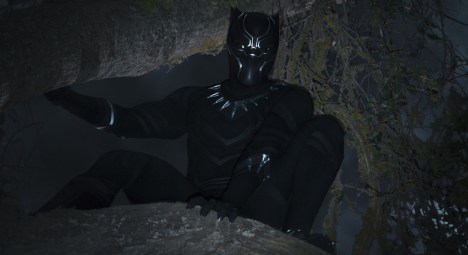
The Panther Strikes!

However, there is a lot to be said for the film’s more understated revolutionary qualities, the depth of understanding that the production team bring to the adaptation. Black Panther is acutely aware of what it means to construct a superhero fantasy epic about an African prince who leads a utopian society in the context of 2017, and there is something reassuring in how confidently and efficiently the film works within that framework. It is not merely that the existence of Black Panther is important, it is that Black Panther‘s assertion of its identity is important.

Black Panther is superior blockbuster by any measure, constructed with a great deal of care and thought about what it means. Much like its title character, there is a sense that the weight of expectation is upon Black Panther, and the most remarkable thing about the film is how seriously it takes that obligation without ever feeling burdened.

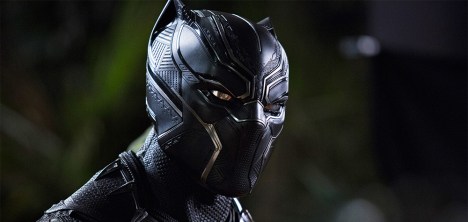
Heavy lies the head that wears the cowl.

Continue reading

Non-Review Review: Den of Thieves

Heat was not the first cops and robbers film to parallel the opposite sides playing for control of the board, suggesting lives on a collision course inside a gritty crime epic.

However, Heat did it better than most. Heat inspired an entire generation of film fans, and arguably an entire subgenre of heist movie. Los Angeles had always lent itself to operatic crime sagas, with triumph and tragedy playing off against one another in the City of Angels, but Heat redefined the game. The movie developed a style of storytelling, both in terms of actual technical craft and in terms of storytelling construction.

Mann of Today.

Success breeds imitation, and there have been far too many crime films inspired by Michael Mann’s classic, to the point that many film fans were disappointed to discover that Mann himself had not adhered to the template in making Public Enemies. Almost every year, there seems to be another example of a movie constructed in the image of Heat, from Takers to The Town. The quality varies from film to film, as does the level of innovation and inspiration.

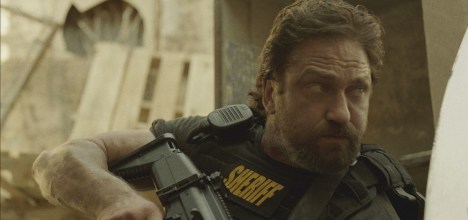
Den of Thieves is rather brazen in how much it takes from Heat, lifting both the crime classic’s cinematic language and even direct scenes. The result is a lukewarm reHeat of an exquisite meal, something to which the movie cheekily alludes towards the end of its climactic heist when one character literally serves up days-old leftovers. It isn’t anywhere near as filling or satisfying as the original meal, but it can satisfy a craving.

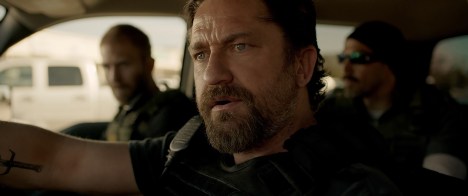
You definitely feel the Heat around the corner.

Continue reading

Non-Review Review: Maze Runner – The Death Cure

Maze Runner: The Death Cure feels like a movie that has arrived several years too late, a belated epilogue to the young adult boom.

The Death Cure is the last in the trilogy, the culmination of a journey that began with The Maze Runner in 2014. By that point, the young adult adaptation boom was already winding down. The Twilight Saga – Breaking Dawn, Part II had been released two years earlier, and Harry Potter and the Deathly Hallows, Part II had been released the year before that. There was a clear sense that The Maze Runner was starting when everybody else was ending.

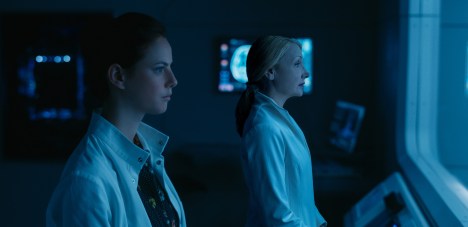
“So, it turns out that the Death Cure is… not dying. Whudda thunk it?”

Of course, there were still faint signs of life in the genre when the series began, but those sparks have largely been extinguished. The Hunger Games: Mockingjay, Part II was released the year after The Maze Runner. One year later, The Divergent Series: Allegiant underperformed to such a degree that it has been suggested that the series might be resolved on television. Even in the context of The Death Cure, there is a sense that the production team understand the fatigue; there is no over-extended duology to bring the series to a close; no lingering Part II.

The Death Cure is mostly an efficient film, one that keeps moving well enough for the bulk of its two-hour-and-twenty-two-minute runtime, although the bloat eventually becomes too much in the final act. There is something very functional about The Death Cure, a sense that everybody involved the film – and every character within the film – has adopted a “let’s get stuff done” attitude towards the production. There is all the expected angst, betrayal, insecurity and hesitation expected of a young adult novel, but surprisingly little wallowing in those emotions.

After initial trials proved unsuccessful and disappointing third quarter returns, WCKD moved on to producing “The Death Treatment.”

The result is something of a mixed blessing. Very few young adult adaptations had the benefits and strengths that defined the Harry Potter or Hunger Games franchises. Those two heavy-weight franchises had the luxury of several built-in advantages denied to many of their imitators; the strong ensemble cast, the compelling source material and the distinctive-within-limits voice. The Death Cure seems cognisant of its limitations, and so structures itself in a way to avoid exposing them too readily and too often.

However, this efficiency hinders The Death Cure. The film only rarely stumbles, and never falls flat on its face. However, it never manages to soar either.

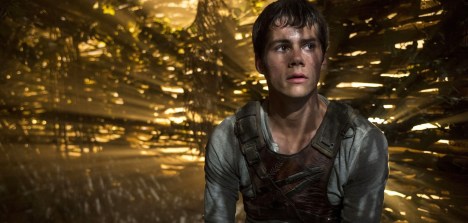
Runner, runner.

Continue reading