• Following Us

  • Categories

  • Check out the Archives


  • Awards & Nominations

Star Trek: The Next Generation – The Dauphin (Review)

This January and February, we’ll be finishing up our look at the second season of Star Trek: The Next Generation and moving on to the third year of the show, both recently and lovingly remastered for high definition. Check back daily for the latest review.

The Dauphin ends what looked like the beginning of a winning streak for the second season of Star Trek: The Next Generation. Both A Matter of Honour and The Measure of a Man represented a significant shift in gear for the show – a demonstration of just what The Next Generation was capable of at the top of its game. The Dauphin, in contrast, is a decidedly generic little episode.

It doesn’t help that it’s a character episode devoted to Wesley Crusher as a teenage protagonist on the Enterprise. Wesley was always a character who posed a bit of a problem for the show. There were times when bad writing and Wheaton’s less-than-nuanced performance saw the character threatening to turn The Next Generation into a plucky teenage science-fiction adventure series. Watch the boy genius save the ship while the trained professionals around him are useless!

While A Matter of Honour teased a way of making Wesley work in the context of the show, The Dauphin falls back into familiar traps. It’s a poorly-written teenage romance with some awful dialogue and two rather wooden leads, using familiar Star Trek trappings.
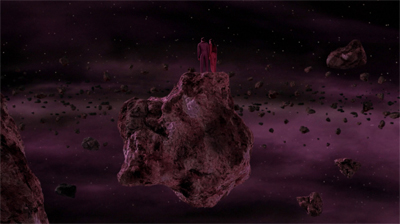
A rocky relationship?

A rocky relationship?

Continue reading

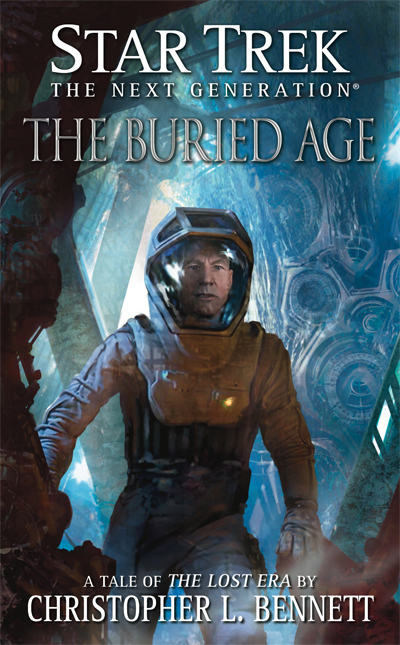
Star Trek: The Lost Era – The Buried Age by Christopher L. Bennett (Review)

This January and February, we’ll be finishing up our look at the second season of Star Trek: The Next Generation and moving on to the third year of the show, both recently and lovingly remastered for high definition. Check back daily for the latest review.

We’ll be supplementing our coverage of the episodes with some additional materials – mainly novels and comics and films. This is one such entry. This is actually supplementary to the first season of the Next Generation, specifically the episode Encounter at Farpoint.

“I’m offering the chance to find something entirely new,” Picard teases at one point in The Buried Age. “To begin filling in a tremendous gap in our understanding of galactic history.” In a way, Picard might as well be addressing the reader, explaining one of the many joys of Christopher L. Bennett’s The Buried Age. It is a chance to delve into the world of Star Trek, exploring the lacuna that exists leading directly into Encounter at Farpoint.

tng-theburiedage

Continue reading

Star Trek: Deep Space Nine – The Maquis, Part II (Review)

Star Trek: Deep Space Nine is twenty years old this year. To celebrate, I’m taking a look at the first and second seasons. Check back daily for the latest review or retrospective.

Oddly enough, for an episode designed to serve as a launching pad for Star Trek: Voyager, The Maquis, Part II really feels like the point where Star Trek: Deep Space Nine becomes Ira Steven Behr’s show. Deep Space Nine had been created by Michael Piller and Rick Berman. While Berman oversaw the franchise as a whole, Piller had been a guiding influence during the first two seasons of Deep Space Nine. However, his attention would wander to both Voyager and the pending films based on the Star Trek: The Next Generation film franchise.

As a result, producer Ira Steven Behr would be left in the driving seat of Deep Space Nine. Behr had some experience with the franchise. he was part of the wonderful writers’ room responsible for the massive upswing in the quality of The Next Generation, but left after a year on that show – describing it as “the Connecticut of Star Trek.” Years later, he was aggressively pursued by Piller to work on Deep Space Nine, where Piller felt his philosophy might be more at home.

The Maquis, Part II is far from Behr’s first writing credit on the show, and it’s certainly not the first time his influence has been felt. It is, however, the point at which it feels like Behr’s creative vision is firmly cemented the show’s outlook. Piller would move further away over the course of the next year, and Behr’s influence would grow even stronger, but this is the point where Behr’s vision of Deep Space Nine really takes hold.

Burning bridges...

Burning bridges…

Continue reading

Star Trek – Worlds of Deep Space Nine: Unjoined (Trill) by Michael A. Martin and Andy Mangels (Review)

Star Trek: Deep Space Nine is twenty years old this year. To celebrate, I’m taking a look at the first and second seasons. Check back daily for the latest review or retrospective.

We’ll be supplementing our coverage of the episodes with some additional materials – mainly novels and comics and films. This is one such entry.

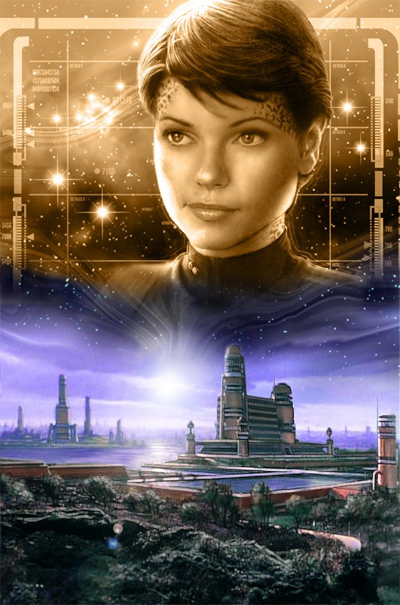
Worlds of Deep Space Nine was an ambitious project, but one that existed as a testament to the world-building that defined Star Trek: Deep Space Nine. A series of six novellas published in three books, each covering one of five planets associated with the television show (plus Andor), the book series was intended to launch the unofficial “ninth season” of the show. Beginning unofficially with The Lives of Dax and A Stitch in Time, the idea was for the spin-off novels to continue to develop and expand the series’ loose threads.

It’s quite something that Deep Space Nine left enough fertile ground to support a relaunch that ran so long, covering story beats that couldn’t necessarily be included in the television show – Bajor’s admittance to the Federation, the rebuilding of Cardassia, the aftermath of the war. Unjoined builds off the Trill storylines running through Deep Space Nine, using the events from the “eighth season” (the books through Unity) as a stepping stone to explore Trill culture.

ds9-unjoined

Continue reading

Star Trek: Deep Space Nine – The Circle (Review)

Star Trek: Deep Space Nine is twenty years old this year. To celebrate, I’m taking a look at the first and second seasons. Check back daily for the latest review or retrospective.

Drama naturally lends itself to a neat three-act structure. At the most basic level, it’s as simple as beginning, middle and end. However, it’s also a format taught in just about every screenwriting course, and it’s even used as the conventional model for those with more innovative approaches. With that in mind, it’s interest that Star Trek has done relatively few three-part stories. The Circle sits in the middle of the first such attempt, in the second season of the second spin-off. The format would not see use again for over a decade, when it would become a feature of the final season of Star Trek to air on television.

Given the franchise is relatively fond of two-parters, it seems strange that there haven’t been more attempts to extend that out an episode. Perhaps the reason is obvious. Of the three acts, the beginning and the end are the most essential. Both come with a certain in-built amount of energy. The first part introduces the problem, while the conclusion deals with it. However, it’s the middle which proves problematic. It’s the point in the story after you’ve set up the conflict, but before you resolve it. Given how much difficulty Star Trek: The Next Generation had with conclusions, imagine how difficult the second part of a three-parter would be.

Even when Star Trek: Enterprise adopted the three-parter format it ran into basic structural difficulties, with a couple feeling like a two-part episode with an additional prologue or epilogue added on. The Circle isn’t a terribly flawed piece of television, but it suffers from the fact that Star Trek has never really tried storytelling in this mode before.

The writing's on the wall...

The writing’s on the wall…

Continue reading

Star Trek: Deep Space Nine – Vortex (Review)

Star Trek: Deep Space Nine is twenty years old this year. To celebrate, I’m taking a look at the first season. Check back daily for the latest review or retrospective.

Something very interesting happens in the second half of Star Trek: Deep Space Nine‘s first season. It seems like the writers and producers are making a conscious effort to develop the show’s characters, themes and the world that these inhabit. Plot threads are hinted at, only to be left dangling. Ideas are broached, and tucked away for another day. Given that Star Trek: The Next Generation waited until the third season to broach serialisation in Sins of the Father, the approach taken here is quite striking.

These three episodes are more notable for what they set up rather than what they actually accomplish on their own terms. These adventures lay groundwork, or at least hint at laying groundwork, that will pay off throughout the show’s extended seven-year run. Okay, not exactly. There are some redundant elements here that never actually pay off, but Vortex, Battle Lines and The Storyteller all play into the show’s bigger story arc, even if it seems the writers aren’t entirely sure what those story arcs are.

It's murky out there...

It’s murky out there…

Continue reading

Star Trek: Deep Space Nine – A Man Alone (Review)

Star Trek: Deep Space Nine is twenty years old this year. To celebrate, I’m taking a look at the first season. Check back daily for the latest review or retrospective.

To be fair to Star Trek: Deep Space Nine, it’s clear that the show’s heart is in the right place. After all, a Star Trek television show isn’t quite the gambit that it was in 1987. The producers expect that the series will be going for quite some time. After all, the regulars signed six-year contracts, one of the reasons that the show managed to make it to its penultimate season without losing a primary cast member.

As such, a lot of the early episodes of Deep Space Nine seem prudent – they effectively amount to good housekeeping. While Star Trek: The Next Generation got its cast together and couldn’t wait to start telling bold Star Trek stories, you can see that Deep Space Nine is laying a lot of groundwork. The ensemble doesn’t gel instantly. Episodes are devoted to little more than set-up for something that will pay off over the coming year. A vast supporting cast is systematically established.

This is world-building, and it’s world-building to a purpose, even if Deep Space Nine doesn’t seem to really know what that purpose is yet. So it’s quite hard to fault these early episodes, even if they feel more like set-up for delayed pay-off.

The writing's on the wall for Odo...

The writing’s on the wall for Odo…

Continue reading

Star Trek – In the Name of Honour by Dayton Ward (Review)

This August, to celebrate the upcoming release of Star Trek: Into Darkness on DVD and blu ray, we’re taking a look at the Star Trek movies featuring the original cast. Movie reviews are every Tuesday and Thursday.

We’ll be supplementing our coverage of the movies with tie-ins around (and related to) the films. We’ll be doing one of these every week day. This is one such article.

The Klingons changed rather dramatically, between the classic Star Trek and Star Trek: The Next Generation. Part of the changes were physical – most obviously, advances in make-up allowed Klingon characters to be shown with their now-iconic forehead ridges. However, there was another interesting change. Somewhere between The Turnabout Intruder and Encounter at Farpoint, the Klingons went from generic communist stand-ins to a fully-formed alien culture with a wealth of ritual and tradition.

To a large extent, this shift took place during the movie era. Klingons wound up being the focus of Star Trek III: The Search for Spock, and were a significant presence in each of the films that followed. Star Trek V: The Final Frontier, produced at the same time as the first season of Star Trek: The Next Generation, suggested that it wasn’t necessary for the Federation and the Klingon Empires to be mortal enemies. The final movie featuring the original cast, Star Trek VI: The Undiscovered Country, tied up Kirk’s adventures with the promise of galactic peace.

Still, it’s hard to reconcile the differences in characterisation between the Klingons seen in the classic Star Trek television show and those from the later spin-offs. With In the Name of Honour, Dayton Ward tries to explore this radical shift and also to bridge The Final Frontier and The Undiscovered Country. He does the former much better than the latter.

startrek-inthenameofhonour

Continue reading

Star Trek – Leonard McCoy, Frontier Doctor by John Byrne (Review)

The August, to celebrate the upcoming release of Star Trek: Into Darkness on DVD and blu ray, we’re taking a look at the Star Trek movies featuring the original cast. Movie reviews are every Tuesday and Thursday.

We’ll be supplementing our coverage of the movies with tie-ins around (and related to) the films. We’ll be doing one of these every week day. This is one such article.

It’s fascinating how few stories take place around Star Trek: The Motion Picture. There’s a rake of tie-in material that exists to flesh-out the Enterprise’s five-year mission, and a large volume of material set during the period from Star Trek II: The Wrath of Khan straight through to Star Trek VI: The Undiscovered Country. However, the space around The Motion Picture has been somewhat overlooked by writers delving into the expanded world of Star Trek tie-in fiction.

To be fair, there are reasons for this. Although it was a box office success, looked stunning for the time, had a rake of big ideas and welcomed the crew to the screen, The Motion Picture isn’t generally considered to be one of the high points of the franchise. As such, it seems reasonable that it garners less attention, the affection shown by a few writers aside. There’s also the fact that The Motion Picture opens with the crew of the Enterprise broken up, scattered amongst the cosmos.

The Motion Picture sees Kirk putting the band back together after the universe seems to have forgotten about them, pulling them out of mothballs. Any story set in the lead-up to The Motion Picture would have to feature the ensemble all separated and going about their own thing. This limits the kind of stories that can be told in the setting, and makes it less appealing than other settings in Star Trek continuity.

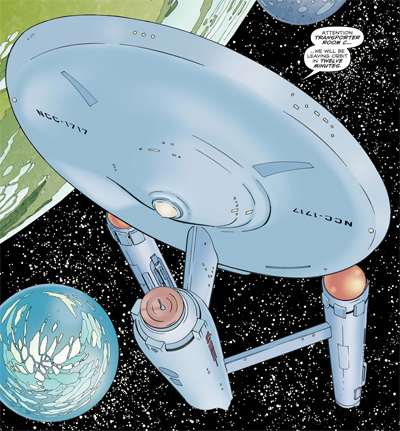
John Byrne’s Leonard McCoy, Frontier Doctor gives us a glimpse of what a project set between the end of the Enterprise’s mission and the start of The Motion Picture might look like. It’s essentially a solo adventure series focusing on one member of the cast, and it’s absolutely fascinating.

These are the voyages of the Starship... Yorktown...

These are the voyages of the Starship… Yorktown…

Continue reading

Star Trek – Errand of Mercy (Review)

To celebrate the release of Star Trek: Into Darkness this month, we’ll be running through the first season of the classic Star Trek all this month. Check back daily to get ready to boldly go. It’s only logical.

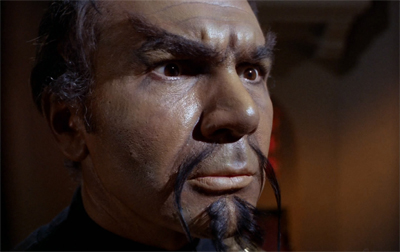
Ah, Klingons. It feels strange to think that we’re almost at the end of the show’s first year and that we’re only meeting the franchise’s most famous aliens now. More than that, in the original version of the show, their distinctive model space ships didn’t appear until the third season, in Elaan of Troyius, the same episode where their iconic imperial crest appeared. They wouldn’t get their bumpy foreheads for over a decade, until Star Trek: The Motion Picture. And a lot of what we’d take for granted about Klingon culture would only be established in the tie-in novel The Final Reflection and later in Star Trek: The Next Generation.

Still, Errand of Mercy welcomes the Klingons to the franchise, and offers a demonstration of why the aliens had such staying power. It’s also a rather wonderful Cold War analogy, feeling like something of a companion piece to Gene L. Coon’s A Taste of Armageddon.

I bet a lot of people were surprised that they could Klingon to their reputation as Star Trek's top alien for so long...

I bet a lot of people were surprised that they could Klingon to their reputation as Star Trek’s top alien for so long…

Continue reading