• Following Us

  • Categories

  • Check out the Archives


  • Awards & Nominations

Star Trek: Enterprise – Future Tense (Review)

Next year, Star Trek is fifty years old. We have some special stuff planned for that, but – in the meantime – we’re reviewing all of Star Trek: Enterprise this year as something of a prequel to that anniversary. This April, we’re doing the second season. Check back daily for the latest review.

The Temporal Cold War arguably works better as a metaphor than a plot.

There is something quite compelling about the imagery of Star Trek‘s past and future doing battle within the confines of a troubled prequel, of outside forces meddling in a narrative, of the characters caught in the grip of forces they cannot understand. To expect the Temporal Cold War to make sense is to miss the point; to expect clear resolution is foolhardy. Instead of serving as a strong narrative thread running through Star Trek: Enterprise, it serves as a visual manifestation of the troubles haunting the show. It also serves as a very effective story backdrop.

Let's do the time warp again...

Let’s do the time warp again…

Future Tense has a pretty straightforward story. Archer and his crew discover a piece of floating space debris. They bring it aboard, discovering it is not what it appears to be. The Suliban show up, claiming salvage rights. The Tholians arrive, demanding the same. A chase ensues, as Archer tries to outrun the two alien species desperate to get their hands on the technology. Future Tense is a classic chase narrative, as multiple parties fight over what Hitchcock described as a “macguffin.” Little is revealed, nothing is proven, everything is resolved so neatly that it seems divine intervention is at work. Maybe it is.

And yest, despite – or perhaps because – of this narrative simplicity, Future Tense stands as a highlight of the troubled second season. Future Tense leaves almost every question about the Temporal Cold War unanswered, but it is a tight and efficient action adventure. Like Cold Front before it, it recognises that the Temporal Cold War is a story as much as a backdrop. The fact that it is mysterious and nonsensical and arbitrary make it all the more compelling. After all, that is how it must appear to Archer.
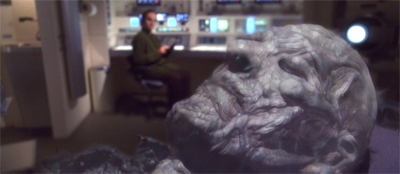
Alien bodies...

Alien bodies…

Continue reading

The X-Files – The Field Where I Died (Review)

This February and March, we’re taking a trip back in time to review the fourth season of The X-Files and the first season of Millennium.

Morgan and Wong’s four scripts for the fourth season of The X-Files are utterly unlike any other stories in the show’s nine-season run. Experimental, bold, confrontational; these four stories stretch and pull at The X-Files, as if eager to see just how far the hit show will bend.

The Field Where I Died is probably the weakest of these four episodes, but it is also the most ambitious. It is a script with big ideas and a willingness to commit to those ideas. There is no modesty here, no hesitation. There is a sense that Morgan and Wong are committing wholeheartedly to their themes and their concepts. The Field Where I Died is an episode that rubs quite a lot of people the wrong way, for a number of different reasons; however, the episode never pulls its punches. It never holds back. It never tries to be anything that it is not.

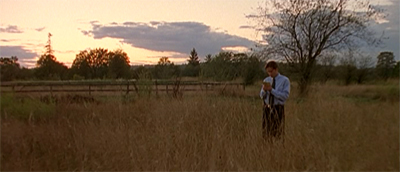
Far afield...

Far afield…

There is a lot to admire here. The Field Where I Died is not an episode with a simply formulaic concept or a conventional structure. It looks and feels completely unlike any other episode of the show. Even when the show touched on similar themes in its final season, the result was radically different. Hellbound is a much more conventional episode than The Field Where I Died. More than Home or Musings of a Cigarette-Smoking Man or Never Again, this is an episode that really seems like an odd fit for The X-Files.

Then again, that may be the beautiful thing about The Field Where I Died, for all its many flaws. It is utterly unlike anything else on television in the nineties. The fact that it can produce an episode of television so unique and incomparable is ultimately what makes The X-Files feel like The X-Files. The fact that The Field Where I Died feels so unconventional and eccentric is precisely what makes it a worthy episode of The X-Files.

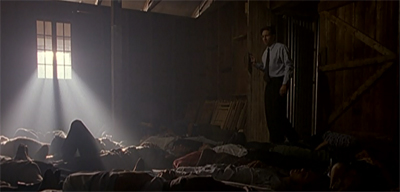
Another roaring success for Mulder...

Another roaring success for Mulder…

Continue reading

Space: Above and Beyond – Level of Necessity (Review)

This November (and a little of December), we’re taking a trip back in time to review the third season of The X-Files and the first (and only) season of Space: Above and Beyond.

Coming hot on the heels of Who Monitors the Birds?, Level of Necessity was almost destined to be a little disappointing. Who Monitors the Birds? is perhaps the quintessential episode of Space: Above and Beyond, encapsulating the show’s core themes and utilising its world in a clever and constructive manner. In contrast, Level of Necessity seems almost rote. It is an episode that might have been written for any other nineties science-fiction show.

There are some nice ideas here, but Level of Necessity feels far too generic. In fact, it seems like the episode is centred around Damphousse not because the story makes any more sense for her than it does for any other character, but because she is the only character who has yet to occupy the centre of a story. Thomas J. Wright directs quite well, and Richard Kind makes for a solid guest star. However, Level of Necessity suffers from the fact that it could be an episode of any other show.

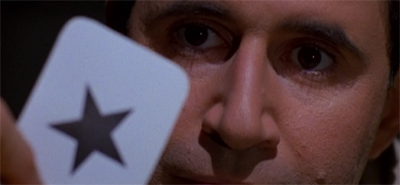
Stars in his eyes...

Stars in his eyes…

Continue reading

The X-Files – Clyde Bruckman’s Final Repose (Review)

This November (and a little of December), we’re taking a trip back in time to review the third season of The X-Files and the first (and only) season of Space: Above and Beyond.

Clyde Bruckman’s Final Repose is a masterpiece.

It is one of the best episodes that The X-Files ever produced. It is the only episode of The X-Files to win the Emmy for Outstanding Writing in a Drama Series. It was the first episode to take home an Emmy for a performance on the show, with Peter Boyle winning the Emmy for Outstanding Guest Actor in a Drama Series. It was Boyle’s only Emmy win of ten nominations. It was the only episode of The X-Files to air on the 13th October, a symbolically important date for Carter (“1013”). It was also Friday the 13th.

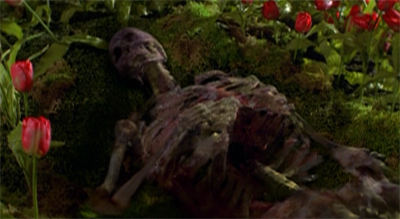
No bones about it...

No bones about it…

As part of the recent resurgence in interest in The X-Files, the story has enjoyed even more focus. It was one of three episodes voted by fans to air as part of the Los Angeles Times Hero Complex Film Festival in 2013 as part of the series’ twentieth anniversary celebrations. Chris Carter himself chose it to represent The X-Files at the Austin Film Festival in 2012. It is very frequently ranked among the best the show ever produced.

And all of that praise is very well earned.

Crystal clear...

Crystal clear…

Continue reading

Non-Review Review: Minority Report

I don’t love Minority Report. Don’t get me wrong, it’s a well-made film – perfectly entertaining and cleverly directed by a director who is one of the best living today – but it just doesn’t feel consistent for me. The whole doesn’t necessarily add up to the sum of its parts, as it were.

They should probably screen their officers better...

Continue reading

This is no time to argue about time, we don’t have the time…

The early reviews for Terminator: Salvation seem to be in – and they are not as bad as I thought they would be. Apparently if you leave your brain at reception, you might enjoy it. Still, it’s got me thinking. The original Terminator was one of the few Hollywood movies to deal with time travel relatively well. How come Hollywood seems to have such difficulty wrestling with such a common science fiction trope?

Warning: thinking about time travel might make your brain melt

Warning: thinking about time travel might make your brain melt

Continue reading