• Following Us

  • Categories

  • Check out the Archives


  • Awards & Nominations

The X-Files – Gethsemane (Review)

This February and March, we’re taking a trip back in time to review the fourth season of The X-Files and the first season of Millennium.

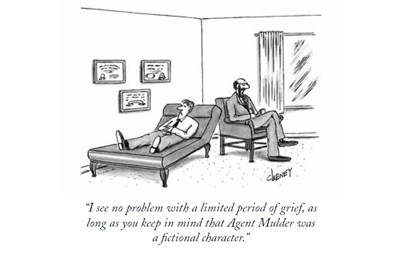
Agent Mulder died late last night from an apparent self-inflicted gunshot wound to the head.

– Agent Dana Scully, 22nd October 1997

xfiles-gethsemane27 Continue reading

Star Trek – Bread and Circuses (Review)

The first Star Trek pilot, The Cage, was produced in 1964. To celebrate its fiftieth anniversary, this December we are reviewing the second season of the original Star Trek show. You can check out our first season reviews here. Check back daily for the latest review.

Bread and Circuses is not subtle. Then again, that is the point.

There’s a lot of interesting stuff happening in Bread and Circuses, the fourteenth episode produced for the second season, but the last to air. There’s the idea of a world dominated by “a twentieth century Rome”, a rogue captain, a Prime Directive dilemma and a scathing indictment of modern television. Not only is it one of the last episodes with a “produced by Gene L. Coon” credit, it is also an episode co-written by Roddenberry and Coon. It is also the episode of Star Trek that endorses Christianity most explicitly and heavily.

"Wait, we're only getting it in black and white?"

“Wait, we’re only getting it in black and white?”

Bread and Circuses is a bold and audacious piece of television, full of venom and righteous anger, rich in satire and cynicism. It’s a plot so ridiculously over-stuffed with good ideas that viewers are liable to forgive the show’s somewhat cop-out ending where Kirk and his away team beam back to the Enterprise and continue on their merry way as though little has actually happened. Bread and Circuses feels like it uses every minute of its fifty-minute runtime wisely, balancing character with world-building.

It is probably a little bit too messy and disjointed to be labelled a dyed-in-the-wool classic, particularly when compared to the shows produced around it. Nevertheless, it is a decidedly ambitious piece of work, and one that demonstrates what Star Trek could do when it sets its mind to something.

When in Rome...

When in Rome…

Continue reading

Star Trek – The Apple (Review)

The first Star Trek pilot, The Cage, was produced in 1964. To celebrate its fiftieth anniversary, this December we are reviewing the second season of the original Star Trek show. You can check out our first season reviews here. Check back daily for the latest review.

It’s amazing how iconic Star Trek could be, even when it was terrible. There’s something quite ironic about how much of the franchise’s truly memorable iconography is rooted in some of the show’s weakest episodes. The Apple is one of the most iconic and memorable Star Trek episodes, featuring a giant evil dragon head sculpture, David Soul in orange body paint, lots of speechifying from Kirk, and a strong atheistic message with Kirk casting himself as Satan in the Garden of Eden.

It is also just terrible.

"VAAAAAAAL!!!"

“VAAAAAAAL!!!”

Continue reading

Star Trek – Who Mourns For Adonais? (Review)

The first Star Trek pilot, The Cage, was produced in 1964. To celebrate its fiftieth anniversary, this December we are reviewing the second season of the original Star Trek show. You can check out our first season reviews here. Check back daily for the latest review.

In many respects, Who Mourns for Adonais? is a formative episode for Star Trek as a franchise. It’s a show that really informs a lot of the franchise that would follow, even beyond the confines of the original television show. It’s an episode that represents the first clear articulation of a strand of thought that has been bubbling away through the first season of Star Trek and into the second, exploring the religious side of the Star Trek universe and mankind’s place in the cosmos.

The episode is iconic and memorable. It is packed with images that are familiar to even the most casual of fans. “Kirk confronts a Greek god in deep space!” is a catchy premise. “A giant hand grabs the Enterprise and threatens to crush the ship!” is the type of delightfully insane visual that ranks with “Captain Kirk as a Nazi!” or “space Lincoln!” when it comes to Star Trek visuals that stick with people outside the context of the show itself. Coupled with the distillation of those themes, this is a “big” episode.

"Jack, I'm flying!"

“Jack, I’m flying!”

Unfortunately, Who Mourns for Adonais? is also a deeply troubling episode. It has problems heaped upon problems. Some of those problems are inherited from the general aesthetic of the show, and are not specific to this episode. However, some of those problems are explicitly articulated here. Who Mourns for Adonais? is an episode that embodies quite a few of the very serious problems that run through the original Star Trek and haunt the franchise for quite some time.

The fact that these problems come baked into an iconic and memorable episode is disappointing.

"Oh, your gods..."

“Oh, your gods…”

Continue reading

Space: Above and Beyond – The River of Stars (Review)

This November (and a little of December), we’re taking a trip back in time to review the third season of The X-Files and the first (and only) season of Space: Above and Beyond.

And so this is Christmas.

On the face of it, doing a Christmas episode of Space: Above and Beyond seems absurd. Space: Above and Beyond is a show about a grim and relentless future war, where human lives are sacrificed in a long and brutal slog. It is very hard to reconcile that with the traditional structure of a Christmas story, which typically draws together a family so that they might celebrate the possibility of “peace on Earth” and “goodwill to all men.”

Homecoming...

Homecoming…

And yet, the episode works in spite of this contrast – or, perhaps, because of it. The River of Stars opens with a monologue narrated by Wang that helps to set the mood for the next forty-five minutes, documenting the well-known Christmas truces that took place during the First World War. Although these spontaneous demonstrations of good will and trust were by no means unique, those temporary reprieves served as a reminder of the humanity that often seemed lost amid the pain and the bloodshed.

If any show could use a charming feel-good story about the possibility of peace on Earth and goodwill towards other people, Space: Above and Beyond might be it.

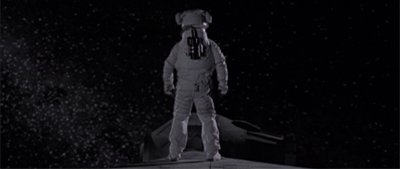
Staring at the stars...

Staring at the stars…

Continue reading

The X-Files – Revelations (Review)

This November (and a little of December), we’re taking a trip back in time to review the third season of The X-Files and the first (and only) season of Space: Above and Beyond.

Religion, eh?

In the mid-nineties, religion was a very difficult subject to navigate on network television. The so-called “culture wars” were in full swing at the middle of the decade, with religious values serving as a particularly brutal battleground. Religion is a very thorny and contentious subject. As recently as 2012, more than 40% of polled Americans stated they would not vote for an atheist candidate in a presidential election. Pete Stark would admit to being an atheist in 2007, becoming the first self-identified atheist in the United States Congress.

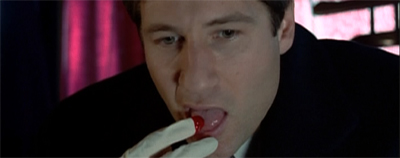
Mulder's got a taste for adventure...

Mulder’s got a taste for adventure…

As a result, it is very difficult to have a meaningful and thoughtful conversation about it. “There’s a man that I work with – a friend – and usually I’m able to discuss these things with him… but not this,” Scully confesses at the end of the episode. While undoubtedly a comment on Mulder’s stubborn refusal to engage with Scully on the topic, it also feels like a commentary on the awkwardness of any public discussion about religious beliefs or values, which was prone to become highly charged and contentious.

The conventional wisdom was that you didn’t talk about religion at the dinner table. It wasn’t much easier on television. This puts Revelations in a very awkward position.

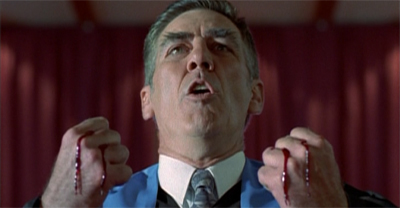
A bloody business...

A bloody business…

Continue reading

The X-Files (Topps) Annual #1 – Hallow Eve (Review)

This August (and a little of September), we’re taking a trip back in time to review the second season of The X-Files. In November, we’ll be looking at the third season. And maybe more.

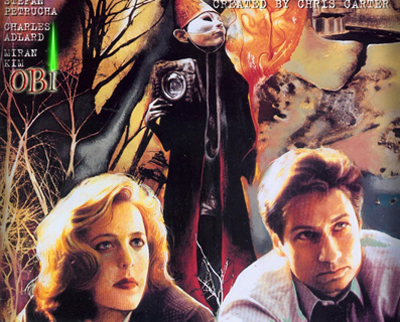
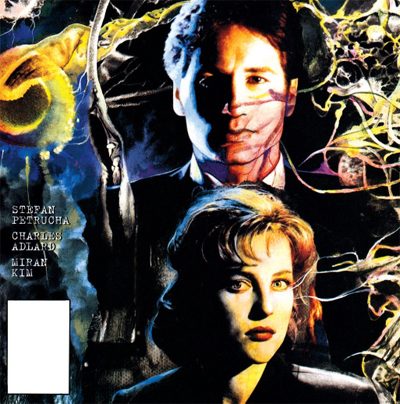
No matter how you cut it, the creative team of Stefan Petruscha and Charles Adlard were prolific. The duo only worked on The X-Files comics book for seventeen months between January 1995 and May 1996, but they put out a phenomenal amount of work. On top of sixteen issues of the monthly series, there were also two digests, a number of short stories and an annual. In most cases, some of this work would be outsourced to another creative team, but Petrucha and Adlard remain the creative team for Topps’ X-Files comic.

While this undoubtedly required a great deal of creative energy from Petrucha, churning out scripts on a regular basis, it is worth pausing to praise artist Charles Adlard. These days, for a variety of reasons, it seems that major comic book artists have difficulty producing twelve twenty-odd-page issues in a year. Not only was Adlard able to meet that objective, he was able to do that while drawing a large volume of supplementary material, including this feature-length annual.

All about Eve...

All about Eve…

It’s remarkable how consistent it all is. One of the advantages of a tie-in comic book with a steady creative theme is that there’s a much clearer authorial voice. Although Chris Carter oversaw the production of The X-Files, the demand of weekly network television mean that some episodes got more attention than others, and that particular voices tend to shine through. Darin Morgan writes his own version of The X-Files, as do Glen Morgan and James Wong or Howard Gordon or Vince Gilligan. (This isn’t a bad thing, by the way.)

On a comic, with all the issues written by the same author and illustrated by the same artist, there is a bit more consistency. Even though Hallow Eve is a stand-alone one-shot story that exists quite separate to Petrucha and Adlard’s twelve-issue meta-arc, it fits quite comfortably with their themes and subtexts. It’s an episode about history and memory, and perception and reality.

Shocking...

Shocking…

Continue reading

The X-Files (Topps) #4-6 – Firebird (Review)

This August (and a little of September), we’re taking a trip back in time to review the second season of The X-Files. In November, we’ll be looking at the third season. And maybe more.

Firebird is the first multi-part story told in the pages of The X-Files. Writer Stefan Petrucha and artist Charles Adlard don’t transition from done-in-one stories to two-part adventures, instead skipping the middle step and producing a three-issue epic. While A Little Dream of Me exposed the limitations facing a creative team working on a tie-in, Firebird demonstrates the strengths of the format. Spanning from Siberia to New Mexico, Firebird has an epic scale that would not be possible on the second season of The X-Files.

(Rather interestingly – and perhaps tellingly – Petrucha takes the comics to places that the show wants to go. The American South-West would be very difficult to replicate in Vancouver, prompting the creative team to make an ambitious effort to bring Mulder and Scully to New Mexico in Anasazi, infamously painting a quarry red to achieve the desired result. The show would wait until the fourth season before it was confident enough to take Mulder to Siberia in Tunguska and Terma.)

Something out of this world?

Something out of this world?

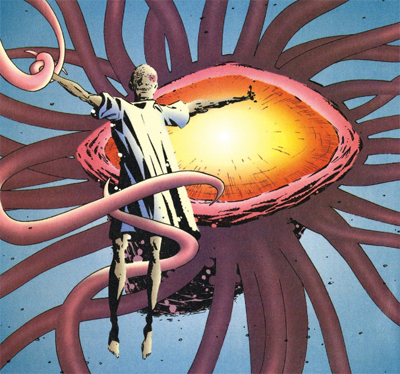
As with Not To Be Opened Until X-Mas, Firebird is very much a comic book story. While the show was reluctant have Mulder and Scully directly encounter aliens, the story features a monster that looks like something from the Lovecraft mythos. While the stakes on the show were generally rather personal to this point, Firebird puts the entire population of New Mexico (if not the world) at stake. While the series took its time revealing its evil conspiracy, Firebird gives us a cabal headed by a monologuing skull-holding would-be supervillain.

Perhaps surprisingly, this works. It’s clear that Petrucha and Adlard are aware that they are working in a different medium with different expectations and conventions. Firebird is very much an X-Files comic book epic, a story that couldn’t be realised on film. And there’s something very endearing about that.

Alien affairs...

Alien affairs…

Continue reading

The X-Files – Die Hand Die Verletzt (Review)

This August (and a little of September), we’re taking a trip back in time to review the second season of The X-Files. In November, we’ll be looking at the third season. And maybe more.

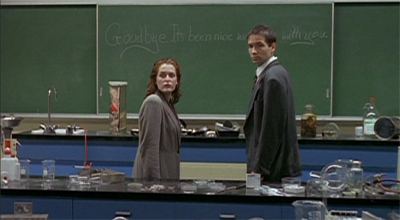
Die Hand Die Verletzt is a fascinating piece of work, for a number of reasons. The most striking reason, however, is that it is essentially a comedy episode. While The X-Files has always had a wry sense of humour – Mulder’s viewing habits are a recurring joke, after all – this is the first time the series has tried to produce a full-length comedy episode. Die Hand Die Verletzt is still a horror story, and the comedy is pretty black, but it does seem to prove that the show can do an entire episode that is funny.

The implications of this are far-reaching. At its height, the beauty of The X-Files was its versatility. The show could tell just about any sort of story imaginable, flitting between prestige drama, out-and-out horror, pastiche, broad comedy, political thriller, satire or even romance. While you could always bet on at least a hint of the supernatural and a dash of horror, The X-Files could really be anything that Chris Carter and his writers wanted it to be. It was even a show that could collide with other shows, as in The Springfield Files or X-Cops.

She's the devil in disguise...

She’s the devil in disguise…

To be fair, the second season is already reaching towards that approach to The X-Files. Although he has yet to produce a script for the series, the show has hired Darin Morgan to work on the writing team; his sensibilities would be proven truly and brilliantly gonzo. Irresistible proved that you could produce an episode of The X-Files without an overt supernatural horror, focusing on a more grounded horror. Red Museum provided an “almost crossover” with another television series.

However, Die Hand Die Verletzt is the point at which the show does something that looks truly weird in the context of what has come before, yet feeling strangely comfortable in light of what has followed. The script may mark the departure of Glen Morgan and James Wong from the show – the duo leaving to produce Space: Above & Beyond – but it isn’t the end of an era so much as the start of a new one.

The writing's on the... er... chalkboard...

The writing’s on the… er… chalkboard…

Continue reading

The X-Files (Topps) #1 – Not To Be Opened Until X-Mas (Review)

This August (and a little of September), we’re taking a trip back in time to review the second season of The X-Files. In November, we’ll be looking at the third season. And maybe more.

If you needed proof that The X-Files had made it, then the forty-issue Topps comic book series from the mid-nineties seems a place to start. Of course, this has less to do with the stories published in the comics themselves – though some are very interesting – and more to do with the comic book market in the nineties and the business model employed by Topps. The comic book industry was perhaps at its peak in the nineties – at least when it came to exposure and public profile.

Chris Claremont and Jim Lee’s X-Men #1 became the biggest-selling comic book of all time in 1991, selling over eight million copies. A year later, DC Comics published The Death of Superman, a sprawling highly-publicised comic book event that killed off (and then revived) the Man of Steel. The year after that, Batman got in on the action with the Knightfall trilogy, a suitably spectacular event that featured the crippling of Bruce Wayne, his replacement as Batman, and the eventual return of the Caped Crusader.
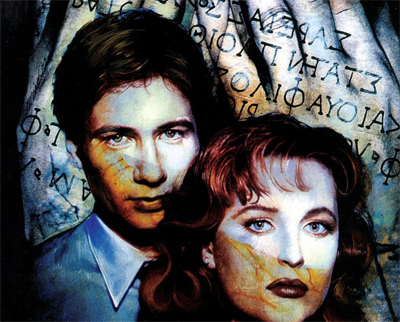
The truth is in here?

The truth is in here?

It is important to put those figures in perspective. While this was a financial peak for the comic book industry, it was still something of a fringe economy. In the mid-nineties, a television show attracting only eight million viewers would find itself on the bubble line when it came to renewal. However, that figure was the largest readership of any comic book ever. (Audience diversification means that both television audiences and comic book readers have dwindled in the years since, but the latter much more than the former.)

However, the business model for comic books in the nineties made them highly profitable, despite their smaller audience. Price gouging was not uncommon, with some retailers charging as much as $30 for Superman #75 in 1992. Poly bags, gimmick covers, variant artwork, celebrity authors – comics were largely driven by gimmicks in the nineties. More than that, the emphasis on comic books as an investment in the mainstream media helped to suggest the industry was more for collectors than for readers.
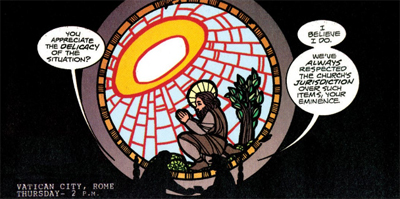
Holy conspiracy, Mulder!

Holy conspiracy, Mulder!

It is telling that the company to land the license for The X-Files was Topps, a company famous for producing sports memorabilia. The company had branched into comics in 1993, as the industry was growing and growing, hoping to license various characters and properties. The implication was that The X-Files comic had been designed more as an accessory than as a story. The cover to Not To Be Opened Until X-Mas ever features a handy “first collectors item issue” tag below the “1” at the top left-hand corner.

Licensed comic books have something of a chequered history. In the context of the mid-nineties, it would be easy to write off the forty-one issues (and change) of The X-Files as a cynical cash-in. However, the series has moments of brilliance and insight that mark it as a worth extension of the brand name.
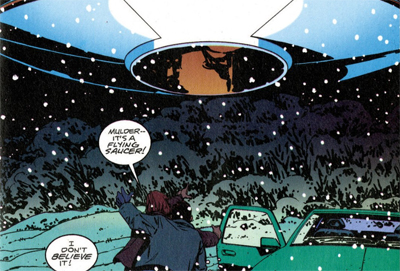
Up in the sky!

Up in the sky!

Continue reading