• Following Us

  • Categories

  • Check out the Archives


  • Awards & Nominations

Ed Brubaker’s Run on Uncanny X-Men – The Rise and Fall of the Shi’ar Empire (Review/Retrospective)

I’m currently wading my way through Marvel’s somewhat complicated continuity, with a major focus on The Avengers, what with the film due out in 2012 and all that. Anyway, this isn’t really a “big” crossover in its own right, but it factors into a big event I’ll be looking at later on today. Consider this an appendix.

Ed Brubaker’s run on Uncanny X-Men isn’t as widely praised as his work on Daredevil or Captain America – in fact, while Marvel couldn’t wait to churn out omnibus releases of his work on those two titles, his Uncanny X-Men run, like Matt Fraction’s run which followed, has been haphazardly collected. Part of me suspects that this might be down to factors outside Brubaker’s control – Joss Whedon was monopolising the most popular X-Men for Astonishing X-Men when Brubaker kicked off his run – but part of it comes down to the simple fact that Brubaker simply isn’t a great writer of team books. That said, writing a year-long space epic featuring none of the more iconic characters as his introductory arc probably didn’t help much.

Brotherly love…

Continue reading

X-Men: Messiah Complex (Review/Retrospective)

This is the seventh in a series of comic book reviews that will look at the direction of Marvel’s core continuity (and in particular their “Avengers” franchise) over the past five or so years, as they’ve been attempting to position the property at the heart of their fictional universe. With The Avengers planned for a cinematic release in 2012, I thought I’d bring myself up to speed by taking a look at Marvel’s tangled web of continuity.

It has been commonly accepted that the “golden days” of X-Men crossovers are behind us. Of course, “golden days” is a subjective term – for every Age of Apocalypse, there was an Onslaught Saga – but there’s no way to argue that the mutants didn’t dominate Marvel’s output in the nineties. One would have thought that with Bryan Singer’s X-Men helping give birth to the superhero genre, this past decade might have been an even better one for the franchise, but it was not to be. In fact, The Avengers seem to have replaced the X-Men as the engine driving Marvel’s storytelling universe. Some might suggest that it is so blatant that it looks intentional (prompting a movie-related “conspiracy theory”), although Marvel have casually denied it – with vice president Tom Brevoort stating “these things tend to go in waves”. However, Messiah Complex is the first of a series of crossovers with the X-Men titles following House of Mwhich would chart the franchise’s gradual return to the status quo.

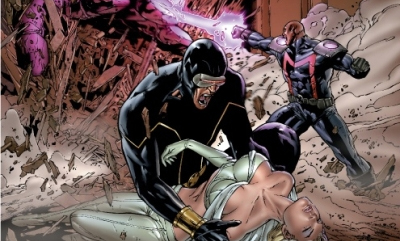
Cyclops has warmed to Ms. Frost…

Continue reading

House of M (Review/Retrospective)

This is the third in a series of comic book reviews that will look at the direction of Marvel’s “Avengers” franchise over the past five or so years, as they’ve been attempting to position the property at the heart of their fictional universe. With The Avengers planned for a cinematic release in 2012, I thought I’d bring myself up to speed by taking a look at Marvel’s tangled web of continuity. Get an overview of what I’m trying to take a look at here.

The X-Men represent the oddball of mainstream superhero comic books. In a genre and medium dedicated offering a static setup – things never really change or resolve – the X-Men are built upon the very idea of evolution. The whole basis of the franchise is the pursuit of equality by the genetically distinct mutant population, the idea that they and mankind can grow together. It has even been frequently suggested that these super-powered individuals represent out future or our replacements. However, the only way to actually tell a story like that is to follow it through to its logical conclusion – to let the ball roll and to let the world change. It feels a little counterproductive for Charles Xavier and his students to still be fighting for the same rights as everyone else nearly fifty years on – it might even seem a little stale. Grant Morrison’s superb New X-Men run offered a solution of sorts – it gave us a world where humanity would be extinct in a couple of generations and showed the growth and relationship between human and mutant subculture. Gone was the minority struggling against an oppressive majority – a more complex example of race relations had come into play with “mutant music” and “mutant slang” making their impression on the youth, amid a silent and almost invisible middle-class backlash. This was an ingenious approach which demonstrated the relevance of the franchise. Unfortunately, Marvel were not quite pleased with this – some people even, ridiculously, accused Morrison of telling all the remaining X-Men stories – and decided to set things right. They did that through House of M.

Dive in...

Continue reading

Daredevil by Ed Brubaker Omnibus, Vol. II

Still, it must have been nice for you, Murdock.

What?

To win this one. It seems like you really needed it.

– North and Murdock

There goes the whiniest superhero I ever met.

– Mr. Izo

I’ve said it before and I’ll likely say it again: Daredevil has had an amazing ten-year run under the stewardship of Kevin Smith, David Mack, Brian Michael Bendis and Ed Brubaker. It’s just been a really well-put together comic book which really works. one of the finest compliments of the book I’ve read, and one I sadly can’t take credit for, is that Daredevil mostly avoids the deconstruction which has been a fixture of many iconic runs, while also avoiding the pitfalls of nostalgia that typically define the reaction to deconstruction – instead, the book has found a third way: it has found a way to take the conventional tropes of the superhero genre, and use them to offer something relatively new and exciting, exploring the story potential inherent in ideas like a secret identity, or what happens when a vigilante creates a vacuum in crime. Ed Brubaker, who – if you ask me – has offered the most fascinating run on the character and has surpassed his work on Captain America, finishes his run here and closes a chapter in the life of the Marvel Universe’s most tragic superhero.

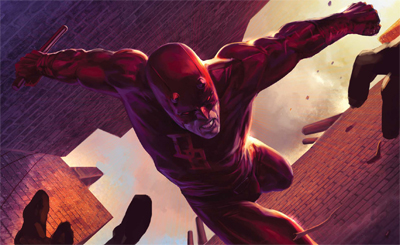
Stars in your eyes...

Note: This review will contain spoilers for the end of Brubaker’s run, if you aren’t already familiar with it. I’ll flag them beforehand, but consider yourself warned.

Continue reading

The Immortal Iron Fist Omnibus

My name is Daniel Rand. I am the Immortal Iron Fist. And though it may be in chaos, my world just got a little bigger. My sense of self has grown ten thousandfold.

– Danny Rand reflects on the first half of his run

Who the hell is the Immortal Iron Fist, I hear you ask? It’s a good question. The character traces his roots back to 1974, with Marvel attempting to work off the success of the period’s kung-fu films with a line of martial arts comics. Just like they used to have western comics and war comics and so on. However, the character – despite enjoying success at the time and creating a vocal supportive fan base – never really breached pop culture consciousness in the same way that the truly big comic book characters did. He remained mostly a cult figure, beloved of some and virtually unknown to others. Matt Fraction and Ed Brubaker, two very talented comic book creators who had recently found a home at Marvel, decided to stage a revival of the character in the middle of the last decade. Apparently Marvel was so happen with the result that they omnibus’ed it, releasing it in one giant collection.

Okay, maybe ‘giant’ is exaggerating, but it’s certainly impressive.

Everybody was kung-fu fighting...

Continue reading

Daredevil by Ed Brubaker Omnibus, Vol. I

It’s pretty tough taking over a beloved cult title from a run which certainly measures among its best. Daredevil has long been a testing ground for many an iconic comic book writer, but Brian Michael Bendis left the book seeming to have done the impossible. Depending on who you asked, he had either come extremely close to matching the seminal run by Frank Miller, or had simply left it in the dust behind him. So taking over from Bendis would be no easy task. Thankfully, Ed Brubaker is more than up to the task.

Brubaker dives headfirst into his run...

Continue reading

Daredevil: Yellow (Review)

The rest of the story you know too well. It’s been told a lot of ways, with many other people in my life, but this is the way I choose to remember it when I think of you.

– Matt Murdock

The first part of Tim Sale and Jeph Loeb’s informal ‘colours’ trilogy (Spiderman: Blue and Hulk: Grey being the rest of it), Daredevil: Yellow has a lot going for it beyond the two talents behind a trilogy of iconic Batman stories (Haunted Knight, The Long Halloween, Dark Victory). Cynics would describe it as the last classic that Loeb wrote. The truth is that it offers a wonderful eulogy for the carefree comic book stories of old, simple and ridiculous fare with simple storylines and clear-cut good guys and bad guys. It’s a nostalgia trip – which means it isn’t quite as compelling as the duo’s work on Batman – but it does lend the collection a nice feel to it. If you are in anyway interested in the olden days of comic books without the retro-post-modernism that typically accompanies such fare, this is the story for you.

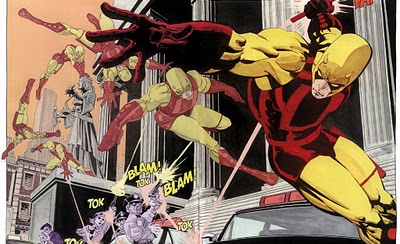
Daredevil's come on leaps and bounds from his early days...

Continue reading

The Death of Captain America Omnibus (Review)

I was impressed by the original Captain America by Ed Brubaker Omnibus, but I wasn’t as blown away by his run as almost everyone else seems to have been. A lot of my problems were outside Brubaker’s control – the big Civil War event in the Marvel Universe loomed large over the climax of his run – and, in fairness to him, he worked around it as well as he could have been expected to. His on-going run is continued in a second (albeit smaller) omnibus, succinctly entitled The Death of Captain America Omnibus, which does exactly what it says on the tin, following the events which immediately followed the climax of the last omnibus (even going so far as to reprint the last issue in that volume as the first one in this volume). It’s just over half the size of the early collection – even factoring in the reprint – but I’ll concede that I actually enjoyed it a lot more. Maybe it was the sense that Brubaker was delivering a pay-off to all the threads opened in the first part of his run, or that he was solidly unfettered by editorial mandate this time around, or even that the storyline was considerably more streamlined and focused – no matter what the reason, the vast majority of my (already admittedly small) qualms about the first collection are dealt with here.

That's gonna be a pain to clean...

Continue reading

Captain America by Ed Brubaker Omnibus (Review)

There’s a lot of buzz out there suggesting that Ed Brubaker’s run on Captain America might be the run on the character, the one for the ages – like Frank Miller’s tenure on Daredevil, for example. I decided that – with the movie coming out next year – it might be worth bringing myself up to speed on the character. While I haven’t finished Brubaker’s run (it’s on-going and I still have to read The Death of Captain America Omnibus), it is a very solid run, packed with great ideas. It’s a clever and well-crafted story that demonstrates that Brubaker has more in him than just gritty pulp like his fantastic runs on Daredevil and Gotham Central. On the other hand, I’m slow to call the run an instant classic – I’d rather finish his run before I make that judgement. Towards the end it feels like Brubaker’s own story has become somewhat derailed by the larger events looming in a shared universe. He’s still an amazing writer and succeeds in keeping the train mostly on the tracks, but one gets the sense that the collection would have been better if he had been granted complete control over it.

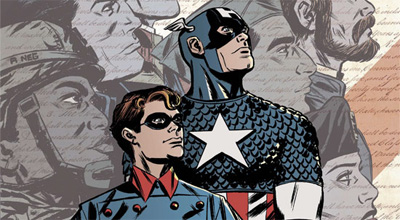
"Hey, Cap, what are we staring at?""You'll know it when you see it, Bucky; you'll know it when you see it."

Continue reading

Gotham Central – In The Line of Duty & Jokers And Madmen (Review)

Just when you think there isn’t an original concept left in comic book storytelling, Ed Brubaker and Greg Rucka come up this ingenious concept: what is it like to police a comic book city – and the one populated with the same sorts of loons which give Batman a headache? Brubaker and Rucka construct a truly surprisingly awesome noir police procedure that takes a gutter’s-eye view of one of the darkest cities ever to appear in comic books. It manages to combine the two aspects brilliantly, simultaneously bringing a fresh perspective to both the Batman mythos and the police procedural.

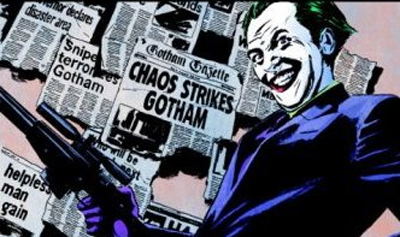
The joke's on Gotham...

The joke's on Gotham...

Continue reading