• Following Us

  • Categories

  • Check out the Archives


  • Awards & Nominations

Doctor Who: Black Orchid (Review)

To celebrate the fiftieth anniversary of the longest-running science-fiction show in the world, I’ll be taking weekly looks at some of my own personal favourite stories and arcs, from the old and new series, with a view to encapsulating the sublime, the clever and the fiendishly odd of the BBC’s Doctor Who.

Black Orchid originally aired in 1982.

Why would I attack you? Have you done me any harm?

No!

No, then I’ve no reason to harm you. And besides…

Besides what?

Well, it wouldn’t be cricket.

– the Doctor, Ann Talbot and Muir

Black Orchid is pretty damn frustrating. There’s a lot of interest here, but sadly it’s mostly from a technical point of view. This is the first two-part adventure since The Sontaran Experiment. It’s also the first historical story told with no science-fiction elements excluding the TARDIS crew since The Highlanders. It’s also the penultimate adventure starring this version of the TARDIS crew, and the last Fifth Doctor serial before his world is turned upside down in Earthshock. So there’s a lot that should be interesting here.

Unfortunately, the writing is at best generic and at worst actively crap. Black Orchid feels exactly like the sort of thing that the BBC was doing without countless television shows other than Doctor Who, so Black Orchid needs to be able to do it to a reasonable standard. Instead, it feels like a murder mystery written by somebody writing with an Agatha Christie adaptation on in the background. It’s frustrating, because there’s a lot of potential here, but the end result is just disappointing.
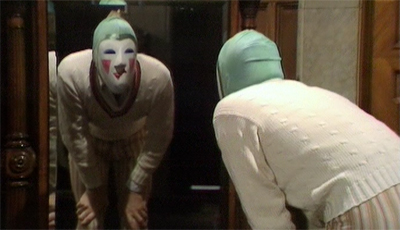
Clowning around...

Clowning around…

Continue reading

Star Trek – Crew by John Byrne (Review)

To celebrate the release of Star Trek: Into Darkness this month, we’ll be running through the first season of the classic Star Trek all this month. Check back daily to get ready to boldly go. It’s only logical.

We’ll be supplementing our coverage of the episodes with some additional materials – mainly novels and comics and films. This is one such entry.

Majel Barrett Roddenberry was the first lady of the Star Trek franchise, in more ways than one. She was married to Gene Roddenberry and remained a part of the franchise after his death. She guest starred on the shows occasionally, continued to lend her voice to the computers and offered the occasional interview to the press. Although her actual influence on the television shows was relatively minimal (and she was occasionally prone to protesting various plot developments including the Dominion War on Star Trek: Deep Space Nine), she did remain involved in Star Trek until she passed away in 2008.

However, she was also involved from the start. She had the recurring role of Christine Chapel throughout the original television show, and appeared in the unaired pilot, The Cage, as Christopher Pike’s first officer. Identified only as “Number One”, this almost made her the literal “first lady” of Star Trek. I’m surprised that Number One hasn’t been used more often as a character, with her appearances in tie-ins generally restricted to her time on board Pike’s Enterprise.

John Byrne’s miniseries might have the title Crew, and feature supporting roles for Christopher Pike and Mister Spock, but it is very much the story of Number One. Published a year after her death, and dedicated to her memory, Crew feels like a fitting farewell to the actress responsible for one of the franchise’s earliest and most intriguing supporting characters.

Fate protects fools, little children... and ships named Enterprise.

Fate protects fools, little children… and ships named Enterprise.

Continue reading

Star Trek – The Cage (Review)

To celebrate the release of Star Trek: Into Darkness this month, we’ll be running through the first season of the classic Star Trek all this month. Check back daily to get ready to boldly go. It’s only logical.

The Cage is fascinating. Looking at it now, it holds up phenomenally well a s apiece of sixties science-fiction. However, it feels like we’re watching a prototype of Star Trek. In many respects, The Cage feels like a rough sketch that captures some essentials, but is missing out on the finer details. Spock is there! But he smiles! The set design looks the same, but the characters are different. Some of the cast fill the same roles, but some are dramatically different. Watching The Cage, you can see a lot of the philosophy that Gene Roddenberry would bring to Star Trek, but it’s very difficult to imagine an on-going series spinning out of this adventure, let alone one that managed to become as iconic or influential as Star Trek would ever be.

Still, it’s pretty solid viewing. It’s entertaining on its own terms, but it’s also informative in the context of the series. It’s more like dry run or a test drive of the concept.

To boldly go... for some reworking...

To boldly go… for some reworking…

Continue reading

Doctor Who: The Sound of Drums (Review)

To celebrate the fiftieth anniversary of the longest-running science-fiction show in the world, I’ll be taking weekly looks at some of my own personal favourite stories and arcs, from the old and new series, with a view to encapsulating the sublime, the clever and the fiendishly odd of the BBC’s Doctor Who.

The Sound of Drums originally aired in 2007.

Doctor.

Master.

I like it when you use my name.

You chose it. Psychiatrist’s field day.

As you chose yours. The man who makes people better. How sanctimonious is that?

– the Doctor and the Master

The Sound of Drums is really more interesting than it is successful. Building off Utopia as the second part of a three-part finalé, building the longest single story in the revived Doctor Who, The Sound of Drums does an excellent job moving the characters along and getting everything where it needs to be for the requisite cliffhanger. Unfortunately, Davies’ weaknesses when it comes to plotting are at play here. While Utopia took advantage of a leisurely pace and conventional plot in order to do some nice set-up, The Sound of Drums doesn’t have that luxury. Utopia came out of left-field, with the last ten minutes taking the audience by surprise. Now the audience knows the game is afoot, so the rules have changed.

The Sound of Drums kicks off with everything in full swing, and Davies has to ratchet up the tension from there. The result is that Davies does solid character work, but that the plot points and set-ups occasionally feel a bit forced. That’s especially true when it comes to the ideas that will be important to the resolution of The Last of the Time Lords.

The End of the World... oh, wait, we already did that one...

The End of the World… oh, wait, we already did that one…

Continue reading

Doctor Who: Planet of the Spiders (Review)

To celebrate the fiftieth anniversary of the longest-running science-fiction show in the world, I’ll be taking weekly looks at some of my own personal favourite stories and arcs, from the old and new series, with a view to encapsulating the sublime, the clever and the fiendishly odd of the BBC’s Doctor Who.

Planet of the Spiders originally aired in 1974.

Oh dear, this is getting monotonous.

– the Doctor sums it up

Jon Pertwee’s final season is a real shame. The actor was, at the time, the actor who had served the longest period of time in the lead role. Starring as the Doctor for five years, and appearing as the face of the show during an era of renewal and reinvention, the actor deserved a much strong swansong. The year had started relatively strong with The Time Warrior, which I would rank among the best stories of the Pertwee era. However, every story after that just felt like it was treading water, revisiting old triumphs while biding time until the finalé. We had a Dalek episode in Death to the Daleks. We had a Malcolm Hulke lizard story with Invasion of the Dinosaurs. We had an off-world social commentary story in The Monster of Peladon. All felt like the cast and crew were just worn out, just going through the motions.

Sadly, Planet of the Spiders continues this trend, rather than bucking it.

Kiss of the spider-queen...

Kiss of the spider-queen…

Continue reading

Doctor Who: The End of the World (Review)

You’ve seen how dangerous it is. Do you want to go home?

I don’t know. I want… Oh, can you smell chips?

Yeah… Yeah.

I want chips.

Me too.

Right then, before you get me back in that box, chips it is, and you can pay.

No money.

What sort of date are you? Come on then, tightwad, chips are on me. We’ve only got five billion years till the shops close.

-the Doctor and Rose contemplate the mysteries of the universe

If Rose proved that Doctor Who was back for a new generation, The End of the World demonstrates that it’s still the same show that it was all those years ago. The show has always struggled to do “future” on the budget afforded by the BBC, but this second episode of the show offers a glimpse of what the series was capable of. It’s not quite perfect, but has all the ambition that a revived Doctor Who needs in its first season, laying a great deal of thematic groundwork and character development on top of a visual feast. If Rose promised an update to everyone’s favourite Time Lord for the twenty-first century, The End of the World existed to assure viewers that some things never quite change.

... and I feel fine...

… and I feel fine…

Continue reading

Doctor Who – The Ark (Review)

To celebrate the fiftieth anniversary of the longest-running science-fiction show in the world, I’ll be taking weekly looks at some of my own personal favourite stories and arcs, from the old and new series, with a view to encapsulating the sublime, the clever and the fiendishly odd of the BBC’s Doctor Who.

The Ark originally aired in 1966.

Yes, I bet it’ll take some time to get the whole of the population down here, so the sooner you get started, the better, I should think.

Don’t worry. It may not take as long as you think.

What do you mean? Are you up to something?

Em… no.

– Dodo (yes, Dodo) outwits a Monoid

The Ark is an interesting piece of Doctor Who, both in terms of structure and in terms of theme. It’s a very clever concept, with the four-parter effectively split into two halves as the Doctor and his companions join the same story at two different intervals. It’s a wonderful high concept, with the action jumping from across time while keeping a fixed location. However, The Ark is also notable because of its less-than-subtle political under-currents, one of the relatively rare times where Doctor Who has seemed reactionary, conservative and downright colonial in its attitudes.

The end of the world as we know it...

The end of the world as we know it…

Continue reading

Doctor Who: Colony in Space (Review)

To celebrate the fiftieth anniversary of the longest-running science-fiction show in the world, I’ll be taking weekly looks at some of my own personal favourite stories and arcs, from the old and new series, with a view to encapsulating the sublime, the clever and the fiendishly odd of the BBC’s Doctor Who.

Colony in Space originally aired in 1971.

Are you some kind of scientist?

I’m every kind of scientist.

– Caldwell and the Doctor

Colony in Space is an interesting story for many reasons. For one thing, it’s the first colour adventure to travel to another world. It was the first time since Jon Pertwee took over the title role that the character had been allowed to leave the surroundings of modern-day Earth. Even if he did land in a quarry. Colony in Space demonstrated the possibilities to tell futuristic and extraterrestrial stories in the new and remodelled version of Doctor Who, and the show began to slowly venture further and further afield over the next few years, with the Doctor finally regaining control of his TARDIS in The Three Doctors a little under two years later.

However, Colony in Space is also interesting because it is a script from Malcolm Hulke, who has really become one of the more Doctor Who script writers more inclined to pepper his scripts with political and moral philosophy. Colony in Space is an interesting exploration of those themes, even if it does run a little bit long in places. (That said, Hulke is one of the better writers of the six-part format in the show’s history.)

Go on, try to fight the urge to pronounce the episode title like "colony... IN SPACE!"

Go on, try to fight the urge to pronounce the episode title like “colony… IN SPACE!”

Continue reading

Doctor Who: The Vampires of Venice (Review)

To celebrate the fiftieth anniversary of the longest-running science-fiction show in the world, I’ll be taking weekly looks at some of my own personal favourite stories and arcs, from the old and new series, with a view to encapsulating the sublime, the clever and the fiendishly odd of the BBC’s Doctor Who.

The Vampires of Venice originally aired in 2010.

Tell me the whole plan!

One day that will work.

– the Doctor

The Vampires of Venice is interesting because it looks very different in 2013 as compared to when it was originally broadcast in 2010. In 2010, it looked a bit overly familiar, a collection of the tropes and storytelling tricks that we took for granted in the show under Russell T. Davies. The elements felt, at the time, a little over-familiar. Indeed, it seemed like Toby Whithouse’s script owed a great deal to his earlier adventure School Reunion.

However, Doctor Who looks very different in 2013. The show has definitely radically changed, so that these familiar plot points don’t seem quite so familiar any longer. Whereas The Vampires of Venice didn’t feel so strange after five years of Russell T. Davies, it does seem a bit more unique after three years of Steven Moffat. It doesn’t seem so much an attempt to repackage these story elements as it does one final celebration of them, a fond farewell to many of the narrative bits and pieces that we’d come to take for granted.

How times change.

A late-night bite...

A late-night bite…

Continue reading

Doctor Who: The Parting of the Ways (Review)

To celebrate the fiftieth anniversary of the longest-running science-fiction show in the world, I’ll be taking weekly looks at some of my own personal favourite stories and arcs, from the old and new series, with a view to encapsulating the sublime, the clever and the fiendishly odd of the BBC’s Doctor Who.

The Parting of the Ways originally aired in 2005.

Everything must come to dust. All things. Everything dies. The Time War ends.

– Rose

And so the first season of Russell T. Davies’ revived Doctor Who comes to a close. If you asked me, it’s the best season of the show that Davies has produced. The year contains a few clunkers, and it doesn’t contain the highest concentration of enjoyable episodes, but I think the first year has a much clearer direction and purpose than any of the years that followed. Although apparently Christopher Eccleston’s departure was only decided after the show went into production, the first season seems like it is constantly building to the death of the Doctor. The entire first season seems to build, logically and rationally, towards that moment.

He's not all there...

He’s not all there…

Continue reading