• Following Us

  • Categories

  • Check out the Archives


  • Awards & Nominations

Star Trek: Deep Space Nine – Profit and Loss (Review)

Star Trek: Deep Space Nine is twenty years old this year. To celebrate, I’m taking a look at the first and second seasons. Check back daily for the latest review or retrospective.

It seems we’ve reached the point where Star Trek: Deep Space Nine has figured out a base level of quality, an “average” zone that it can pitch to without too much effort or breaking a sweat. We’ve had three episodes in a row now that haven’t been brilliant, but have been far from terrible. Solid, watchable stuff. That might sound like damning with faint praise, but it took Star Trek: The Next Generation longer to find that base level of quality, while Star Trek: Voyager settled into a zone where that “average” was a lot lower.

Profit and Loss is unlikely to be anybody’s favourite episode, but it remains thoroughly unobjectionable. It features the cast playing their roles reasonably well, some hints at world-building and even a guest spot for Garak. Nobody will really remember Profit and Loss as a brilliant piece of television after completing a lengthy Deep Space Nine rewatch, but they also won’t curse its name. It’ll simply be an episode in the middle-to-end section of the second season that wasn’t too bad and wasn’t too great.

Love him and leave him...

Love him and leave him…

Continue reading

Doctor Who: Cold Blood (Review)

To celebrate the fiftieth anniversary of the longest-running science-fiction show in the world, I’ll be taking weekly looks at some of my own personal favourite stories and arcs, from the old and new series, with a view to encapsulating the sublime, the clever and the fiendishly odd of the BBC’s Doctor Who.

Cold Blood originally aired in 2010.

It is the story of our past and must never be forgotten.

– Eldane attempts to justify the “traditional monster” two-parters the revived show is so fond of

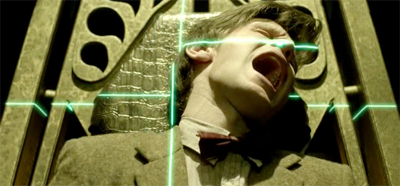
The Hungry Earth wasn’t too bad. It wasn’t great. There was nothing too exciting or novel about it, but it wasn’t a complete failure. It was an interesting and affectionate throwback to an older style of Doctor Who. It wasn’t exceptional, but it was -broadly speaking – functional. Chris Chibnell’s script had some rough edges, mostly around characterisation, but there was nothing too unworkable about the premise, which basically consisted of a selection of classic Doctor Who tropes thrown in a blender and served up to the audience.

However, Cold Blood is much less satisfying. Part of that is because it’s part of a story that can’t be sustained by nostalgia or affectionate references to tales long past. There’s also the fact that it hinges on an emotional climax that asks us to invest in an especially two-dimensional supporting cast. And that’s saying nothing about how the last few minutes of the episode aren’t even devoted to tying up its own threads so much as playing into the much more interesting season-long arc.

Cold Blood leaves me… well, cold.

Doesn't scan...

Doesn’t scan…

Continue reading

Doctor Who: The Hungry Earth (Review)

To celebrate the fiftieth anniversary of the longest-running science-fiction show in the world, I’ll be taking weekly looks at some of my own personal favourite stories and arcs, from the old and new series, with a view to encapsulating the sublime, the clever and the fiendishly odd of the BBC’s Doctor Who.

The Hungry Earth originally aired in 2010.

Oh look! Big mining thing! Oh, I love a big mining thing. See, way better than Rio. Rio doesn’t have a big mining thing.

– the Doctor looks on the bright side of arriving in not!Rio

The Hungry Earth represents the biggest structural shift of Steven Moffat’s first season of Doctor Who. The writer would indulge in a number of radical structural changes over his time running the show, but his first season as showrunner conforms to the pattern of Russell T. Davies’ four full seasons. There’s the introductory present/past/future trilogy, the two mid-season two-parters and the gigantic two-part season finalé. The content of Moffat’s season might have been markedly different (actual romantic snog! a season building an arc that isn’t just references and easter eggs!), but the format was carried over faithfully.

Moffat’s following two seasons would get more experimental. For one thing, both seasons would be split in half. This allowed Moffat to offer the first genuine cliffhanger in the revival’s history to last more than a week, with a gap of several months between A Good Man Goes to War and Let’s Kill Hitler. His second season would feature the first two-part season opener (and first one-part season finalé) of the revived television show. His third season would feature no two-part episodes, spread across two calendar years.

However, sitting at the tail end of his first season, The Hungry Earth feels like the strangest structural element of Moffat’s first year in charge of Doctor Who. It’s what would traditionally be the first two-parter of the season, pushed back towards the end of the year.

Balancing the scales...

Balancing the scales…

Continue reading

Doctor Who: Timelash (Review)

To celebrate the fiftieth anniversary of the longest-running science-fiction show in the world, I’ll be taking weekly looks at some of my own personal favourite (and not-so-favourite) stories and arcs, from the old and new series, with a view to encapsulating the sublime, the clever and the fiendishly odd of the BBC’s Doctor Who.

Timelash originally aired in 1985.

I don’t trust you. You’re being too reasonable.

– Peri’s on to him

Timelash is on the short list of serials broadly agreed to be “the worst Doctor Who stories ever.” Given how prone science-fiction fans are to bickering about absolutely everything, and how impossible it is to find consensus, that’s really saying something. More than that, it ranks with quite a few Colin Baker stories among that list. I can’t help but wonder if part of the problem with Baker’s tenure isn’t a lack of classic episodes (Revelation of the Daleks and Vengeance on Varos surely count), but the batting average skewed by so many truly terrible stories.

Any season containing Timelash would be ridiculed, but it’s hard to imagine that any year of television containing Attack of the Cybermen, Timelash and The Mark of the Rani couldn’t help but raise questions about the show’s future at the BBC.

The face of evil...

The face of evil…

Continue reading

Superman: The Animated Series – Blasts From the Past, Parts 1 & 2 (Review)

To celebrate the release of Man of Steel this month, we’re going Superman mad. Check back daily for Superman-related reviews.

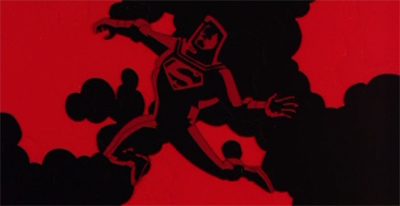
Blasts from the Past feels like it should be a better episode. After all, Superman’s relationship with his Kryptonian heritage should be fodder for good drama. If you read Superman as a parable for the American Dream – the story of an orphan from far away who comes to America and makes something of himself – it’s always fascinating to look at that story from the other direction. What are Superman’s ties to Krypton, a planet destroyed before he could speak? Does he define himself as Kryptonian?

Some versions of the character’s mythology suggest that his outfit is Kryptonian armour. Most recent takes on the character suggest that the famous “S-shield” is the emblem of the House of El. There are a lot of interesting questions about how an alien from a dead world who has become the protector of Earth must see himself. Is he one or other, both, or neither? Most interpretations seem to opt for “both”, although the suggestion is that Kal-El leans more heavily towards Earth.

Blasts from the Past should be a vehicle to explore this, bringing back two Kryptonian characters and allowing Superman to interact with them. At the very least, perhaps it could be an exploration of how much a childhood on Earth changed Superman. Instead, it feels like a rather bland rehash of Superman II, just with some names changed.

Red sky in the... well, eternity, I guess...

Red sky in the… well, eternity, I guess…


Continue reading

The Death & Return of Superman Omnibus (Review/Retrospective)

To celebrate the release of The Man of Steel this month, we’re going Superman mad. Check back daily for Superman-related reviews.

The Death & Return of Superman stands as one of the most influential and iconic Superman stories ever told. It was certainly the best-selling, even if that doesn’t necessarily make it the most-read, due to the nature of the nineties comic book speculation market. Read today, separate from all the hype and publicity and novelty items, it’s a very interesting part of the character’s lore. It’s certainly an ambitious tale, epic in scope. However, it’s very clearly disjointed and oddly paced and often demonstrates a strange disconnect with its own subject. A story with the title The Death & Return of Superman should probably offer some profound insight into its lead character. This just feels like a series of plot twists peppered with some casual observations.

Death of a hero...

Death of a hero…

Continue reading

Star Trek (Gold Key) #56 – No Time Like the Past (Review)

To celebrate the release of Star Trek: Into Darkness this month, we’ll be running through the first season of the classic Star Trek all this month. Check back daily to get ready to boldly go. It’s only logical.

We’ll be supplementing our coverage of the episodes with some additional materials – mainly novels and comics and films. This is one such entry.

It’s remarkable to think that Star Trek was kept alive in the decade between the airing of The Turnabout Intruder and Star Trek: The Motion Picture. The most popular television show to air in the 1968 and 1969 season was Rowan and Martin’s Laugh-In, a show that was apparently lucky to receive two “best of” DVD collections in the early part of the last decade, collecting a grand total of eight of the 140 episodes. Given that Star Trek didn’t even rank among the twenty highest rated shows of that broadcast season, it’s incredible that the show endured for so long.

To be fair, there is a lot of material which fills the gap between the last episode of the live action television show and the first feature film. There was Star Trek: The Animated Series, perhaps the most high-profile release. There were a few novels, even if the tie-in line wouldn’t necessarily take off until the eighties. And there were the comic books, produced by Gold Key, notable as perhaps the largest publisher of non-superhero comics in the seventies.

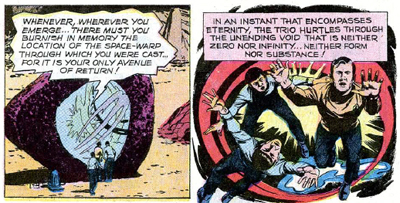
These comics weren’t classics. It’s hard to argue that they are essential additions to the mythos, or that anybody would miss anything be ignoring them entirely. However, there’s a weird pulpy sci-fi charm to these stories that makes them interesting, even when you would wonder whether the artist or writer had actually watched any episodes of the show they were apparently adapting.

Trippy!

Trippy!

Continue reading

Star Trek – The Devil in the Dark (Review)

To celebrate the release of Star Trek: Into Darkness this month, we’ll be running through the first season of the classic Star Trek all this month. Check back daily to get ready to boldly go. It’s only logical.

There are any number of ways to “get into” Star Trek, to jump on board the cult phenomenon. Despite decades of continuity, a lot of the franchise is accessible on its own terms, and it’s easy enough to come across a list of recommended classic episodes for a neophyte to sample. There are over seven hundred hours of Star Trek, so there’s something for everybody. And it’s perfectly possible to tailor a recommendation to the new viewer’s preferences.

Want proof that Star Trek can do credible drama? Stick on The City on the Edge of Forever. Fascinated by Spock? Try Amok Time. Want to watch William Shatner take on another leading character with a similar amount of gravitas? Give Space Seed a go. Want some high-concept sci-fi android stuff? Maybe What Are Little Girls Made Of? is right up your street. Want a contemporary commentary on the Vietnam War? Watch A Private Little War.

However, if you asked me to recommend an example of the franchise’s philosophy and its humanist values, executed with a superb level of craftsmanship, The Devil in the Dark is really the only choice. There’s a reason that Arthur C. Clarke considers it to be the most memorable episode of Star Trek ever produced.

Spock would have to have a heart of stone not be affected by this...

Spock would have to have a heart of stone not be affected by this…

Continue reading

Star Trek – Space Seed (Review)

To celebrate the release of Star Trek: Into Darkness this month, we’ll be running through the first season of the classic Star Trek all this month. Check back daily to get ready to boldly go. It’s only logical.

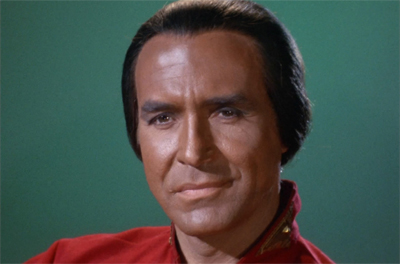
Following the commercial success (and lack of critical success) of Star Trek: The Motion Picture, Paramount made a conscious decision to side-line Gene Roddenberry. Given that his plans for the sequel involved Spock travelling through time to assassinate Kennedy, we can likely all agree that was probably a good thing. Harve Bennett was tasked with producing the sequel, and took to the task of researching what would become the second Star Trek film. Demonstrating considerable respect for the source material, Bennett locked himself away and screened all three seasons of the show, looking for inspiration.

Apparently he only needed to reach the tail end of the first season, because he had found the basis of his film by the closing credits of Space Seed.

You Khan do it...

You Khan do it…

Continue reading

Star Trek – The Return of the Archons (Review)

To celebrate the release of Star Trek: Into Darkness this month, we’ll be running through the first season of the classic Star Trek all this month. Check back daily to get ready to boldly go. It’s only logical.

It is really hard to believe that this is the first time we’ve really had one of these plots, with the Enterprise visiting an alien civilisation, meddling thoroughly and freeing the population from oppression. Of course, that’s probably because the universe seemed so vast an empty in the first few episodes. The only planets seemed to be either lifeless rocks or human colonies. From this point on, the galaxy is going to seem a whole lot busier.

Return of the Archons is a little bit like an expansion of the archetypal Star Trek plot established in What Are Little Girls Made Of? The Enterprise visits an alien world following up on the disappearance of Federation personnel. When they arrive, they discover sinister plans afoot involving evil artificial intelligences that plan on stomping out free will. Kirk promptly uses his humanity to talk the machines into destroying himself.

However, Return of the Archons deals with a whole civilisation trapped in the midst of this sinister robotic plot. Kirk and his crew aren’t strolling through an alien graveyard. This is a living, breathing society. And this is the first time that Kirk would save an entire civilisation.

Some men just want to watch the world burn...

Some men just want to watch the world burn…

Continue reading