• Following Us

  • Categories

  • Check out the Archives


  • Awards & Nominations

Star Trek: Deep Space Nine – Season 4 (Review)

This February and March (and a little bit of April), we’re taking a look at the 1995 to 1996 season of Star Trek, including Star Trek: Deep Space Nine and Star Trek: Voyager. Check back daily for the latest review.

The fourth season of Star Trek: Deep Space Nine is one of the best seasons of Star Trek ever produced.

The first three years of Deep Space Nine were relatively rocky, although not quite to the extent that accepted fandom wisdom would contend. Each of the first three seasons had strong episodes, with the second season in particular featuring a strong selection of episodes that clearly cemented the tone and mood of the series. Nevertheless, those three seasons were also remarkably uneven. This is entirely understandable; the production team were consciously pushing the boat out and it is to be expected that it might take a little while to steady the ship.
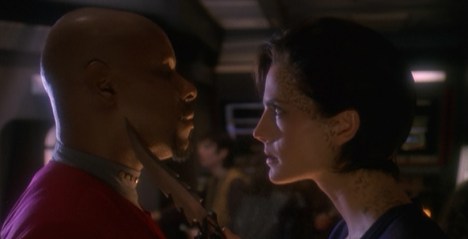
ds9-shatteredmirror20a

With the start of the fourth season, the ship has been steadied. After three years of experimenting and tinkering, the fourth season is all about application. It is about recognising the most successful aspects of what came before and compensating for what did not work. The four season is about refining and honing the best parts of those first three seasons and building a new show around it, right down to structuring The Way of the Warrior as a second pilot and featuring a new credits sequence.

Although Deep Space Nine would change quite a bit in the final three years of its run, the fourth season marks the point at which the series seems to have a firm sense of itself. Deep Space Nine has emerged from its chrysalis.
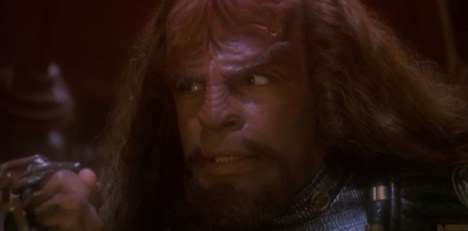
ds9-tothedeath2a

Continue reading

Star Trek: Deep Space Nine – Body Parts (Review)

This February and March (and a little bit of April), we’re taking a look at the 1995 to 1996 season of Star Trek, including Star Trek: Deep Space Nine and Star Trek: Voyager. Check back daily for the latest review.

Like The Quickening before it, Body Parts offers another glimpse at the humanism at the heart of Star Trek: Deep Space Nine.

Body Parts plays into the broader themes of the fourth season. Zack Handlen effectively and memorably described Deep Space Nine as “Star Trek’s version of the Island of Misfit Toys.” In a way, that has been true since Emissary; the episode where the series got a bitter widower who wasn’t even a proper captain and a chief engineer who used to manage a transporter room on the flagship. Characters like Odo and Garak were always outcasts, while it never felt like the crew operating the station could claim to be the franchise’s “best and brightest.”

"Look, we're all exhausted after the season that's been..."

“Look, we’re all exhausted after the season that’s been…”

However, the fourth season really emphasises this aspect of the series. Worf joins the cast in The Way of the Warrior, and is promptly cut off from his own people. In Sons of Mogh, Worf is quickly cut off from his own brother. Kira brings Tora Ziyal to the station in Return to Grace, and she reflects on her isolation in For the Cause. Odo’s estrangement from his own people will be properly formalised in Broken Link, when he is cast into a wilderness between human and changeling. Body Parts simply puts Quark through his version of this arc.

Body Parts is essentially a story about how Quark is no longer a proper Ferengi. He has been exposed to the values and ideals of the Federation, corrupted and changed through his time on Deep Space Nine. Although this winds up costing Quark a lot, the final scenes of Body Parts suggest that Quark has also benefited from his time on the station. Body Parts suggests that wandering out into the winder universe and exposing yourself to different cultures is inherently a good thing, even if it does generate tension.

Bearing the Brunt of his wrath...

Bearing the Brunt of his wrath…

Continue reading

Star Trek: Deep Space Nine – To the Death (Review)

This February and March (and a little bit of April), we’re taking a look at the 1995 to 1996 season of Star Trek, including Star Trek: Deep Space Nine and Star Trek: Voyager. Check back daily for the latest review.

To the Death continues the late fourth season shift in focus back towards elements unique to Star Trek: Deep Space Nine.

At the end of the third season, the production team found themselves receiving notes and input from the network, who wanted Deep Space Nine to go in a different direction. The writing staff on Deep Space Nine were willing to compromise, and took some of the network input on board. As a result, The Way of the Warrior added Worf to the cast and brought the Klingons back to the fore. However, it was clear that Deep Space Nine was not particularly interested in telling a long-term story about new hostilities between the Federation and the Klingons.

The Weyoun of the Warrior...

The Weyoun of the Warrior…

Over the course of the fourth season, the writing staff’s original plans and interests began to reassert themselves in an organic and logical manner. A story similar to Homefront and Paradise Lost had originally been planned to bridge the third and fourth seasons; instead, it was pushed back to almost half-way through the fourth seasons. The Bajoran religion was still the focus of Accession. Gul Dukat received a character arc in Indiscretion and Return to Grace. The Jem’Hadar got a focus episode in Hippocratic Oath. Ferengi politics popped up in Bar Association.

However, these aspects of the show really galvanise towards the end of the fourth season, with the production team really focusing on the elements that had been important during the third season and which would become even more important during the fifth season. For the Cause marked the return of the Maquis as a political player. Body Parts focused on Ferengi culture. However, three of the season’s final four episodes focus on the Dominion, working to reestablish the Dominion as the most credible of threats and the show’s primary antagonists.

Boy, does Sisko ever break out the welcome wagon...

Boy, does Sisko ever break out the welcome wagon…

Continue reading

Star Trek: Deep Space Nine – For the Cause (Review)

This February and March (and a little bit of April), we’re taking a look at the 1995 to 1996 season of Star Trek, including Star Trek: Deep Space Nine and Star Trek: Voyager. Check back daily for the latest review.

For the Cause essentially refocuses the fourth season of Star Trek: Deep Space Nine, rallying the season’s strength as the finalé approaches.

After a bunch of lackluster episodes, from Rules of Engagement through to Shattered Mirror and The Muse, the show finds its voice once again. For the Cause is not just a great episode of television, it is an episode uniquely tailored to this particular show. For the Cause would not work on any of the other for Star Trek shows, so precisely is it calibrated to what makes Deep Space Nine unique. It is a story about trust and betrayal, but also one that chips away at the romance of Starfleet and the Federation.

Pinning his colours to the mast...

Pinning his colours to the mast…

What is particularly interesting about the stretch of episodes running from here through to Broken Link is the sense that Deep Space Nine is getting back to basics. The fourth season is somewhat overshadowed by the addition of Worf to the cast and the emphasis placed on the Klingons in The Way of the Warrior. Although the production team do a great job working within the studio mandate, this shift in focus has meant that many more traditional elements of Deep Space Nine have been shunted into the background.

The final stretch of the fourth season finds the show returning to ideas that were threaded through earlier seasons and were shifted slightly out of focus with the return of the Klingons. For the Cause brings the Maquis back to the fore. To the Death, The Quickening and Broken Link focus on the Dominion threat. Body Parts returns to Ferengi politics. To be fair, the Maquis were the only element that totally faded from view over the fourth season, so it makes sense to return to them first.

A stunning betrayal...

A stunning betrayal…

Continue reading

Star Trek: Deep Space Nine – Shattered Mirror (Review)

This February and March, we’re taking a look at the 1995 to 1996 season of Star Trek, including Star Trek: Deep Space Nine and Star Trek: Voyager. Check back daily Tuesday through Friday for the latest review.

Shattered Mirror and The Muse represent the nadir of the fourth season of Star Trek: Deep Space Nine.

To be fair, it could be worse. Neither episode is Let He Who is Without Sin or Profit and Lace or The Emperor’s New Cloak. Neither is a good episode by any measure, and they certainly rank among the weakest episodes in the show’s seven year run. However, they are more misbegotten lumps of clay than spectacular disasters. Still, as critical defenses go, that is a fairly unconvincing effort. “It could be a lot worse” is hardly the most ringing of critical endorsements.

A close shave...

A close shave…

On the other hand, the fourth season of Deep Space Nine is a fairly spectacular piece of television when taken as a whole. There is a strong argument to be made for the fourth season as the most consistently entertaining season of Deep Space Nine, which stands it in good stead when placing it in the context of the franchise as a whole. The fourth season of Deep Space Nine is one of the best seasons that the franchise ever produced, right alongside the third season of Star Trek: The Next Generation.

However, even the third season of The Next Generation had its weaker moments; The Price and Ménage à Troi come to mind. The realities and demands of television production mean that a perfect twenty-six episode season without any duds is an aspirational object rather than an achievable goal. The constant churn required to produce twenty-six forty-five minute blocks of television within nine or ten months means that not every episode is going to end up perfectly sculpted. Some will be great, some will be bland. Some will be bad.

ds9-shatteredmirror11a

Yanking his chain…

Continue reading

Star Trek: Deep Space Nine – Sons of Mogh (Review)

This February and March, we’re taking a look at the 1995 to 1996 season of Star Trek, including Star Trek: Deep Space Nine and Star Trek: Voyager. Check back daily Tuesday through Friday for the latest review.

Moving Worf over from Star Trek: The Next Generation to Star Trek: Deep Space Nine could be seen as a cynical move.

In fact, it was a bit of a cynical move, a rare example of executive meddling in the basic plot of Deep Space Nine. Although there is some disagreement as to precisely how much give and take was involved in the decision-making process by the production team and the studio, it was clear that the writing staff had not originally envisaged Worf joining the show and that the addition of Michael Dorn to the show’s cast was an attempt to shore up the show’s ratings and profile. These are the realities of network television production.

As the world Kurns...

As the world Kurns…

At the same time, moving Worf over to Deep Space Nine from The Next Generation afforded the production team unique opportunities and storytelling possibilities. With Star Trek: Voyager unfolding in the distant Delta Quadrant, Deep Space Nine had been largely free to reinvent and rework the franchise’s status quo for its own purpose. Deep Space Nine was allowed to play with toys that would have been off limits while The Next Generation was on the air; war with the Klingons, Federation civil war, Dominion invasion.

However, actually transitioning a character from The Next Generation to Deep Space Nine allowed the production team even more freedom and even greater contrast. Although very clearly the same character, Worf changes between The Next Generation and Deep Space Nine. There is a sense that Deep Space Nine is a lot more willing to carry certain aspects of the character to their logical conclusion, in a way that was simply not feasible on The Next Generation. This is clear in Sons of Mogh, when Worf attempts to murder his own brother.

Flirty!

Flirty!

Continue reading

Star Trek: Deep Space Nine – Crossfire (Review)

This February and March, we’re taking a look at the 1995 to 1996 season of Star Trek, including Star Trek: Deep Space Nine and Star Trek: Voyager. Check back daily Tuesday through Friday for the latest review.

In many ways, Star Trek: Deep Space Nine has aged remarkably well.

Episodes like Homefront and Paradise Lost arguably have greater resonance now than they did on initial broadcast, their commentary on state authority and the erosion of civil liberties packing more punch during the War on Terror than it did during the long nineties. The Way of the Warrior even invites comparison to the invasion of Iraq, despite the fact that the episode aired eight years before the invasion took place. In many respects, Deep Space Nine has aged considerably better than its siblings.

Odo's attempts at redecorating were not going well...

Odo’s attempts at redecorating were not going well…

On the other hand, there are some aspects that have not aged particularly well. There are certain elements of Deep Space Nine that feel ill-judged or ill-advised in hindsight; for example, the thinly-veiled (and awkward) racial politics inherent in the exploration of the Jem’Hadar in The Abandoned. The relationship between Odo and Kira is another such example, the show’s central “will they?”/“won’t they?” dynamic seeded in Necessary Evil and brought to fruition in Heart of Stone.

Taken on its own merits, Crossfire is a spectacular piece of television. It is skilfully written and directed, with a superb central performance from Rene Auberjonois as Odo. The plot of the episode seems to focus on Odo working through his long-simmering crush on Kira, suffering a near breakdown and eventually deciding to work through it. It is, in many ways, the best possible story that could be told using the relationship. However, the problem is that Crossfire is not the end of this particular thread. It is just a hurdle for Odo to pass.

Quark serves some unpalatable truths...

Quark serves some unpalatable truths…

Continue reading

Star Trek: Deep Space Nine – Our Man Bashir (Review)

This February and March, we’re taking a look at the 1995 to 1996 season of Star Trek, including Star Trek: Deep Space Nine and Star Trek: Voyager. Check back daily Tuesday through Friday for the latest review.

Our Man Bashir is an underrated masterpiece.

It is possibly the best holodeck (or holosuite) episode in the history of the franchise; only Ship in a Bottle can really compete. A lot of this is down to the production value of the episode; Our Man Bashir looks and sounds beautiful, a delightfully detailed throwback to its source material. The production team on the Star Trek franchise seldom get enough credit for their skill at realising alien worlds and cultures from scratch, but their beautiful evocation of sixties design is breathtaking. Our Man Bashir is a clear forerunner to Trials and Tribble-ations, less than a year away.

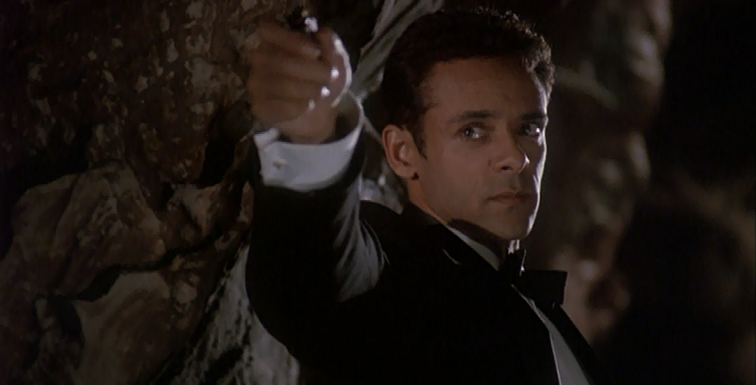
"The name's Bashir, Julian Bashir..."

“The name’s Bashir, Julian Bashir…”

However, there is more to it than that. Like Little Green Men, Our Man Bashir succeeds as a (relatively) light-hearted run-around that never loses track of its characters. The first three seasons of Star Trek: Deep Space Nine struggled with the character of Julian Bashir; audience members could wait entire seasons for a good Bashir episode. With the fourth season, three come along at once. Our Man Bashir might look light and fluffy – and it largely is – but it never loses sight of its core character dynamics in the midst of all the fun unfolding around them.

More than that, Our Man Bashir plays into the broader themes and strengths of the fourth season. The climax of the episode feels like Deep Space Nine is ruminating on its new-found place dictating the direction of the Star Trek canon. Bashir’s decision to “save the day by destroying the world” feels oddly prophetic. The fifth season of the show would find the writers destroying some of the most fundamental rules of the franchise in an effort to keep things vital.

Got some bottle...

Got some bottle…

Continue reading

Star Trek: Deep Space Nine – The Sword of Kahless (Review)

This February and March, we’re taking a look at the 1995 to 1996 season of Star Trek, including Star Trek: Deep Space Nine and Star Trek: Voyager. Check back daily Tuesday through Friday for the latest review.

The Sword of Kahless is the first episode of Star Trek: Deep Space Nine to focus primarily on Worf.

The character arrived on the show (and the station) in The Way of the Warrior, but his development since then had largely been confined to secondary plots. In Hippocratic Oath and Starship Down, Worf learned that life on Deep Space Nine would not be the same as life on the Enterprise. However, he had not really been the centre of any given episode before this point. (Even in The Way of the Warrior, Worf’s arrival and crisis of conscience was just one facet of a larger political situation.)

Sword of destiny...

Sword of destiny…

This is quite remarkable, and a result of a number of unique factors. Most obviously, Worf was not just any new cast member. Worf was a character who had arrived over from Star Trek: The Next Generation, and so was something of a known quantity to fans. There was less of a need to establish who Worf was, because most fans already knew. More than that, a lot of the early fourth season episodes had been in development before Michael Dorn had been confirmed to be joining the ensemble. As such, they tended to focus on other characters.

Nevertheless, it is remarkable that the fourth season is almost one-third of the way through its run before the production team devoted an episode to the newest member of the cast. It is a testament to the production team that the show had the confidence and restraint to adopt such an approach to such an obviously popular character. More than that, The Sword of Kahless is undoubtedly a Worf-centric episode, but it is a Worf-centric episode that makes it quite clear that Worf is a Deep Space Nine character now.

"Thank you, sir. May I have another?"

“Thank you, sir. May I have another?”

Continue reading

Star Trek: Deep Space Nine – Little Green Men (Review)

This February and March, we’re taking a look at the 1995 to 1996 season of Star Trek, including Star Trek: Deep Space Nine and Star Trek: Voyager. Check back daily Tuesday through Friday for the latest review.

Little Green Men might just be the best Ferengi episode from the seven-year run of Star Trek: Deep Space Nine.

It helps that the episode is very clearly a passion project for writers Ira Steven Behr and Robert Hewitt Wolfe. More than any other Star Trek show, Deep Space Nine had a deep and abiding affection for classic cinema. Michael Piller might have tried to steer the first two seasons of Star Trek: Voyager back to classic western storytelling tropes, while Rick Berman and Brannon Braga might have promised that Star Trek: Enterprise would be a “back to basics” reimagining of the show, but Deep Space Nine was a show that adored old-school Hollywood.

Quark's Family Vacation...

Quark’s Family Vacation…

This was reflected in a number of ways. In Past Tense, Part II, B.C. planned to escape to Tasmania because Errol Flynn was born there. There was also the fact that Ira Steven Behr could never resist the lure of a good homage to classic cinema – even when it was not the best of ideas. Meridian was written as an attempt to adapt Brigadoon to the Star Trek universe; Fascination was based on the 1935 adaptation of A Midsummer Night’s DreamRules of Acquisition was basically YentlProfit and Loss was Casablanca.

It seemed almost inevitable that at some stage the cast and crew of Deep Space Nine would find themselves colliding with classic Hollywood.

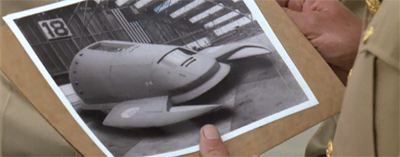
"Well, it's not a saucer..."

“Well, it’s not a saucer…”

Continue reading