• Following Us

  • Categories

  • Check out the Archives


  • Awards & Nominations

Doctor Who: The Brain of Morbius (Review)

To celebrate the fiftieth anniversary of the longest-running science-fiction show in the world, I’ll be taking weekly looks at some of my own personal favourite stories and arcs, from the old and new series, with a view to encapsulating the sublime, the clever and the fiendishly odd of the BBC’s Doctor Who.

The Brain of Morbius originally aired in 1976.

How did you get her here, by the way?

The power of the Sisterhood.

Really? What, you mean you still practise teleportation? How quaint. Now, if you got yourself a decent forklift truck–

Doctor, you have but a little time left. Will you waste it prattling nonsense or confess your guilt.

What do you mean, I have but a little time left?

Before you die.

But I’m only seven hundred and forty nine. Life doesn’t begin until seven hundred and —

At the next sun. That is agreed.

Not by me, it isn’t. I haven’t even been consulted.

– The Doctor, Ohica and Maren are clear on a few things

The Brain of Morbius continues the trend of phenomenally strong episodes in Baker’s sophomore season. Barring The Android Invasion, it’s a fairly stellar run of adventures, and I think that it’s these stories that a lot of people (casual follower and hardened fanatic alike) think of when they remember Tom Baker’s celebrated tenure in the role. Producer Philip Hinchcliffe continues his “gothic adventures… in space!” trend from Planet of Evil, this time offering a futuristic take on a Hammer-Horror-style Frankenstein. And the results are as fun, as wonderful and as grotesque as you might have imagined.
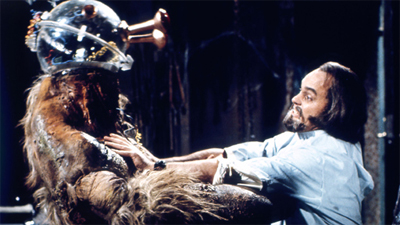
They did the monster mash…

Continue reading

Doctor Who: Utopia (Review)

To celebrate the fiftieth anniversary of the longest-running science-fiction show in the world, I’ll be taking weekly looks at some of my own personal favourite stories and arcs, from the old and new series, with a view to encapsulating the sublime, the clever and the fiendishly odd of the BBC’s Doctor Who.

Utopia originally aired in 2007.

Ooo, new voice. Hello, hello. Hello. Anyway, why don’t we stop and have a nice little chat while I tell you all my plans and you can work out a way to stop me, I don’t think.

Hold on. I know that voice.

I’m asking you really properly. Just stop. Just think!

Use my name.

Master. I’m sorry.

Tough!

– the Master, Martha and the Doctor welcome a new old face back

It’s very hard to talk about Utopia without seguing into talking about The Sound of Drums or The Last of the Time Lords. Certainly the third season finalé is the most ambitious of Russell T. Davies’ end-of-season adventures. It’s a three-part adventure, the equivalent to one of those classic gigantic six-part serials. If you accept that logic, it breaks down neatly into the old two-parter-and-four-parter format that the writers used to use to prevent an extended story from dragging too much.

Utopia, of course, serves the function of the two-parter in this classic structure – the smaller chunk of the episode with its own plot points and characters and settings, but with very definite connections to the rest of the adventure. However, I’d argue that Utopia is a lot more successful than either of the two episodes following, and a lot of that stems from the fact that it devotes a considerable amount of time to quietly setting up plot points and characters that will pay off down the line.

It’s also a powerful subversion of the fundamental ethos of Doctor Who, which makes it particularly effective as we head into two episodes where the Master hijacks not only the TARDIS but the show itself.

No time like the end of the universe...

No time like the end of the universe…

Continue reading

Doctor Who: The End of the World (Review)

You’ve seen how dangerous it is. Do you want to go home?

I don’t know. I want… Oh, can you smell chips?

Yeah… Yeah.

I want chips.

Me too.

Right then, before you get me back in that box, chips it is, and you can pay.

No money.

What sort of date are you? Come on then, tightwad, chips are on me. We’ve only got five billion years till the shops close.

-the Doctor and Rose contemplate the mysteries of the universe

If Rose proved that Doctor Who was back for a new generation, The End of the World demonstrates that it’s still the same show that it was all those years ago. The show has always struggled to do “future” on the budget afforded by the BBC, but this second episode of the show offers a glimpse of what the series was capable of. It’s not quite perfect, but has all the ambition that a revived Doctor Who needs in its first season, laying a great deal of thematic groundwork and character development on top of a visual feast. If Rose promised an update to everyone’s favourite Time Lord for the twenty-first century, The End of the World existed to assure viewers that some things never quite change.

... and I feel fine...

… and I feel fine…

Continue reading

Doctor Who: The Claws of Axos (Review)

To celebrate the fiftieth anniversary of the longest-running science-fiction show in the world, I’ll be taking weekly looks at some of my own personal favourite stories and arcs, from the old and new series, with a view to encapsulating the sublime, the clever and the fiendishly odd of the BBC’s Doctor Who.

The Claws of Axos originally aired in 1971.

Are you trying to tell me you can absorb the total output of this complex in a police box?

Yes.

– Hardiman and the Master discover that self-confidence is a genetic Time Lord trait

The Claws of Axos tends to come in for a fair bit of criticism for pretty much being the quintessential Earth-based Jon Pertwee story, with very little exceptional to distinguish it from the pack. Personally, I’m actually quite fond of it, perhaps precisely for that reason. I think you’re hard-pressed to find an adventure in the early part of Jon Pertwee’s tenure that so effectively and so efficiently captures the spirit of the show – both good and bad. That kind of makes The Claws of Axos stand out if only because it so perfectly embodies those early Pertwee years.

Eye see you…

Continue reading

Doctor Who: Terror of the Autons (Review)

To celebrate the fiftieth anniversary of the longest-running science-fiction show in the world, I’ll be taking weekly looks at some of my own personal favourite stories and arcs, from the old and new series, with a view to encapsulating the sublime, the clever and the fiendishly odd of the BBC’s Doctor Who.

Terror of the Autons originally aired in 1971.

That jackanapes! All he ever does is cause trouble!

– nice to see the Doctor taking the Master seriously

I think you can make a fairly credible argument that Jon Pertwee’s first season of Doctor Who stands out as one of the best years the show ever produced. Facing the challenge of migrating from black-and-white to colour, and forced to tell stories entirely set on present-day Earth, the writers and producers managed to craft a season of television that I think stands quite well when measured against the very best of vintage BBC science-fiction. Sure, there may have been walking shop-front dummies, lizard people, animal men and haunted space suits, but the stories were surprisingly mature and relatively clever. The writers used the framework of Doctor Who to tell four very good and very philosophical stories exploring both bold science-fiction high-concepts (alternate universes) and also moral quandaries (how humanity relates to the unknown).

Terror of the Autons is the first story in Jon Pertwee’s second season. I’m actually quite fond of it, and it’s packed to the brim with iconic imagery, so it’s very difficult to be too critical of it. After all, any adventure that left so large an impression on the public imagination must have something to recommend it. However, there’s a very clear sense of regression here. It seems, from this first serial of Pertwee’s second year, that the agenda has changed somewhat.

Terror of the Autons is arguably more indicative of Pertwee’s time in the lead role than any of those stories from his first year. It’s exciting, it’s fast-paced, it has a decidedly man-of-mystery feeling to it, but it also feels somewhat light and a little insubstantial. Not that there’s anything wrong with that, but it just feels like a definite regression.

Master of the Whoniverse?

Master of the Whoniverse?

Continue reading

Doctor Who: Attack of the Cybermen (Review)

To celebrate the fiftieth anniversary of the longest-running science-fiction show in the world, I’ll be taking weekly looks at some of my own personal favourite stories and arcs, from the old and new series, with a view to encapsulating the sublime, the clever and the fiendishly odd of the BBC’s Doctor Who.

Attack of the Cybermen originally aired in 1985.

We realise this must be confusing for you.

– Threst tells it how it is

There is a tendency, these days, to be more sympathetic in appraisals of the Colin Baker years. Everybody – including Baker – accepts that his tenure could have gone a lot smoother. Watching Attack of the Cybermen, I can’t help but feel sorry for just about everybody involved. Rewatching Colin Baker’s first season, I can’t help but feel that the problem with this period of the show wasn’t that the production crew were making new mistakes or deviating from good ideas. It seems quite apparent that a lot of the major problems were embedded during Peter Davison’s time in the role.

The problem with Colin Baker’s first year on the show was that the writers and producers allowed those already significant flaws to attain critical mass.

A crushing blow...

A crushing blow…

Continue reading

Doctor Who: The Tomb of the Cybermen (Review)

To celebrate the fiftieth anniversary of the longest-running science-fiction show in the world, I’ll be taking weekly looks at some of my own personal favourite stories and arcs, from the old and new series, with a view to encapsulating the sublime, the clever and the fiendishly odd of the BBC’s Doctor Who.

The Tomb of the Cybermen originally aired in 1967.

In fact you might say they’ve had a complete metal breakdown.

Oooooh….

I’m sorry, Jamie.

– traveling with the Doctor can be quite pun-ishing

The Tomb of the Cybermen is a bit of miracle. Originally thought lost to history in the great BBC archives purge (along with most of the Troughton era), The Tomb of the Cybermen was recovered completely intact from Hong Kong in 1992, a quarter of a century after the adventure aired and several years after the original series had been cancelled by the BBC. It remains perhaps the most significant recovery in recent memory, and fosters hope that there might be a few other serials that have been preserved in their entirety. Still, even outside of its significant historical context, I’d make the argument that The Tomb of the Cybermen stands as the best adventure to feature the metallic men.

Sealing your tomb…

Continue reading

Doctor Who: Revenge of the Cybermen (Review)

To celebrate the fiftieth anniversary of the longest-running science-fiction show in the world, I’ll be taking weekly looks at some of my own personal favourite stories and arcs, from the old and new series, with a view to encapsulating the sublime, the clever and the fiendishly odd of the BBC’s Doctor Who.

Revenge of the Cybermen originally aired in 1975.

Then what is it? You’ve no home planet, no influence, nothing. You’re just a pathetic bunch of tin soldiers skulking about the galaxy in an ancient spaceship.

– the Doctor pretty much sums it up

To be fair, the title should the first clue that something is not quite right here.

Tom Baker’s first season of Doctor Who contains two genuine classics in the form of Genesis of the Daleks and The Ark in Space, along with the quite good Sontaran Experiment, but it was bookended by two absolute clunkers. Indeed, Revenge of the Cybermen and Robot both feel like holdovers from the Barry Letts era of the show, and they’d both probably seem a whole lot more entertaining as vehicles for Jon Pertwee rather than Tom Baker.

Sadly, we’ve got what we’ve got, so let’s just try to work through this.

Sadly it's A bomb, not THE bomb...

Sadly it’s A bomb, not THE bomb…

Continue reading

Doctor Who: The Infinite Quest (Review)

To celebrate the fiftieth anniversary of the longest-running science-fiction show in the world, I’ll be taking weekly looks at some of my own personal favourite stories and arcs, from the old and new series, with a view to encapsulating the sublime, the clever and the fiendishly odd of the BBC’s Doctor Who.

The Infinite Quest was originally broadcast in weekly instalments on Totally Doctor Who in 2007.

… And then I’ll have my revenge! Revenge! REVENGE!

– just in case you didn’t get that Baltazar was evil

The Infinite Quest is a 45-minute animated episode of Doctor Who that was broadcast as part of Totally Doctor Who in 2007, during the third season of the revived show. It was written by Alan Barnes, who has written a number of Big Finish audio plays for Doctor Who, and was directed by Gary Russell. The animation was produced by Cosgrave Hall, who animated the missing episodes of The Invasion for its 2006 DVD release. So there’s a fairly considerable amount of talent involved in this project, which is notable as not only the first full-length animated Doctor Who episode to be broadcast on television, but is the first fully serialised story to be told since the show was revived. It was originally broadcast in chunks of three-and-a-half minutes.

Flight of fancy...

Flight of fancy…

Continue reading

Doctor Who: Shada (2003) (Review)

To celebrate the fiftieth anniversary of the longest-running science-fiction show in the world, I’ll be taking weekly looks at some of my own personal favourite stories and arcs, from the old and new series, with a view to encapsulating the sublime, the clever and the fiendishly odd of the BBC’s Doctor Who.

Shada originally broadcast on the BBC website in 2003.

Doctor, a fool would realise that it was written in code!

Skagra, this thing is written in code!

– Skagra and the Doctor have some communication difficulties

Has a failed Doctor Who story every haunted the collective consciousness in the way that Shada does? There’s a wealth of adventures that were proposed and never produced, from the last Master story that never happened in The Final Game, through to the laundry list of unproduced adventures that would have made up Colin Baker’s second season if the show hadn’t been parked by the BBC. However, Shada is something different. So different, in fact, that it has been told quite a few times. In fact, it might be the only Doctor Who story I end up covering twice.

This was a webcast version, a very simply animated version of the tale produced for the BBC website, using an audio play adapted from Douglas Adams’ original script by Big Finish, the fan collective who produce a range of celebrated audio plays for the classic series. Starring Paul McGann, the Eighth Doctor who never really got a chance to develop the role in live action, it’s an interesting glimpse at what might have been.

Lost in time...

Lost in time…

Continue reading