• Following Us

  • Categories

  • Check out the Archives


  • Awards & Nominations

Doctor Who: A Christmas Carol (Review)

To celebrate the fiftieth anniversary of the longest-running science-fiction show in the world, I’ll be taking weekly looks at some of my own personal favourite stories and arcs, from the old and new series, with a view to encapsulating the sublime, the clever and the fiendishly odd of the BBC’s Doctor Who.

A Christmas Carol originally aired in 2010.

If you’re my babysitter, why are you climbing in the window?

Because if I was climbing out of the window, I’d be going in the wrong direction. Pay attention.

– Kazran and the Doctor get things straight

A Christmas Carol might just be the best Doctor Who Christmas Special ever produced, if only because it’s such a brilliantly obvious idea, executed with the show’s traditional wit and charm. Russell T. Davies tended to write the Christmas Special in the style of a gigantic blockbuster episode of Doctor Who, but Moffat adopts a slightly different approach to what has quickly become the annual tradition of the Doctor Who Christmas Special.

Davies traditionally had the Doctor collide with genres of Christmas television viewing. The Christmas Invasion was American blockbuster sci-fi, The Runaway Bride was fun odd-couple comedy action film, Voyage of the Damned was a disaster flick in space and The Next Doctor was a celebration of quaint Victoriana. In contrast, Moffat has Doctor Who collide with beloved children’s stories in his first two Christmas Specials. His second two are burdened with dealing with left-over plot threads.

A Christmas Carol is perhaps the most effective distillation of “Doctor Who as a story” that the show has ever managed, on top of being a wonderfully moving piece of Christmas television and hitting on the major themes of the Moffat era as a whole.
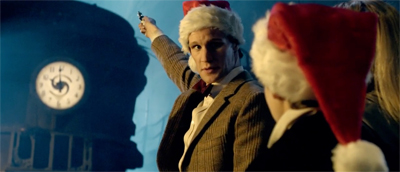
Turning back the clock...

Turning back the clock…

Continue reading

Doctor Who: The Specials (Review/Retrospective)

In theory, the specials were a great idea. The BBC is in the middle of converting to high-definition broadcast. One of their best-loved and most respected dramas isn’t quite ready to make that leap, and will require extensive re-working in order to be sustainable for high-definition broadcast, which seems to be the future of home entertainment. It’ll be a year before the show can get back to churning out thirteen episodes and a Christmas Special.

However, the show runner who brought the show back from the dead and turned it into a highlight of your broadcast schedule, and the beloved lead actor who has become deeply associated with the lead role are willing to do a series of five specials that you can broadcast to fill the gap year. Producing a series of Doctor Who specials to tide over the viewing public and keep the show fresh in the public’s mind was a great idea. After all, you don’t want fans to forget about the show.

doctorwho-theendoftimepart2o

The plan has the added benefit of allowing Russell T. Davies and David Tennant a bit more freedom to stretch their wings. Davies can work on Torchwood in a way that he was never able to find time before, producing the superb Children of Earth. Tennant can work with Royal Shakespearean Company, playing the lead in Hamlet. All this, and fans get their prescription dose of Doctor Who and the BBC has the time to upgrade the show so it can broadcast in high definition. Everybody wins! Everybody stays happy!

Unfortunately, there’s a bit of a catch. It turns out that these five episodes have to do more than merely “tide” fans over. These five specials are also the last episodes that will be written by Davies and that will star Tennant. So these five specials become more than just a way to stop the public forgetting about Doctor Who. They also have to close out what has been a phenomenal era for the show, and wrap up everything in a nice big bow. And this is where the specials don’t really work.

doctorwho-thewatersofmars19

Continue reading

Doctor Who: The Next Doctor (Review)

To celebrate the fiftieth anniversary of the longest-running science-fiction show in the world, I’ll be taking weekly looks at some of my own personal favourite stories and arcs, from the old and new series, with a view to encapsulating the sublime, the clever and the fiendishly odd of the BBC’s Doctor Who.

The Next Doctor originally aired in 2008.

Oh, goodness me. Well. But this is… but this is nonsense.

Well, that’s one word for it.

Complete and utter, wonderful nonsense. How very, very silly.

– Jackson Lake and the Doctor

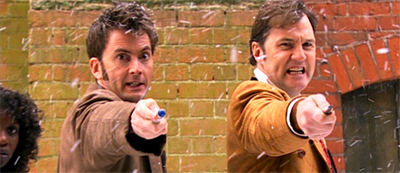
The Next Doctor actually has a pretty audacious concept. It’s one gigantic tease that plays off the audience’s media savvy. Airing after David Tennant’s departure from the role had been announced, but before Matt Smith had been named as Tennant’s successor, The Next Doctor is one gigantic tease. Like the surprise “regeneration” at the climax of The Stolen Earth, it’s a shrewd attempt to turn the audience’s expectations against themselves.

After all, the gap between an announced departure of an existing lead and the point where he actually leaves is rife for experimentation – particularly in a show about time travel. Up until The Next Doctor actually aired, it was quite possible that David Morrissey was Tennant’s successor, and The Next Doctor was a rather clever twist on the classic “multi-Doctor” story by having the Doctor team up with his future self.

Of course, as with The Doctor’s Daughter, Davies was just teasing. It’s to Davies’ credit that The Next Doctor remains interesting even after the illusion begins to slip. The first half is actually a wonderfully solid mystery and character study, albeit one that descends into confusion and chaos in the second half of the episode.

The Next Doctor...?

The Next Doctor…?

Continue reading

Doctor Who: The Curse of Fenric – Special Edition (Review)

To celebrate the fiftieth anniversary of the longest-running science-fiction show in the world, I’ll be taking weekly looks at some of my own personal favourite stories and arcs, from the old and new series, with a view to encapsulating the sublime, the clever and the fiendishly odd of the BBC’s Doctor Who.

The Curse of Fenric originally aired in 1989. The special edition cut of the episode was released on DVD in 2003.

I’ve said it a lot over this past year, but you really have to be incredibly grateful for the wonderful team behind the classic Doctor Who DVD releases. Not only do they loving restore classic adventures that might be forgotten to the ages, and not only do they packages the episodes with buckets of in-depth and lovingly-made featurettes, but they also occasionally revisit classic serials to bring them up-to-date, or to move them more in line with the director or writer’s artistic vision. Sure, some of these “special editions” occur in the most random of places (Planet of Fire, anyone?) or simply to remove a few technical impairments holding a story back from being an entertaining romp (as in Day of the Daleks), but occasionally they do something more substantial. In this instance, they make a great adventure into something truly spectacular.

This is not a drill…

Continue reading

Doctor Who: Planet of the Dead (Review)

To celebrate the fiftieth anniversary of the longest-running science-fiction show in the world, I’ll be taking weekly looks at some of my own personal favourite stories and arcs, from the old and new series, with a view to encapsulating the sublime, the clever and the fiendishly odd of the BBC’s Doctor Who.

Planet of the Dead originally aired in 2009.

Hello, I’m the Doctor. Happy Easter!

– the Doctor sets the mood

Planet of the Dead is light-weight Doctor Who. That wouldn’t normally be a problem. In fact, there’s a significant portion of each season devoted to light-weight run-around adventures. The problem is that it didn’t air as part of a season. It aired as the first piece of Doctor Who since Christmas and the next aired around Halloween. This was something of an attempt to tide fans over, to remind everybody that Doctor Who was still on the air while Steven Moffat and Matt Smith prepared to take over the TARDIS, the BBC got used to filming in HD and David Tennant pursued his career beyond the show.

As a result, the special feel a little funny. In a way, they seem like an attempt to truncate a standard season of Davies’ Doctor Who. The Next Doctor fits the mould of Christmas special quite well. It even snows! The Waters of Mars is the darker second two-parter of the season, dealing with bigger ideas and adult fears. The End of Time is very much a spiritual successor to Journey’s End. All of this is a way of pointing out that Planet of the Dead is clearly designed to serve as the bombastic family-friendly adventure two-parter that typically aired after the first two episodes of a given season.

As such, the logical point of comparison is Rise of the Cybermen, The Sontaran Stratagem or Daleks in Manhattan. Indeed, Planet of the Dead is conspicuous for its gratuitous location shooting; the last time the production team went abroad to film a story was Daleks of Manhattan, even if the cast stayed at home that time. The problem is that those light two-parters are tolerable in the context of a longer series. On its own, Planet of the Dead is far from satisfying.

Egging him on...

Egging him on…

Continue reading

Doctor Who: The Sun Makers (Review)

To celebrate the fiftieth anniversary of the longest-running science-fiction show in the world, I’ll be taking weekly looks at some of my own personal favourite stories and arcs, from the old and new series, with a view to encapsulating the sublime, the clever and the fiendishly odd of the BBC’s Doctor Who.

The Sun Makers originally aired in 1977.

Why did you come here, then?

Because my new little chum here seemed unhappy about something.

Mandrell discovers all he needs to know about the Doctor

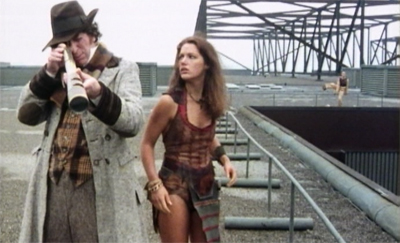
The Sun Makers was reportedly written as a result of a disagreement between writer Robert Holmes and the British Revenue and Customs. That’s the oft-cited background to the story, so well known that it’s even included on the notes included in the DVD release. With that summary, you’d expect The Sun Makers to be a condemnation of the tax system, and a protest at the government’s funnelling off of money from the individual to pay like pesky things like roads or schools or hospitals.

Instead, Holmes has crafted The Sun Makers as something altogether more compelling and instructive. Rather pointedly, while The Sun Maker is a story about excessive taxation, the episode casts a large interstellar corporation as the villain of the piece. The episode’s primary antagonist isn’t a state official, it’s a single-minded number-crunching accountant who operates a large corporation that has managed to turn light itself into a financial commodity. This isn’t the story about individuals fighting for the right not to pay tax, it’s people fighting for decent working and living conditions.

Indeed, it’s quite easy to read The Sun Makers as a rather socialist piece of Doctor Who, ending with the massive organisation of the working class to resist their greedy capitalist overlords. That’s quite a radical shift from the story you’d expect given the background. In that respect, it seems almost like a call-forward to the pointed subversive social commentary of the Cartmel and even Davies eras.

I see the future...

I see the future…

Continue reading

Doctor Who: Blood of the Daleks (Review)

To celebrate the fiftieth anniversary of the longest-running science-fiction show in the world, I’ll be taking weekly looks at some of my own personal favourite stories and arcs, from the old and new series, with a view to encapsulating the sublime, the clever and the fiendishly odd of the BBC’s Doctor Who.

Blood of the Daleks originally broadcast in 2006-2007.

Blood of the Daleks is an interesting piece of Doctor Who lore. It isn’t the first of Paul McGann’s audio adventures in the role of the Doctor. While McGann wasn’t the first of the performers to work with Big Finish, he recorded his first performance in 2001, half a decade before he recorded Blood of the Daleks. He’d gone through years of audio adventures and even a couple of companions before Blood of the Daleks.

Paul McGann been working on the character since before Russell T. Davies had had a chance to structure and plan the revival, and he has been a fixture of the line throughout the tenures of Christopher Eccleston, David Tennant and Matt Smith in the role. However, Blood of the Daleks marks something of a big moment for the character, a definite step forward for his version of the character, and a bold endorsement of his interpretation by the BBC.

Blood of the Daleks didn’t debut on audio CDs in collectible shops. It broadcast on BBC7, less than a week following the broadcast of The Runaway Bride.

doctorwho-bloodofthedaleks

Continue reading

Doctor Who: The Five Doctors (Review)

To celebrate the fiftieth anniversary of the longest-running science-fiction show in the world, I’ll be taking weekly looks at some of my own personal favourite stories and arcs, from the old and new series, with a view to encapsulating the sublime, the clever and the fiendishly odd of the BBC’s Doctor Who.

The Five Doctors originally aired in 1983.

There was one chap we tried to get hold of. What was his name? Used to be your scientific advisor.

Oh, the Doctor.

Yes that’s right.

Wonderful chap. All of them.

– Crichton and the Brigadier get into the spirit of things

The Five Doctors is a big anniversary celebration for the franchise, reuniting all five… er, four… er, three of the actors to play the lead role and one guy in a dodgy wig. Written by Terrance Dicks, The Five Doctors is 100 minutes of pure celebration, without too much in the way of depth or drama or development. It’s a beautifully packaged “greatest hits” collection for the franchise, to the point where the generally nostalgic atmosphere of the rest of the twentieth season (pairing up the Doctor with foes from his twenty-year history) can’t help but feel a little a little shallow in comparison.

Producer John Nathan Turner and script editor Eric Saward tended to fixate a bit too heavily on the show’s history and its continuity, with stories often becoming oppressively burdened with in-jokes and references to events that took place decades ago. In contrast, Dicks is able to craft a healthy slice of nostalgia that remains accessible and enjoyable, giving everybody their moment in the sun.

Well, everybody but the Cybermen.

Terrance Dicks does not care for the Cybermen...

Terrance Dicks does not care for the Cybermen…

Continue reading

Doctor Who: Night of the Doctor (Review)

To celebrate the fiftieth anniversary of the longest-running science-fiction show in the world, I’ll be taking weekly looks at some of my own personal favourite stories and arcs, from the old and new series, with a view to encapsulating the sublime, the clever and the fiendishly odd of the BBC’s Doctor Who.

Night of the Doctor originally aired in 2013.

I’m a Doctor. But probably not the one you’re expecting.

– isn’t that the truth?

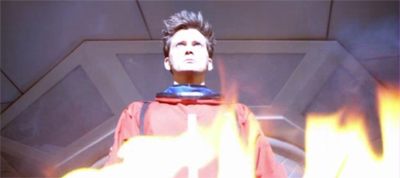
Paul McGann. The “sort of” Doctor; the version of the character that is highly contested by fan and casual viewer alike. With only a single televised story to his credit, produced and filmed in America, McGann was always a controversial part of Doctor Who lore. Before his face appeared in a notebook in Human Nature, there was even debate about whether or not the movie “counted” in the grand pantheon of Doctor Who.

Ironically, McGann’s Doctor has gone on to have one of the most prolific lives of any Doctor. He has appeared in Big Finish audios, webcasts and even a series of audio plays broadcast on BBC radio. McGann has had an impressive volume of output, even without counting the tie-in novels and comics featuring his character, made without his input. The state of limbo in which the character seemed to hover seemed monumentally unfair, a quirk of fate that was the result of powers far beyond those of McGann himself.

So The Night of the Doctor is a pleasant surprise, conferring the ultimate legitimacy upon Paul McGann’s interpretation of the character, effectively confirming the Eighth Doctor as the version who held the flame for the classic series, and whose regeneration marks a turning point for the show.

He really eights himself...

He really eights himself…

Continue reading

Doctor Who: Carnival of Monsters (Review)

To celebrate the fiftieth anniversary of the longest-running science-fiction show in the world, I’ll be taking weekly looks at some of my own personal favourite stories and arcs, from the old and new series, with a view to encapsulating the sublime, the clever and the fiendishly odd of the BBC’s Doctor Who.

Carnival of Monsters originally aired in 1973.

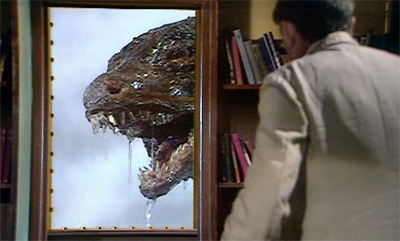
Roll up and see the monster show! A carnival of monsters, all living in their natural habitat, wild in this little box of mine. A miracle of intragalactic technology! Roll up! Roll up! Roll–

– Vorg welcomes us to the new world

There’s a valid argument to be made that Carnival of Monsters is the heart of the show’s tenth anniversary celebrations. Sure, it lacks the bombast of recruiting William Hartnell and Patrick Troughton to guest star in The Three Doctors, but it’s very much an affectionate love letter to the show and a bold statement of purpose going forward. With the Time Lord’s ending the Doctor’s exile in The Three Doctors, the whole universe is at his doorstep.

Carnival of Monsters, then, is really the point at which a specific era of Doctor Who can be said to begin. While the First and Second Doctors had journeyed to other worlds and times, they had done so in black-and-white. The whole point of exiling the Doctor to Earth way back in Spearhead from Space was so that the shift to colour wouldn’t destroy the suspension of disbelief. The hope was that grounding the series might make it possible to maintain suspension of disbelief in bright colour.

Here there be monsters...

Here there be monsters…

While the Third Doctor has ventured to other worlds before (Colony in Space, Curse of Peladon, The Mutants), this is the point in the show where Doctor Who becomes the full-colour adventures of a man traveling through space and time in a blue box. This is the point at which cardboard sets and dodgy alien design become more than just occasional quirks – they become an expected part of the formula.

In a way, Carnival of Monsters is just as much a bold statement of purpose as Spearhead from Space was.

In the palm of his hands...

In the palm of his hands…

Continue reading