• Following Us

  • Categories

  • Check out the Archives


  • Awards & Nominations

Doctor Who: The Ribos Operation (Review)

To celebrate the fiftieth anniversary of the longest-running science-fiction show in the world, I’ll be taking weekly looks at some of my own personal favourite stories and arcs, from the old and new series, with a view to encapsulating the sublime, the clever and the fiendishly odd of the BBC’s Doctor Who.

The Ribos Operation originally aired in 1978. It was the first part of The Key to Time saga.

Your name!

What about my name?

It’s too long… by the time I’ve called out “Look out Romanadv…” – what’s your name again?

Romanadvoratrelundar!

By the time I’ve called that out you could be dead! I’ll call you Romana.

I don’t like Romana!

It’s either Romana or Fred!

All right, call me Fred!

Good! Come along Romana!

The Key to Time was a rather ambitious project for the time – the idea being that an entire series of the show would centre around one core arc, suggested in the first story, developed through the rest of the season, and tied up at the end of the year. It helps, when you’re doing something like that, to have an experienced hand at the reins. While The Ribos Operation doesn’t stand as Robert Holmes’ finest contribution to the series, it’s a suitable introduction to the adventure.

Time Lord and Lady...

Continue reading

Doctor Who: Frontier in Space (Review)

To celebrate the fiftieth anniversary of the longest-running science-fiction show in the world, I’ll be taking weekly looks at some of my own personal favourite stories and arcs, from the old and new series, with a view to encapsulating the sublime, the clever and the fiendishly odd of the BBC’s Doctor Who.

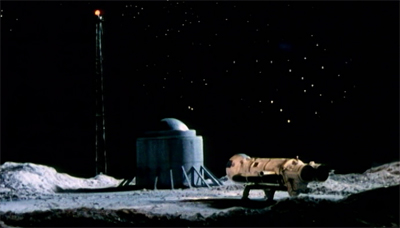
Frontier in Space originally aired in 1973.

To celebrate the tenth anniversary of the show, the four-part serial The Three Doctors was produced. However, it was also decided that Jon Pertwee’s fourth season in the role should also contain something quite a bit grander than the average Doctor Who serial. Clearly intended to rival the epic (and lost) Daleks’ Master Plan in terms of scale and scope, an epic twelve-part adventure was conceived that would run across two back-to-back serials. It would open with Frontier in Space, before easing gently into Terry Nation’s Planet of the Daleks.

Unfortunately the adventure was never quite able to measure up to the series’ earlier Dalek epic, primarily due to problems with the second serial. Still, though somewhat weakened by the necessity to dovetail into the story directly following, Frontier in Space remains a rather wonderful example of the series on its largest scale, offering epic space opera with large-scale consequences.

Lost in space…

Continue reading

Doctor Who: The Seeds of Doom (Review)

To celebrate the fiftieth anniversary of the longest-running science-fiction show in the world, I’ll be taking weekly looks at some of my own personal favourite stories and arcs, from the old and new series, with a view to encapsulating the sublime, the clever and the fiendishly odd of the BBC’s Doctor Who.

The Seeds of Doom originally aired in 1976.

Very impressive. What do you do for an encore, Doctor?

I win.

– Chase and the Doctor

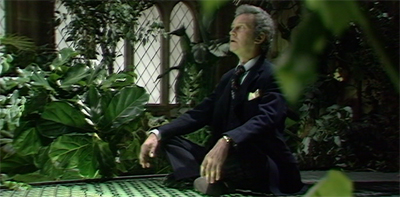
“The mixture of styles is charming,” Miss Ducat notes of Harrison Chase’s impression mansion, and it’s also true of the story itself. I think that part of the reason that The Seeds of Doom works so well is because it’s actually a rather wonderful blend of any number of pulp subgenres, mixing a spy adventure, a trashy sci-fi adventure, an end-of-the-world catastrophe story, a gothic horror tale and an alien invasion saga, all within one six-part story. The story’s meglomaniac, Harrison Chase, might believe hybrids are “a crime against nature” (which opens up all sorts of avenues of plant racism), but I think this works quite well.

Hamilton Chase goes green…

Continue reading

Doctor Who: Frontios (Review)

To celebrate the fiftieth anniversary of the longest-running science-fiction show in the world, I’ll be taking weekly looks at some of my own personal favourite stories and arcs, from the old and new series, with a view to encapsulating the sublime, the clever and the fiendishly odd of the BBC’s Doctor Who.

Frontios originally aired in 1984.

“You know, we can sort this all out in no time at all, if everyone just stays calm.”

– The Doctor sums up the tragedy of Peter Davison’s time as the Timelord

Towards the end of Peter Davison’s time in the title role, Doctor Who was becoming gradually darker. While Colin Baker’s brightly-coloured take on the character would convert this grim fare into a surreal and grotesque pantomime, there was something tragic about Davison’s iteration confronting a quickly darkening universe. Steven Moffat once explained, “this Doctor takes the emphasis off the eccentricities and turns it into a pained heroism of a man who is so much better than the universe he is trying to save but cannot bear to let it stand”, and that’s very much the case here. While the cynicism and pointless darkness would reach their zenith during Resurrection of the Daleks and pay off spectacularly in The Caves of Androzani, Frontios feels like the perfect illustration of these ideas.

The Doctor's surgery...

Continue reading

Doctor Who: The Tomb of the Cybermen (Review)

To celebrate the fiftieth anniversary of the longest-running science-fiction show in the world, I’ll be taking weekly looks at some of my own personal favourite stories and arcs, from the old and new series, with a view to encapsulating the sublime, the clever and the fiendishly odd of the BBC’s Doctor Who.

The Tomb of the Cybermen originally aired in 1967.

In fact you might say they’ve had a complete metal breakdown.

Oooooh….

I’m sorry, Jamie.

– traveling with the Doctor can be quite pun-ishing

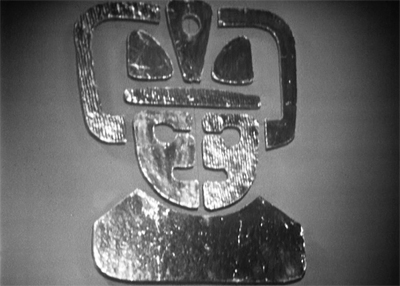
The Tomb of the Cybermen is a bit of miracle. Originally thought lost to history in the great BBC archives purge (along with most of the Troughton era), The Tomb of the Cybermen was recovered completely intact from Hong Kong in 1992, a quarter of a century after the adventure aired and several years after the original series had been cancelled by the BBC. It remains perhaps the most significant recovery in recent memory, and fosters hope that there might be a few other serials that have been preserved in their entirety. Still, even outside of its significant historical context, I’d make the argument that The Tomb of the Cybermen stands as the best adventure to feature the metallic men.

Sealing your tomb…

Continue reading

Doctor Who: Horror of Fang Rock (Review)

To celebrate the fiftieth anniversary of the longest-running science-fiction show in the world, I’ll be taking weekly looks at some of my own personal favourite stories and arcs, from the old and new series, with a view to encapsulating the sublime, the clever and the fiendishly odd of the BBC’s Doctor Who.

Horror of Fang Rock originally aired in 1977.

So you found the trouble then?

Yes, I always find trouble.

– Vince and the Doctor

The show was on something of a hot streak when Horror of Fang Rock aired. While producer Philip Hinchcliffe’s tenure on the show is roundly praised, and is a personal favourite, the standard of the show had been particularly high. The beloved Talons of Weng-Chiang had closed out the previous season, following hot-on-the-heels of the well-regarded Robots of Death – both classic and iconic stories that stand as the very best of Tom Baker’s time in the lead role. Horror of Fang Rockis right on up there, as perhaps one of the best gothic horrors that the series has ever produced.

Something wicked this way comes...

Continue reading

Doctor Who: The God Complex (Review)

To celebrate the fiftieth anniversary of the longest-running science-fiction show in the world, I’ll be taking weekly looks at some of my own personal favourite stories and arcs, from the old and new series, with a view to encapsulating the sublime, the clever and the fiendishly odd of the BBC’s Doctor Who.

The God Complex originally aired in 2011.

It’s time we saw each other as we really are.

– The Doctor

It really is like the McCoy era all over again, isn’t it? The Impossible Astronaut gave us a scheming and manipulative Doctor. Night Terrors felt like it was drawn from the same cloth as Survival, with the faintest trace of Paradise Towers. Here, we get to revisit the ideas at the heart of The Curse of Fenric. Moffat’s second season has really been about the writer defining his own way of making Doctor Who, following a debut season that followed the same structure as the four years overseen by Russell T. Davies.

Here, Moffat is deconstructing the myth of the Doctor, in a way that draws on and contrasts with Davies’ “the Lonely God”, without going to the excess of “the Time Lord Victorious.” Indeed, with the whole dynamic between the Doctor and Amy drawing on one careless miscalculation the character made, changing a young girl’s life forever, one can’t help but wonder if there was more than a hint of truth in what the Doctor confessed to Amy to break her faith in him. “I took you with me because I was vain,” he tells her, “because I wanted to be adored.”

More than ever, it seems there’s a bit of truth in the Doctor’s admission that, “I’m not a hero.” Russell T. Davies has the Doctor follow a similar trajectory, albeit on a larger scale – episodes like Midnight and The Waters of Mars represented massive failings on the part of the Doctor. Moffat draws on the same sort of idea, but renders the Doctor’s failures much more intimate. It isn’t so much that the Eleventh Doctor fails to save the world or defeat the monster, it’s that he fails the people close to him so frequently and thoroughly.

You can check out any time you like, but you may never leave…

Continue reading

Doctor Who: The Girl Who Waited (Review)

You always said that for Christmas dinner, you wish there were two of you.

– Rory tries to look on the bright side

The Girl Who Waited might just be the most Moffat-esque Doctor Who script that wasn’t written by the man himself. “Timey wimey” hijinks, killer robots, glitchy technology and cultural misunderstandings all tie together one of the best episodes of the show’s sixth season. Writer Tom MacRae even throws in a juicy character dilemma to add flavour. Offering a fairly explicit example of why travelling with the Doctor might not necessarily be a good thing, despite how much fun it might seem, The Girl Who Waited serves as a prelude to The God Complex, while continuing the season’s exploration of just how tough it is to be the companion.

The waiting room…

Continue reading

Doctor Who: A Christmas Carol

Being honest, this Christmas special had me from the moment that Michael Gambon was announced. I might have been a little uncertain when it was stated that Stephen Moffat’s first Christmas episode would be essentially a re-telling of the Dickens classic A Christmas Carol, but I have to admit that I enjoyed it a great deal. That isn’t to pretend that it’s a perfect episode of Doctor Who or that there aren’t significant flaws with the hour of television, but it’s fairly entertaining, features fantastic performances and has a few clever concepts playing about – making it great for seasonal viewing.

The Ghost of Christmas past, present and future...

Continue reading