• Following Us

  • Categories

  • Check out the Archives


  • Awards & Nominations

Star Trek: Deep Space Nine – The Visitor (Review)

This February and March, we’re taking a look at the 1995 to 1996 season of Star Trek, including Star Trek: Deep Space Nine and Star Trek: Voyager. Check back daily Tuesday through Friday for the latest review.

To my father, who is coming home.

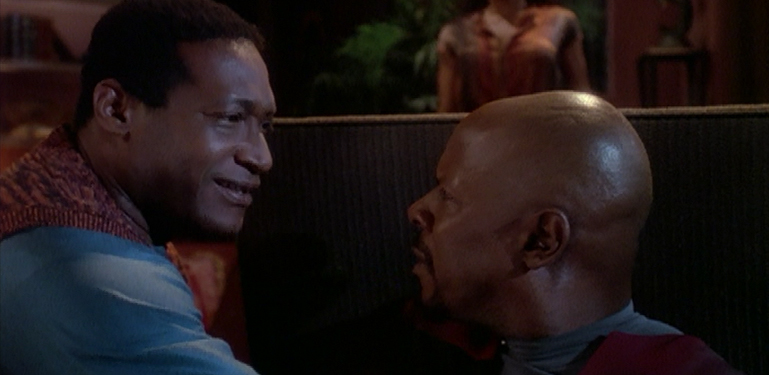
Daddy's home...

Daddy’s home…

Continue reading

Star Trek: Deep Space Nine – The Way of the Warrior (Review)

This February and March, we’re taking a look at the 1995 to 1996 season of Star Trek, including Star Trek: Deep Space Nine and Star Trek: Voyager. Check back daily Tuesday through Friday for the latest review.

The third season of Star Trek: Deep Space Nine was really just a dress rehearsal for what lay ahead.

The third season had been a tumultuous time for the show, with Michael Piller departing the franchise to pursue opportunities outside Star Trek. It was the year directly after the end of Star Trek: The Next Generation, and all attention was focused on the pending release of Star Trek: Generations and the launch of Star Trek: Voyager. On top of that, the third season suffered from a great deal of confusion and disorganisation throughout the year, making it very hard for the production team to set an end goal for themselves.

"This could be the start of a beautiful friendship..."

“This could be the start of a beautiful friendship…”

In fact, the third season of Deep Space Nine was such a mess that the production team had not even managed to hit the end of season cliffhanger that they wanted. The Adversary had been drafted at the last possible minute when the studio vetoed the idea of ending the year with a Vulcan withdrawal from the Federation. This is not to discount the long list of impressive episodes produced during the season, but it does illustrate that the third season of Deep Space Nine had not progressed according to plan.

At the same time, it was a vital learning experience for the show. It provided a clear framework for what followed, providing producer Ira Steven Behr with a foundation from which he would build the rest of the run. The work put in during the third season would pay dividends in the fourth and fifth seasons, as the show began to play with and pay off ideas that had been carefully and meticulously established during that most chaotic of seasons. In fact, the show begins paying off those dividends with The Way of the Warrior, the first episode of the fourth season.

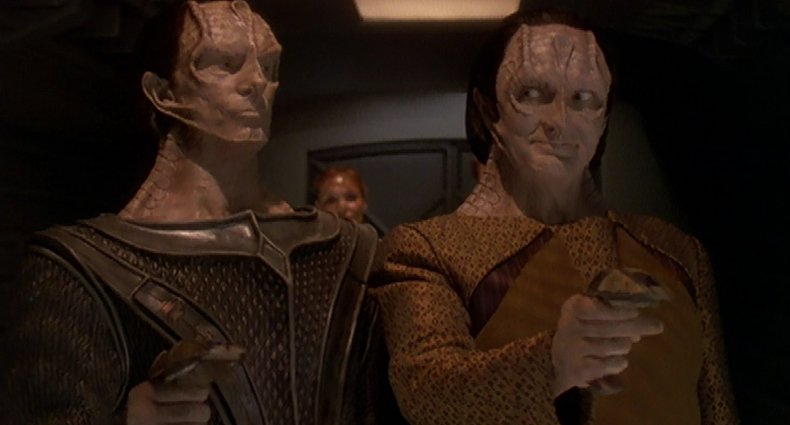
Klingons woz 'ere...

Klingons woz ‘ere…

Continue reading

Star Trek: Enterprise – Oasis (Review)

Next year, Star Trek is fifty years old. We have some special stuff planned for that, but – in the meantime – we’re reviewing all of Star Trek: Enterprise this year as something of a prequel to that anniversary. This January, we’re doing the first season. Check back daily for the latest review.

Oasis is an interesting story.

It was also an interesting story that time it was produced as Shadowplay during the second season of Star Trek: Deep Space Nine.

Ghosts of Star Trek's past...

Ghosts of Star Trek’s past…

Continue reading

Star Trek: Enterprise – Acquisition (Review)

Next year, Star Trek is fifty years old. We have some special stuff planned for that, but – in the meantime – we’re reviewing all of Star Trek: Enterprise this year as something of a prequel to that anniversary. This January, we’re doing the first season. Check back daily for the latest review.

Acquisition feels like a misstep for the first season of Star Trek: Enterprise.

It’s not the worst episode of the season. In fact, it falls rather comfortably into the show’s “big middle” – the random and generic episodes that take Star Trek clichés and execute them in a competent manner while overlooking the opportunity to do something a bit more novel and exciting. Acquisition ranks with failures like Civilisation or Sleeping Dogs or Rogue Planet. It is competently executed and contains a few moments of merit, but there’s a feeling that this has all been seen before.

"Take us to your leader."

“Take us to your leader.”

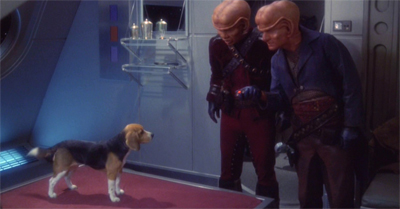
Of course, Acquisition serves to foreground a number of pressing concerns about the production of Enterprise. It’s something of a lightening rod to certain aggressive elements of fandom. Bringing back the Ferengi for a guest appearance proves that the show is more of a prequel to Star Trek: The Next Generation than to the original Star Trek. Glossing over continuity issues by refusing to name these marauding aliens demonstrates that the show clearly doesn’t care about continuity at all. Trying to do a comedy episode featuring the Ferengi demonstrates the producers have no idea what does and doesn’t work in Star Trek production.

All of this is, of course, nonsense. Acquisition isn’t a bad episode because it plays with continuity, or because it features the Ferengi. It’s a bad episode because it’s a comedy adventure that isn’t particularly funny or exciting.

"Hey, at least we got here before the Borg..."

“Hey, at least we got here before the Borg…”

Continue reading

Star Trek: Voyager – Season 1 (Review)

This September and October, we’re taking a look at the jam-packed 1994 to 1995 season of Star Trek, including Star Trek: Deep Space Nine and Star Trek: Voyager. Check back daily for the latest review.

The best thing that can be said about the first season of Star Trek: Voyager is that it avoids being actively terrible.

This might sound like damning with the faintest of praise, but it’s worth looking at the show in the context of its siblings. None of the Star Trek spin-offs have had illustrious first seasons, often struggling to find their feet. It’s worth noting that Voyager‘s first season doesn’t contain any episodes that are as flat-out bad as something like Code of Honour, Angel One or The Passenger. While the show has more than its fair share of problems, it’s hard to look at the concept behind any episode in Voyager‘s first season and think “this is truly bad idea.”

voy-caretaker2

Of course, the logical counterpoint to that argument is the observation that the show hasn’t produced anything of equivalent quality to Heart of Glory, Conspiracy, Duet or In the Hands of the Prophets. This is perfectly legitimate criticism, and it really explains the problem with the first season of Voyager. While the show has avoided any spectacularly embarrassing decisions, it did this by completely avoiding any real risk.

The first season of Star Trek: Voyager is almost perfectly calibrated to land in the Star Trek comfort zone.

voy-learningcurve18

Continue reading

Star Trek: Deep Space Nine – The Adversary (Review)

This September and October, we’re taking a look at the jam-packed 1994 to 1995 season of Star Trek, including Star Trek: Deep Space Nine and Star Trek: Voyager. Check back daily for the latest review.

The Adversary is a strange little episode. In many respects, barring the last line, it really doesn’t feel like a season finalé. While Star Trek: Deep Space Nine typically eschewed the season-ending cliff-hangers that came to define Star Trek: The Next Generation and Star Trek: Voyager, the last episode of a given year typically ended with a major shake-up to the status quo. They may not have ended with the promise “to be continued…”, but they usually carried a great deal of weight.

In contrast, The Adversary feels like a fairly standard episode of Deep Space Nine. It doesn’t radically alter anything. Although Odo’s last line hints at the shape of things to come, it’s not much more than what Lovok assured us in The Die is Cast. The episode is well-executed, well-constructed and it’s distinct enough from a standard Star Trek episode that it works, but The Adversary feels like it’s not really positioned to close out the year.
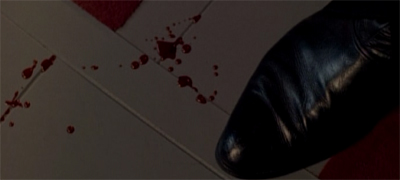
There's blood on the Defiant's floor...

There’s blood on the Defiant’s floor…

This is, of course, because it wasn’t intended to close out the year. The third season of Deep Space Nine was quite troubled. While not anywhere near as troubled as the third season of The Next Generation, it was a year where plans were constantly changing and scripts were frequently written on the fly. It seemed like the writers were constantly struggling against deadlines while trying to keep track of all the moving pieces.

Second Skin was filmed from little more than a first draft; Improbable Cause was extended into a two-parter at short notice. Scripts like The Abandoned looked like they needed a bit more work before being put in front of the camera. Shows like Meridian, Facets and Life Support seemed stitched together out of desperation. Indeed, The Adversary was produced at only a week’s notice. It’s to the credit of the episode – like Second Skin before it – that it holds up remarkably well.

There won't be blood...

There won’t be blood…

Continue reading

Star Trek: Deep Space Nine – The Lives of Dax: The Music Between the Notes (Curzon) by Steven Barnes

This September and October, we’re taking a look at the jam-packed 1994 to 1995 season of Star Trek, including Star Trek: Deep Space Nine and Star Trek: Voyager. Check back daily for the latest review.

Star Trek: Deep Space Nine struggled with the character of Dax on-and-off for the first three years. Terry Farrell found herself at the centre of interesting character-driven stories with Playing God and Facets, but the show tended to treat the Dax symbiont as a macguffin that just happened to be inside Jadzia. Episodes like Dax, Invasive Procedures and Equilibrium tended to marginalise Jadzia so that the symbiont itself could be pushed to the centre of a story driven by other members of the ensemble.

However, Dax is a character with absolutely phenomenal potential. There is something absolutely fascinating idea of a creature that has lived for centuries, and seen generations of history unfold within its lifetime.The symbiont has witnessed countless changes and pivotal moments. Dax has seen civilisations fall and alliances form; Dax has seen old enemies become true friends, and watched civilisations reach out into the cosmos.

The realities of a seven-season television show mean that Deep Space Nine never really got to explore the fact that Dax was living history. Perhaps Blood Oath and Trials and Tribble-ations come closest, using Dax as a rather logical bridge spanning almost a century of continuity. One of the joys of the Star Trek universe is how expansive and how limitless it is. Infinite diversity and all that. While even Dax cannot have seen everything, Deep Space Nine never felt like it captured the sense of Dax as living history.

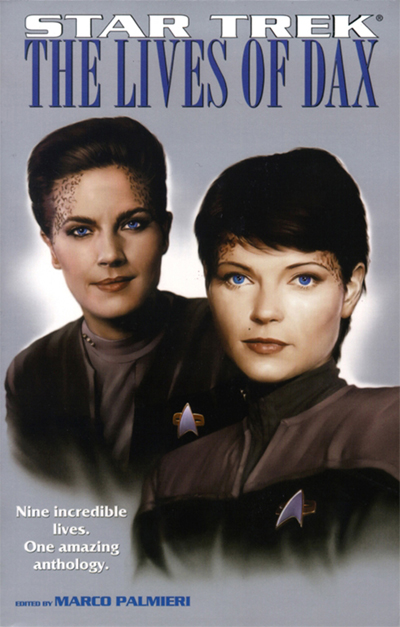
At its best, Pocket Books’ The Lives of Dax anthology captures this sense of change and movement. The books spans the width and breadth of the Star Trek franchise, as lived through the life of one single organism. It is beautiful.

ds9-thelivesofdax1 Continue reading

Star Trek: Deep Space Nine – Shakaar (Review)

This September and October, we’re taking a look at the jam-packed 1994 to 1995 season of Star Trek, including Star Trek: Deep Space Nine and Star Trek: Voyager. Check back daily for the latest review.

There are really two versions of Shakaar.

There is the episode that Shakaar very clearly wants to be. It’s intended to offer Kira a bit of closure, following on from the events of Life Support. It’s very clearly meant to explore Kira’s grieving process and to allow her to come to terms with the loss she suffered. After all, the episode opens establishing that Kira still mourns Bareil, while the episode closes with Kira extinguishing the memorial candle she lit for him. (Which does invite the audience to wonder if it was burning the whole time she was on Bajor.)

Carrying a torch...

Carrying a torch…

As such, it makes sense to offer Kira an opportunity to get back to her roots – to suggest that Kira might secretly want to return to the relative simplicity of a rebel fighter resisting an oppressive government; fighting a war is a lot less complex than navigating the peace. Kira’s reunion with the Shakaar Resistance Cell is meant to offer her a way to escape into something comfortable, to avoid moving forward; because moving forward is tough and painful. Shakaar should be about Kira learning that she has to push forward. It should be a companion piece to Progress.

The episode can’t quite manage this. Instead, we end up with an episode about how Kira gets swept off her feet by a dashing hunk of a man – an episode that leaves the viewer with the unfortunate implication that Kira only needed to find another weirdly paternal man to help her get past the death of the man she loved. Shakaar is an episode with a host of interesting ideas, but isn’t quite sure how to best bring those ideas to the screen.

You Winn some, you lose some...

You Winn some, you lose some…

Continue reading

Star Trek: Deep Space Nine – Explorers (Review)

This September and October, we’re taking a look at the jam-packed 1994 to 1995 season of Star Trek, including Star Trek: Deep Space Nine and Star Trek: Voyager. Check back daily for the latest review.

Explorers is a wonderful piece of Star Trek: Deep Space Nine, an episode produced by a show entirely comfortable with itself. Indeed, the entire point of Explorers seems to be stressing just how comfortable Deep Space Nine has become in its own skin. It’s a leisurely and relaxed celebration of what makes the show unique in the Star Trek franchise, wallowing in the things that make Deep Space Nine the show that it is.

With a smart script by René Echevarria adapted from a solid premise by Hilary J. Bader, Explorers is an episode that never feels like it has anything to prove. And that’s the charm of it all.

Open to new cultures...

Open to new cultures…

Continue reading

Star Trek: Deep Space Nine – The Die is Cast (Review)

This September and October, we’re taking a look at the jam-packed 1994 to 1995 season of Star Trek, including Star Trek: Deep Space Nine and Star Trek: Voyager. Check back daily for the latest review.

The Die is Cast is, like Improbable Cause before it, a wonderful piece of television.

As with most Star Trek: The Next Generation and Star Trek: Deep Space Nine two-parters, The Die is Cast maintains continuity and consistency with its predecessor, but it feels like a very different episode than Improbable Cause. After all, the curtain has been pulled back. The assassination attempt is no longer the driving force of the narrative (in fact, it’s barely referenced), with the plot focusing on Enabrain Tain’s pre-emptive strike against the Dominion.

A bruised ego...

A bruised ego…

It’s interesting that it falls to the Cardassians and the Romulans to drive the Dominion plot onwards. There’s been no real development of this long-form plot since Sisko and his crew escaped at the end of The Search, Part II. Episodes like The Abandoned and Heart of Stone have seen the crew encountering individual members of the Dominion, and shows like Visionary have had characters sitting around talking about them, but nothing has actually happened. It is mostly business as usual.

As such, the episode’s title feels beautifully appropriate – it’s the crossing of a threshold, a point from which there can be no return. Not just for Tain or the Cardassians, but the show itself.

Odo's sympathy for Garak runs dry...

Odo’s sympathy for Garak runs dry…

Continue reading