• Following Us

  • Categories

  • Check out the Archives


  • Awards & Nominations

The X-Files – Small Potatoes (Review)

This February and March, we’re taking a trip back in time to review the fourth season of The X-Files and the first season of Millennium.

Darin Morgan’s absence haunts the fourth season of The X-Files.

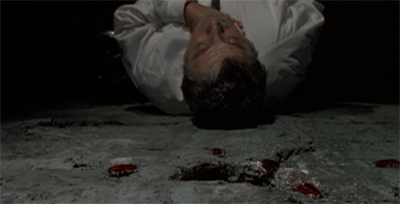
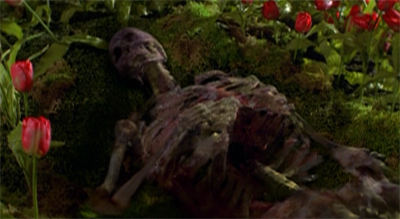
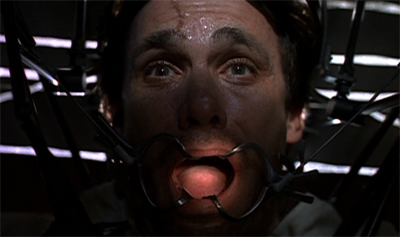
According to Frank Spotnitz, Darin Morgan had originally hoped to contribute a script in the middle of the season. Unfortunately, that idea fell through. The scramble to fill that gap in the schedule led to Memento Mori, which ultimately became the centre of the fourth season’s mythology arc, for better or worse. Scully’s cancer arc was just one result of the Darin-Morgan-shaped hole in the fourth season. Small Potatoes is another, the show’s first real “comedy” episode since Morgan departed the staff at the end of the third season.

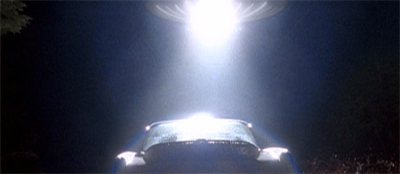
A sting in the tale...

A sting in the tail…

Darin Morgan often gets credit for introducing the concept of comedy to The X-Files. That is not entirely fair; Glen Morgan and James Wong wrote Die Hand Die Verletzt shortly before Darin Morgan wrote Humbug. However, Morgan did refine the idea of comedy on The X-Files. Darin Morgan won an Emmy for writing Clyde Bruckman’s Final Repose, and he still considers Jose Chung’s “From Outer Space” to be among the best things that he has ever written.

Despite Morgan’s departure, it was clear that The X-Files could not completely avoid comedy. Once a show has demonstrated that it can do something particularly well, it becomes very difficult to stop doing that thing. Comedy episodes became something of a staple on The X-Files, with the show regularly churning out light-hearted and funny episodes (with varying degrees of success) until the show was finally cancelled after its ninth season. However, there was a long stretch after Morgan departed where the series seemed quite grim. Somebody would have to go first.
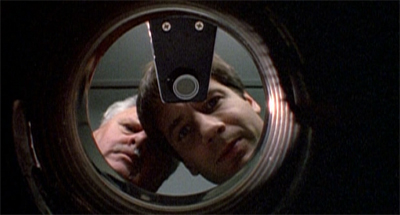
The inside, looking out...

The inside, looking out…

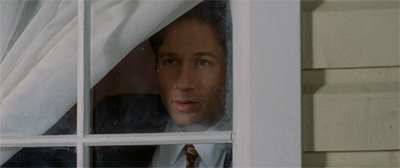
So Vince Gilligan stepped up to bat. Gilligan had been on staff for a bout a year at this point. He had quickly established himself as one of the most promising young writers in the room. While his first script for the show – Soft Light – was arguably more interesting than successful, Gilligan enjoyed an incredible hot streak when he joined the staff. Pusher, Unruhe and Paper Hearts are among the best scripts of the third and fourth seasons. With Small Potatoes, he seemed to position himself as the logical successor to Darin Morgan.

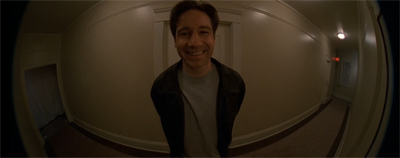
Darin Morgan even appears in Small Potatoes to pass the metaphorical baton.
"Here's Mulder!"

“Here’s Mulder!”

Continue reading

The X-Files – Season 3 (Review)

This November (and a little of December), we’re taking a trip back in time to review the third season of The X-Files and the first (and only) season of Space: Above and Beyond.

The second season of The X-Files was quite experimental in nature. Not all of that experimentation was intentional or planned, but the second season worked quite hard to demonstrate what the show could do. Gillian Anderson’s pregnancy forced the show to plot a relatively long-form arc, with Scully getting abducted and the X-files remaining closed for the first six episodes of the season. In essence, Anderson’s absence forced the show to embrace serialisation.

Other second-season experiments seemed more relaxed. The show discovered that big two-part mythology episodes did well during sweeps. Die Hand Die Verletzt and Humbug proved that the series could do comedy. David Nutter, Rob Bowman and Kim Manners became the show’s go-to directors. The show’s alien conspiracy arc became a recurring thread rather than a subset of the monsters of the week. There was a lot learnt during that second season.

xfiles-paperclip26

The third season of The X-Files feels a lot more relaxed, and a lot more comfortable. The third season seems to be largely about reinforcing the lessons learned during the second season. The third season gives more work to writers, directors and actors who made an impression during the second season. It works hard to solidify the concept of The X-Files. It seems like Chris Carter and his collaborators have finally figured out exactly what The X-Files should be, and are delivering it consistently.

The result is one of the most impressive seasons of television produced in the nineties, beginning a hot streak for the show. Chris Carter and Ten Thirteen would manage to produce three consistently fantastic seasons of television between September 1995 and May 1998. The third season of The X-Files really gets that ball rolling in a very profound and meaningful sense.

xfiles-josechungsfromouterspace5 Continue reading

The X-Files – Quagmire (Review)

This November (and a little of December), we’re taking a trip back in time to review the third season of The X-Files and the first (and only) season of Space: Above and Beyond.

Quagmire is a delightful little episode, one of third season episodes that most effectively embodies what casual fans (or even those who have never seen the show) think of when they hear the words The X-Files.” In Wanting to Believe, author Robert Shearman describes Quagmire as something akin to a “live action Scooby Doo, and he’s not far wrong. This is Mulder and Scully searching together in the darkness, looking for a monster that may or may not be there. You don’t get more archetypical X-Files than that.

One of the defining features of the third season of The X-Files has been a sense of consolidation. It feels like the show experimented a great deal in its first two years, but the third season is very much about cementing and solidifying its identity. It is no wonder, then, that the third season has such a high concentration of archetypal episode – episodes you can show an interested viewer and say this is The X-Files in a forty-five minute nutshell.” In that respect, Quagmire ranks with D.P.O. or Pusher or Clyde Bruckman’s Final Repose as a great introduction to the show.

There's something in the water!

There’s something in the water!

Of course, Quagmire is a very good introduction to The X-Files for new viewers, but it is also something of a farewell. It is Kim Newton’s last script for the show. Newton had joined the writing staff at the start of the third season. Her other major credit was Revelations. Like Revelations, there is a sense that Quagmire was heavily re-written before it made it in front of the cameras. In this case, it is something of an open secret that Quagmire received a fairly significant polish from departing story editor Darin Morgan, whose fingerprints are all over the finished draft.

If Darin Morgan bid farewell to The X-Files with Jose Chung’s “From Outer Space”, then Quagmire serves as something of a coda to his time on the show. If that is the case, it makes for an uncharacteristically upbeat postscript to Morgan’s work on the show.

They really collared the bad guy...

They really collared the bad guy…

Continue reading

The X-Files (Topps) #14 – Falling (Review)

This November (and a little of December), we’re taking a trip back in time to review the third season of The X-Files and the first (and only) season of Space: Above and Beyond.

Falling is a delightfully nasty piece of work.

It is, to be fair, something that has been gestating for quite a while in Petrucha and Adlard’s extended run on The X-Files. If their first year on the title explored the loose boundary between reality and unreality, their final few issues shifted to more grounded and cynical themes. Most explicitly, the idea that humanity makes the best monsters. It is a gleefully subversive twist on one of the core elements of The X-Files: the idea that monsters are real.

Falling to pieces...

Falling to pieces…

Petrucha and Adlard had broached this before. This was the key point in Big Foot, Warm Heart, where the eponymous creature shows more humanity than the human antagonist of the story. One Player Only featured a delightful red herring when it suggested a murderous artificial intelligence had driven a developer to a killing spree at a software company, only to reveal that the developer’s actions were entirely his own. It will be taken to the logical extreme in Home of the Brave, essentially the duo’s grand finalé.

Blending together the Americana and nostalgia of Stand By Me with the brutal cynicism of Lord of the Flies, Falling is a compelling and unsettling read.

If a tree falls in the woods...

If a tree falls in the woods…

Continue reading

The X-Files – Jose Chung’s “From Outer Space” (Review)

This November (and a little of December), we’re taking a trip back in time to review the third season of The X-Files and the first (and only) season of Space: Above and Beyond.

Then there are those who care not about extraterrestrials, searching for meaning in other human beings. Rare or lucky are those who find it. For although we may not be alone in the universe, in our own separate ways, on this planet, we are all alone.

– Darin Morgan takes his bow

It came from beyond the stars...

It came from beyond the stars…

Continue reading

The X-Files – Pusher (Review)

This November (and a little of December), we’re taking a trip back in time to review the third season of The X-Files and the first (and only) season of Space: Above and Beyond.

Pusher is perhaps one of the most effective stand-alone “monster of the week” stories that the show ever did.

It is no wonder that the episode is frequently cited among the best episodes of The X-Files ever produced, but it is telling that it was identified by Slate as the perfect “gateway” episode of the show. If you want to give someone a taste of The X-Files without burdening them with continuity or back story, this is a good choice. It may not be the best episode that Vince Gilligan ever wrote, and it may not even be the best episode of the third season, but it is one the strongest demonstrations of what the show does on a weekly basis.

Mano a mano...

Mano a mano…

Pusher is the first episode that Vince Gilligan wrote after joining The X-Files writing staff. It is the only episode credited to Gilligan in the show’s third season. He had been offered a position on staff after turning in Soft Light at the end of the second season, but had hesitated before accepting the job. When he did accept the job, he came down with a dose of infectious mononucleosis. As a result, Gilligan only wrote one script for the third season, despite becoming one of the show’s most prolific writers.

Pusher is a pulpy delight, a spectacularly constructed standalone that perhaps points the way to Gilligan’s later work.

Gift of the gab...

Gift of the gab…

Continue reading

The X-Files – Syzygy (Review)

This November (and a little of December), we’re taking a trip back in time to review the third season of The X-Files and the first (and only) season of Space: Above and Beyond.

On original broadcast, Syzygy and War of the Coprophages were separated by three weeks, airing either end of January.

That probably helps to make Syzygy seem like less of a disappointing retread on initial broadcast, but it doesn’t help on modern binge re-watches. Even allowing for the three weeks between the episodes, Syzygy was always going to suffer in comparison its direct predecessor. If War of the Coprophages was Darin Morgan affectionately mimicking Chris Carter’s style, then Syzygy feels like Carter’s attempt to write a script in a voice quite close to that of Darin Morgan.

The horny beast...

The horny beast…

Structurally, the third season is constructed quite cleverly – and Syzygy is a massive part of that. The third season seems to fold in on itself, which means it makes sense for Syzygy to serve as a fun house mirror War of the Coprophages from a purely structural perspective. The problem is that this decision adds a lot to the third season of the whole while undermining Syzygy itself. It feels like an unsatisfactory decision.

However, even divorced from context, Syzygy is still a mess of an episode. Carter would go on to provide some of the show’s most comedic hours in later seasons, and Syzygy marks a starting point of that trend. It is not an auspicious beginning.

Reading the signs...

Reading the signs…

Continue reading

The X-Files – War of the Coprophages (Review)

This November (and a little of December), we’re taking a trip back in time to review the third season of The X-Files and the first (and only) season of Space: Above and Beyond.

It is very odd to describe any Darin Morgan episode as “underrated.” And yet, despite that, War of the Coprophages feels like the underrated Darin Morgan teleplay.

Clyde Bruckman’s Final Repose had appeared towards the start of the season, featuring a powerhouse guest performance from Peter Boyle. Both Boyle and Morgan would win Emmys for their work on that episode, and Clyde Bruckman’s Final Repose is perhaps Morgan’s most conventional script for The X-Files or Millennium. In contrast, Jose Chung’s “From Outer Space” is perhaps the most adventurous and gonzo episode of The X-Files ever produced, coming at the end of the season and relentlessly (but affectionately) mocking the show’s core iconic mythology.

Down the drain...

Down the drain…

In contrast, War of the Coprophages sits in the middle, literally and figuratively. It is positioned almost precisely in the middle of the third season, with Morgan writing the screenplay in an exceptionally short period of time. It isn’t a truly exceptional example of a monster-of-the-week episode in the way that Clyde Bruckman’s Final Repose was, but it also isn’t as off-the-walls and bizarre as Jose Chung’s “From Outer Space.” It doesn’t feel like it has as much to say about death as Clyde Bruckman’s Final Repose, nor as much about life as Jose Chung’s “From Outer Space.”

And yet, in its own way, War of the Coprophages as an incisive and well-constructed commentary on The X-Files as a television show while allowing Morgan to tackle his recurring themes about society and humanity, and whether the world is what we would like to think that it is.

Bug hunt...

Bug hunt…

Continue reading

The X-Files – Clyde Bruckman’s Final Repose (Review)

This November (and a little of December), we’re taking a trip back in time to review the third season of The X-Files and the first (and only) season of Space: Above and Beyond.

Clyde Bruckman’s Final Repose is a masterpiece.

It is one of the best episodes that The X-Files ever produced. It is the only episode of The X-Files to win the Emmy for Outstanding Writing in a Drama Series. It was the first episode to take home an Emmy for a performance on the show, with Peter Boyle winning the Emmy for Outstanding Guest Actor in a Drama Series. It was Boyle’s only Emmy win of ten nominations. It was the only episode of The X-Files to air on the 13th October, a symbolically important date for Carter (“1013”). It was also Friday the 13th.

No bones about it...

No bones about it…

As part of the recent resurgence in interest in The X-Files, the story has enjoyed even more focus. It was one of three episodes voted by fans to air as part of the Los Angeles Times Hero Complex Film Festival in 2013 as part of the series’ twentieth anniversary celebrations. Chris Carter himself chose it to represent The X-Files at the Austin Film Festival in 2012. It is very frequently ranked among the best the show ever produced.

And all of that praise is very well earned.

Crystal clear...

Crystal clear…

Continue reading

The X-Files – Season 2 (Review)

This August (and a little of September), we’re taking a trip back in time to review the second season of The X-Files. In November, we’ll be looking at the third season. And maybe more.

The first few seasons of a television show are very much about defining the show – figuring out what works and what doesn’t, and what form the show will take. After all, a lot of discussion and planning takes place during development, but all of that is on paper. It’s only once you’ve worked with the cast and had a chance to gauge audience response that it is possible to truly understand a television show.

The first two seasons of The X-Files seem like an attempt to map out the show, to mark the boundaries and do some fine calibration. The show had been a sleeper hit in its first season, popular enough to secure a second season on Fox. However, the second season had seen the series become a breakout hit. It climbed rather dramatically in the ratings, and the show would continue that ascent through to the fifth season in the lead-in to the feature film. However, the second season still feels like it’s a learning curve.

xfiles-onebreath6

There are exceptional episodes in the second season. The season provides a wealth of classic stories. Fresh Bones and Our Town stand out as two of the best monster-of-the-week stories that the show had done by this point in its life-cycle. Even outside of that, there are classics like One Breath or Humbug or The Host or F. Emasculata. However, there are also quite a few misfires like Fearful Symmetry or Excelsis Dei or 3.

There are a lot of points in the second season where it feels like The X-Files is experimenting, trying new things that would ultimately become part of the show’s unique identity. Not all of these elements worked, but that is the luxury of a second season. It allows the production team to do that sort of experimentation so they might find their groove.

xfiles-duanebarry16 Continue reading