• Following Us

  • Categories

  • Check out the Archives


  • Awards & Nominations

The X-Files/30 Days of Night (Review)

This January, to prepare for the release of the new six-part season of The X-Files, we’re wrapping up our coverage of the show, particularly handling the various odds and ends between the show’s last episode and the launch of the revival.

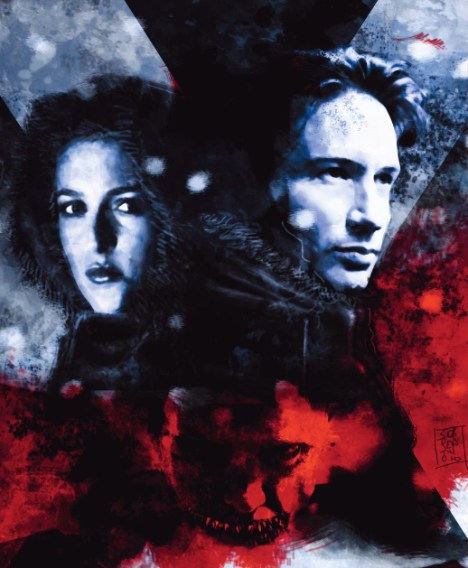
The X-Files/30 Days of Night is the most satisfying X-Files story of the interregnum between The Truth and My Struggle I.

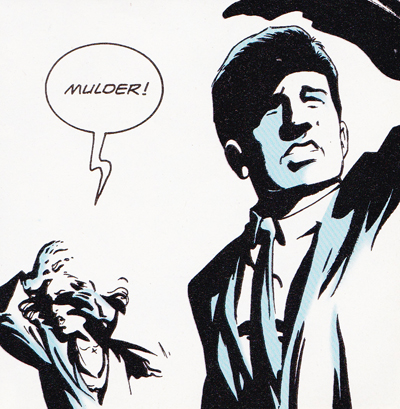
The comic book miniseries is notable for a number of reasons. It is the simultaneously the last X-Files comic to be published by Wildstorm and the first X-Files comic to be published by IDW. It is the first comic book crossover between X-Files characters and another established comic book franchise, and it crosses over directly through Mulder and Scully rather than using the Lone Gunmen to insulate the franchise. It is also the first X-Files comic to be illustrated by Tom Mandrake, who would later work with Joe Harris.

Darkness falls...

Darkness falls…

There are other reasons that The X-Files/30 Days of Night stands out. The comic is the work of a creative team (much) more strongly associated with 30 Days of Night than The X-Files, and there is a sense the comic services that franchise more than The X-Files. Barring the first twelve-issues of Stefan Petrucha and Charles Adlard’s Topps run, which was really more of a series of shorter interlocking stories, The X-Files/30 Days of Night is also the longest single X-Files comic book story published to this point in the franchise’s history.

It is also just really good.

Due North...

Due North…

Continue reading

The X-Files (Wildstorm) #0 (Review)

This January, to prepare for the release of the new six-part season of The X-Files, we’re wrapping up our coverage of the show, particularly handling the various odds and ends between the show’s last episode and the launch of the revival.

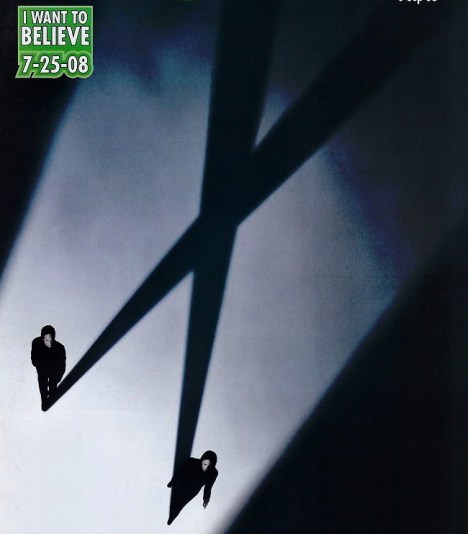
The X-Files: I Want to Believe marks a point of transition for The X-Files.

It seems to represent the point at which The X-Files truly stops its forward momentum; the point at which the show embraces its status as an artifact of the nineties rather than a living (and evolving) entity. There had been indications of this with the release of Resist or Serve, a video game which seemed to treat the seventh season as the “end” of The X-Files, but I Want to Believe embraced it on a much larger scale and on a much larger platform. The X-Files was not so much pushing forward as looking backwards.

THE TRUTH IS OUT THERE

THE TRUTH IS OUT THERE

This reality was reflected in a number of ways. The importance of the eighth and ninth seasons was consciously downplayed, to the point where a gag in I Want to Believe hinges on the audience forgetting that both Mulder and Scully had worked at the FBI during the Bush administration. Doggett and Reyes were consigned to a blu ray bonus feature, an evolutionary branch of The X-Files to be cut off for the sake of convenience. I Want to Believe even took Mulder and Scully back to snowy Vancouver, a literal journey backwards.

The Wildstorm comic book pushes this reconceptualisation of the show to its logical conclusion, as if imaging some alternate world where The X-Files‘ so-called “golden age” of the second through fifth seasons had somehow lasted over a decade. The Wildstorm comics tease a glimpse of The X-Files frozen in amber, trapped for an eternity.

I WANT TO BELIEVE

I WANT TO BELIEVE

Continue reading

Harsh Realm – Leviathan (Review)

This November, we’re taking a trip back in time to review the seventh season of The X-Files and the first (and only) season of Harsh Realm.

The first three episodes of Harsh Realm are an interesting combination, and not just because they were the only three episodes of the show to air before cancellation.

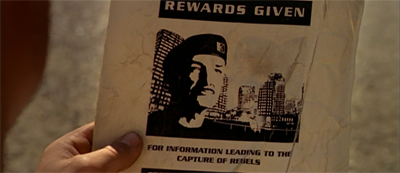
All three episodes are written by Chris Carter. The first two are directed by Daniel Sackheim. Taken together, they form a loose triptych. They are effectively three separate stories that come together to form a three-part pilot for the show. It is only by the end of Inga Fossa that Thomas Hobbes (and the audience) fully accept the virtual world into which they have been placed, embracing the hero’s journey that lies ahead. It isn’t until Kein Ausgang that the show really offers the audience a sense of how it might work on a weekly basis.

Fading out...

Fading out…

This is not to suggest that the events of The Pilot flow elegantly into Leviathan, nor that the events of Leviathan bleed over into Inga Fossa. All three episodes of television are discreet and individual; foreshadowing the format that the show would take in its relatively brief life. Interestingly, Carter does not take advantage of the show’s video game structure to enforce more rigid serialisation. If anything, most the nine episodes (particularly the back six) are rigidly episodic.

Leviathan is particularly relaxed in its structure. The Pilot offered all the spectacle and exposition necessary to establish Harsh Realm. In contrast, Leviathan is a bit more focused on mood and atmosphere. There is an impressive action sequence to close out the episode, but there is a larger sense that Leviathan is about establishing what day-to-day existence must be like in this virtual world.

General problems...

General problems…

Continue reading

John Rozum and Alex Saviuk/Charles Adlard/Gordon Purcell’s Run on The X-Files (Topps) (Review)

This May and June, we’re taking a trip back in time to review the fifth season of The X-Files and the second season of Millennium.

It is amazing to think that Topps’ licensed comic book tie-in to The X-Files lasted three-and-a-half years, let alone that it was such a success that it spawned a second on-going series, a miniseries and a considerable volume of one-shots and digests and annuals. If anything, Topps enjoyed greater success exploiting the license than even IDW has – despite the fact that Topps was a relatively young company with minimal experience in comic book publishing while IDW has a reputation for (and a lot of experience at) skilfully leveraging these sorts of tie-in properties.

This success would be remarkable in any context, but the comic book succeeded at a time of turmoil for the entire comic book industry. The late nineties were not a good time for comics, with the speculation bubble imploding and Marvel filing for bankruptcy. The success of Topps’ X-Files comic book is in many way a triumph of the brand, yet another reminder of how the series was on top of the world. There were lots of others – the ratings, the film, the tie-in video game – but the success of the comic was part of the narrative of The X-Files at this stage of its life.
xfiles-remotecontrol10

The comics themselves are actually surprisingly good. There is a reason that one of the first things that IDW did upon receiving the license was to publish “classic” collections of these comics. One of the more interesting aspects of the monthly series was the way that it managed to feel like The X-Files while still seeming suited to the medium in question. Stefan Petrucha and Charles Adlard pitched their run as something akin to a Vertigo comic, feeling like a crossover between The X-Files and the work of Grant Morrison or Neil Gaiman.

The influences on John Rozum’s run are a lot less ambitious. Time and time again, Rozum seems to position his run on The X-Files as a rather strange hybrid between the first season of the television series and pulpy fifties horror comics. There are quite a few stories in Rozum’s run that might easily be read alongside Fantagraphics’ E.C. Comics archives, albeit guest starring Mulder and Scully. (And modern fashions. And phones. And so on.) It is a perfectly reasonable and legitimate way to approach the idea of “X-Files comic books.”
xfiles-beprepared3

Indeed, it seems especially reasonable given the existing tensions between Ten Thirteen and Topps over the comics. The relationship had been fraught since the early days of the comic, with Ten Thirteen objecting to both Petrucha’s dense and ambitious plotting and Adlard’s moody and atmospheric art. Petrucha was fired from the title after sixteen issues, while Adlard was phased out in favour of better likeness artists like Gordon Purcell or Alex Saviuk. Ten Thirteen wanted a safer and more conventional comic book under Rozum’s pen, and they got it.

While it is easy to understand why these creative decisions were made, it does not make them any more palatable. Rozum’s work on The X-Files is generally quite consistent and occasionally even impressive. But it seldom seems ambitious or exciting. Under Petrucha, the tie-in comic carved out its own space that intersected with the parent show. Under Rozum, the comic book seems to do nothing but skirt the margins.
xfiles-cropduster2

Continue reading

The X-Files (Topps) #41 – Severed (Review)

This May and June, we’re taking a trip back in time to review the fifth season of The X-Files and the second season of Millennium.

This is the end.

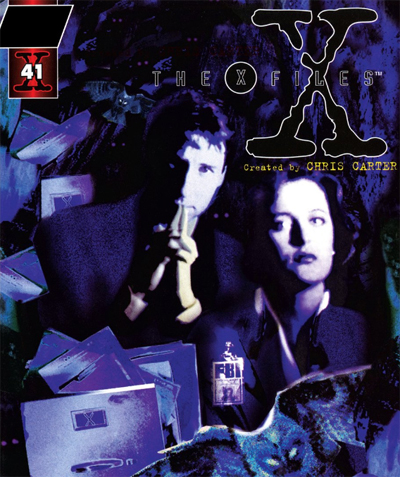
Severed is the last X-Files comic book to be published by Topps. It was released in September 1998, after the release of The X-Files: Fight the Future and before the broadcast of The Beginning. The company had actually solicited a number of X-Files comics that were never actually published – including Season One adaptations of The Jersey Devil and Ghost in the Machine. It seems quite likely that Severed was the last comic book to be published by the comic book division of Topps, who had decided to retreat from the industry following market trends.

Filed away...

Filed away…

Topps wrapped up the bulk of its publishing operations over the summer of 1998, releasing the last few tie-in comics for Xena: Warrior Princess and Hercules: The Legendary Journeys. Severed was actually delayed significantly. Devil’s Advocate had been published in June, leaving a three-month gap between the two issues. It is interesting to wonder what the delays behind publication might have been; certainly writer John Rozum and Alex Saviuk had proven themselves quite capable of managing a monthly schedule.

Whatever was happening behind the scenes, Severed is very much damp squib of an ending. It’s a bland and forgettable story, but one that is sadly par for the course in the stage of the book’s life cycle.

The transformed man...

The transformed man…

Continue reading

The X-Files (Topps) #40 – Devil’s Advocate (Review)

This May and June, we’re taking a trip back in time to review the fifth season of The X-Files and the second season of Millennium.

Devil’s Advocate is a perfectly serviceable comic.

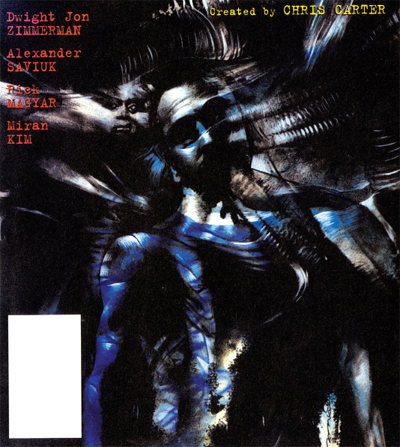
Its most distinguishing feature is the fact that it was not written by John Rozum, even though the art is provided by Alex Saviuk. This is not the first time that Rozum had taken a break from the monthly title. Writer Kevin J. Anderson had substituted in for Family Portrait, providing a quick two-issue fill-in rather early in the run. Here, executive editor Dwight Jon Zimmerman steps in to script the issue, possibly freeing up Rozum to finish work on the adaptation of The X-Files: Fight the Future that Topps planned to publish to mark the release of the film.

Ghosts in the machine...

Ghosts in the machine…

Dwight Jon Zimmerman was an industry veteran. He had worked at Marvel during the late eighties, writing for characters like Spider-Man and Wolverine. He joined Topps when they announced their plan to expand into the world of comic book publishing. Zimmerman worked as both an executive editor and as a writer. He worked on the company’s Mars Attacks! line. He also wrote Once Upon a Time…, the illustrated biography of Princess Diana that was published by the company in 1997.

Zimmerman’s interests tend towards the military. He has written articles on American military history for American Heritage, the Naval Institute Press, and Vietnam Magazine. He served as President of the Military Writers’ Society of America. As such, it is no surprise that Devil’s Advocate plays to those strengths. It is an old-fashioned “military cover-up” story, with little to distinguish or define it from dozens of similar stories told using these characters over years and years.

"This is why we should go rafting in the daytime, Scully."

“This is why we should go rafting in the daytime, Scully.”

Continue reading

The X-Files: Season One (Topps) #5 – Ice (Review)

This May and June, we’re taking a trip back in time to review the fifth season of The X-Files and the second season of Millennium.

With Ice, Season One jumps ahead a bit.

It is hard to blame them. The first four episodes of the first season are relatively solid, outlining the heart of The X-Files and conveying everything the audience really needed to know at this point. However, the first season gets a little bit rocky after Conduit. Episodes like The Jersey Devil and Shadows are unlikely to top anybody’s list of favourite X-Files episodes. Ghost in the Machine is somewhat underrated, but it is hardly a world-beater either. So it makes sense to skip ahead to probably the most highly-regarded episode in the first half of the first season.

Worming its way into your heart...

Worming its way into your heart…

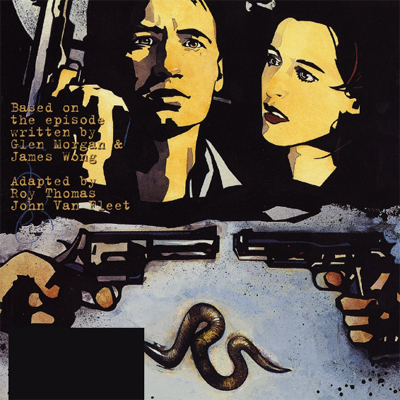
Ice is a classic installment of The X-Files. Like Squeeze, it is an episode that tends to lodge itself in the popular memory. It is hard to verify such things in any objective fashion, but it is an episode that many casual fans reference or point to whenever the show is mentioned. It has just the right balance of memorable imagery and distinctive hooks, brought to life in a haunting and atmospheric fashion. It would have been crazy for Roy Thomas’ adaptations of the Season One episodes to skip over this particular episode, and it makes sense to jump right to it.

Then again, there is also a pretty clear precedent for this.

This is not who we are...

This is not who we are…

Continue reading

The X-Files (Topps) #34 – Skybuster (Review)

This May and June, we’re taking a trip back in time to review the fifth season of The X-Files and the second season of Millennium.

There is an interesting divide in John Rozum’s work on The X-Files.

Half the time, it seems like Rozum is writing classic EC horror stories that just happen to feature Mulder and Scully. There are stretches of his work on the title where it seems like the stories might easily have been found in the desk drawer of some classic editor, tweaked and altered slightly so as to update them forty years, and published with the addition of Mulder and Scully. Stories like Silver Lining, Donor and Soma comfortably fit this classic pulpy horror mould. There’s nothing wrong with this approach, although it is quite striking.

Death from above!

Death from above!

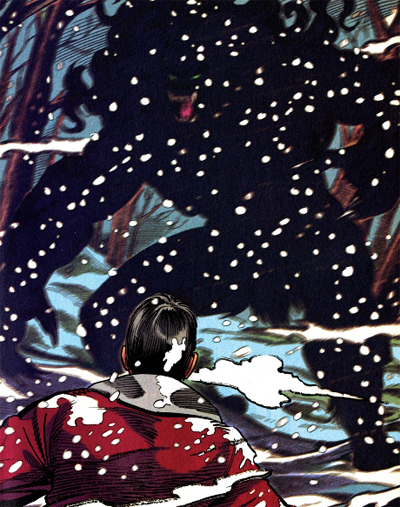
When Rozum does write a story that feels particular to The X-Files, it often feels a little disconnected from the season unfolding around it. Scripts like Be Prepared, Remote Control and N.D.E. feel like they hark back to the first season of the show. The characterisation is familiar, if simplistic; shades of the mythology is present, but underdeveloped; there is a very traditional approach to big paranormal ideas like the Wendigo or “remote viewing.” It feels like these comics make a solid companion piece to the Season One comics written by Roy Thomas.

Skybuster is a pretty perfect example of this style of storytelling, offering an environmental parable about the arrogance of mankind’s tampering with nature.

Quoth the raven...

Quoth the raven…

Continue reading

The X-Files (Topps) #33 – Soma (Review)

This May and June, we’re taking a trip back in time to review the fifth season of The X-Files and the second season of Millennium.

Soma is a done-in-one story that fits quite comfortably with the rest of John Rozum’s work on The X-Files.

Indeed, like a lot of Rozum’s output, Soma feels like a story recovered from a fifties horror comic. It is a very traditional ghost story hinging on a number of absurd contrivances and building to a suitably impressive climax. This is not a low-key supernatural thriller – it features vengeful smoke demons who materialise in front of countless witness and almost murder Mulder and Scully at the climax. Despite the insistence on the final page that it was too smoky to see anything, Soma feels a little too loud and campy for the world of The X-Files.

Burnt out...

Burnt out…

The script is very familiar. In many ways, Soma plays like an update of the script to Donor. It is another supernatural “beyond the grave” revenge story, similar in tone to first season episodes like Young at Heart or Lazarus or Born Again. As with Donor, the malicious spirit is a husband who plots a horrific revenge on a wife who disregarded his dying wishes. However, while Donor had an enjoyable pulpy charm to sustain it as an unwilling organ donor attempted to reclaim his harvested organs, Soma feels just a little bit too mean-spirited and malicious in tone.

Soma is a functional and efficient X-Files comic, but one that feels just a little bit too rote and familiar for its own good.

Burning love...

Burning love…

Continue reading

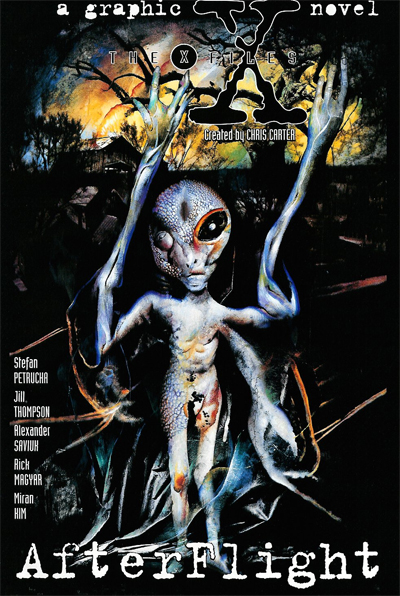
The X-Files (Topps) – Afterflight (Review)

This May and June, we’re taking a trip back in time to review the fifth season of The X-Files and the second season of Millennium.

And so we reach the end of Stefan Petrucha’s work on The X-Files.

It is quite a delayed end. Petrucha had originally written Afterflight three months before Home of the Brave, his last script for the monthly tie-in comic book. It was published fifteen months after the publication of Home of the Brave. That meant a year and a half had passed between Petrucha finished and Topps actually publishing it. The delay was rooted in disagreements with Ten Thirteen over the artwork. Still, Afterflight offers just a hint of closure to the sixteen-issue (and more) run that launched Topps’ licensed X-Files comic book line.

The truth is up there...

The truth is up there…

Afterflight is a mournful little comic, a story that takes a lot of the core themes of Petrucha’s X-Files work and distills them down to a single story. Interviewed about his work, Petrucha contended that his writing for The X-Files primarily meditated on themes of “memory, the self and what is reality.” All of these ideas are brought to the fore in Afterflight, a comic that offers a similar thematic resolution to Home of the Brave, suggesting the faintest hint of hope can be found beyond the world of men.

Afterflight is a beautiful piece of work, and a suitable conclusion to a fantastic run.

Aliens among us...

Aliens among us…

Continue reading