• Following Us

  • Categories

  • Check out the Archives


  • Awards & Nominations

Star Trek: The Next Generation – The Emissary (Review)

This January and February, we’ll be finishing up our look at the second season of Star Trek: The Next Generation and moving on to the third year of the show, both recently and lovingly remastered for high definition. Check back daily for the latest review.

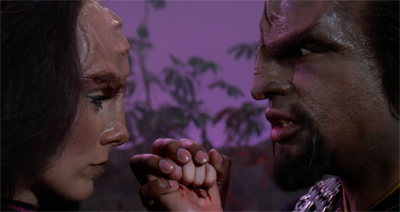
The Emissary is one of the stronger episodes from the tail end of Star Trek: The Next Generation‘s second season. An interesting meditation on heritage and race, as well as an insightful character piece for Worf, The Emissary is an interesting exploration of Worf’s relationship to his culture – and how his experience is far from universal. It’s the sort of story that The Next Generation should have been producing on a more consistent basis, but it’s better late than never.
Bonded by blood...

Bonded by blood…

Continue reading

Star Trek: The Next Generation – Q Who? (Review)

This January and February, we’ll be finishing up our look at the second season of Star Trek: The Next Generation and moving on to the third year of the show, both recently and lovingly remastered for high definition. Check back daily for the latest review.

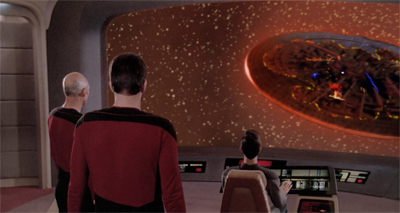
Q Who? throws down the gauntlet for Star Trek: The Next Generation. It serves as a fitting reminder that Picard and his crew are still amateurs when it comes to space exploration. They don’t even win the day – they suffer “a bloody nose” before limping away from their strange new opponents to lick their wounds. For a crew that never seemed to sweat before, who never seemed like they were under pressure, this is a shocking development.

More interestingly, it’s something unknown in a universe that has become far too familiar. Three of the four episodes leading into Q Who? ended with the crew accepting that there were some things they’d never fully understand or comprehend, and – while it’s unlikely this was intentional – it seems like a nice bit of thematic foreshadowing rather than haphazard plotting. For the first season-and-a-half of the show, it seemed like the Enterprise was always dealing with the familiar, always in control of the situation.

With Q Who?, everything is put into perspective.

Borg to death...

Borg to death…

Continue reading

Star Trek: The Next Generation – Contagion (Review)

This January and February, we’ll be finishing up our look at the second season of Star Trek: The Next Generation and moving on to the third year of the show, both recently and lovingly remastered for high definition. Check back daily for the latest review.

Contagion is a nice reminder that the average quality of Star Trek: The Next Generation is improving. While the stand-out episodes of the second season of The Next Generation tend to attract a lot of attention, the more solid episodes tend to get a bit lost in the discussion. Contagion doesn’t rank alongside Elementary, Dear Data, A Matter of Honour, The Measure of a Man or Q Who?, but it’s still demonstrating that we’ve reached a point where the show can churn out a pretty good episode without it feeling like a special occasion.

It’s a bit of a shame, then, that Contagion comes from two individuals outside the show’s writers’ room.

The Yamato rests in pieces...

The Yamato rests in pieces…

Continue reading

The X-Files – Eve (Review)

The X-Files owes a conscious debt to Twin Peaks, in quite a few ways. David Lynch’s landmark television series perfectly blended the mundane with the surreal, creating a world that managed to be both incredibly familiar and hauntingly ethereal. One of the hallmarks of Lynch’s approach to Twin Peaks – and of his work in general including, most obviously, Blue Velvet and Dumbland – was the sense that there was something quite horrid and rotten lurking beneath the flowerbeds and picket fences of those lovely suburban houses.

Eve is the show’s first real exploration of suburbia, hitting on all manner of rich Cold War anxieties and fears lurking just behind those neatly-trimmed hedges.

Breaking up families...

Breaking up families…

Continue reading

The X-Files – Conduit (Review)

The X-Files is somewhat fascinating as a historical artifact, a prism through which the viewer might explore the United States in that gap of time between the end of the Cold War and the start of the War on Terror. The show serves as something of a travelogue through the American subconscious, a vehicle for the nation’s fear and anxieties. It might be quaint now to look back on the show’s depiction of mobile phones and the internet, but The X-Files offers a snapshot of an America just on the cusp of that technological revolution, when there were still dark shadows and corners of the continent to be probed and explored.

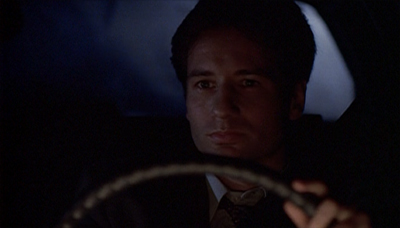
One of the more interesting aspects of The X-Files is the way that it deals with faith in the nineties. Scully’s attempts to reconcile her religious beliefs with a rational approach to the universe are surprisingly insightful and nuanced, but Mulder’s belief system also offers a vehicle to explore the form that faith might take. “I want to believe,” Mulder confesses at the end of Conduit, with the iconic poster turning the sentiment into a motto. It doesn’t matter that Mulder chooses to invest his faith in aliens or conspiracies, The X-Files is still an exploration of what faith meant in the nineties.

Why is Mulder so driven?

Why is Mulder so driven?

Continue reading

Star Trek: Deep Space Nine – Whispers (Review)

Star Trek: Deep Space Nine is twenty years old this year. To celebrate, I’m taking a look at the first and second seasons. Check back daily for the latest review or retrospective.

You could make a credible argument that each of the first three Star Trek shows beautifully encapsulated their time and place. The original show was the very embodiment of the sixties zeitgeist, providing a channel for commentary and insight into counter-culture and the Vietnam War, and an outlet for various fixations and phobias. Star Trek: The Next Generation was a show that spoke to a version of America which was emerging from the Cold War, a clean and sterile morning for a new America.

Star Trek: Deep Space Nine was positioned somewhat strangely, as the idealism and enthusiasm of the early nineties gave way to paranoia and insecurity. If the hyperreal technicolour production values of the original Star Trek spoke to the energy and enthusiasm sixties, then the drab grey Orwellian design of Deep Space Nine was a reflection of the late nineties.

Whispers is really the first time that the show has pushed its sense of paranoia to the fore, and it confirms that Deep Space Nine will be a show of its time, anchored in the nineties.

It's all a bit askew...

It’s all a bit askew…

Continue reading

Non-Review Review: Star Trek VI – The Undiscovered Country

This August, to celebrate the upcoming release of Star Trek: Into Darkness on DVD and blu ray, we’re taking a look at the Star Trek movies featuring the original cast. Movie reviews are every Tuesday and Thursday.

Whatever its faults, Star Trek VI: The Undiscovered Country is a fond farewell to the original cast of Star Trek, giving the ensemble one last epic adventure before heading off into legend. Chancellor Gorkon suggests that the “the undiscovered country” that lends the movie its title is “the future.” Most Shakespearean scholars would argue that it is “death.” Perhaps they need to – as Gorkon argues – “experience” it in “the original Klingon”, or perhaps there’s more to it than that.

Perhaps the undiscovered country can be both – the death waiting for all of us eventually, the “chimes at midnight” that Chang alludes to after a disastrous diplomatic dinner. Probably not. Still, The Undiscovered Country does represent a death. It’s the end of an era, the extinguishing of a torch that had already been passed. It’s the last adventure of Kirk’s starship Enterprise, and it feels appropriate that it serves to end the Cold War raging between the Klingons and the Federation.

It’s a beautiful farewell to the crew, to the extent that even the actors’ decision to “sign” the closing credits doesn’t feel over saccharine or manipulative. The movie has more than its fair share of narrative flaws, neither as tight as Star Trek II: The Wrath of Khan nor as energetic as Star Trek IV: The Voyage Home. However, it hangs together remarkably well, in no small part thanks to a solid premise, a strange honesty and a deep affection for the cast and crew.

We're having some old friends for dinner...

We’re having some old friends for dinner…

Continue reading

Star Trek: Myriad Universes – Echoes and Refractions: The Chimes at Midnight by Geoff Trowbridge (Review)

This August, to celebrate the upcoming release of Star Trek: Into Darkness on DVD and blu ray, we’re taking a look at the Star Trek movies featuring the original cast. Movie reviews are every Tuesday and Thursday.

We’ll be supplementing our coverage of the movies with tie-ins around (and related to) the films. We’ll be doing one of these every week day. This is one such article.

The death of Spock at the climax of Star Trek II: The Wrath of Khan is one of the definitive Star Trek moments. Pop culture has assimilated the moment, to the point where any half-decent nerd will identify “the needs of the many…” or “I have been and always shall be…” or maybe even “of all the souls I encountered…” It’s an absolutely massive moment for the franchise, where the film series dared to kill off the show’s most iconic and best-loved character.

It’s no wonder that the moment is such a strong focal point for those seeking to explore Star Trek. Star Trek: Into Darkness riffs mercilessly on that iconic scene, inverting it and counting on the iconography to generate enough emotional resonance for the film to get away with a fairly half-hearted homage. (The effects of The Wrath of Khan last until Star Trek III: The Search for Spock, while the consequences of the climax of Into Darkness don’t even last until the closing credits.)

So that famous sequence serves as an effective focal point of Geoff Trowbridge’s The Chimes at Midnight, which offers a parallel continuity of the Star Trek films in a universe where Spock died after the events of Yesteryear.

st-myriaduniverses

Continue reading

Star Trek – A Taste of Armageddon (Review)

To celebrate the release of Star Trek: Into Darkness this month, we’ll be running through the first season of the classic Star Trek all this month. Check back daily to get ready to boldly go. It’s only logical.

It’s amazing to think that A Taste of Armageddon and The Return of the Archons were produced on consecutive weeks by the same television show. Both are politically-charged pieces of pop culture, heavily influenced by the realities of the Cold War, but they adopt two completely different philosophies towards the conflict. The Return of the Archons is a story about the need for freedom and individuality, and how the struggle for those inalienable rights is a battle that must be fought. While it’s debatable whether Landru is a representation of the forces of communism, the episode is unquestionably about the triumph of Western liberal values.

In contrast, A Taste of Armageddon can’t help but feel a little cynical about the whole damn thing.

A shooting war...

A shooting war…

Continue reading

Star Trek: Early Voyages #1 – Flesh of my Flesh (Review)

To celebrate the release of Star Trek: Into Darkness this month, we’ll be running through the first season of the classic Star Trek all this month. Check back daily to get ready to boldly go. It’s only logical.

We’ll be supplementing our coverage of the episodes with some additional materials – mainly novels and comics and films. This is one such entry.

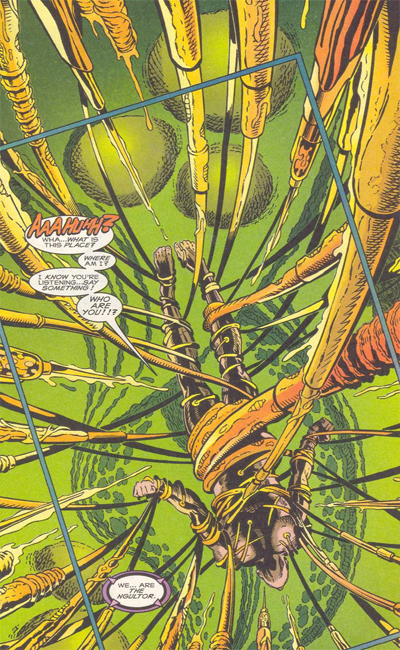
In the late nineties, Marvel were publishing Star Trek comic books. One of those books, perhaps the book garnering the most critical praise, was Star Trek: Early Voyages. Written by Dan Abnett and Ian Edginton, the series was intended to follow the mission of the USS Enterprise under the command of Captain Christopher Pike. Published monthly, the comic is perhaps the best indication of what a Star Trek show starring Christopher Pike might have actually looked like. Although the series was cancelled suddenly after only seventeen issues, ending on a cliffhanger, it is still a fascinating look at what might have been.

Looks like they've hooked a Pike...

Looks like they’ve hooked a Pike…

Continue reading