• Following Us

  • Categories

  • Check out the Archives


  • Awards & Nominations

Millennium – The Fourth Horseman (Review)

This May and June, we’re taking a trip back in time to review the fifth season of The X-Files and the second season of Millennium.

The second season of Millennium has been consciously building towards an apocalypse.

Actually, that is not entirely true. The second season of Millennium has been building to an almost infinite number of apocalypses. The collapse of Michael Beebe’s home in Beware of the Dog, the destruction of an entire community in Monster, the dissolution of the tribe in A Single Blade of Grass, the potential loss of a child in 19:19, an author’s acceptance of his fading skills and relevance in Jose Chung’s “Doomsday Defense”, the stealing of a soul in The Pest House, the breaking of a spirit in A Room With No View. The second season is populated with apocalypses.

Everything dies...

Everything dies…

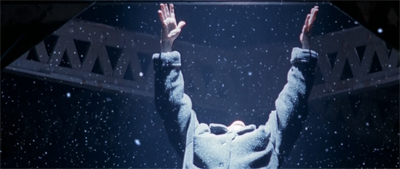
Ever since The Beginning and the End opened with Frank Black staring into space as he contemplated cosmic forces of entropy and decay, it has been clear that the second season of Millennium is about more than just the end of the world. It is about the end of worlds. Over the course of The Fourth Horseman and The Time is Now, Peter Watts loses his faith (and maybe his life) as Lara Means loses her sanity. Frank Black loses his father and his friends – and, ultimately, his wife. The Marburg Virus is just a blip on the radar compared to all of this.

The Fourth Horseman and The Time is Now combine to form one of the most interesting and compelling finalés ever produced. The two-parter is the perfect conclusion to the second season of Millennium. Indeed, it would be the perfect conclusion to the entire series. Perhaps the biggest problem with The Fourth Horseman and The Time is Now is the fact that The Innocents is lurking only a few months away.
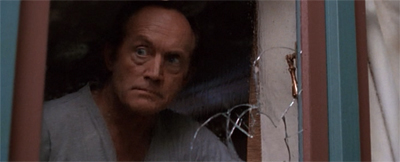
Cracking up...

Cracking up…

Continue reading

The X-Files: Season One (Topps) #6 – Space (Review)

This May and June, we’re taking a trip back in time to review the fifth season of The X-Files and the second season of Millennium.

If the jump to Ice suggested that the Season One line would only be covering the “highlights” of the first season of The X-Files, then the decision to immediately follow with an adaptation of Space puts paid to that theory.

Ice is generally regarded as one of the strongest stories of the first season. It is moody and atmospheric, tense and claustrophobic. It shines a light on the characterisation of Mulder and Scully, while also offering a particularly memorable (and unsettling) monster of the week. In contrast, Space is generally regarded as one of the weakest stories of the first season. It is clumsy and muddled, slow and dreary. The episode’s direction is bland and the special effects are woeful. On paper, it is probably the least likely choice for a Season One adaptation.

Face the future...

Face the future…

However, Space ultimately lends itself to a comic book adaptation. The story finds itself well-suited by the transition from live action footage to comic book page. there are a number of different reasons for this, but the truth is that the story is simply better suited to this format. That applies to the technical limitations imposed on film, but also to the storytelling conventions associated with comic books as opposed to live action television. It is a startling result, and arguably the biggest success of the entire Season One line.

Although it is a qualified accomplishment at best, Space is the first Season One comic that manages to surpass its source material.

Is there life on Mars?

Is there life on Mars?

Continue reading

The X-Files – The Red and the Black (Review)

This May and June, we’re taking a trip back in time to review the fifth season of The X-Files and the second season of Millennium.

“Before the exploration of space, of the moon and the planets, man hailed that the heavens were the home and province of powerful gods who controlled not just the vast firmament, but the earthly fate of man himself and that the pantheon of powerful, warring deities, was the cause and reason for the human condition, for the past and the future, and for which great monuments would be created on earth as in heaven. But in time man replaced these gods with new gods and new religions that provided no more certain or greater answers than those worshipped by his Greek or Roman or Egyptian ancestors. And while we’ve chosen now our monolithic and benevolent gods and found our certainties in science, believers all, we wait for a sign, a revelation. Our eyes turn skyward ready to accept the truly incredible to find our destiny written in the stars.”

Lift me up...

Lift me up…

Continue reading

The X-Files – Patient X (Review)

This May and June, we’re taking a trip back in time to review the fifth season of The X-Files and the second season of Millennium.

This should not work.

There are lots of reasons why Patient X and The Red and the Black should simply implode under their own weight. Most obviously, they are scripts that are rather blatantly just piling more and more back story and convolution onto a framework that is already overloaded and over-stretched. They are introducing new characters at a late stage of the game. They rely on contrivance and sketchy character development. They seem to exist at odds with the script for The X-Files: Fight the Future, which had been written and shot, but was awaiting release.

Everything burns...

Everything burns…

However, despite all this, Patient X and The Red and the Black work very well together. They are the strongest story-driven mythology two-parter since Nisei and 731 at the start of the third season. There is an energy and drive to Patient X and The Red and the Black that has been largely absent from the show’s big blockbuster two-parters since Herrenvolk at the start of the fourth season. After a year-and-a-half treading water as the release date of the movie draws ever closer, it is nice to see Chris Carter cut completely loose.

Patient X and The Red and the Black form a story which doesn’t seem at all worried about what any of this means for the summer realise of Fight the Future. Parts of it become quite difficult to reconcile with the film as released. However, the two-parter is all the stronger for it.

Fog of war...

Fog of war…

Continue reading

The X-Files – Kill Switch (Review)

This May and June, we’re taking a trip back in time to review the fifth season of The X-Files and the second season of Millennium.

On the surface of it, William Gibson seems a strange fit for The X-Files.

He certainly seems like a more eccentric choice than Stephen King. King was a writer famed for his horror stories, with a fascination for small-town life and an interest in guilt as a legacy of American history. On paper, King should have been the perfect “special guest writer” for the show, able to churn out a script that would resonate perfectly with the larger themes of The X-Files while still sitting comfortably within his own oeuvre. While Chinga is not a bad episode, it is not an exceptional episode by any measure. It feels perfectly adequate.

Well, that's going in the DVD menu.

Well, that’s going in the DVD menu.

As such, Kill Switch seems like a story that could go horribly wrong. Gibson is a writer most famous for his work in defining and popularising “cyberpunk”, a science-fiction subgenre that is far removed from the horror trappings generally associated with The X-Files. Gibson was a writer who tended to explore the possible future development of cyberspace and associated issues, while Carter worked very hard to anchor The X-Files in the now. Gibson’s stories seemed to take place in the not-too-distant future; Carter grounded The X-Files in a very particular now.

However, Kill Switch works. It works phenomenally well. It is an episode that feels markedly different from everything else around it, while still feeling like it belongs to The X-Files. The clash of styles is evident in Kill Switch, as writers William Gibson and Thomas Maddox find themselves adapting their themes and ideas to a completely different aesthetic. That is perhaps part of appeal. While Chinga made it look quite easy to construct a solid Stephen King story that was also a solid episode of The X-Files, Kill Switch is nowhere near as smooth. This is a different beast. And it is glorious.

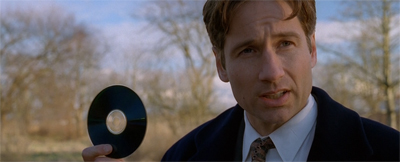
"Woah, woah, woah. What happened to floppies?"

“Woah, woah, woah. What happened to floppies?”

Continue reading

The X-Files – Chinga (Review)

This May and June, we’re taking a trip back in time to review the fifth season of The X-Files and the second season of Millennium.

Chinga is the episode of The X-Files that was written by Stephen King.

That is a pretty big deal. Stephen King is one of the most influential American writers of the twentieth and twenty-first centuries. He is a writer who has enjoyed tremendous commercial success, but who has also balanced that popularity with considerable respect of critics and academics. His work has permeated popular cultured, and sparked all sorts of analysis and exploration. While no creator of that calibre works without at least some small level of backlash, King is one of the most successful American writers by any measure.

Play time!

Play time!

Writing about King in A Century of Great Suspense Stories, Jeffery Deaver argued that the author “helped free the popular name from the shackles of simple genre writing. He is a master of masters.” As such, he should be quite a comfortable fit for The X-Files. Even aside from any stylistic sensibilities that he might share with the series, King is a creator who manages to consistently producer work that might be dismissed as “genre”, but manages to compete with more prestigious and high-profiler literature.

The X-Files did something similar in the nineties. It was a show that frequently dabbled in cult genres – it was a show that dealt with horror and science-fiction themes on a regular basis. However, thanks to the craftsmanship of those involved, The X-Files was frequently able to compete with more “serious” fare at the major awards ceremonies. Chris Carter worked very hard to prevent the show from being relegated to the horror or science-fiction “ghetto.” It was a show that could slide to high-brow to low-brow over a single act; that was part of what made it so fun.

A bloody disaster...

A bloody disaster…

So landing King was very much a coup for The X-Files. He was one of the best-selling and most prolific American writers of the nineties, with his name all over a wealth of media. All that Chinga really needs to do is exist. It would be next to impossible for Chinga to be anything but “that episode of The X-Files written by Stephen King.” Indeed, it seems almost unreasonable to expect anything more from it. The hype on Chinga was unbelievable – as one might expect from a television show that had bagged one of the most popular fiction writers around.

Chinga is a very flawed piece of television, an episode that feels too much like an early draft than a fully-developed concept. The styles of Chris Carter and Stephen King blend reasonably well, but there is a sense that neither is pushing the other out of their comfort zone. Chinga is a pretty average piece of television, a pretty average Stephen King story, and a pretty average episode of The X-Files. While not necessarily a catastrophic failure, it is hardly a fantastic success.

"Yeah, I'm sure this vacation will be completely uneventful!"

“Yeah, I’m sure this vacation will be completely uneventful!”

Continue reading

“Mulder and Scully” by Catatonia (Review)

This May and June, we’re taking a trip back in time to review the fifth season of The X-Files and the second season of Millennium.

Things are getting strange, I’m starting to worry

this could be a case for Mulder and Scully…

If you needed proof that The X-Files was a cultural juggernaut in the mid-to-late nineties, look no further than Mulder and Scully.

The first single off Catatonia’s International Velvet propelled the band to new heights of fame and fortune. Before the release of Mulder and Scully, the band had skulked around the bottom of the British charts; their biggest success before that point had been You’ve Got a Lot to Answer For, a song lucky to scrape the top forty. Indeed, reaching the third position in the United Kingdom charts, Mulder and Scully easily became the Welsh band’s largest pop hit. A month after the release of Mulder and Scully, its parent album would reach the top of the international charts.

catatonia-mulderandscully3

Having a Wales of a time…

Indeed, it could be argued that Catatonia’s success overlapped quite neatly with that of The X-Files. The core of the band’s “classic” line-up, Cerys Matthews and Mark Roberts, began writing songs together in 1992. The single Mulder and Scully and the album International Velvet represented the peak of their success. The band would release two more albums building off the success of International Velvet, before formally announcing the dissolution of the band in September 2001. It is an arc that roughly mirrors that of The X-Files – suggesting Catatonia were another nineties artifact.

Although Mulder and Scully was Catatonia’s biggest success, it is worth noting The X-Files had enjoyed a great deal of success in the British charts. Late in the show’s third season, the theme song had been released as a single in its own right. Mark Snow’s iconic opening credits music had climbed all the way to the number two slot. Nevertheless, Mulder and Scully is interesting because it is a massive hit about the show that came from outside the production office. The X-Files had conquered television, now it seemed to be laying claim to both cinema and the pop charts.

Sing when you're winning...

Sing when you’re winning…

Continue reading

The X-Files – The Post-Modern Prometheus (Review)

This May and June, we’re taking a trip back in time to review the fifth season of The X-Files and the second season of Millennium.

The Post-Modern Prometheus is a decidedly strange little episode.

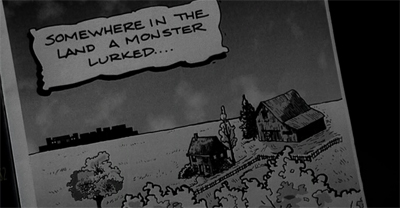
As the title suggests, it is a stunningly indulgent piece of television. Written and directed by Chris Carter, The Post-Modern Prometheus is an off-beat adventure shot in black-and-white, stylistically referencing everything from James Whale’s Frankenstein to the work of Cher to the iconic dance sequence from Risky Business. The script is chocked full of literary and cinematic references, stitching them together in a way that suggests the monster alluded to in the title of the episode.

Once upon a time...

Once upon a time…

There are more than a few moments of awkwardness in the script. As with Small Potatoes, there seems something a little awkward about a comedy episode that treats a serial rapist as the jumping-off point for a wacky comedy adventure. (“This is a very serious crime,” Mulder asserts at one point, but the script never seems too bothered by it.) There is something quite knee-jerk and reactionary about how The Post-Modern Prometheus plays into the stereotype of scientific development and research as morally questionable by default.

And, yet, despite these fairly sizable problems, there is a lot to love here. It has been suggested that Carter considers The Post-Modern Prometheus as a deeply personal work – it is not hard to see why. The Post-Modern Prometheus is a story obsessed with the act of creating – whether through biological reproduction or scientific experimentation or even by way of storytelling. It is an episode engaging with a story that has long since slipped out of the control of its creator, and which is free to evolve and develop in infinite directions.

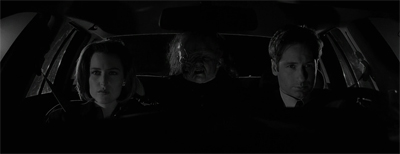
Drivin' to Memphis...

Drivin’ to Memphis…

There is a joy and energy to The Post-Modern Prometheus that almost compensates for the more unpleasant aspects of the script. There is a lot of fun to be had here, whether listening to the creature singing along with Cher or simply watching Mulder and Scully dance as they provide a monster with a (literal) storybook ending. There is a sense that The Post-Modern Prometheus was written almost entirely without cynicism, an incredible celebration of Chris Carter’s own thoughts on storytelling and mythmaking.

The Post-Modern Prometheus is perhaps too deeply flawed to be the classic that it desperately wants to be, but it is a fascinating and bold piece of nineties television that demonstrates just how much enthusiasm and verve The X-Files could bring to proceedings when it wanted to.

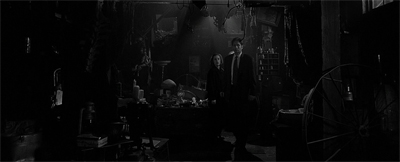
It is never a happy mob...

Basement dwellers…

Continue reading

The X-Files – Redux II (Review)

This May and June, we’re taking a trip back in time to review the fifth season of The X-Files and the second season of Millennium.

Redux II would be a lot better if the audience believed anything that the episode was saying.

In fact, Redux II would be a lot better if it seemed like the show itself believed anything that the episode was saying.

"Hm. That resolution is unsatisfying. Deeply unsatisfying."

“Hm. That resolution is unsatisfying. Deeply unsatisfying.”

Continue reading

The X-Files – Redux I (Review)

This May and June, we’re taking a trip back in time to review the fifth season of The X-Files and the second season of Millennium.

Redux I hits on the same problem that haunted The Blessing Way. It is very hard to structure a three-parter that bridges two seasons of television. The biggest problem is the second episode, which has the unfortunate position of having to serve as a season premiere while carrying the baggage from the last season finalé and remaining unable to resolve anything. So the episode inevitably becomes an exercise in spinning wheels as the show saves all of its potential resolutions for the third episode.

A particular cynical commentator might suggest that Redux I plays as Chris Carter’s twisted take on Aaron Sorkin. Sorkin is famous for his sequences of characters walking through corridors while trading witty banter – a very nice way of keeping physical movement in the midst of largely dialogue-driven plots. This would become a defining feature of The West Wing, the show that Sorkin would launch in September 1999. Redux I seems to prefigure the style, albeit with a twist. There is lots of walking through corridors as characters talk to themselves in monologue.

"Wow, and I though my filing system was bad..."

“Wow, and I thought my filing system was bad…”

Redux I plays as a collection of voice-over monologues transposed over sequences of Mulder wandering through corridors in the Pentagon. One immediately wonders how the Department of Defence could have staged such a complex and convincing hoax against the American people when they cannot find one lost FBI agent inside the Pentagon. The drab setting makes for a shockingly dull episode; the majesty of the Yukon Mountains is lost, replaced by long sequences of grey walls and red doors.

Redux I has more than a few interesting ideas, but its structure is a mess. Sitting between Gethsemane and Redux II, the episode has no clear sense of purpose or momentum; no drive or ambition or excitement.

Don't worry, it could still make sense...

Don’t worry, it could still make sense…

Continue reading