• Following Us

  • Categories

  • Check out the Archives


  • Awards & Nominations

The X-Files – Hollywood A.D. (Review)

This September, we’re taking a trip back in time to review the seventh season of The X-Files and the first (and only) season of Harsh Realm.

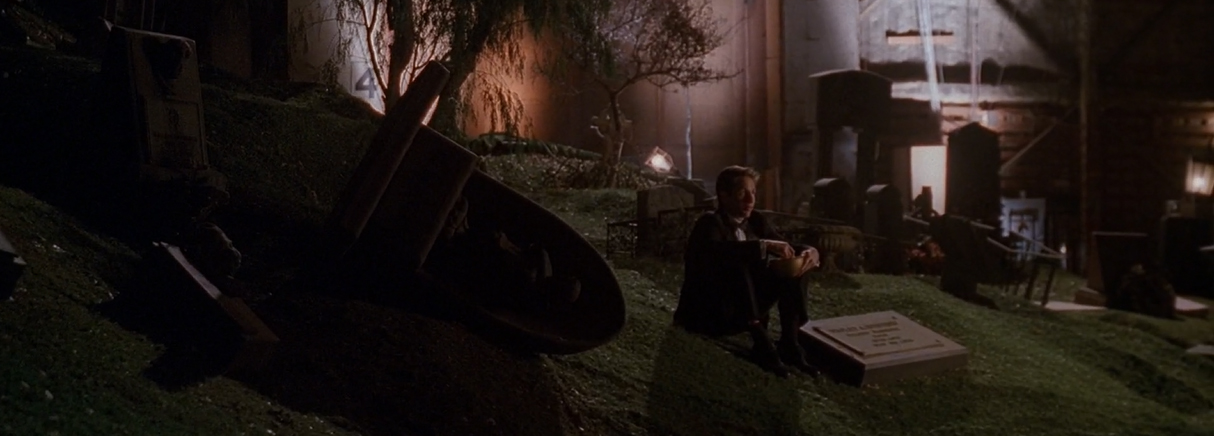
And now as we drift off the laughing agents and back to the graveyard , we see the Lazarus Bowl lying discarded beneath a tree.

A SWITCH, a broken tipped branch of the tree gets blown by the fan’s wind force down toward the plastic grooves of the replica as we move down toward it, we can read a “MADE IN ISRAEL” sticker on its bottom – the branch reaching toward the plastic,  like a woman’s arms to her lover —

Close on the splintered wood making contact on the colored plastic like a phonograph needle on vinyl —

And now MUSIC COMES UP – scratchy like an old record, the fourth track from BUENA VISTA SOCIAL CLUB, in a superior interpretation rendered by Mark Snow, called “PUEBLO NUEVO” – a beautiful stately cha cha instrumental —

We pull back wide as APPARITIONS appear to rise from their graves, rotting, but standing at atte ntion and then —

When the music kicks in, they begin to dance, all of them, in the round – dignified, changing partners… we hear the bones creaking, we see the gentlemanly half skulls smiling…

And now by the magic of Bill Millar & Co., the GREEN SCREEN becomes the rest of a HUGE GRAVEYARD with corpses dancing  stately and dignified upon it as we begin a slow pull out to a heavenly perspective…

This is what life’s about. This is what the dead would do if only they could. As we slowly fade to black, the band plays on.

And we end.

 – David Duchovny takes his bow
Everything ends.

Everything ends.

Continue reading

Harsh Realm – Kein Ausgang (Review)

This November, we’re taking a trip back in time to review the seventh season of The X-Files and the first (and only) season of Harsh Realm.

So, what does an average episode of Harsh Realm look like?

After all, the show was cancelled after only three episodes had been broadcast. Those three episodes were all written by the creator, and formed something of a loose introduction to the show. Inga Fossa ended with our protagonist finally accepting his place in the virtual world and his mission to defeat General Omar Santiago before the dictator can destroy the real world. There is a sense that the show had yet to even demonstrate what a regular episode of Harsh Realm might look like. It was over before it had even begun.

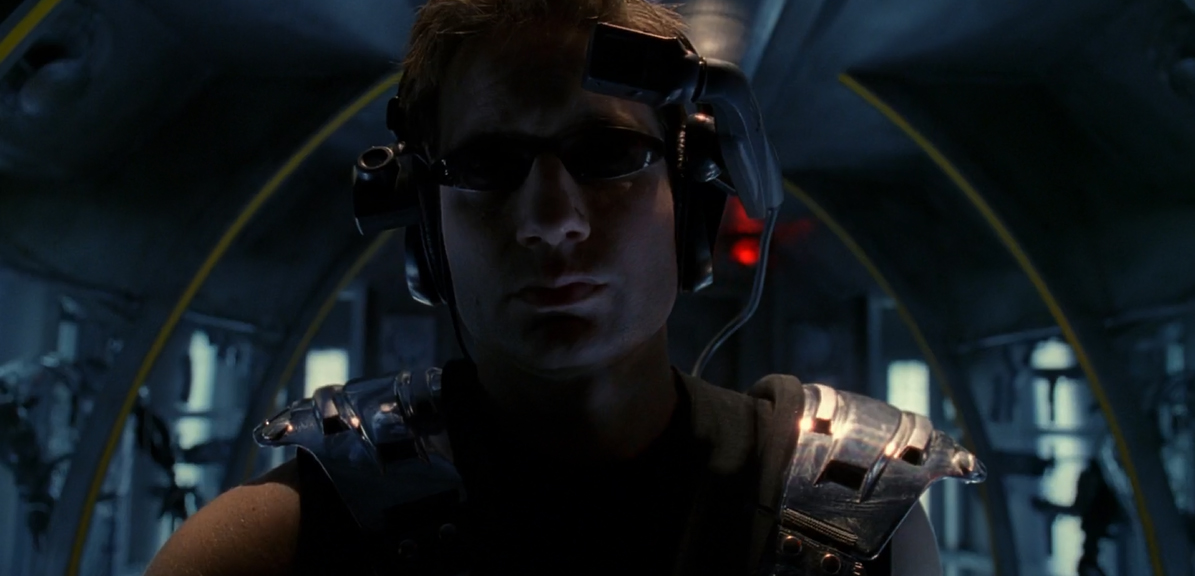
Jumping into action...

Jumping into action…

Kein Ausgang is the first episode of Harsh Realm to be written by somebody other than Chris Carter. As such, it is an important milestone in the development of the series. It is also the first of two episodes written by Steven Maeda, who would prove to be a pretty reliable set of hands in the life of the young show. Based on his contributions to Harsh Realm, it is easy to see why Carter drafted Maeda over to The X-Files in the wake of Harsh Realm‘s cancellation, even if his contributions to that show were a little more uneven.

Kein Ausgang offers an interesting glimpse of what Harsh Realm might have looked like going forward, if Fox had waited more than three episodes to cancel the show.

Shining a light on it...

Shining a light on it…

Continue reading

The X-Files – First Person Shooter (Review)

This November, we’re taking a trip back in time to review the seventh season of The X-Files and the first (and only) season of Harsh Realm.

On paper, this should be a slam dunk.

X-Cops was an incredibly risky and experimental episode of The X-Files that really pushed the show in an unexpected direction. The idea of crossing over into Cops was strange and surreal; it seemed like a gimmick that could backfire spectacularly. How could an episode of The X-Files adopt many of the identifiers and signifiers of Cops while still managing to tell its own story? It was a risky proposition, but writer Vince Gilligan and director Michael Watkins managed to pull it off, producing a definite highlight of the seventh season. (If not the final three seasons.)

Game on.

Game on.

First Person Shooter is a similarly ambitious episode, but one that should be a much safer bet. While it pushes the show outside its comfort zone in terms of setting and concept, it does not stray too far from the basic X-Files template. It is written by outsider writers William Gibson and Tom Maddox, but could logically be seen an extension of their superlative script for Kill Switch. In fact, Kill Switch wasn’t even the show’s first “killer artificial intelligence” story; Howard Gordon and Alex Gansa had written Ghost in the Machine as the series’ eighth episode.

On paper, First Person Shooter is ambitious without being entirely unprecedented. Still, the script bends the show too far out of shape. The episode seems to warp and distort the series around it. Despite the fact that First Person Shooter contains far more of the trappings and structures of The X-Files than X-Cops, the episode feels far less comfortable in its own skin. First Person Shooter plays almost like an episode of The X-Files filtered through a lens of unreality; it feels like a textured wireframe model of an X-Files episode, wandering lost in the uncanny valley.

Game over.

Game over.

Continue reading

The X-Files – Closure (Review)

This November, we’re taking a trip back in time to review the seventh season of The X-Files and the first (and only) season of Harsh Realm.

Sein und Zeit and Closure don’t fit together at all.

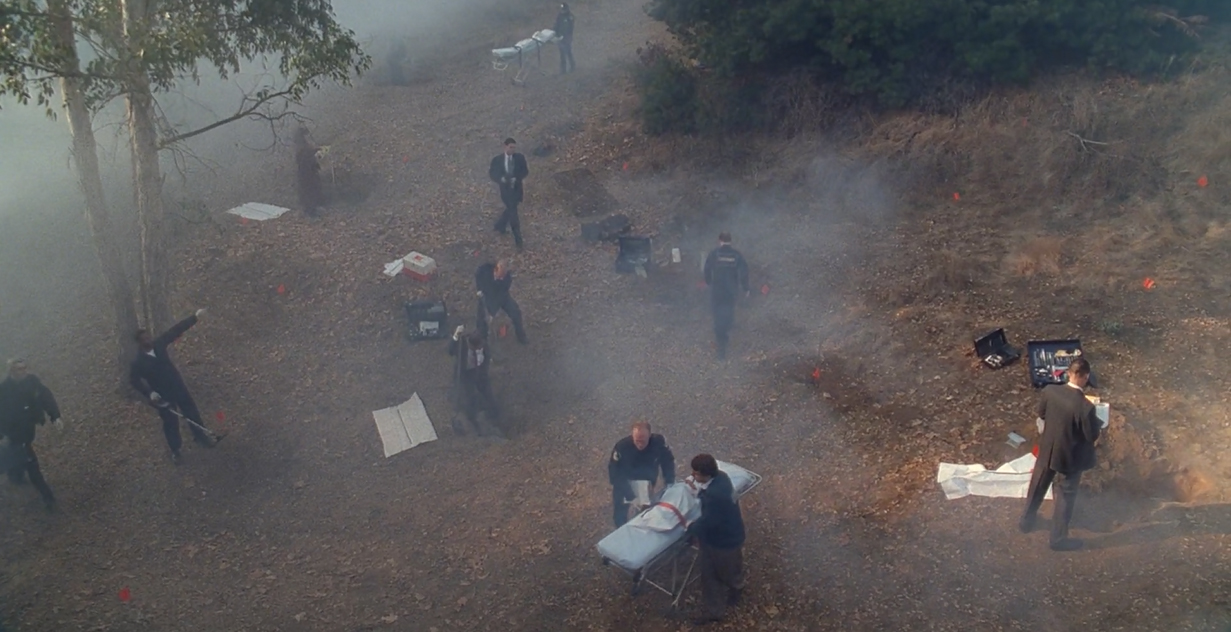
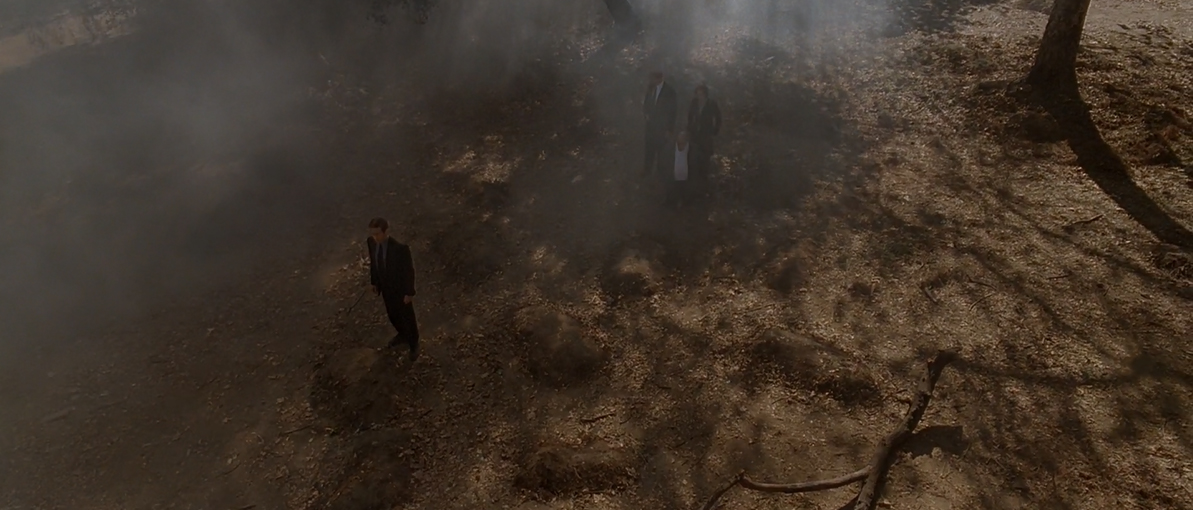
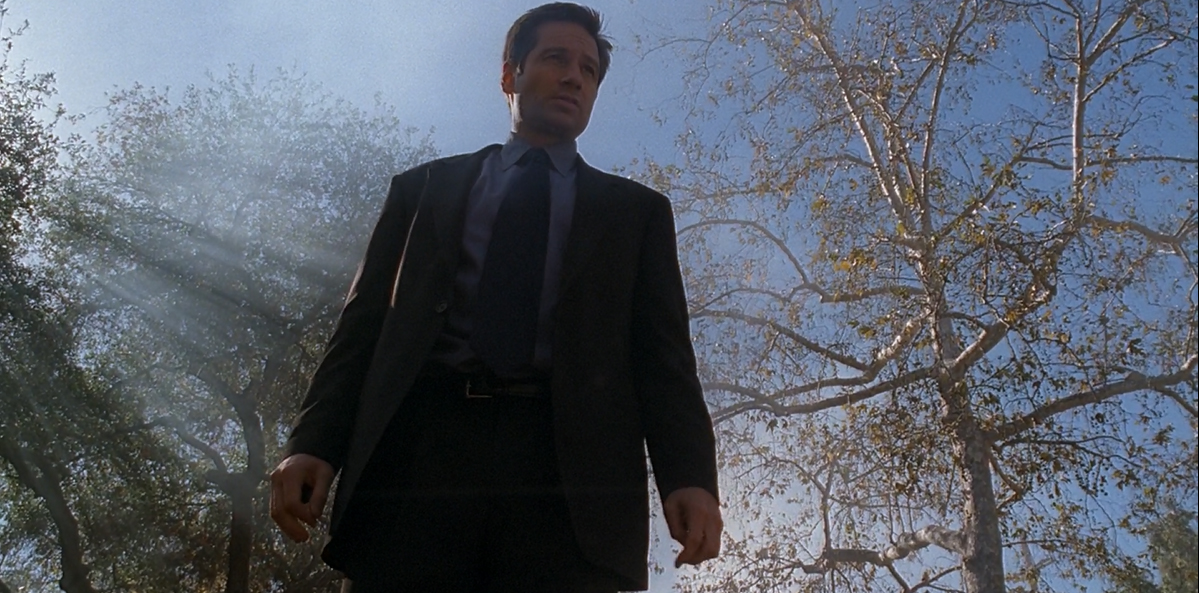
There is a nice symmetry to the stories, with Sein und Zeit closing with Mulder standing amid a mass grave and Closure opening with the excavation of the same mass grave. The contrast between the two shots of the same space says a lot about the differences between Sein und Zeit and Closure. Sein und Zeit is an episode that isolates Mulder, demonstrating how alone he truly is in the world and how all his beliefs might be empty; Closure responds by cluttering up the narrative and revealing an absurdly convoluted explanation of what happened to Samantha.

A grave subject...

A grave subject…

Even the themes of the two episodes are almost unique. Both Sein und Zeit and Closure are driven by Mulder’s desire to make sense of what happened to his sister, but both adopt diametrically different approaches towards the question. Sein und Zeit proposes that the world is a random and cruel place where bad things happen to children for no reason beyond the sadistic whims of strangers, while Closure embraces the idea that there is a larger scheme in which these horrible events occur.

There is a yin-and-yang structure to Sein und Zeit and Closure, a sense that the two episodes are almost at odds with one another when it comes to the fate of Samantha Mulder. Closure offers something approaching hope. It is too much to describe Closure as a happy-ending to the character arc that ran through the first seven seasons of the series, but it does offer Samantha an ending that is not soul-destroyingly bleak. It offers Mulder resolution and understanding. In his own words, it offers him freedom.

"Conscience... it's just the voices of the dead... trying to save us from our own damnation."

“Conscience… it’s just the voices of the dead… trying to save us from our own damnation.”

It is a very hopeful suggestion. It is a particularly hopeful suggestion coming at the middle of the show’s seventh season, as the resolution to Mulder’s character arc. The audience has spent seven years watching Mulder deal with the trauma of the loss of his sister, wrestling with the fear that he might never find an answer; or that he might find an answer that fails to make sense of it all. What if he found an answer that made sense of everything? What if Samantha’s disappearance wasn’t just part of a government conspiracy? What if it was part of something bigger?

What if the disappearance of Samantha Mulder meant everything?

A man alone.

A man alone.

Continue reading

The X-Files – Sein und Zeit (Review)

This November, we’re taking a trip back in time to review the seventh season of The X-Files and the first (and only) season of Harsh Realm.

Sein und Zeit and Closure don’t fit together at all.

There is a clear demarcation that exists between the two episodes, to the point where they cannot really be described as a single two-part story. Following the disappearance of Amber Lynn LaPierre from her home, Sein und Zeit closes with the arrest of a serial child-murderer and the discovery of a mass grave. There is not a whiff of the show’s central mythology to be found, despite Mulder’s insistence and anxiety. Although Closure picks up where Sein und Zeit left off, it embarks on its own separate story that does draw heavily from the show’s established mythology.

A grave subject...

A grave subject…

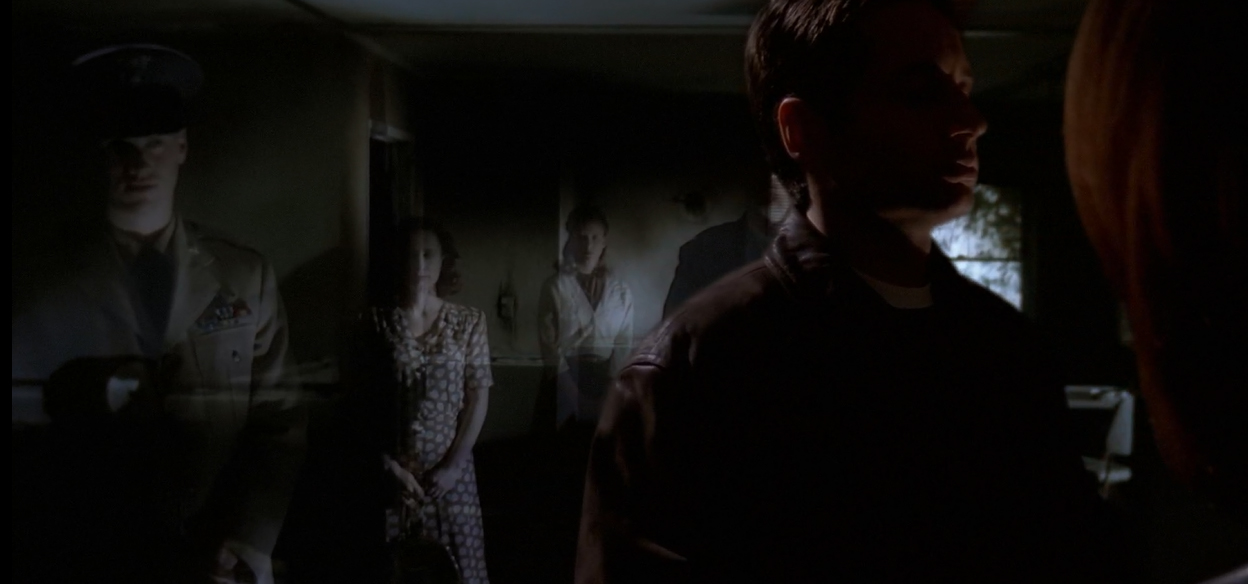
Even the guest casts of the two episodes are almost unique. Outside of David Duchovny and Gillian Anderson, only two guest stars appear in both episodes. Rebecca Toolan and Megan Corletto both play characters who die in Sein und Zeit, but appear as ghosts in Closure. The featured guest stars in Sein und Zeit do not reappear in Closure, and vice versa. Even the series’ recurring cast is firmly divided between the two halves; Walter Skinner appears in Sein und Zeit, while the Cigarette-Smoking Man plays an important role in Closure.

There is a yin-and-yang structure to Sein und Zeit and Closure, a sense that the two episodes are almost at odds with one another when it comes to the fate of Samantha Mulder. Sein und Zeit dares to ask what might happen if there was no rhyme or reason to her abduction; what if it was just a tragedy, like the tragedies that happen to happy families all the time? Mulder has invested so much of himself in the quest to explain what happened on that night in late November 1973; what would happen if there were no meaningful explanation?

"Conscience... it's just the voices of the dead... trying to save us from our own damnation."

“Conscience… it’s just the voices of the dead… trying to save us from our own damnation.”

It is a very bleak suggestion. It is a particularly bleak suggestion coming at the middle of the show’s seventh season, as the resolution to Mulder’s character arc. The audience has spent seven years watching Mulder dig deeper and deeper into a sinister conspiracy against mankind, largely motivated by the fact that his sister’s disappearance is a part of some larger puzzle. What if it wasn’t? What if Mulder’s whole quest were simply a lie that he had told himself? What if Mulder wanted to believe so badly that he convinced himself that this made sense?

What if the disappearance of Samantha Mulder meant nothing?

A man alone.

A man alone.

Continue reading

The X-Files – Millennium (Review)

This November, we’re taking a trip back in time to review the seventh season of The X-Files and the first (and only) season of Harsh Realm.

There are any number of ironies around the cancellation of Millennium.

The show was cancelled by Fox to make room for Harsh Realm, hoping that Chris Carter’s new show would perform better in the Friday night slot. Of course, that did not turn out to be the case; Harsh Realm was cancelled after only three episodes had been broadcast, all failing to even match the already low numbers of the third season of Millennium. A show in its third season was cancelled to make room for a hip new show that was pretty much dead on arrival. However, that is not the only irony.

Frank Black's return...

Frank Black’s return…

Millennium concluded with Goodbye to All That in May 1999. The show fell seven months shy of its own deadline. If Fox had commissioned only eight new episodes, the creative team would have been able to take the show right up to the turn of the millennium itself. (Well, in a way that would make sense to most viewers. “Nobody likes a maths geek, Scully.” Even one who is technically correct.) It seems like Frank Black would not get to see the arrival of the date that had defined his show. (It was the title, after all.)

If Christmas is the season of goodwill to all men, then it is a nice gesture that The X-Files invited Frank Black to ring in the new year (and the new millennium) with them. It might not be much more, but it is a nice gesture.

... is just one thing that fans remember about this episode.

… is just one thing that fans remember about this episode.

Continue reading

The X-Files – The Sixth Extinction II: Amor Fati (Review)

This November, we’re taking a trip back in time to review the seventh season of The X-Files and the first (and only) season of Harsh Realm.

My formula for greatness in a human being is amor fati: that one wants nothing to be different, not forward, not backward, not in all eternity. Not merely bear what is necessary, still less conceal it—all idealism is mendacity in the face of what is necessary—but love it.

– Friedrich Nietzsche, Ecce Homo

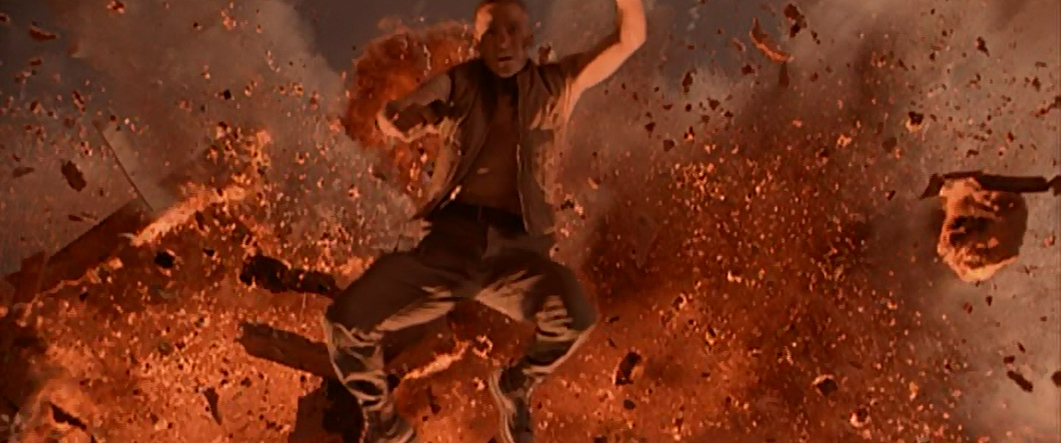
Everything burns...

Everything burns…

Continue reading

The X-Files – The Sixth Extinction (Review)

This November, we’re taking a trip back in time to review the seventh season of The X-Files and the first (and only) season of Harsh Realm.

The fate of individual human beings may not now be connected in a deep way with the rest of the universe, but the matter out of which each of us is made is intimately tied to processes that occurred immense intervals of time and enormous distances in space away from us. Our Sun is a second- or third-generation star. All of the rocky and metallic material we stand on, the iron in our blood, the calcium in our teeth, the carbon in our genes were produced billions of years ago in the interior of a red giant star. We are made of star-stuff.

– Carl Sagan’s Cosmic Connection

Sea of blood...

Sea of blood…

Continue reading

Harsh Realm – Inga Fossa (Review)

This November, we’re taking a trip back in time to review the seventh season of The X-Files and the first (and only) season of Harsh Realm.

Inga Fossa is a noteworthy episode of Harsh Realm for a number of reasons.

In production terms, it closes out the loose three-episode introduction to the series. The Pilot, Leviathan and Inga Fossa were all written by Chris Carter and served as an introduction to the world and rules of Harsh Realm. Perhaps owing to the relative complexity of the show’s premise, Carter takes a bit of time to lay out and establish the core ideas of the show. It isn’t until the end of Inga Fossa that characters like Thomas Hobbes and Sophie have reached the status quo that will carry them through the rest of the first season.

Game on...

Game on…

However, all of this is ultimately irrelevant. Inga Fossa will always be notable for being the final episode of Harsh Realm to air on Fox. Chris Carter’s new show was infamously cancelled after only three episodes were broadcast. The six episodes that had been produced before cancellation were quietly shuffled off Fox’s 1999 schedule; they eventually aired on FX in mid-2000, to little fanfare. The cancellation was a shocking development. The ratings were spectacularly terrible, but Harsh Realm had been intended to establish Carter as the network’s idea-generating machine.

Something was very wrong.

"You can't $@!# in here, this is the war room!"

“You can’t $@!# in here, this is the war room!”

Continue reading

Harsh Realm – Pilot (Review)

This November, we’re taking a trip back in time to review the seventh season of The X-Files and the first (and only) season of Harsh Realm.

Hereby it is manifest, that during the time men live without a common Power to keep them all in awe, they are in that conditions called Warre; and such a warre, as is of every man, against every man.

– Thomas Hobbes, Leviathan, The First Part, Chapter XIII

Harsh Realm is essentially a war story, or a collection of war stories.

To be fair, there are other themes that bleed through the show’s short nine-episode run; a critique of late-stage capitalism, a healthy dose of Chris Carter’s patented nineties existential spirituality, an exploration of American masculinity. The show plays on all sorts of genres across its short lifespan, from horror story to western to modern noir film. However, all of these unfold against the backdrop of a world locked in total warfare. The opening scenes of The Pilot unfold against the Siege of Sarajevo, setting the tone for the rest of the series.

Tom's not here, man...

Tom’s not here, man…

Carter tends to wear his cinematic and televisual influences on his sleeves. The X-Files was a spiritual successor to Kolchak: The Night Stalker, with a little bit of The Parallax View and The Silence of the Lambs thrown in for good measure. Millennium launched in 1996 and owed a lot to the look and feel of David Fincher’s work on se7en. Harsh Realm owes a lot to the resurgence in war movies towards the end of the twentieth century, coming less than a year after Saving Private Ryan and The Thin Red Line both scored Best Picture nominations.

On the commentary for The Pilot, Chris Carter notes that the show’s protagonist was named for the philosopher Thomas Hobbes. Carter cites that Hobbes’ most famous observation is that life is “solitary, poor, nasty, brutish, and short.” The same might be said of the life of Harsh Realm.

Fading out...

Fading out…

Continue reading